Core Technologies of Thermal Imaging Products
Thermal imaging performance is determined by far more than detector resolution.
FORESEEN OPTICS develops products across four dimensions: the thermal imaging core platform, complete-unit architecture, optical and algorithm matching, and environmental reliability. This enables brand customers to convert mature thermal imaging technology into products that are better suited to real hunting conditions, offer differentiated functions, and can be manufactured consistently at scale.
| 1. High-Performance Thermal Core & Open Interface
Built on a mature and stable thermal imaging core platform, with deeper customization at the system level.
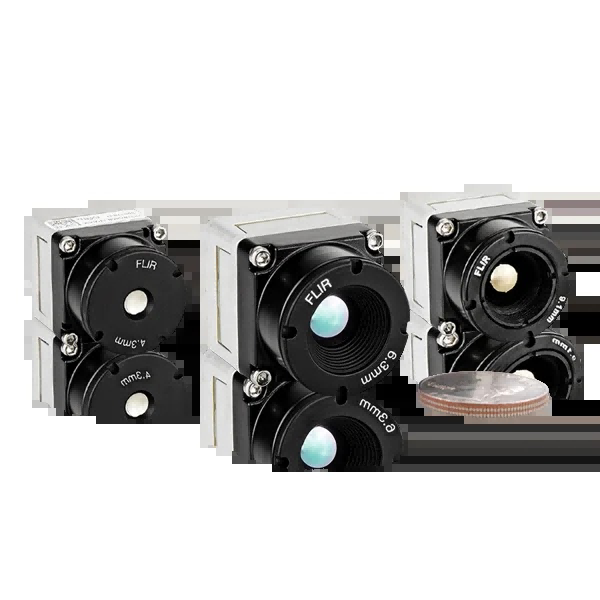
FORESEEN OPTICS uses high-performance thermal imaging chips, detectors, and core modules from established supply-chain partners such as iRay, providing a dependable foundation in thermal sensitivity, imaging stability, power control, temperature adaptability, and continuity of supply.
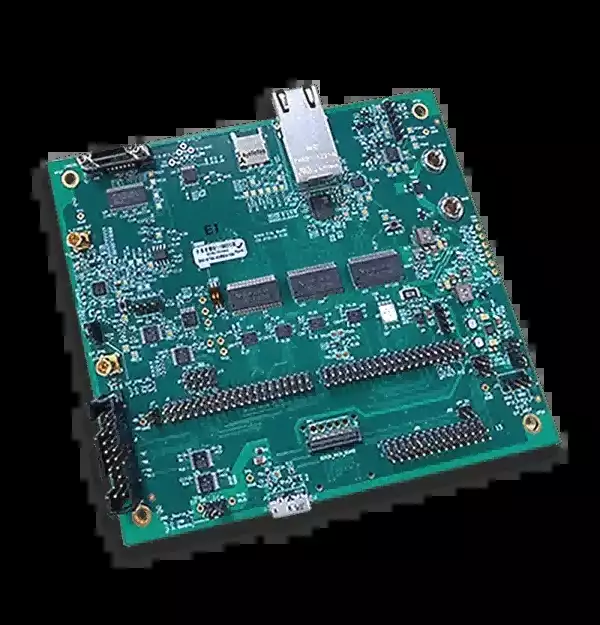
However, using a mature thermal imaging core does not mean every product must follow the same functions and operating logic.
Through open hardware and software interfaces, we can participate further in the development of low-level firmware, image parameters, system functions, and peripheral-device communication, embedding each customer’s brand requirements into the product’s core operating logic.
Core Technical Capabilities
- Develop complete products on mature thermal imaging chip and module platforms;
- Support low-level firmware, functional logic, and image-parameter programming;
- Support brand-specific UI, menus, and operating workflows;
- Support customization of color palettes, imaging modes, and scene parameters;
- Support video recording, Wi-Fi, ranging, and external-module connectivity;
- Support hunting functions such as standby wake-up and recoil-activated recording;
- Support system-level coordination among different functional modules;
- Support firmware-version management and future feature upgrades.
Core Value
Customers do not need to develop an entire thermal imaging core platform from scratch. They can build a branded functional system and product experience on mature technology, although advanced feature development may involve additional engineering costs and different MOQ requirements.
| 2. Hunting-Grade Lightweight Architecture
Lightweight design is not simply a smaller housing; it requires the entire product to be re-engineered around weight, balance, strength, and operation.
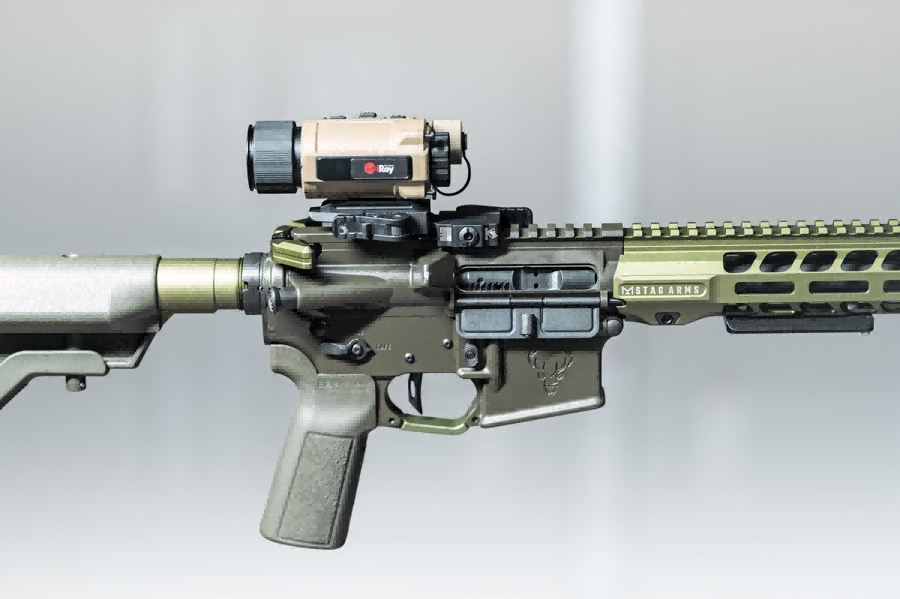
Thermal riflescopes, handheld thermal monoculars, and front-mounted thermal clip-ons have very different weight and structural requirements.
Once a thermal sight is mounted on a rifle, total weight, center of gravity, lens length, battery layout, and mounting height all affect weapon balance, target-acquisition speed, and fatigue during extended use.
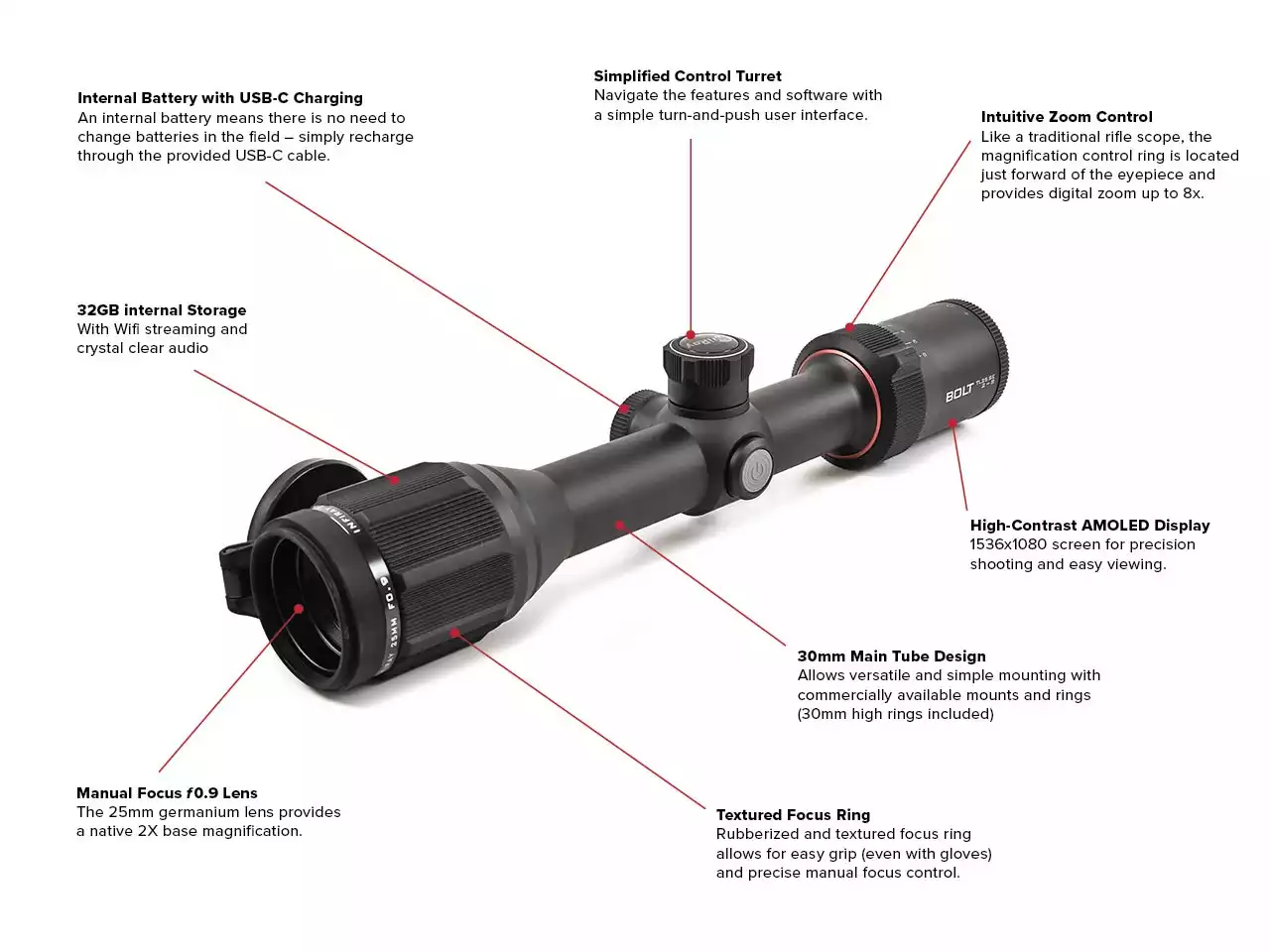
Before entering thermal riflescope development and production, FORESEEN OPTICS had already accumulated more than a decade of experience designing and manufacturing hunting riflescopes. This allows us to start from real shooting positions and integrate the infrared lens, thermal module, display system, mainboard, battery, controls, and mounting structure, reducing weight while retaining the structural strength and environmental reliability required in the field.
Core Technical Capabilities
- Optimize front-to-rear weight distribution and the overall center of gravity after mounting;
- Reduce unused internal volume and redundant structures;
- Optimize the stacking arrangement of the lens, display module, mainboard, and battery;
- Redesign the architecture for handheld, weapon-mounted, and clip-on use;
- Balance lightweight construction with recoil resistance;
- Optimize control placement for gloved operation and blind use at night;
- Support built-in, replaceable, and modular battery configurations;
- Control overall size, mounting height, and optical-axis position.
Core Value
A product should not only look lighter on a specification sheet. It must also remain well balanced, controllable, and comfortable when mounted, searching, and continuously tracking a target.
| 3. Hunting Imaging Algorithm & Optical Matching
Calibrate the detector, infrared lens, image algorithms, and display as one complete imaging chain.
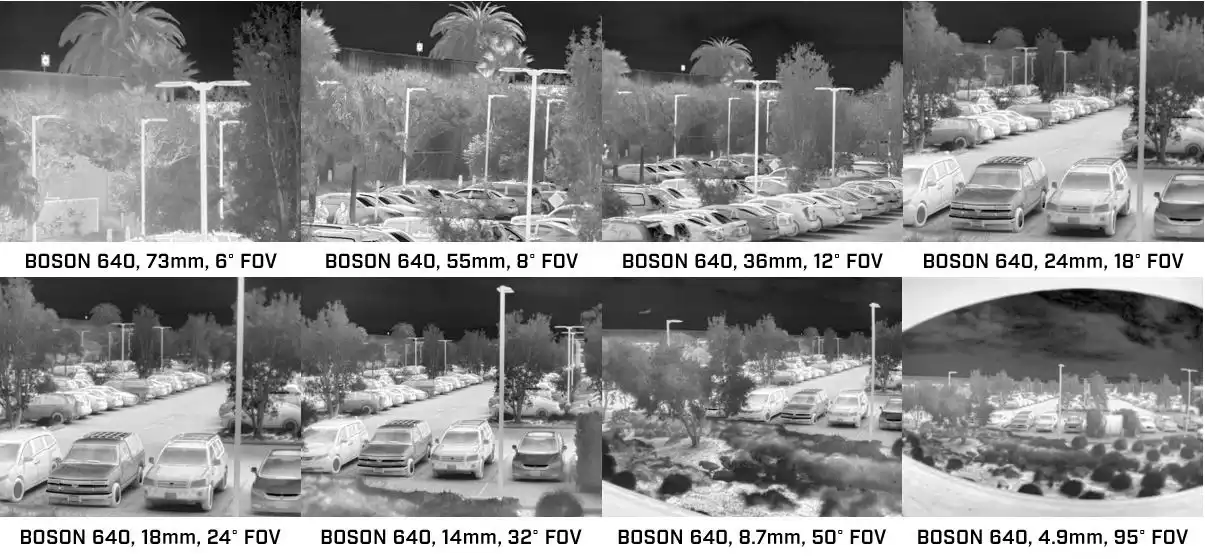
Thermal imaging products using the same 384×288 or 640×512 detector can still produce noticeably different final images.
Detector resolution is only one part of the imaging system. Lens focal length, F-number, field of view, base magnification, detector sensitivity, algorithm strategy, display, and eyepiece system all influence the target information ultimately seen by the user.
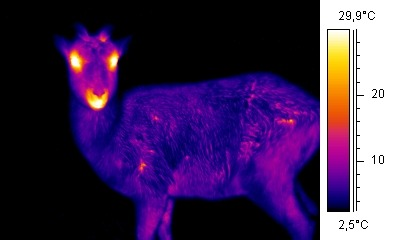
FORESEEN OPTICS does not apply a single universal image-parameter set. Instead, we jointly tune the optical system and imaging algorithms for hunting scenarios such as woodland searching, field observation, long-range identification, and moving-target tracking.
Core Technical Capabilities
- Match lens focal length and base magnification to the intended operating distance;
- Control field-of-view width according to search requirements;
- Balance infrared-lens F-number, size, weight, and light-gathering capability;
- Strengthen target contours in low-thermal-contrast conditions;
- Suppress interference from vegetation, the ground, and environmental thermal noise;
- Improve temporal continuity for moving targets while reducing ghosting and image latency;
- Balance noise reduction, contrast, and edge enhancement;
- Reduce artificial black and white halos caused by oversharpening;
- Preserve usable identification detail under digital zoom;
- Harmonize processing between recorded video and the real-time eyepiece image.
AI-Assisted Imaging Calibration
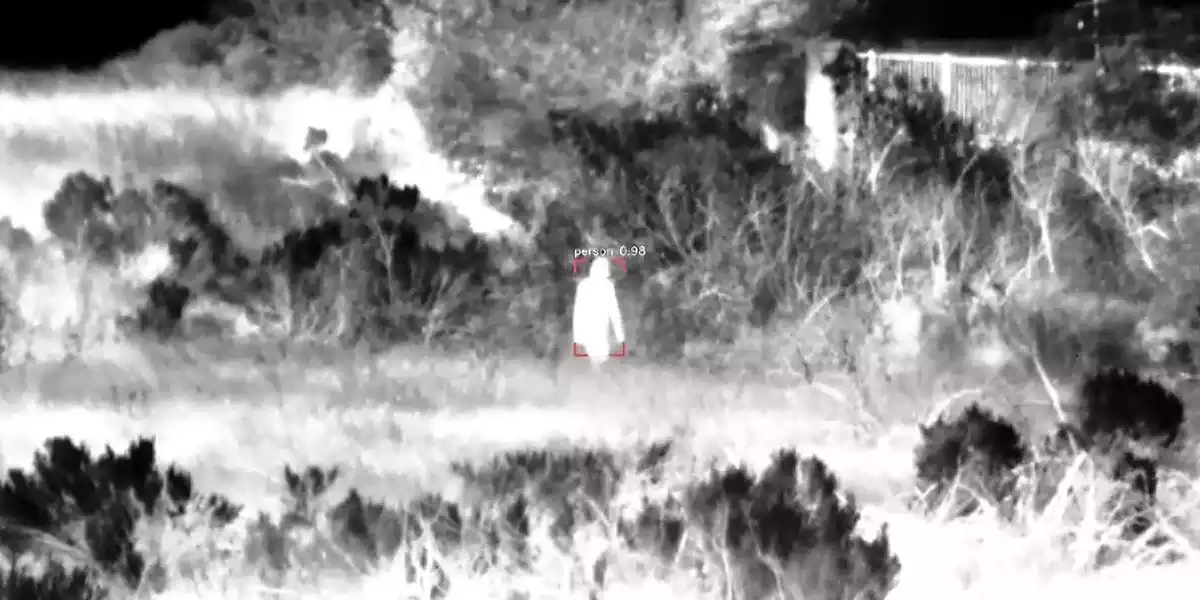
The purpose of AI image processing is not simply to make the entire image appear sharper. It helps the system determine which information should be enhanced and which environmental information should be appropriately suppressed.
In complex hunting environments, AI-assisted algorithms can:
- Enhance animal contours and continuous thermal-target signatures;
- Reduce irrelevant background textures and random thermal noise;
- Analyze sequential frames to improve moving-target tracking stability;
- Dynamically adjust noise-reduction and sharpening strength according to the scene;
- Reduce target-contour fragmentation during digital zoom;
- Improve the efficiency of detecting targets against complex backgrounds.
Core Value
Our goal is not to create the “sharpest image” for marketing. It is to help hunters detect targets, identify contours, maintain tracking, and make aiming decisions more quickly in real environments.
| 4. Integrated Calibration & Recoil Resistance
Integrate optical, mechanical, electronic, and temperature stability into complete-unit calibration and reliability control.
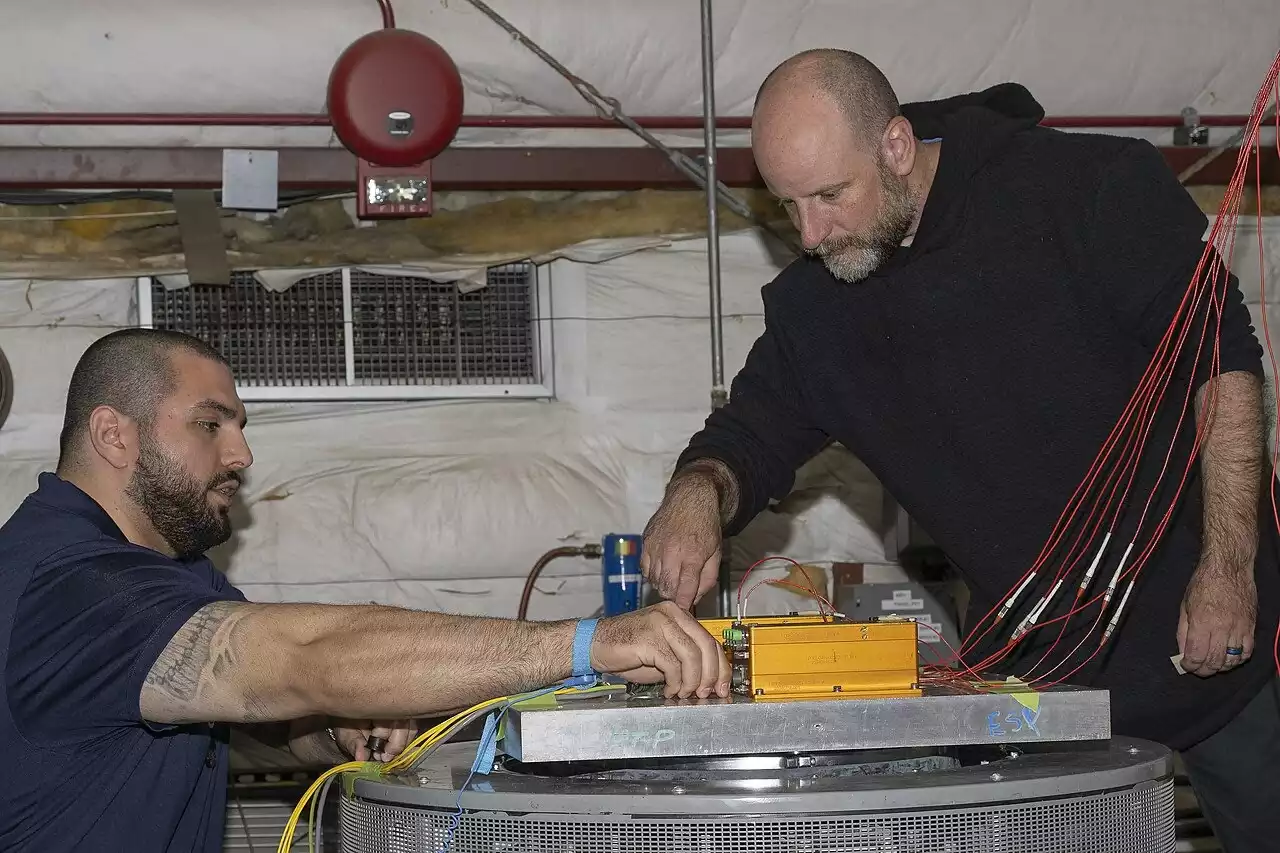
In real outdoor use, thermal imaging products must withstand temperature changes, extended operation, transport vibration, humidity, and firearm recoil.
Even small shifts in the lens, detector, display module, mainboard, connectors, or mounting structure can cause focus changes, image abnormalities, brief black screens, zero shift, or performance variation between production units.
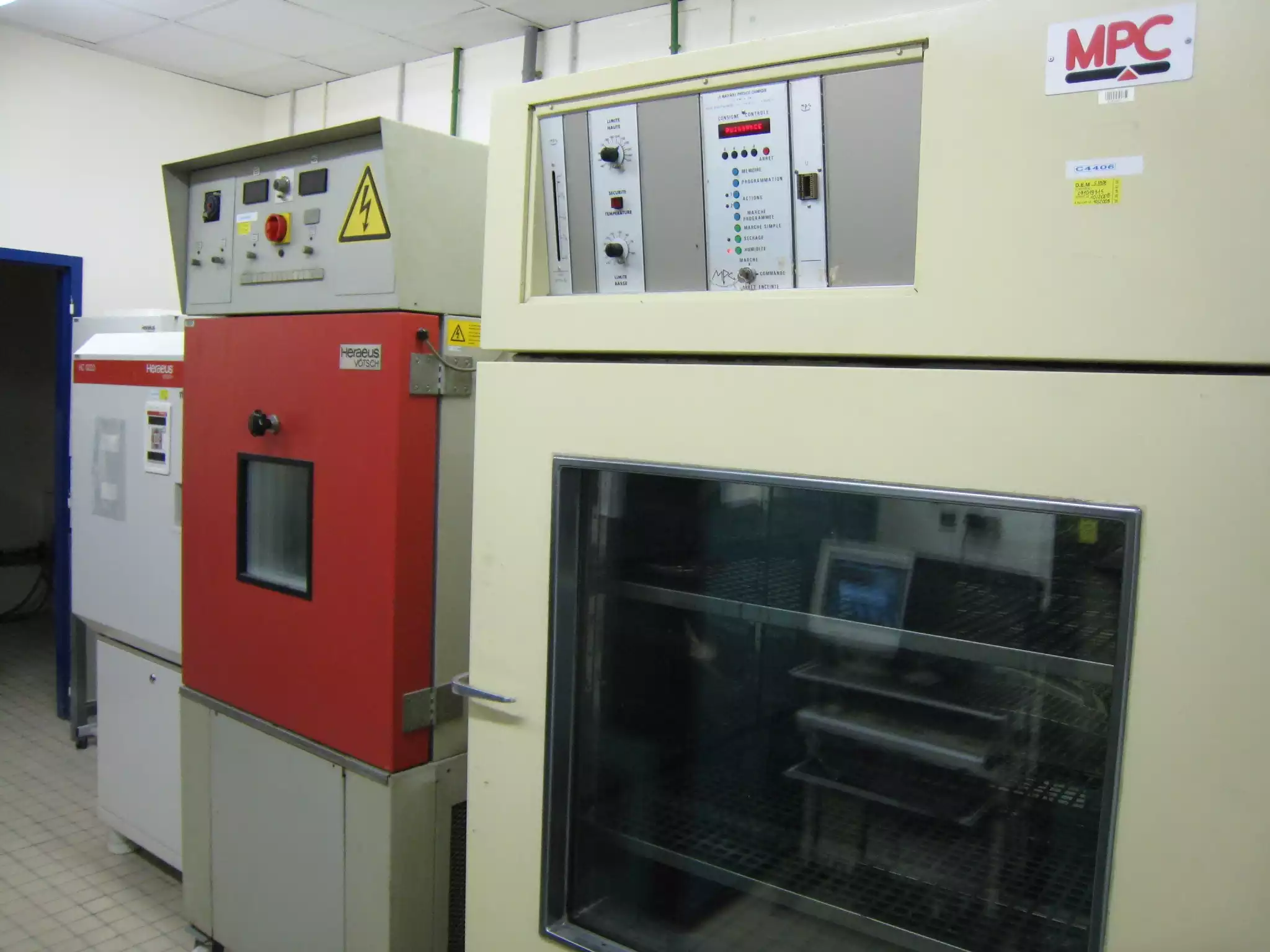
FORESEEN OPTICS combines optical alignment, structural reinforcement, electronic vibration resistance, and full-temperature-range calibration to unite image stability with complete-unit mechanical reliability.
Core Technical Capabilities
- Control optical-axis alignment between the infrared lens and detector;
- Control the accuracy of the lens focal plane and detector position;
- Compensate for focus drift across different ambient temperatures;
- Optimize shutter correction and non-uniformity correction logic;
- Perform bad-pixel detection and compensation, together with image-uniformity calibration;
- Strengthen the vibration resistance of the mainboard, ribbon cables, connectors, and battery contacts;
- Reinforce the scope-mounting area and primary load-bearing structures;
- Control zero retention after recoil impact;
- Check for black screens, black lines, and image abnormalities during rapid movement or impact;
- Screen incoming lenses, modules, and critical electronic components;
- Lock firmware versions, image parameters, and complete-unit calibration standards;
- Establish a comparison and acceptance mechanism between the approved prototype and mass-produced units.
Core Value
Mature thermal imaging technology cannot be demonstrated by a single well-performing engineering prototype.
More importantly, the product must retain stable imaging and zero after different temperatures, operating durations, and repeated recoil impacts. At the same time, the 100th, 500th, and 1,000th production units should remain close to the standard originally approved by the customer.