The Purpose of Sample Testing Is Not Simply to Confirm “Whether You Can See Clearly”
When international buyers receive binocular samples, the most common approach is to check image clarity, turn the focus wheel, and inspect the appearance. For wholesalers, importers, and private-label brands, however, sample testing must answer three more important questions: Is the product suitable for the target channel? Can the same performance be maintained in mass production? Are potential after-sales risks manageable?
Testing therefore should not focus only on magnification and center sharpness. A more effective method is to evaluate the sample across five dimensions—optics, operation, environmental durability, accessories, and mass-production consistency—and define acceptance criteria that can be recorded, repeated, and written into the purchasing specification in advance.
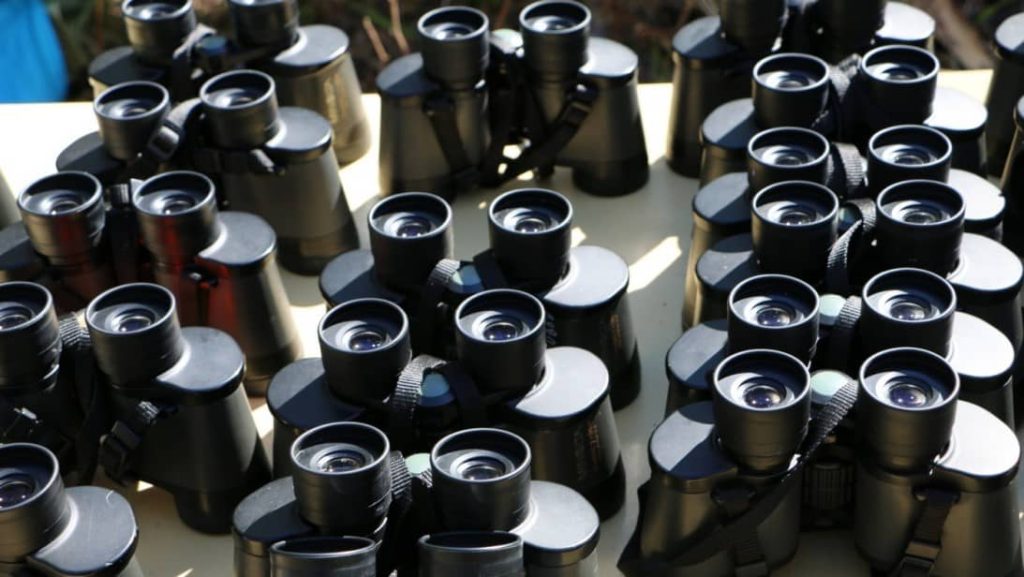
Stage 1: Test Optical Performance First
Sharpness, Chromatic Aberration, and Backlight Control
Use distant text, tree branches, building edges, and other high-contrast targets to inspect both the center and edge of the image. In addition to resolution, check for purple fringing, washed-out images, backlight glare, and stray light. Sample testing should cover sunny, overcast, backlit, dawn, and dusk conditions rather than being completed only beside an office window.
Double Images, Optical Alignment, and Left/Right Barrel Consistency
A binocular must allow the left and right images to merge naturally. Eye strain, dizziness, or the need to consciously force the images together during extended observation may indicate collimation error. Buyers can begin with a subjective check, but before mass production they should also require the factory to provide its collimation test method, permissible tolerances, and sampling inspection records.
Field of View, Eye Relief, Close Focus, and Exit Pupil
These specifications determine whether the sample is genuinely suitable for end users. Testers who wear glasses should confirm that they can see the full field of view; birding and education channels should check close-focus performance; and hunting or low-light channels should compare exit-pupil tolerance, shadow detail, and low-light contrast. Nikon’s educational materials note that sufficient eye relief helps eyeglass wearers obtain a full field of view.
Stage 2: Mechanical Construction Determines Long-Term Usability
A sharp image does not necessarily mean that the mechanical design is mature. Buyers should repeatedly operate the focus wheel, center hinge, eyecups, and diopter ring, checking whether resistance is even and whether there is free play, unusual noise, backlash, or looseness. For outdoor products intended for frequent use, repeatedly extend and retract the eyecups and open and close the hinge to simulate long-term wear.
• Focus wheel: Is focusing smooth from close focus to infinity, and does it become stiff in low temperatures or after extended operation?
• Eyecups: Does each position click clearly into place, are the left and right sides equally firm, and are they stable for eyeglass wearers?
• Hinge and grip: Is interpupillary-distance adjustment secure, and is the balance comfortable during one-handed use?
• Rubber armor and appearance: Check for odor, peeling, burrs, color variation, and surfaces that attract dust easily.
• Accessory interfaces: Do the lens caps, neck strap, carry case, and tripod interface fit properly, and are any parts easily lost?
Stage 3: Environmental and Durability Tests Must Match Sales Claims
Waterproofing, Fogproofing, and Temperature Variation
“Waterproof” and “fogproof” should not remain marketing terms only. Buyers should require the supplier to state the test depth, duration, temperature range, and pass/fail criteria. Samples may be subjected to rain, brief immersion, and hot/cold transitions, but destructive tests should use separate units so that the only approved sample is not sacrificed as the mass-production reference.
If an IP rating is claimed, the applicable standard and test conditions should be written into the contract. IP codes describe the enclosure’s protection against solid foreign objects and water ingress, but a specific rating cannot be replaced by a vague “all-weather” claim.
Drop, Vibration, and Transit-Packaging Tests
International orders should also simulate transport risks. After drop or vibration testing, check whether the retail box, inner tray, lens caps, and accessories have shifted, and whether the binocular shows double images, focusing problems, or housing cracks. For wholesale projects, packaging tests protect not only the individual product but also directly affect warehouse rejection, spare-box requirements, and after-sales replacement costs.
Stage 4: Validate the Product in Real-World Use
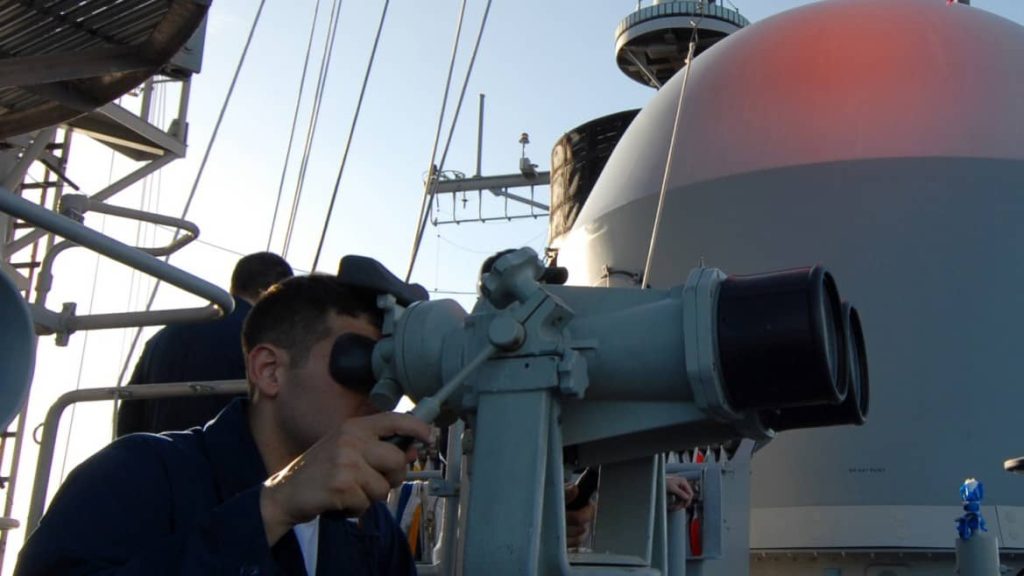
After laboratory data have passed, the product should still be used by different testers in real environments. Include both eyeglass and non-eyeglass users, different hand sizes, and typical scenarios for the target channel. Marine products can be tested in humid and unstable conditions; birding binoculars should be evaluated on moving targets and rapid focusing; hunting products should be compared at dawn and dusk, in shadow, and against backlight.
Real-world testing should record experience-based metrics such as how long it takes to find the target, whether prolonged viewing causes fatigue, and whether the lens caps or strap interfere with operation. Many poor end-user reviews are caused not by incorrect specifications but by a product that is awkward to use in practice.
Sample Testing Checklist for International Buyers
| Test Category | Key Items | Recommended Method | B2B Deliverable |
| Optical | Sharpness, chromatic aberration, double images, field of view, eye relief, close focus | Use identical targets and lighting; compare competitors and multiple samples side by side | Sample score sheet; confirmation of critical specifications |
| Mechanical | Focus wheel, eyecups, hinge, diopter, housing | Repeat operations and record resistance, backlash, and looseness | Structural tolerances; cosmetic acceptance criteria |
| Environmental | Waterproofing, fogproofing, temperature change, drop, vibration | Select non-destructive or destructive tests according to sales claims | Test conditions; pass/fail criteria; responsibility boundaries |
| Accessories & Packaging | Lens caps, neck strap, carry case, retail box, inner tray | Complete unboxing, assembly, drop, and transit simulation | Packing list; spare-parts ratio |
| Mass-Production Consistency | Collimation, focusing feel, chromatic aberration, assembly cleanliness | Retain a Golden Sample and define AQL sampling | Approved-sample standard; batch records; after-sales criteria |
After Sample Approval, Lock the Mass-Production Standard
Buyers should retain at least one approved sample that has not undergone destructive testing as the Golden Sample. The confirmed optical performance, focusing feel, exterior color, packaging configuration, and accessory list should be written into the sample approval document. Bulk-order inspection should combine AQL sampling, batch traceability, and retesting of critical performance rather than relying on another single sample sent by the factory.
Based on the buyer’s target market, MOQ, retail price range, and use case, FORESEEN OPTICS can help define sample configurations, test items, and mass-production inspection standards, reducing information gaps between the sample stage and bulk orders.
Conclusion
Binocular sample testing is not a simple trial; it is the starting point of procurement risk control. International buyers should evaluate optical performance, mechanical construction, environmental durability, accessories and packaging, and mass-production consistency, then convert subjective impressions into acceptance standards that can be recorded and retested. Only then can a sample that “looks good” become stable delivery, a lower after-sales rate, and a sustainable long-term wholesale partnership.