Different Channels Do Not Necessarily Require Three New Binocular Designs
For wholesalers, brands, and importers, Amazon Marketplace, independent websites and general e-commerce platforms, and physical outdoor stores present three different buying environments. Amazon shoppers typically compare the main image, price, ratings, and specifications first. Independent websites rely more on brand content, bundles, and use-case storytelling. In a physical outdoor store, shoppers can pick up the product and feel its weight, grip, focusing action, and eyecup comfort.
An effective multichannel strategy therefore does not usually mean developing a new mold for each channel. It starts with a proven optical and mechanical platform, then adjusts the configuration tier, accessories, packaging, barcodes, presentation, and price band. That preserves a shared supply chain while allowing the same 8×42 or 10×42 binocular to support different sales propositions in different channels.
Channel One: Amazon Marketplace Favors Standardization, Clarity, and Fewer Returns
Images and Specifications Must Substitute for Hands-On Experience
On Amazon, shoppers cannot try the binoculars before buying, so the product must be easy to understand. The main image should clearly show the product, while supporting images should convey its dimensions, scale in the hand, field of view, eye relief, waterproofing, accessories, and use cases. Amazon’s official product photography guide recommends a product image on a white background, along with images of different angles, real-world settings, details, and packaging to help buyers decide. For binoculars, information about 8×42 or 10×42 specifications, ED glass, BaK-4 prisms, fully multi-coated optics, field of view, close focus, and weight should also be consistent throughout the listing and with the product itself.
Packaging, Labels, and Shipping Durability Directly Affect Channel Costs
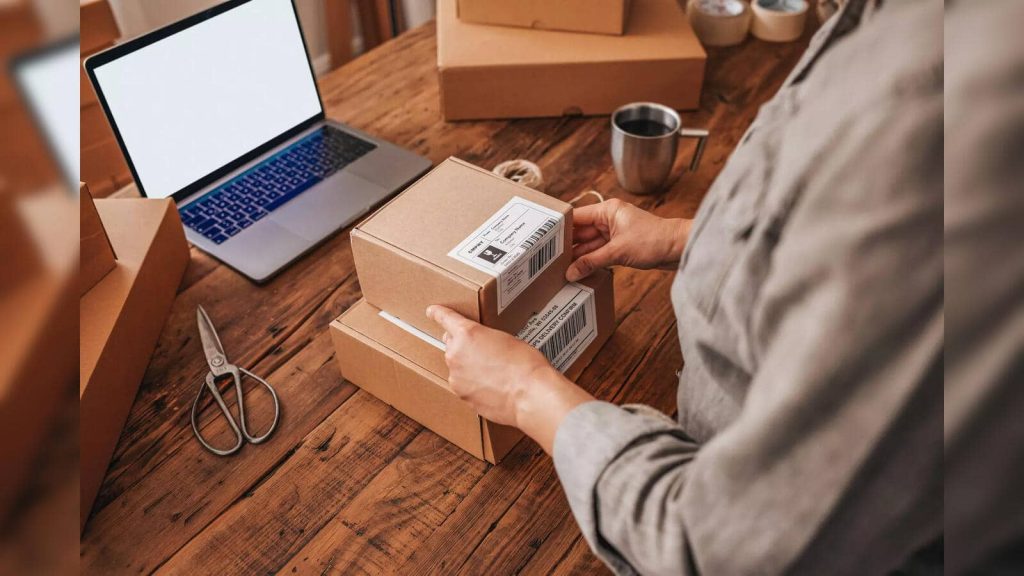
For FBA, a product must do more than sell well: it must suit storage, scanning, and repeated shipping. Amazon’s FBA preparation guide emphasizes barcodes, scannable labels, and protective packaging. For binoculars, an oversized gift box, loose objective caps, or an inner tray that presses on the eyecups in transit can increase fulfillment or after-sales costs. An Amazon version is therefore usually better served by compact, standardized, clearly protective packaging than by a box enlarged solely for visual effect.
Channel Two: Independent Websites and General E-Commerce Suit Differentiated Versions
Accessories, Variants, and Content Can Raise Average Order Value
Independent websites, brand sites, and some general e-commerce platforms usually have more room for content. A brand can explain why an 8×42 uses ED glass, why a wider field of view matters, or why a birdwatching kit includes a harness, smartphone adapter, and cleaning tools. Instead of competing on a single specification, these channels are well suited to combining the binoculars and accessories into a complete use-case package. Product stories, comparisons, and lifestyle images can make the price difference easier to understand.
Google Merchant Center also requires the main product image to represent the actual item accurately and supports additional images showing other angles and use cases. An e-commerce version therefore needs not only a planned SKU, but also coordinated images, variants, packaging, and accessory lists, so channel content matches the actual bill of materials.
More SKUs Are Possible, but Inventory Must Remain Manageable
A common e-commerce problem is having many online variants but increasingly fragmented physical inventory. Suppose the same 8×42 is offered as a standard version, an ED version, a birdwatching kit, a smartphone-photography kit, and a gift set. If every version has a different color box, accessories, and body color, replenishment forecasting quickly becomes complex. A more dependable approach is to share the binocular body and basic packaging wherever possible, then distinguish channels with optional accessory packs, packaging sleeves, or applied labels. For low-volume variants, quick customization of an existing platform is preferable to deep structural development from the outset.
Channel Three: Outdoor Stores Depend on Differences Customers Can Feel
Grip, Focus, Eyecups, and Weight Are Easier to Judge In Person Than Marketing Claims
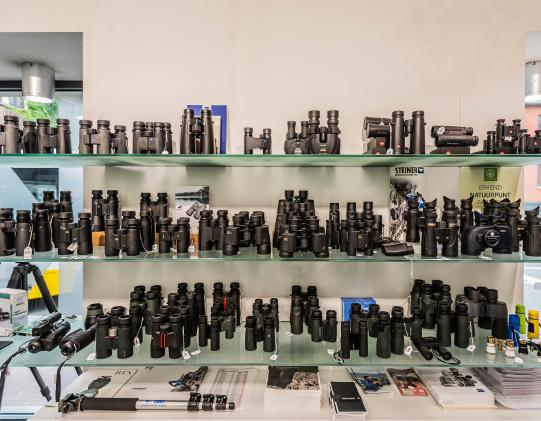
In an outdoor store, shoppers can compare two binoculars with similar-looking specifications directly. The deciding factors may be whether the rubber armor is secure in the hand, the center focus turns smoothly, the eyecups have clear stops, prolonged viewing feels comfortable, the weight suits carrying, and the image genuinely differs in low light. In other words, offline channels are better places to invest in immediately perceptible mechanical feel and optical performance than in a long list of marketing terms that are hard to verify in the store.
Displays and Sales Staff Need to Explain the Line Clearly
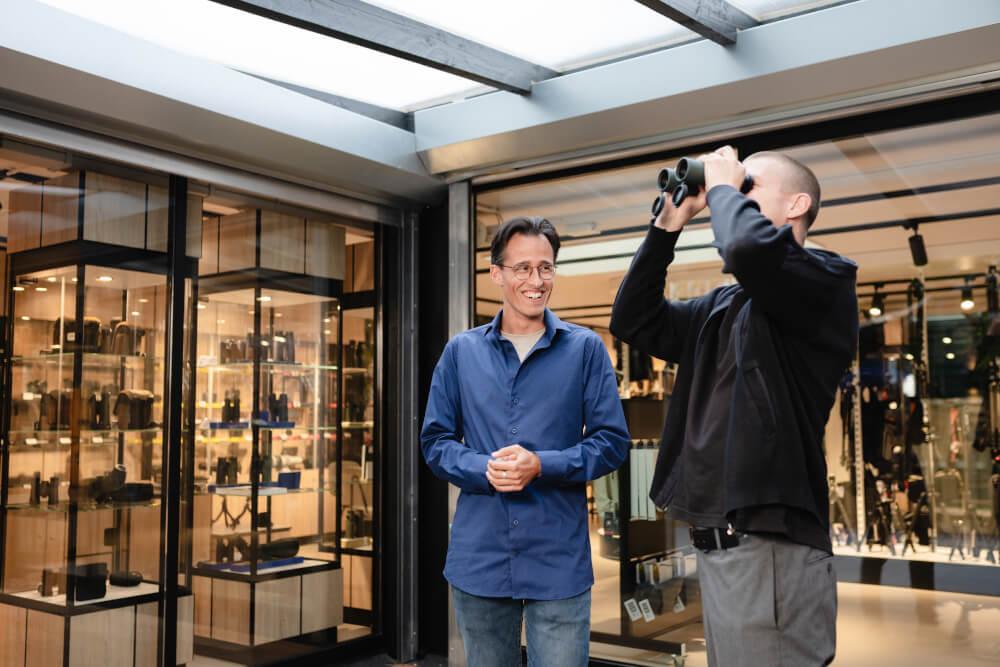
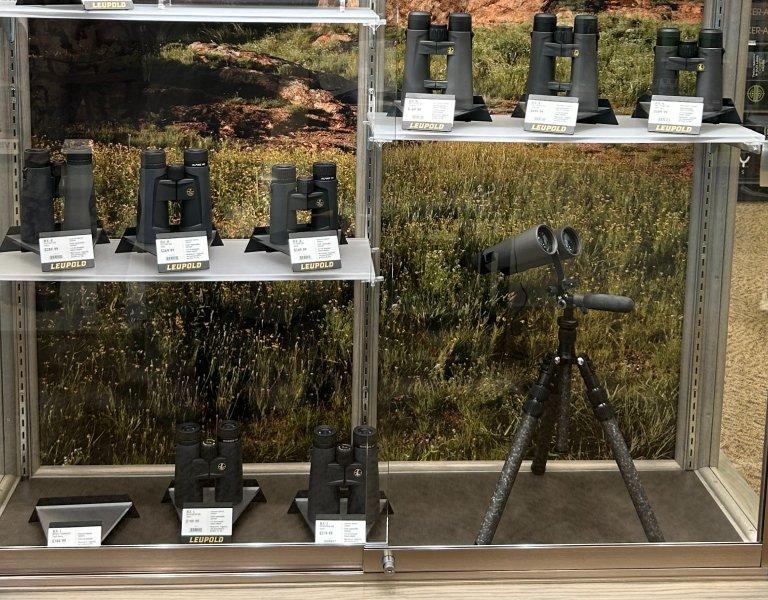
Physical retail also calls for demo-unit management, price tags, display space, and clear talking points for sales staff. A line of 8×32, 8×42, and 10×42 binoculars with related designs and a clear price ladder is usually easier for staff to explain than several visually unrelated SKUs with overlapping benefits. A higher-tier version may add ED glass, better coatings, a premium strap, or a hard case. An entry-level version should retain sound basic imaging, waterproofing, and durability. Customers should be able to understand on the spot why one version costs more and what they gain.
How Can One 8×42 Become Three Channel Versions?
| Channel | How Consumers Mainly Decide | Recommended Version Focus | Supply Chain and Packaging Focus |
| Amazon Marketplace | Compare search results, main images, specifications, ratings, and prices | Clear core configuration; a few strong selling points; fewer complex variants | Compact packaging, scannable barcodes, secured accessories, and lower shipping and return risk |
| Independent sites / general e-commerce | Content, brand story, lifestyle images, and bundle value | Differentiated SKUs such as an ED version, birdwatching kit, or smartphone-photography kit | Share the core body where possible; differentiate with accessory packs, sleeves, and labels |
| Physical outdoor stores | Hands-on trials, staff explanations, and side-by-side shelf comparisons | Highlight grip, focusing, eyecups, low-light performance, and a clear price ladder | Packaging that is easy to display and reset; demo units and clear specification cards |
The key to channel-specific versions is not to turn one product into three entirely different bills of materials. It is to separate the core that must remain common from what can vary by channel.
Which Differences Can Be Made Without New Tooling?
- Amazon version: keep the standard black body, simplify the accessories, use a more compact color box or kraft box, and confirm the UPC/EAN, FNSKU, and outer-carton label locations in advance.
- Independent-site version: add ED glass, a color option, a branded nameplate, harness, smartphone adapter, or gift bundle to the same body to create a higher-order-value version.
- Outdoor-store version: prioritize the rubber texture, focus-wheel resistance, eyecups, strap, and display packaging, and prepare specification cards or quick comparison materials for demo units.
- Across all three channels, share the body, core optical design, and most common parts wherever possible. Concentrate differences in manageable configuration, accessory, and packaging layers.
For product identification, GS1 explains that the same product GTIN can be used in both online and physical retail. A new identification strategy needs to be considered when the product’s trade-item attributes change. Channel differences therefore do not automatically mean a new barcode, body, and mold for every channel.
How FORESEEN OPTICS Supports Multichannel Product Planning
FORESEEN OPTICS can first select suitable base models from its existing roof-prism, Porro-prism, and compact platforms, then adjust the optical configuration, colors, accessories, packaging, labels, and acceptance criteria to match the different sales logic of Amazon, e-commerce, and physical retail. A project that needs a quick market test can begin with channel versions differentiated by logo, packaging, and accessories. Once sales data stabilizes, it can add deeper changes such as ED glass, coatings, waterproofing, structural features, or an exclusive exterior design.
Before mass production, we recommend locking down the golden sample, BOM revision, channel-specific accessory list, packaging version, and critical inspection items together. Otherwise, replenishment across three channels may gradually produce an unmanageable collection of nonstandard versions.
Conclusion
Amazon, e-commerce platforms, and outdoor stores do not necessarily need three completely different binoculars. They do need different product-version strategies. Amazon places greater emphasis on standardized presentation, shipping efficiency, and fewer returns. Independent e-commerce is better suited to differentiation through content, configurations, and accessory bundles. Outdoor stores depend on the feel of the product, hands-on trials, and a clear price ladder. For wholesalers and brands, the most efficient approach is to establish a stable core platform, then adjust the elements that directly affect conversion, average order value, and inventory efficiency for each channel. This avoids duplicate development while giving the same binoculars genuinely different selling strengths across channels.