For importers building a hunting optics brand in Saudi Arabia, or sourcing riflescopes, binoculars, rangefinders, and other outdoor optics from China, one question has become increasingly practical in recent years:
China still has a highly developed optical manufacturing supply chain. How can products reach Saudi Arabia reliably and predictably?
Red Sea shipping, in particular, has not simply returned to its former normal since the start of 2026.
Some services have resumed transits through the Suez Canal, and Asia–Europe routes have again added calls at Jeddah. Shipping lines nevertheless continue to warn that the Red Sea security situation is highly uncertain; if conditions change, some sailings may be rerouted around the Cape of Good Hope. By September 2026, high cargo volumes at Jeddah were also affecting container pickup, truck turnaround, and inland delivery. An operations update published by Hapag-Lloyd on September 24 reported yard density of about 70% at the Jeddah terminal and adjustments to the port-call times of some sailings.
For Saudi importers, the question today is therefore no longer simply:
“Can China ship goods to Saudi Arabia?”
It is:
“Can my brand build a China-based supply system that avoids stockouts even when logistics are disrupted?”
This is an issue we have given increasing attention to while serving Saudi hunting brands.
One point of background is useful here: FORESEEN OPTICS did not begin exporting optics when it entered the Saudi market. The company was established in 2007; its first-generation founder has worked in optics since 1992, initially handling binocular OEM orders for Japanese brands. We combine manufacturing and trading operations. Our own factory is in Beibei, Chongqing, China, with 6,800 square meters of production space, eight production lines, approximately 50 pieces of equipment, and 68 full-time employees.
According to a third-party supplier assessment by TÜV Rheinland, the company generated US$7.10 million in total revenue in 2022, including US$6.35 million in export revenue. The Middle East accounted for 8% of export markets, broadly comparable to East Asia at 10%.
We include these figures not to claim exceptional expertise in the Middle East, but to establish one point: exports are central to our factory, and our customers are in North America, Western Europe, East Asia, and the Middle East. What happens after cargo reaches port is a practical concern for us. Yet experience with many shipments does not mean every shipment arrives on time. That is the issue this guide addresses.
1. How Red Sea Disruptions Affect More Than Transit Time
Many customers importing from China for the first time ask:
“Shipping time to Saudi Arabia?”
For a brand operator, “about 25 days” is nowhere near a complete answer.
Consider a recent shipping option we checked for a Saudi customer: about 2 CBM / 500 kg of goods shipped to Jeddah on CIF terms, with reference ocean freight and insurance costs of approximately RMB 13,500. Normal time at sea was about 25 days. Adding stock preparation, palletizing, booking, container loading, and destination customs clearance and pickup brought the total to roughly 35–40 days. For actual inventory planning, however, we recommend allowing about 45 days or more.
Why?
Because the Red Sea situation can do more than delay a ship by a few days.
It can also affect schedules, available space, routing, transshipment points, port congestion, and surcharges at the same time.
For example, in our recent plan, estimated destination charges for a shipment of about 2 CBM / 0.5 metric ton to Jeddah came to approximately US$1,140, including an estimate of VAT. The quote included WRS war-risk, PSS peak-season, and BAF bunker-adjustment surcharges.
Published 2026 rates from major carriers reflect similar volatility. In August 2026, Maersk adjusted its PSS peak-season surcharge for Far East Asia–Saudi Arabia services and continued to stress that routes through the Middle East and Red Sea must be adjusted as security conditions change.
The first step toward reliable supply is therefore to recognize that both transit times and costs are variable, rather than seek the lowest one-off freight rate.
A note on the source of these numbers: the CIF freight quote, breakdown of destination charges, and transit-time range above came from our actual inquiries with a freight forwarder between September 21 and 24, 2026. They are not estimates of industry averages.
We list destination charges in detail—from deconsolidation, delivery-order, documentation, terminal, port-handling, and X-ray scanning fees to BAF, WRS, PSS, LSS, agency fees, and finally Saudi VAT at 15%—because the Jeddah quote indicates that these items will generally be charged. If a customer calculates landed cost using only freight and customs duties, the omitted items can consume much of the first shipment’s margin.
For a brand, this has two implications. First, destination charges belong in the cost model before the goods arrive, not as a surprise at pickup. Second, because charges fluctuate, supply stability must rest on a predictable process, not on a single fixed quote.
2. Our Approach: Reorder Before Inventory Runs Low
One important lesson from serving Saudi customers is this:
Address logistics risk earlier, during inventory planning rather than only during transport.
If a shipment is expected to take 40–45 days from order confirmation to arrival at the customer’s warehouse, the brand should not wait until it has only 30 days of stock left before reordering.
Instead, we review sales velocity by SKU with the customer and bring the purchasing decision forward.
For example, once a core riflescope enters a steady sales cycle, there is no reason to wait until the first batch is nearly sold out before starting a second production run. The quantity, packaging, and shipment window for the next batch can be confirmed while the first still provides a safety stock buffer.
This approach is especially valuable under current Red Sea shipping conditions.
A 10-day vessel delay is simply a supply chain fluctuation for a brand with two months of inventory.
For a brand with only 10 days of stock remaining, it is a stockout.
Both companies face the same Red Sea route, yet their business outcomes can be very different.
That is why we believe a Chinese supplier should take part in its customer’s inventory planning, rather than merely manufacture after receiving a purchase order.
To make early ordering work, production lead times at the supplier must be predictable. We can offer certainty in capacity and scheduling: our own factory in Beibei, Chongqing, has 6,800 square meters of space, eight production lines, and about 50 pieces of equipment. According to the third-party assessment, average lead time is 15 days and the shortest sample lead time is four days.
These figures do more than suggest speed: they let customers work backward to a firm ordering date. If production takes 15 days, sea transport 25 days, and destination customs clearance and pickup another 3–7 days, the date for confirming the second batch can be entered in a planning sheet rather than guessed. Safety stock becomes meaningful when replenishment can be scheduled.
3. Riyadh in October: The Exhibition Opportunity Is Near
The first two sections explained why purchasing decisions need to move earlier. October 2026 gives that decision a specific deadline.
The Saudi International Falcons and Hunting Exhibition is scheduled for October 1–10, 2026, at the Riyadh Exhibition and Convention Center in Malham, north of Riyadh. It is organized by the Saudi Falcons Club.
This is no small specialist show. In 2025, it attracted more than 1,400 exhibitors and brands from 47 countries, over 700,000 visitors in ten days, and sales exceeding SAR 91 million. The 2026 exhibition adds about 30,000 square meters compared with the previous year, along with areas for hiking, sea fishing, and falcon and camel auctions. The show spans falconry equipment, hunting firearms and ammunition, customized adventure vehicles, camping, hiking, and sea-fishing gear.
For a hunting optics brand, the exhibition is one of the year’s most concentrated opportunities to meet channel buyers in person. Falconers, hunting and outdoor businesses, regional distributors, and retail buyers gather in one venue for ten days. A brand is likely to receive not just individual retail orders, but volume inquiries from distributors and stores, and possibly agree partnership frameworks on site.
Here is the difficulty:
You can agree on an order at the exhibition, but you cannot produce the goods on the exhibition floor.
After the show, the time from order confirmation until goods enter a Saudi warehouse is about 45 days under the estimate in Section 1. If a Saudi brand wants to accept distributor volume orders at the October show, the needed inventory must either already be in Saudi Arabia or have finished production and be at sea.
That is why we particularly want to tell Saudi customers this year:
Stock your best-selling SKUs adequately before the exhibition begins. Opportunities at the show are measured in days; replenishment is measured in months. Those timelines cannot be aligned during the show itself.
More specifically, we recommend confirming three things before the exhibition:
- Safety stock for best-selling SKUs: enough to handle a concentrated round of distributor orders, not merely enough to sell through the end of the month;
- Production for the second batch is locked in: confirm packaging, quantity, and the shipping window before the exhibition, rather than starting only after orders arrive;
- Materials ready for the exhibition stand: product information, specifications, packaging samples, and a specification list so buyers can discuss the offer in full on site.
We can help coordinate the steps on the China side—production, packaging, and shipping—before the show begins, so customers can take orders with confidence.
4. Reduce Inventory Risk Without Developing Every Product from Scratch
There is another issue that often goes overlooked.
Many buyers establishing a new hunting brand assume that building a product line means:
Product design → tooling → prototype → revision → new prototype → testing → packaging → mass production.
In practice, this is often the most expensive and time-consuming path, with the greatest supply risk.
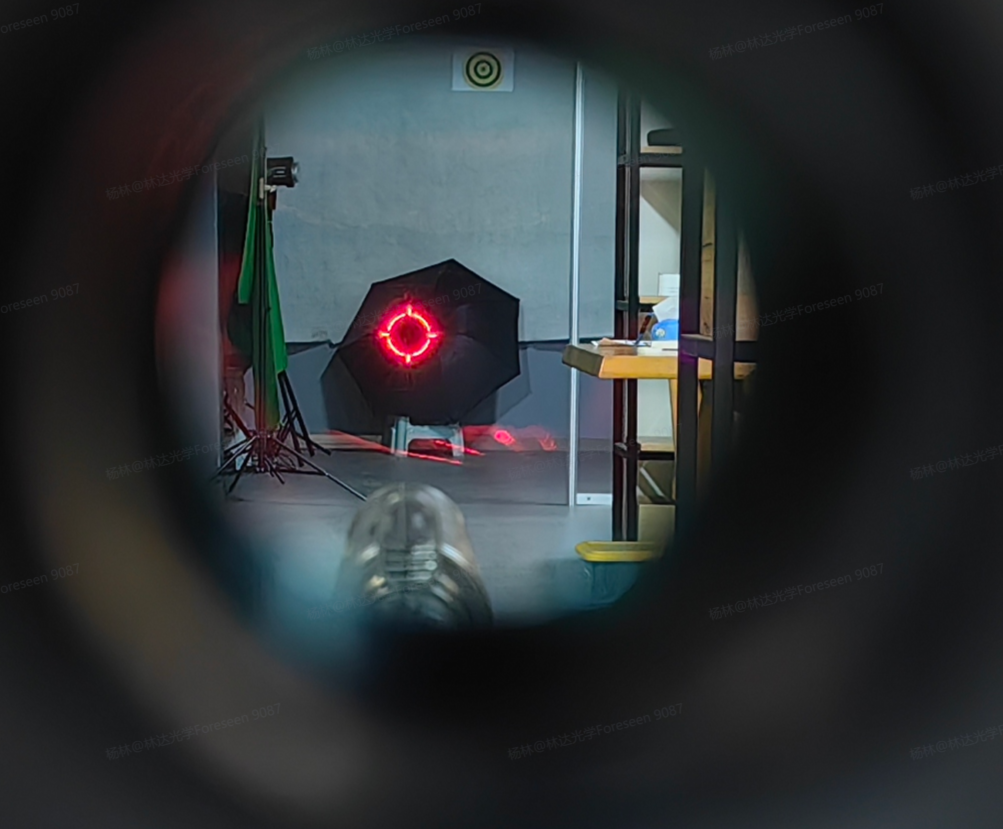
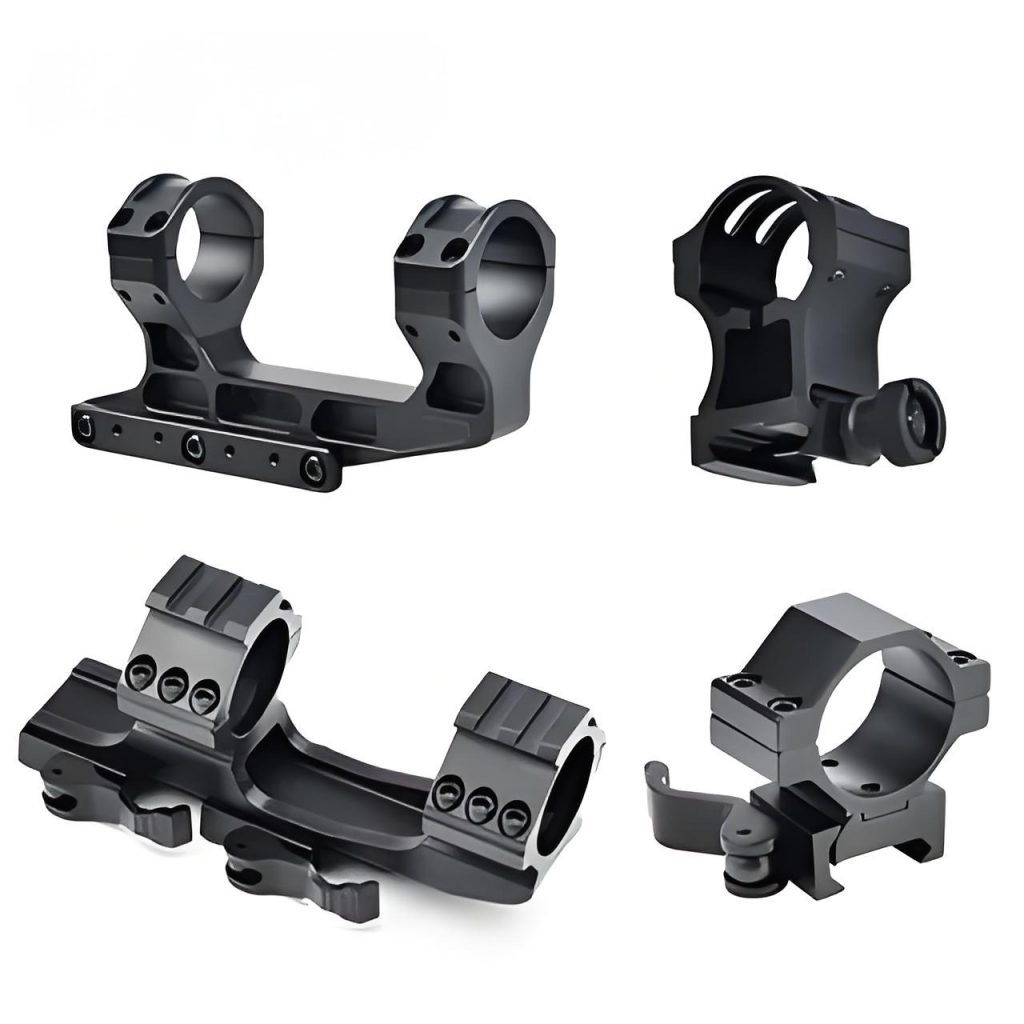
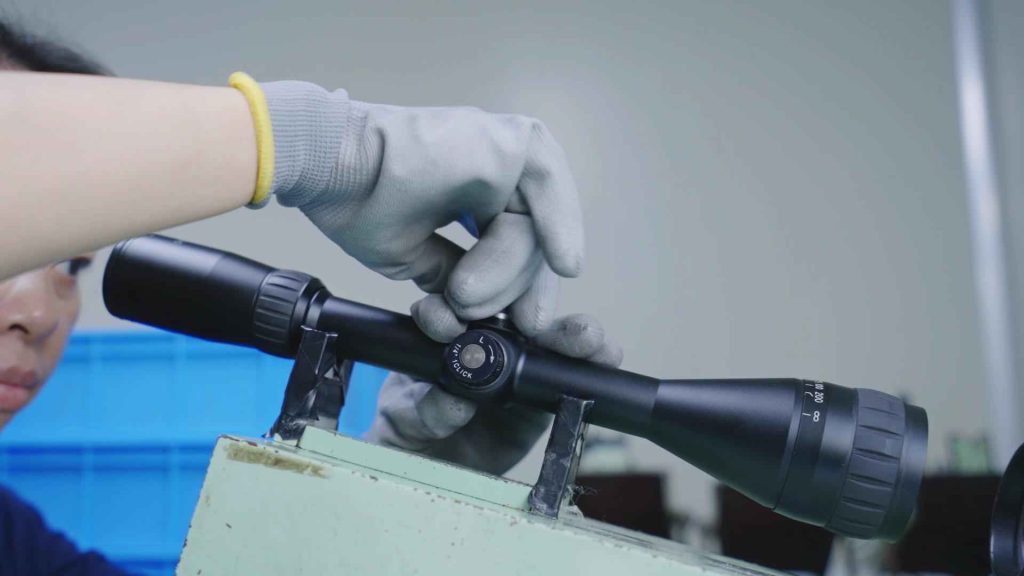
FORESEEN OPTICS has long served hunting and outdoor optics customers, so we have developed proven product platforms for multiple applications. They include riflescopes across magnification ranges, LPVOs, medium- and long-range scopes, PCP and airgun optics, red dots, rangefinders, binoculars, and other outdoor observation products.
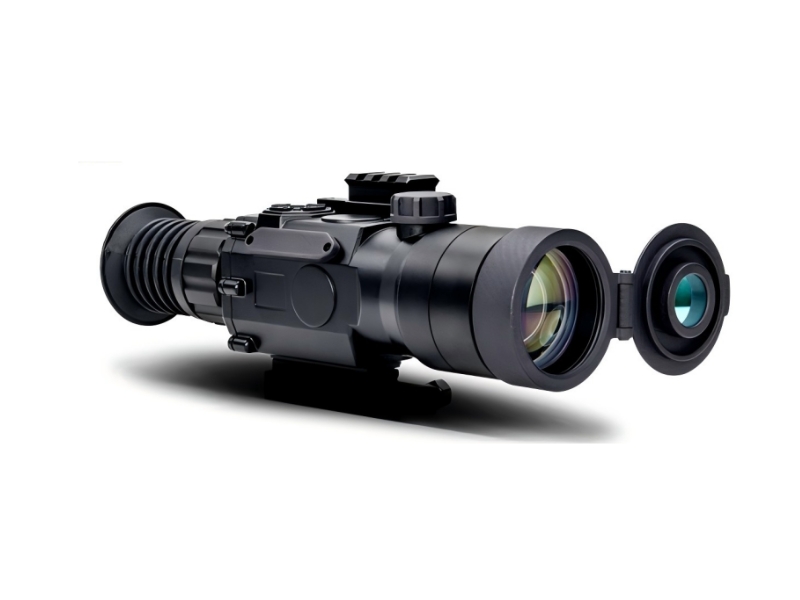
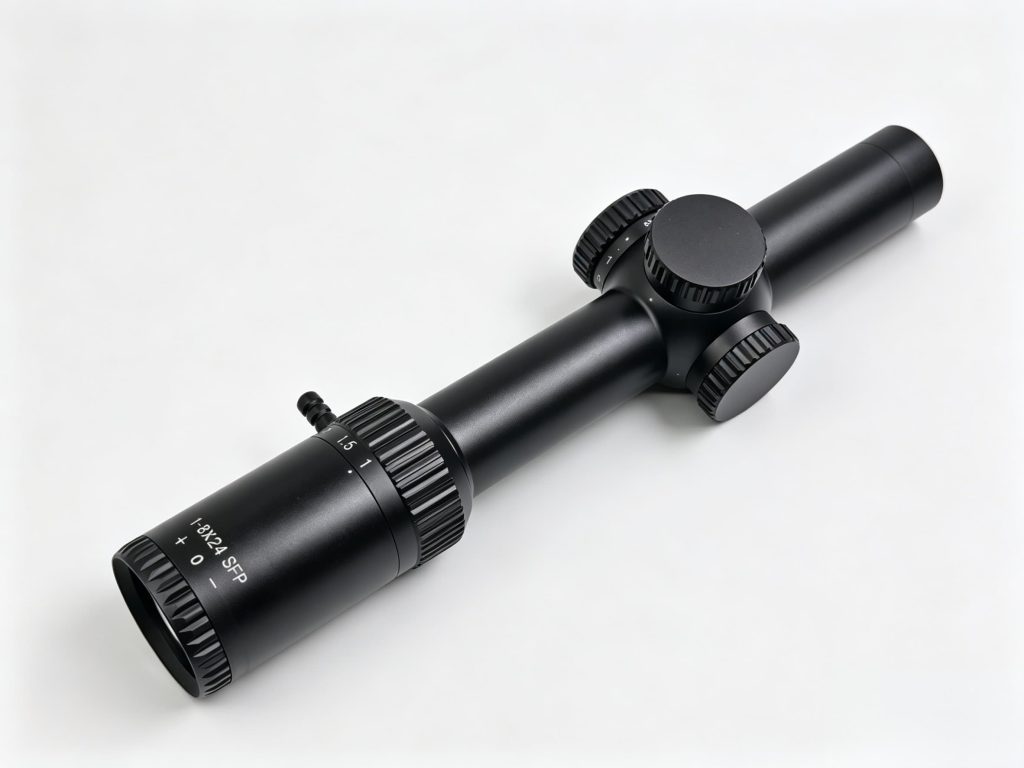
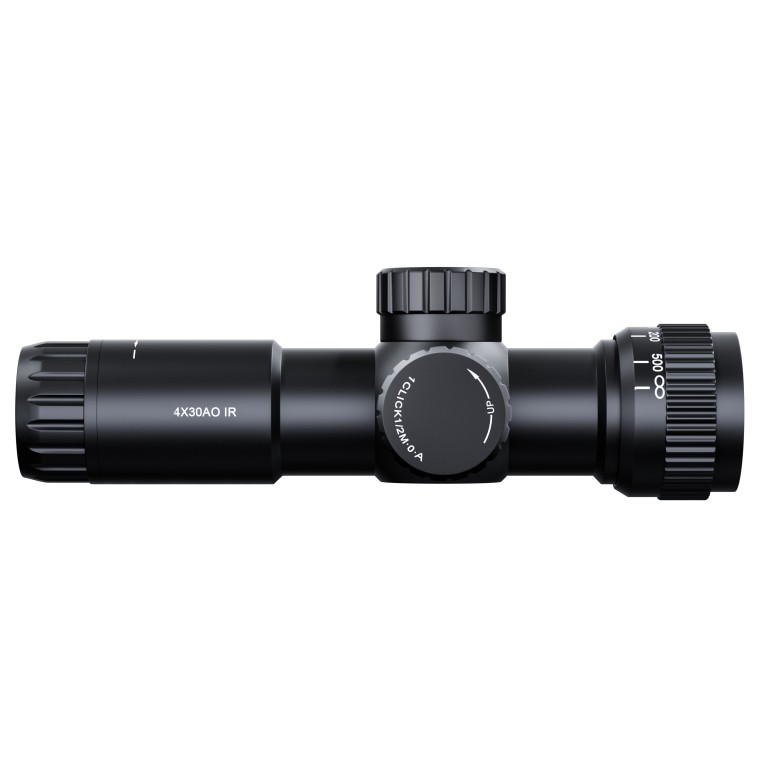
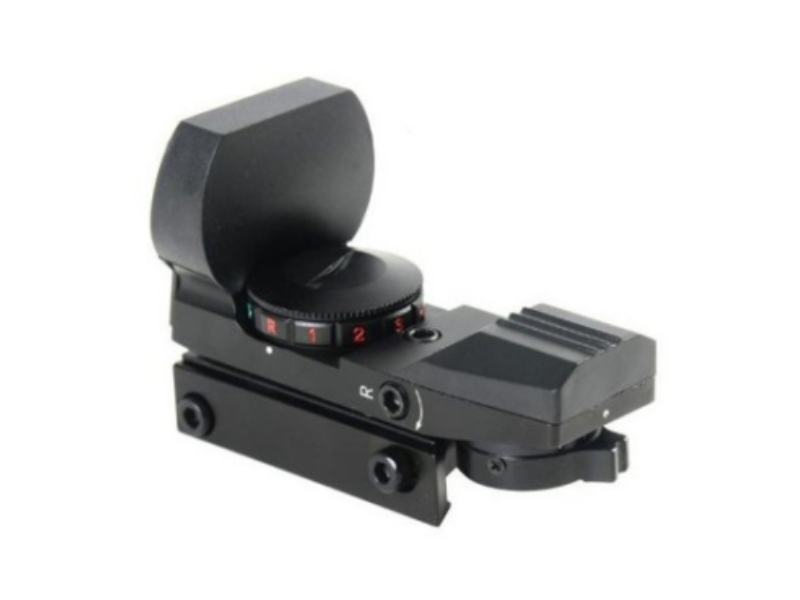
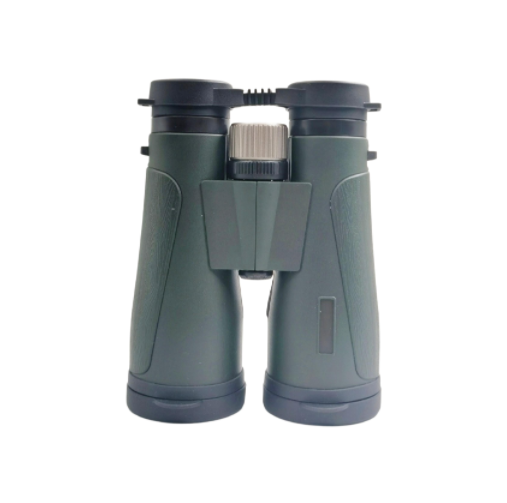

For most brands entering Saudi Arabia, this means:
The first step does not require reinventing a riflescope.
A more practical approach is to select from platforms whose structures, optics, and mass production have already been validated, then increase the degree of customization as the brand develops.
Customers can buy a proven model directly, or create a private-label line by changing the logo, packaging, manual, and accessories. They can then adjust the reticle, turrets, surface color, coatings, certain optical configurations, or accessories. Once sales and user feedback show that a direction merits investment, they can move into deeper structural or optical ODM development.
This creates a partnership path with different levels of risk:
Proven product selection → branding → specification differentiation → deeper ODM → exclusive product.
For a Saudi brand entering the market, the greatest value is not merely saving a tooling fee. It is shortening the time between product selection and the first sale.
It also reduces another risk created by logistics disruption:
When inventory cannot be replenished in time, production can restart more quickly.
Proven product platforms usually have more stable materials, suppliers, and production experience. For a brand that needs continuing replenishment, those advantages matter more than a completely exclusive appearance alone.
We can recommend this approach because our company-wide portfolio spans 10 product categories and 600 models. With that many established platforms, there is a better chance that an existing product can be adapted to a customer’s needs. The customer need not invest in entirely new tooling and an optical system for a market that is still unproven.
To be clear, the 600 models form a company-wide portfolio. That does not mean every customer can immediately use every model at every stage; actual availability depends on the specific model and order confirmation.
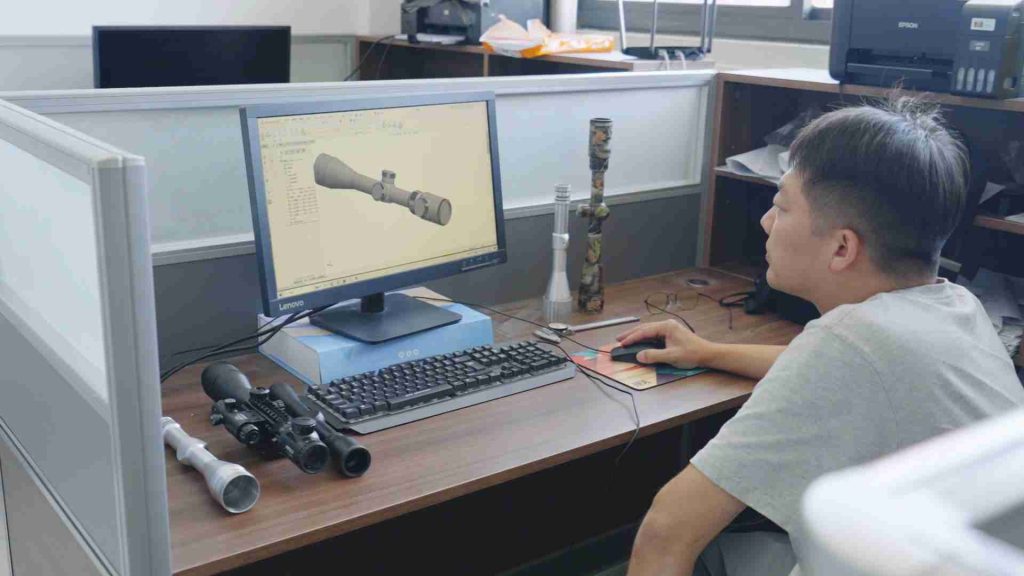
On these platforms, we can support seven types of customization—logo, label, packaging, color, size, graphics, and material substitution—as well as design services based on samples or drawings. New product development typically takes 60–90 days, depending on the category. Our R&D team has 10 members and uses CAD and UG for design. These capabilities were verified in a supplier assessment by TÜV Rheinland.
We should also state the assessment’s limits clearly. It covered the Chongqing factory. The riflescope factory in Nantong in which we later invested was outside its scope, and we do not describe it as certified under that assessment. Stating this boundary upfront is more useful than leaving the customer to discover it during a factory audit.
5. Saudi Arabia Needs a Product Mix of Its Own
Stable supply is only the first layer.
A Chinese manufacturer seeking a lasting partnership must also understand this:
The riflescope that sells best in a U.S. catalog is not necessarily the one Saudi customers need.
Western and southwestern Saudi Arabia have distinctive mountain terrain. The Sarawat Mountains extend north from the Yemeni border toward Taif. On their western side are steep slopes, narrow valleys, and marked elevation changes; the highest peak in western Saudi Arabia reaches about 3,015 meters.
Such conditions create equipment needs quite different from those of flat terrain or a fixed hunting stand:
The user has to carry the equipment up the mountain.
A riflescope for this setting cannot be judged solely by the largest objective lens or highest magnification.
In defining the product, we pay closer attention to weight, size, field of view at low magnification, speed of target acquisition, eye relief, mechanical reliability, and stability after prolonged carrying through rough terrain and high or low temperatures.
For example, a heavy, high-magnification riflescope with a 56 mm objective may have clear advantages for long-range viewing from a fixed position.
But when users must walk for extended periods, move quickly, and repeatedly shoulder a rifle to observe, a more compact scope with moderate magnification may better suit the actual use case.
This is why, when we work with local brands, FORESEEN OPTICS prefers to begin with three questions:
Who is your customer? Where will they use it? How will they carry it?
Only then do we discuss magnification and objective-lens size.
Specifications should follow the use case, rather than define the product from the outset.
And portable observation optics are an established area for us.
They are already our largest product group by shipment volume. According to the third-party assessment, monthly capacity is 80,000 binoculars, 10,000 spotting scopes, and 3,000 rangefinders. Lightweight design, wide fields of view, and stability after prolonged carrying are engineering questions we address every day, without having to build a new capability for a customer.
Saudi hunting activities are, of course, specifically regulated. The current 2026–2027 hunting season permits activity only within specified times, areas, species, and licensing rules, and sets requirements for permitted hunting tools. Brands should therefore check the latest local regulations when choosing products to sell and describing their intended uses.
We recommend applying the same discipline to product copy: do not promise that a product can identify legally huntable game in every region, and make clear that users are responsible for compliance. For a brand, this is safer than a broad claim such as “suitable for night hunting.”
6. A Reliable Chinese Supplier Should Prepare Everything Before Shipment
The more uncertain Red Sea conditions become, the more stable the upstream supply chain needs to be.
In our current Jeddah shipping plan, preparation before dispatch includes more than confirming a vessel schedule. It also covers palletizing, country-of-origin marks on outer cartons, and shipping documents. The current plan requires the cartons to be marked “Made in China.” We also advise customers to confirm their local customs clearance and pickup arrangements in advance. The port offers a three-day free-storage period from the date of deconsolidation; storage charges may accrue afterward.
Our work therefore does not end when the products are packed.
In actual projects, we prefer to connect the key dates into one schedule:
Product confirmation → packaging approval → production completion → vessel booking → arrival window → customer customs clearance and next replenishment order.
Once this schedule is in place, sea freight is one part of the process.
A change to one sailing need not disrupt the rhythm of the brand’s entire supply chain.
Upstream stability depends on whether the factory already has processes that can be checked. We welcome a line-by-line review: inspection of every finished product, four QC inspectors conducting in-process checks, on-site raw-material inspection records, batch traceability from finished products and packaging back to raw materials, product warning and recall procedures, complaint records and corrective-action closure, and 11 pieces of testing and calibration equipment. These are items that can be checked against the third-party assessment report.
We also want to state one limitation explicitly. In the third-party assessment, the answer to whether designed products undergo testing by an independent organization is: only some do. We will not turn that into a claim that all products have passed such testing.
We would rather agree on fixed acceptance criteria with the customer at the sample stage than provide an attractive checklist that does not specify what was tested. A practical approach for Saudi customers is to approve the Golden Sample and its inspection criteria with the first order, then review every later batch against the same standard.
7. For First-Time Saudi Buyers, Build the Supply Chain in Stages
If you are creating a new hunting or outdoor optics brand in Saudi Arabia, we generally do not recommend starting with more than a dozen entirely custom-developed products.
A more practical approach is to:
Define a few core use cases that represent the brand, then select a small number of SKUs from proven product platforms to test the market. We provide this service.
Use the brand logo, packaging, accessories, and product mix to establish a first product line. Contact us for quick customization.
After the first sales yield real customer feedback, adjust magnification, reticles, structure, features, and appearance gradually.
Then place the proven best-selling models on a regular replenishment schedule.
That gives you more than a product catalog. It creates a repeatable supply system:
Market validation → sales data → early replenishment → production in China → sea freight → Saudi inventory → further sales.
Once that cycle runs reliably, the risk of investing in deeper ODM work and exclusive development is much lower.
Our “start small, then expand” approach also reflects our customer base. According to the third-party assessment, our main customer types are brands, wholesalers, retailers, manufacturers, and private-use buyers. We therefore work with customers of very different sizes; a small initial order is not an exception for us.
We can also make one point clear: we do not operate a retail brand that competes with our customers, and we do not publicly display jointly developed projects. Only our independently developed standard products appear publicly. For a Saudi customer building its own brand, that may matter more than price: a product the customer helped define will not turn up on another channel’s shelf six months later.
8. A Stable Supply Chain for an Uncertain Red Sea Route
As of September 2026, Red Sea shipping shows signs of a partial recovery. Maersk and Hapag-Lloyd have routed some Asian services through the Suez Canal again and resumed Jeddah calls. Both carriers have made clear, however, that the whole network has not fully returned to normal and routes may change again if security conditions shift.
This may become the operating reality Saudi importers need to plan for over the coming period:
Transport may fluctuate, but a brand’s supply should remain steady.
The value FORESEEN OPTICS can offer Saudi partners extends beyond manufacturing a riflescope.
We want to take part in the full process:
Understanding local use cases, selecting proven products, OEM branding, ODM product development, production scheduling, replenishment planning, and China-side logistics coordination.
A hunting brand that understands the Saudi market needs a long-term manufacturing partner who can assess more than incoming purchase orders:
Which products suit local users, when to produce them, and when the next batch should leave China.
You are welcome to request the original supporting documents for the following information rather than rely solely on our account:
Company
- Established in 2007; combines manufacturing and trading; own factory in Beibei, Chongqing, China; 6,800 square meters of factory space; eight production lines; approximately 50 pieces of equipment; 68 full-time employees (according to the third-party supplier assessment).
- Products span 10 categories and 600 models; principal customer types include brands, wholesalers, retailers, manufacturers, and private-use buyers (same report).
- Capacity (same report): 80,000 binoculars per month; 10,000 spotting scopes per month; 15,000 astronomical telescopes per month; 3,000 night-vision devices per month; and 3,000 rangefinders per month.
- Export market mix (2022, same report): North America 41%, Western Europe 13%, East Asia 10%, Middle East 8%, and domestic China 11%; the remainder is distributed across South America, Southeast Asia, Eastern Europe, Africa, and other regions.
Qualifications
- TÜV Rheinland’s Alibaba Verified Supplier assessment, renewed over multiple years. The assessment covers the Chongqing factory. The riflescope factory in Nantong in which we invested is outside its scope; we state this explicitly.
- ISO 9001:2015 quality management system certification, with a scope stated as “design, production and sales of telescopes.” To be clear, the certificate does not currently cover riflescopes or red dot sights.
- RoHS 2.0 test report for optical riflescopes: 30 magnification specifications covered, with no hazardous substances detected in those specifications. This finding should not be extended to the entire product line.
- Five additional CE / CPC product-specific certificates covering children’s observation binoculars, astronomical telescopes, and binoculars.
Customization and Delivery
- Seven simple customization options verified by a third-party assessment: logo, label, packaging, color, size, graphics, and material substitution; plus design services based on samples or drawings.
- New product development: 60–90 days, depending on category. Average lead time: 15 days. Shortest sample lead time: four days.
- Business support languages: English, German, Spanish, and Japanese.
Shipping and Destination-Port Support (Jeddah Plan as an Example)
- Before shipment: palletizing, “Made in China” country-of-origin marks on outer cartons, and preparation of shipping documents.
- At destination: three days of free storage from deconsolidation, with storage charges afterward. The customer needs the ability to clear customs and collect cargo at the port.
- A complete breakdown of destination charges, including BAF / WRS / PSS / LSS, agency fees, and 15% VAT, is available from our freight inquiry records for costing reference.

Conclusion: Start with a Supply System That Can Absorb Disruption
If you are building a Saudi hunting optics product line, you do not have to start with a blank drawing.
Tell us your target customers, main use cases, expected retail price, and initial purchase volume. We can assemble a product proposal for the Saudi market from existing FORESEEN OPTICS platforms, then decide which products warrant further customization.
Before the Riyadh exhibition in October, we would also like to settle another question with you:
Which SKUs need enough inventory on hand for the show, and which batches must already be at sea before it opens?
Exhibition opportunities are measured in days, while supply chain planning is measured in months.
FORESEEN OPTICS has long focused on OEM/ODM manufacturing for shooting and hunting optics. Its current products include riflescopes, red dot sights, binoculars, and other optoelectronic products, developed and produced through several optics and electronics manufacturing clusters in China.
What we aim to offer is a phased path that goes beyond a product catalog:
Use-case definition → product selection → branding → sample approval → small-scale market entry → early replenishment → stable mass production → specification upgrades → exclusive ODM.
This is a step-by-step path for supply chain and product development.
Working with Saudi brands, we aim to build a supply line resilient to Red Sea disruption.