Accessories Are Not Freebies: They Help Define the Binocular Product
When planning a binocular product, many wholesalers focus on magnification, objective lens diameter, prisms, coatings, and waterproof ratings, while treating straps, carrying cases, smartphone adapters, and tripod adapters as free extras in the box. Yet consumers are willing to pay for a more complete solution that is easier to use. The real value of accessories is not the number of items in the box; it is how they solve practical problems: carrying and protecting the binoculars, keeping the view steady, capturing and sharing what users see, and maintaining the product over time.
For B2B buyers, accessory bundles offer another advantage. They can create new bundled SKUs, channel-specific versions, and clearer price tiers without redesigning the optical system or changing the main housing molds. On an established binocular platform, combining an accessory bill of materials (BOM) with packaging and retail presentation is therefore a relatively low-risk way to increase average order value and reduce head-to-head price competition.
Layer One: Start With the Accessories Customers Use Most Often
Carrying Systems: Neck Straps, Wide Straps, Harnesses, and Quick-Access Cases
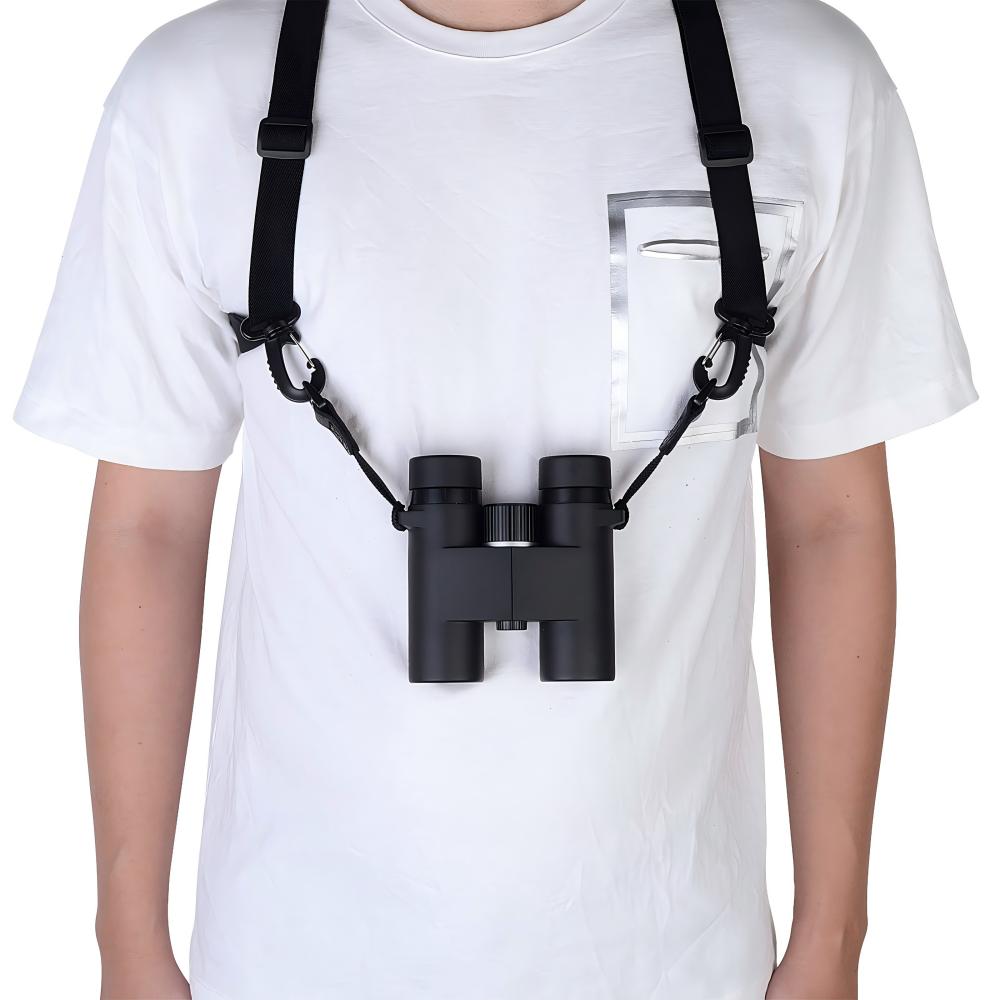
A basic neck strap works with almost any pair of binoculars. But for birdwatching, hiking, hunting, or extended outdoor viewing, carrying comfort becomes much more noticeable to customers. Celestron’s guide to binocular harnesses explains that a harness distributes weight across the shoulders and torso, reducing strain on the neck. For midrange and premium 8×42, 10×42, and larger models, a wide strap, harness, or protective harness case is often a more tangible upgrade than a small free accessory that rarely gets used.
Protection and Care: Soft Cases, EVA Hard Cases, Lens Caps, and Cleaning Kits
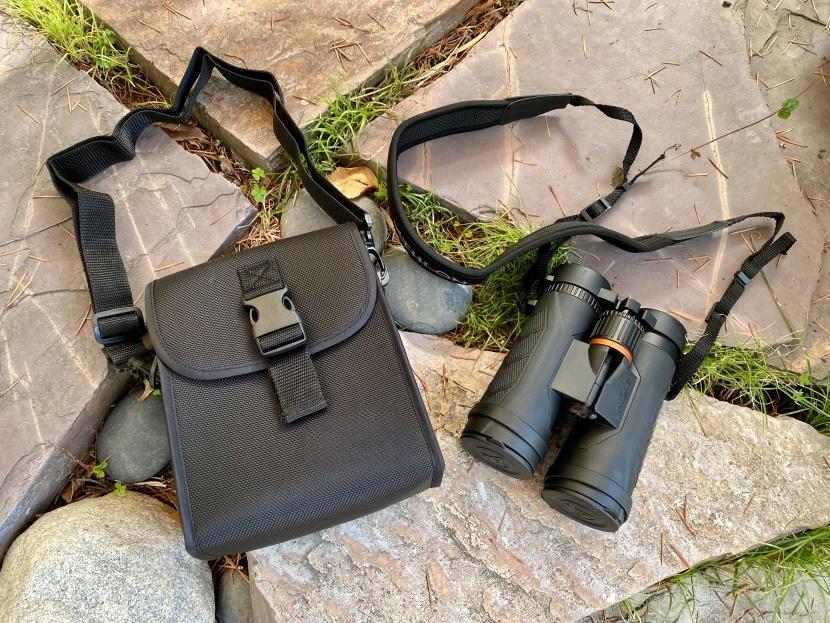
Protection accessories can distinguish price tiers. Entry-level products may include a lightweight soft case, lens caps, and a cleaning cloth. Midrange and premium models can add a more structured EVA hard case, a durable strap, a lens-cleaning kit, and more secure lens-cap attachments. Customers may not pay simply for more accessories, but they may pay to carry and store a more expensive pair of binoculars with greater peace of mind.
Wholesalers also need to calculate packaging volume and shipping costs. An oversized hard case increases master-carton dimensions and sea or air freight volume. The cost of an accessory upgrade must therefore be assessed alongside carton efficiency, retail shelf space, and e-commerce fulfillment costs, not just its unit price.
Layer Two: Give Customers a Clear Reason to Upgrade With Functional Accessories
Smartphone Adapters: Turn Viewing Into Capturing and Sharing
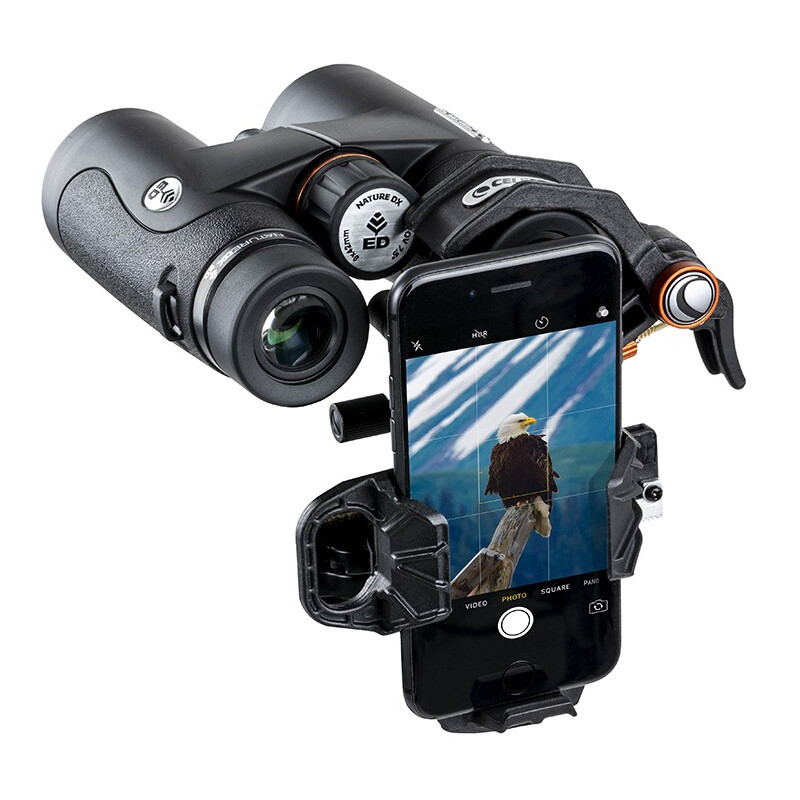
The value of a smartphone adapter is easy to understand: it extends binoculars beyond viewing to capturing and sharing images. For birdwatching, travel, nature education, and content-creation channels, it creates a new use case more readily than another specification alone. SWAROVSKI OPTIK’s VPA 2 smartphone adapter is a good example. A clamp connects a phone to binoculars or a spotting scope so users can photograph and save what they see.
When selecting an adapter, B2B buyers should check its clamping range, eyepiece diameter, eyecup design, phone camera position, and stability once fitted. A universal smartphone adapter can be sold as a separate add-on SKU. If a binocular model targets birdwatchers or travelers who share content, a ‘binoculars + smartphone adapter + carrying case’ bundle may be more suitable.
Tripod Adapters: Make High-Magnification and Extended Viewing Easier
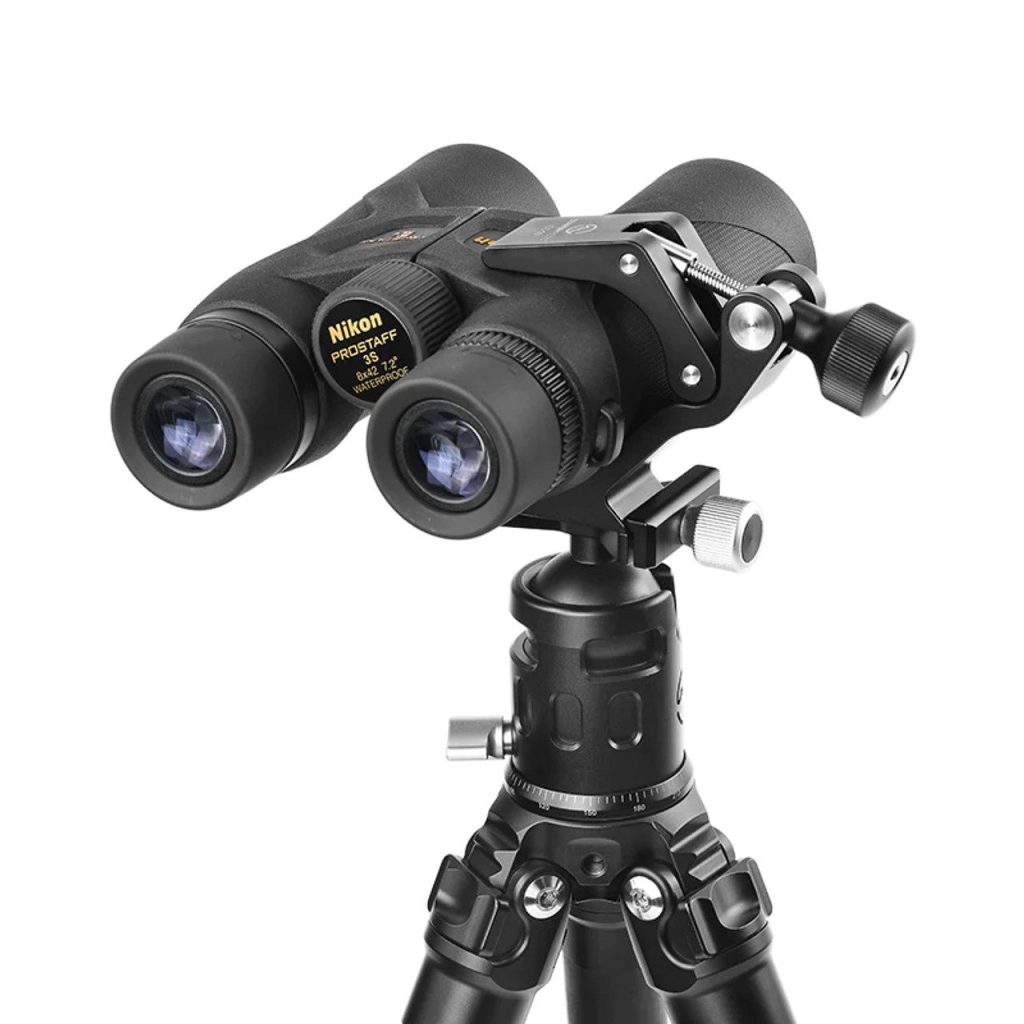
A tripod mount or adapter is most valuable with high magnification, large objectives, and prolonged stationary viewing. Models at 10× or 12× and above, or those used for astronomy, long-range nature viewing, or coastal observation, can deliver a noticeably better experience with stable support. Nikon’s binocular tripod adapter uses a standard 1/4-20 connection, illustrating that compatibility with common tripod systems is itself part of an accessory’s value.
Before adding a tripod adapter to a standard bundle, suppliers should confirm clearance at the central hinge, thread specification, clamping width, center of gravity, and whether the fitted adapter interferes with focusing. An accessory that appears universal may otherwise cause problems in actual use and generate after-sales claims.
Layer Three: Tailor Bundles to Sales Channels Instead of Using One Kit for Every Model
The same binoculars can be paired with different accessories to create distinct SKUs for general retail, e-commerce, birdwatching, hunting, travel, or gifting. For wholesalers, the advantage is shared inventory of the base binoculars, while most differences sit in the accessories, packaging, and barcodes. This broadens price coverage without the risk of developing a new base model.
| Bundle tier | Typical accessories | Best-fit channels | How it raises order value | Inventory / MOQ impact |
| Basic retail kit | Neck strap, soft case, lens caps, cleaning cloth | General retail, entry-level e-commerce | Ready to use out of the box, with basic protection | Lowest; suitable as a standard configuration |
| Outdoor comfort kit | Wide strap / harness, protective case, rain cover, cleaning kit | Hunting, hiking, outdoor stores | More comfortable carrying and better protection during extended use | Accessories can be shared across models and bought in volume |
| Capture and share kit | Smartphone adapter, tripod adapter, carrying case | Birdwatching, travel, nature education, content-led e-commerce | Adds photography, sharing, and stable-viewing use cases | Requires close management of compatibility and separate packaging MOQs |
| Premium gift kit | EVA hard case, harness, cleaning kit, branded gift box | Premium retail, gifting, flagship SKUs | A more complete presentation, stronger branding, and a better unboxing experience | Higher packaging cost and volume; best as a separate SKU |
Layer Four: Packaging, SKUs, and Compatibility Determine Whether Bundles Make Money
An accessory bundle designed to raise average order value must both sell well and be delivered reliably. In physical retail, the front or side of the package should quickly communicate the accessories’ value. For e-commerce, the binocular bundle should have its own SKU, barcode, and clear packing list, while individual accessory SKUs remain available for later add-on and repeat purchases.
Compatibility needs to be managed as carefully as the binocular specifications. The smartphone adapter’s fit range, tripod interface, strap attachment points, hard-case interior dimensions, lens-cap diameter, and packaging inserts should be recorded in the BOM or specification sheet and confirmed against a golden sample. When accessories are shared across several models, a compatibility list is also needed to prevent mix-ups in warehouse picking and after-sales service.
How to Keep Accessory Stacking From Eroding Profit
- Give every accessory a clear use case. One frequently used core accessory usually supports a higher retail price better than three or four rarely used freebies.
- Favor straps, cleaning kits, smartphone adapters, and selected tripod adapters that work across multiple binocular models to reduce accessory inventory complexity.
- Include low-cost essentials as standard, and offer high-perceived-value accessories in upgrade bundles or as separate add-on SKUs. This gives distributors a useful price ladder.
- At the quotation stage, calculate separate minimum order quantities (MOQs) for the base binoculars, accessories, packaging, and custom materials. This avoids leftover dedicated packaging or accessories after the binoculars sell out.
- Before mass production, approve golden samples of the binoculars and accessories, the packing method, and the compatibility list. Include drop, transport, and assembly checks in the inspection criteria.
How FORESEEN OPTICS Supports Binocular Accessory Bundle Planning
FORESEEN OPTICS can combine its existing binocular platforms with a range of accessory systems. For wholesalers who have already selected a base model, we can choose straps, harnesses, carrying cases, smartphone adapters, tripods, and other accessories according to the target channel, retail price, package volume, and MOQ. We can also confirm the logo, packaging, and instruction manual together. This makes it possible to create basic, outdoor, sharing, or premium gift-box SKUs while making as few changes as possible to the base binocular design.
Conclusion
Increasing average order value with accessories does not mean putting more items in the box. It means building a more complete solution around how customers actually use binoculars. Basic accessories make carrying and protection easier; functional accessories add photography and stable-viewing use cases; and channel-specific bundles give the same base platform more price points and reasons to buy.
For wholesalers and brand customers, the safer approach is usually to establish a core model on a proven binocular platform, then extend the SKU range with accessories that can be shared across models and purchased independently. An accessory has a real chance of increasing the final customer’s average order value only when it clearly improves the experience, saves a separate purchase, or strengthens the brand presentation. Otherwise, it simply adds cost.