The Three Coating Types Do Not Solve the Same Problem
In binocular specification sheets, “fully multi-coated,” “phase-correction coating,” and “dielectric high-reflective coating” are often listed in the same section, which can lead buyers to assume that they are simply different grades of the same treatment. In reality, they are applied in different locations and solve different optical problems. Standard anti-reflection coatings primarily reduce reflections from lens surfaces; phase-correction coatings compensate for phase shifts generated by roof prisms; and dielectric coatings increase reflectivity on specific prism surfaces.
This means that the end user’s impression of a “brighter, sharper, and more natural” image usually results from the combined effect of multiple coatings and the optical design, rather than from any single marketing term.

Phase-Correction Coatings: Primarily Improve Detail, Contrast, and Edge Definition
Why Do Roof Prisms Require Phase Correction?
After light reflects from the two roof surfaces of a roof prism, a phase shift occurs, reducing fine-texture resolution and edge contrast. A phase-correction coating compensates for this phase difference and helps restore resolution and contrast. ZEISS explains that its P phase-correction coating prevents loss of fine-detail resolution caused by wave-optical effects, while Nikon also directly associates phase correction with higher resolution and contrast.
Users most readily notice the difference in feather texture, fine branches, animal outlines, and distant text. Entry-level roof-prism binoculars without phase correction may still appear bright, but the image can look slightly soft and less well defined. Porro prisms do not produce the same roof-prism phase issue and therefore normally do not require phase-correction coatings.
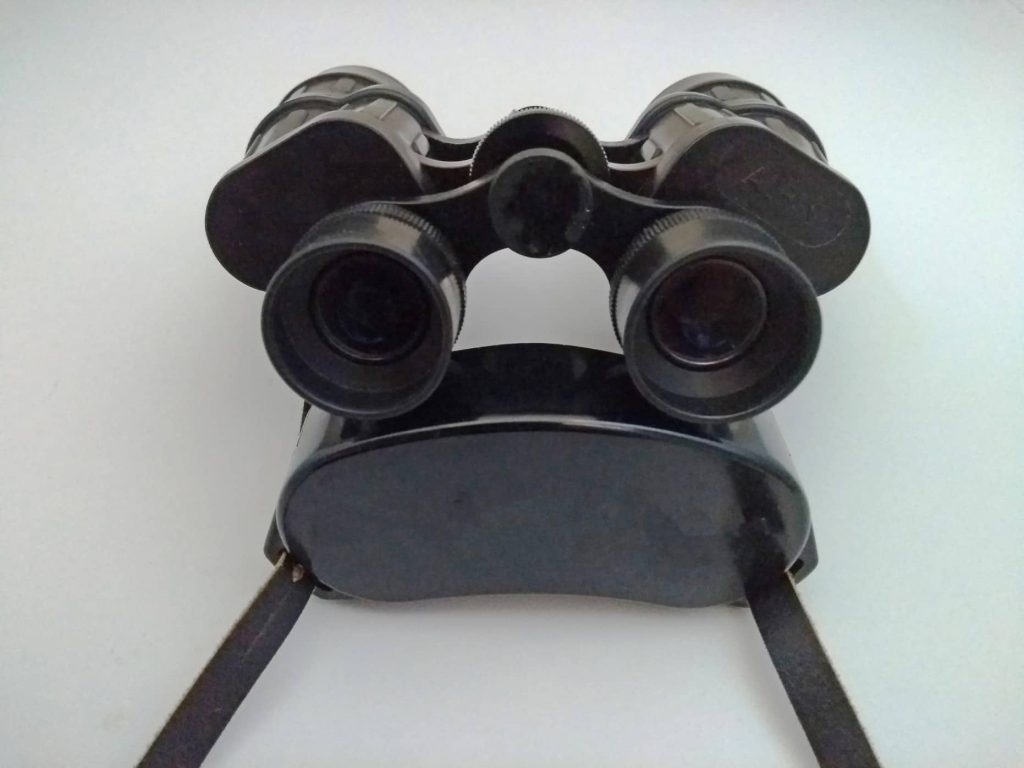
Phase-Correction and Dielectric Coatings Are Mainly Used in High-Performance Roof-Prism Systems
Dielectric Coatings: Primarily Improve Brightness and Color Fidelity
Some Schmidt-Pechan roof-prism designs contain reflective surfaces that cannot rely entirely on total internal reflection and therefore require a metallic reflective coating or a dielectric high-reflective coating. Nikon states that its dielectric high-reflective multilayer prism coating uses optical interference to achieve reflectivity of more than 99% across the visible spectrum and helps preserve natural color.
End users typically notice improved light utilization in shadows, woodland, dawn, dusk, and overcast conditions, together with more natural rendering of whites, greens, browns, and other mixed colors. A dielectric coating does not automatically correct chromatic aberration, edge blur, or collimation problems; rather, it reduces reflection loss within an existing optical system. Some Abbe-Koenig prisms rely on total internal reflection and may not require the same type of reflective coating, although phase correction may still be applied to the roof surfaces.
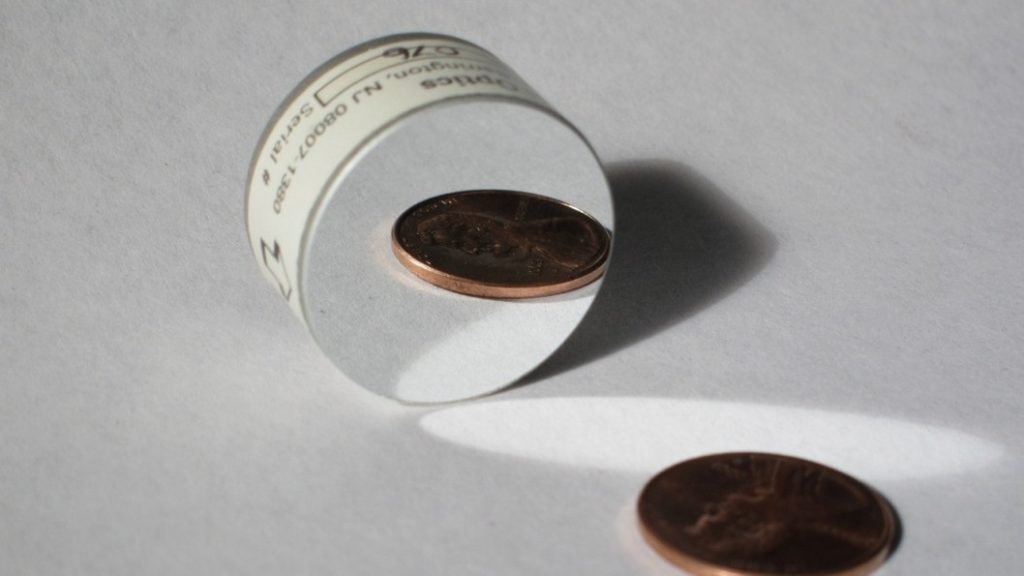
Standard Coatings: Determine Basic Light Transmission, Glare Control, and Overall Color Rendering
The term “standard coating” in purchasing documents is not a strictly standardized grade. It may refer to a single-layer anti-reflection coating, partial multilayer coating, or simply a broad FMC claim. Anti-reflection coatings are generally applied to air-to-glass surfaces on lenses and prisms to reduce surface reflection, improve effective transmission, and decrease ghosting and backlight glare.
For the user, these coatings affect whether the image looks washed out, whether stray light appears against backlighting, whether colors show a cast, and how much brightness remains after cumulative losses through multiple optical elements. Wholesale buyers should not judge coating grade only by green, blue, or purple reflections. Visible coating color represents only part of the reflected spectrum and is not equivalent to actual transmission.
How Different Coating Combinations Affect the End-User Experience
| Coating Type | Primary Function | What Users Notice Most | Key Procurement Question |
| Standard Anti-Reflection / Multilayer Coatings | Reduce reflections from lens and prism surfaces | Overall brightness, glare, ghosting, and color | Which surfaces are coated? Single-layer or fully multi-coated? |
| Phase-Correction Coating | Compensate for phase shifts in roof prisms | Detail, outlines, contrast, and perceived sharpness | Is it applied to the roof surfaces? Which prism design is used? |
| Metallic Reflective Coating | Increase reflectivity on surfaces without total internal reflection | Brightness and overall color rendering | Aluminum or silver? Is there a protective overcoat? |
| Dielectric High-Reflective Coating | Use multilayer interference to increase reflectivity | Low-light brightness and natural color | What is the visible-spectrum reflectivity, and how consistent is it between batches? |
B2B Buyers Do Not Need to Load Every Product with Premium Coating Systems
For promotional gifts, children’s products, or daytime leisure markets, a mature Porro design with reliable fully multi-coated anti-reflection surfaces may offer better value than a low-cost roof-prism system. Once a product line moves into mainstream roof-prism binoculars, phase correction often improves fine-detail performance more effectively than simply adding a “BAK4” label. For birding, hunting, dawn-and-dusk observation, or mid-to-high-end outdoor channels, buyers can then consider a complete combination of phase correction, dielectric reflection, and broadband multilayer coatings.
The coating configuration should match the retail price range, channel margin, and after-sales commitment. More coating layers are not automatically better; each coating should solve a clearly defined problem, and the supplier must be able to reproduce its performance consistently in mass production.
How Can Wholesalers Verify Whether a Coating Upgrade Is Worth the Premium?
• Require the supplier to specify coating locations in the BOM or specification confirmation sheet rather than writing only “green coating” or “premium coating.”
• Confirm lens anti-reflection coatings, roof-prism phase correction, and prism reflective coatings separately so that three different concepts are not combined into one selling point.
• Conduct A/B sample testing using the same magnification and objective size, focusing on backlighting, tree shade, feather detail, white objects, and brightness at dawn and dusk.
• For mid-to-high-end projects, request transmission or reflectivity curves, coating-supply records, and a Golden Sample, and include overall color variation and visible coating damage in AQL sampling.
• Evaluate the coating upgrade together with MOQ, yield rate, rework risk, and target retail price rather than comparing only individual samples.
FORESEEN OPTICS Recommendation: Define the Coating System by Use Case, Not by Stacking Technical Terms
FORESEEN OPTICS can match brands with standard multilayer coatings, phase correction, silver coatings, or dielectric high-reflective coatings for birding, hunting, travel, promotional, and professional outdoor channels. These options can be combined with the prism type, ED glass, waterproof construction, and target MOQ to form a complete OEM/ODM solution.
Conclusion
The three coating types are not interchangeable. Anti-reflection coatings reduce surface losses, phase-correction coatings restore detail and contrast in roof-prism systems, and dielectric coatings improve brightness and color stability on specific reflective surfaces. In wholesale procurement, the goal is not to stack terminology, but to confirm coating locations, actual functions, and mass-production consistency, and to match the configuration to the target channel and retail price.