The First Product Should Not Cover Every User, but Build a Replicable Sales Starting Point
For a new brand entering the binoculars market, the most important factor of the first product is not having the strongest specifications, but whether it can be quickly understood by customers, accepted by channels, keep initial order inventory risks under control, and leave room for future replenishment and product line expansion.
Therefore, the first product should consider target users, retail price, channel margin, application scenarios, MOQ, packaging and after-sales service instead of simply adding magnification, ED glass or exterior options. A mature starting solution usually begins by selecting from a small number of market-proven platforms and then deciding which upgrades are worth the additional cost for the first SKU.
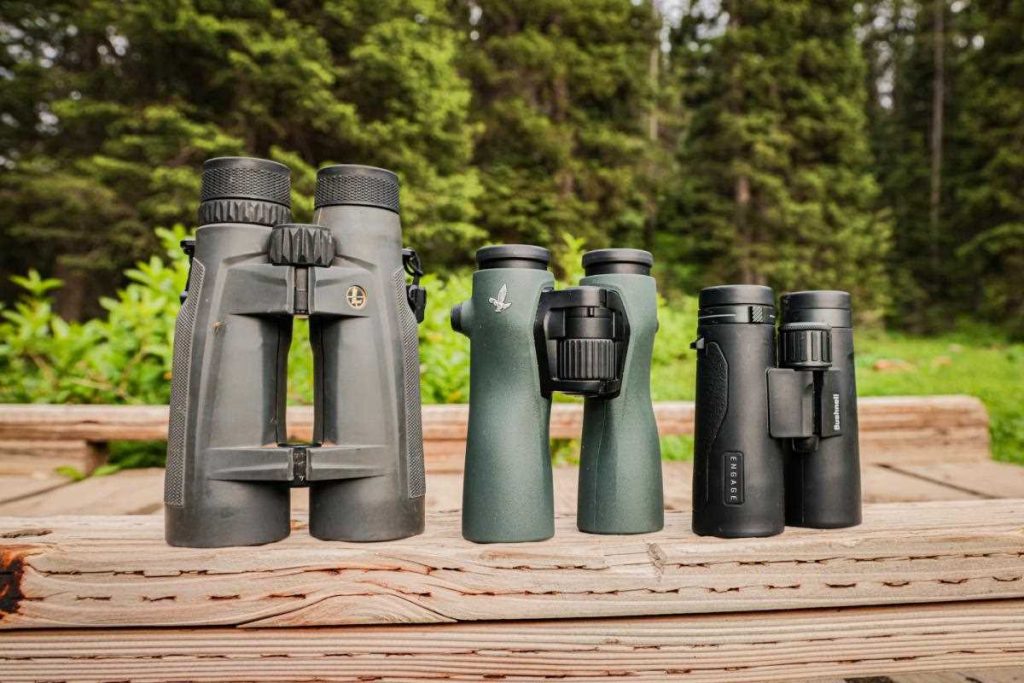
Layer 1: Define Target Users, Sales Channels and Price Range First
Answer “Who Will Buy It?” Before Answering “What Magnification Should It Have?”
For birdwatching, mass outdoor e-commerce, hunting, travel gifts or professional nature observation, the priorities of the first binoculars configuration are different. Birdwatchers focus on field of view, close focus, focusing speed and holding comfort; hunting and outdoor users care more about low-light performance, waterproofing, fog resistance and durability; travel channels pay more attention to weight, size and portability.
The target retail price and channel structure should also be defined first. For new brands, the first product usually needs to build trust and verify sales at the same time, so procurement costs must leave room for advertising, platform fees, distributor discounts, returns and promotions.
Why 8×42 Roof Binoculars Are Often Used as a General Starting Point
If a brand does not focus on a very narrow vertical market, 8×42 roof binoculars are often worth evaluating first: 8x magnification is relatively easy to hold steadily, 42 mm objectives balance brightness and size, and roof prism designs allow a more modern and compact appearance. Cornell Lab also describes this specification as one of the most popular and versatile categories.
However, “general-purpose” does not mean every brand must choose 8×42. Brands focused on long-distance open-area observation can evaluate 10×42; lightweight travel brands can consider 8×32; channels emphasizing value and larger apertures may prefer Porro designs. The key is matching the first product with the first real customers.

Layer 2: Choose a Mature Platform Before Developing from Zero
One common mistake for new brands is investing in new molds, special structures or unique optical systems before sales are validated. This increases development costs, prototype cycles, MOQ requirements, lead times and quality verification difficulty.
A safer approach is selecting a basic model from stable Roof, Porro or Compact platforms and then adjusting coatings, rubber armor colors, logos, eyecups, accessories and packaging according to brand positioning.

Layer 3: Invest the Budget in Features Consumers Can Truly Perceive
Clarity, Field of View, Focusing and Eyecup Experience Matter More Than a Specification Sheet Full of Premium Terms
The first product needs to build trust within minutes after unboxing. Users directly perceive center sharpness, edge performance, backlight control, chromatic aberration, field of view, focusing resistance, eyecup positioning, weight and balance.
If budget allows, BaK4 prisms, fully multi-coated optics, phase correction and ED low-dispersion glass can improve product level, but upgrades should first be confirmed through blind sample testing.
Waterproofing, Fog Resistance and Stable Structure Are Hidden Selling Points
For new brands, sealing, nitrogen purging, fog resistance, eyecup durability, focusing stability and optical axis consistency are especially important. These features directly influence reviews, returns and repeat purchases.

Layer 4: Include SKU, MOQ, Packaging and After-Sales Service in the First Product Plan
The first product should minimize dedicated materials. Logo, manuals, boxes, straps, lens caps and carrying cases can build brand identity, but each item should not create an independent high MOQ.
After-sales service should also be considered during product planning, including spare parts availability and handling rules for minor focusing or appearance issues.
Four Common First Binocular Solutions and Suitable Brand Directions
| Candidate Solution | Suitable Brand Direction | First Product Advantages | Limitations |
| 8×42 Roof | Outdoor, birdwatching, general e-commerce | Wide usage, stable handheld performance, balanced brightness and size | Competitive market requires differentiation |
| 10×42 Roof | Hunting, open areas, long-distance observation | Larger target details, clear positioning | Narrower field of view and more shake |
| 8×32 Roof | Travel, urban outdoor, lightweight brands | Smaller and lighter, suitable for portability | Lower low-light performance than 42 mm |
| 10×50 Porro | High value, large aperture observation | Brightness and traditional optical experience | Larger size and less portability |
Five Common Mistakes When Selecting the First Product
• Treating the highest specifications as the best-selling product without considering user perception.
• Developing multiple SKUs such as 8×42, 10×42 and 8×32 immediately, spreading samples, packaging and inventory resources.
• Opening new molds for appearance differentiation before validating sales.
• Comparing only purchasing price without considering channel fees, discounts, returns and after-sales costs.
• Frequently changing configurations after sample approval without updating BOM, specifications and Golden Sample.
How FORESEEN OPTICS Supports New Brands in Planning Their First Binocular Product
FORESEEN OPTICS can select mature Roof, Porro and Compact platforms according to target market, channel, MOQ and price range, then confirm magnification/objective size, optical configuration, waterproof level, colors, logo, accessories, packaging and inspection standards.
This allows new brands to validate the market with lower development risk before expanding to additional SKUs, ED versions or specialized structures.
For the first product, we recommend defining target users, target retail price, channel and first order quantity first, then selecting the suitable platform instead of letting specifications determine the brand direction.
Conclusion
A new brand’s first binocular product should not try to satisfy every market. It should become a starting point that consumers understand quickly, channels accept easily and the supply chain can reproduce reliably.
Building sales and reviews with one clearly positioned, stable-quality and inventory-controllable product, then expanding based on real replenishment data, is usually more suitable than creating a large product line from the beginning.