For brands that already sell hunting gear, outdoor products, firearm accessories, or have local hunting channels in Japan, entering hunting optics may look like adding a few new SKUs. In reality, it is a product-development effort that requires a fresh understanding of use cases, firearm platforms, optical performance, mechanical reliability, and after-sales responsibility.
This is especially true in Japan.
Compared with North America and Europe, Japan has distinct local characteristics in firearm ownership, hunting environments, shooting distances, and nighttime observation needs. We therefore do not recommend simply copying LPVOs, tactical riflescopes, or thermal weapon sights popular in the U.S. market. Instead, Japanese brands should build a hunting-optics line around how Japanese hunters actually use their equipment.
Based on local industry feedback in Japan and FORESEEN OPTICS‘ long experience developing hunting optics for OEM/ODM customers, we recommend a step-by-step approach: first validate the market with proven product platforms, then upgrade configurations based on real user feedback, and ultimately create proprietary products for the brand.
One additional point of background is worth noting. FORESEEN OPTICS’ first-generation founder entered the optics business in 1992, initially producing binoculars for Japanese brands on an OEM basis. The company itself was established in 2007 and currently supports business in Japanese, English, German, and Spanish. We are not starting from zero in understanding Japanese working practices and quality expectations.
Define Hunting Optics for Japan from the Hunting Ground, Not the Specification Sheet
Many brands entering the optics category for the first time begin by asking:
- What magnification range should we offer?
- Should the main tube be 30 mm or 34 mm?
- FFP or SFP?
- Do we need a MIL reticle?
- Do we need a complex BDC reticle?
These specifications matter, but for Japan three questions should come first:
In what environment will hunters use the product? What firearms will they use? At what distances will they mainly observe and shoot?
Feedback from the Japanese industry shows that, because of the country’s firearm-ownership system and hunting practices, shotguns remain a highly important hunting platform, including for hunting deer and wild boar with slugs. Many Japanese hunting grounds are also in mountainous, forested, and densely vegetated areas. Actual shooting distances therefore tend to place less emphasis on long range than in some open North American terrain, giving low magnification, fast target acquisition, and a wide field of view considerable practical value.
Looking at the realities of hunting in Japan makes it clearer why the specification sheet cannot be the starting point:
- Platform structure: Japan applies a one-firearm, one-permit system to hunting guns, and possession is restricted by purpose. Except for professional use or wildlife-damage control and similar purposes, hunters generally need more than ten years of shotgun experience before using a rifle for hunting. The shotgun is therefore the practical entry platform for hunting in Japan and the platform with the largest installed base; the rifle is a second platform reached by upgrading from a shotgun.
- Activity structure: The number of licensed hunters in Japan has fallen from more than 500,000 in the 1970s to around 200,000, and nearly 60% are over age 60. In actual days carrying a firearm, annual outings for nuisance-wildlife control, about 140 days, far exceed ordinary hunting, about 44 days. In other words, Japanese hunters spend most of their armed field time performing control work in mountains and along farmland, not taking long-range shots in open terrain.
- Game structure: Deer and wild boar are the principal targets and the main sources of agricultural damage. In fiscal 2021 alone, approximately 529,000 wild boar and 725,000 deer were captured nationwide in Japan.
- Ammunition and regulations: Hokkaido and some other regions expressly restrict lead projectiles. Changes in ammunition selection directly affect ballistic performance and usable shooting distance, while nighttime hunting with firearms is itself strictly restricted.
Taken together, these four points lead to one conclusion: the first requirement for Japanese hunting optics is not maximum range. It is whether the hunter can immediately see and hold the target at short to medium range, in dense vegetation, poor light, and time-critical conditions.
This means the first-stage product line for Japanese hunting optics does not necessarily need to begin with high-magnification models such as 5-25×56 or 6-24×50.
For a brand entering this field, we recommend focusing first on:
- Low-power variable optics such as 1-6×24 and 1-8×24, lightweight red dots, and traditional 2-7× or 3-9× hunting scopes.
The goal should not be complexity, but rather:
Fast viewing, stable mounting, recoil resistance, and genuine usability in Japan’s mountain and forest environments.
This judgment is also why FORESEEN shifted its focus from outdoor optics to hunting optics in 2018. Optical design is based in Chongqing, while precision machining and assembly are based in Nantong, allowing requests such as changing a reticle or adopting a different mounting system to be completed within one chain instead of being passed among three suppliers. Know more about FORESEEN.
The First Core Product: A Hunting LPVO for Japan, Not a Tactical LPVO
We believe a 1-6×24 is an excellent specification for a Japanese brand’s first core optical product.
The reason is that it covers two important modes of use:
- At low magnification, it supports fast aiming in woodland, driven hunts, and sudden close-range target encounters;
- At higher magnification, it supports identification and shooting of deer and wild boar along forest edges, across valleys, and at medium ranges.
One point is especially important:
A 1-6×24 suited to Japanese hunters should not simply be an LPVO from the U.S. AR market with a different logo.
If the product is mainly intended for hunting, we recommend instead:
- A 30 mm main tube;
- An SFP design;
- A simple Duplex, German No. 4, or illuminated center-dot reticle;
- A generous eye box;
- Adequate eye relief;
- Capped turrets or another simple, reliable adjustment-turret design;
- Controlled overall weight;
- Higher light transmission and better contrast in overcast and under-canopy conditions;
- Stronger waterproofing, fog resistance, and recoil reliability.
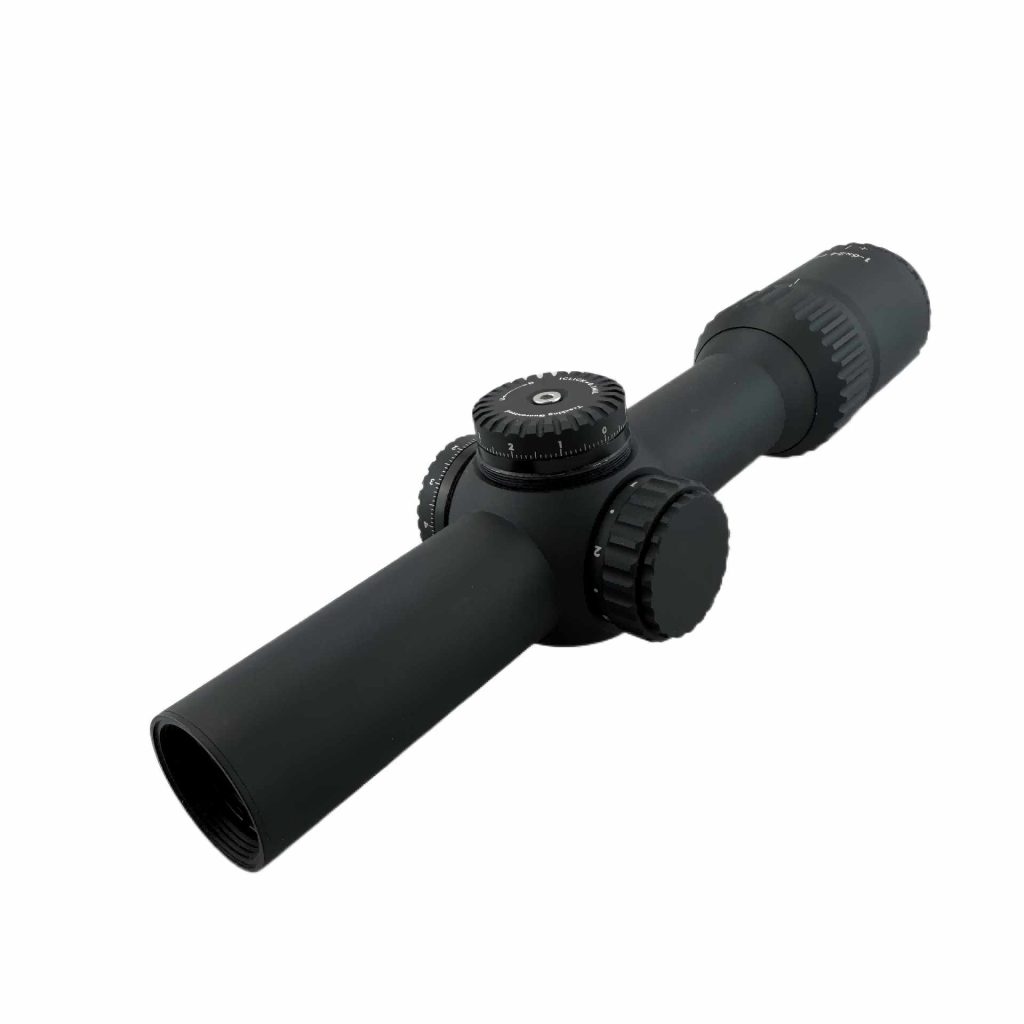
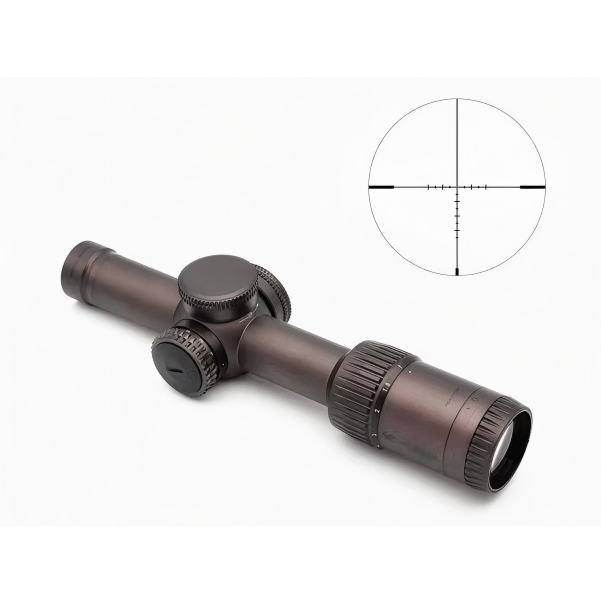
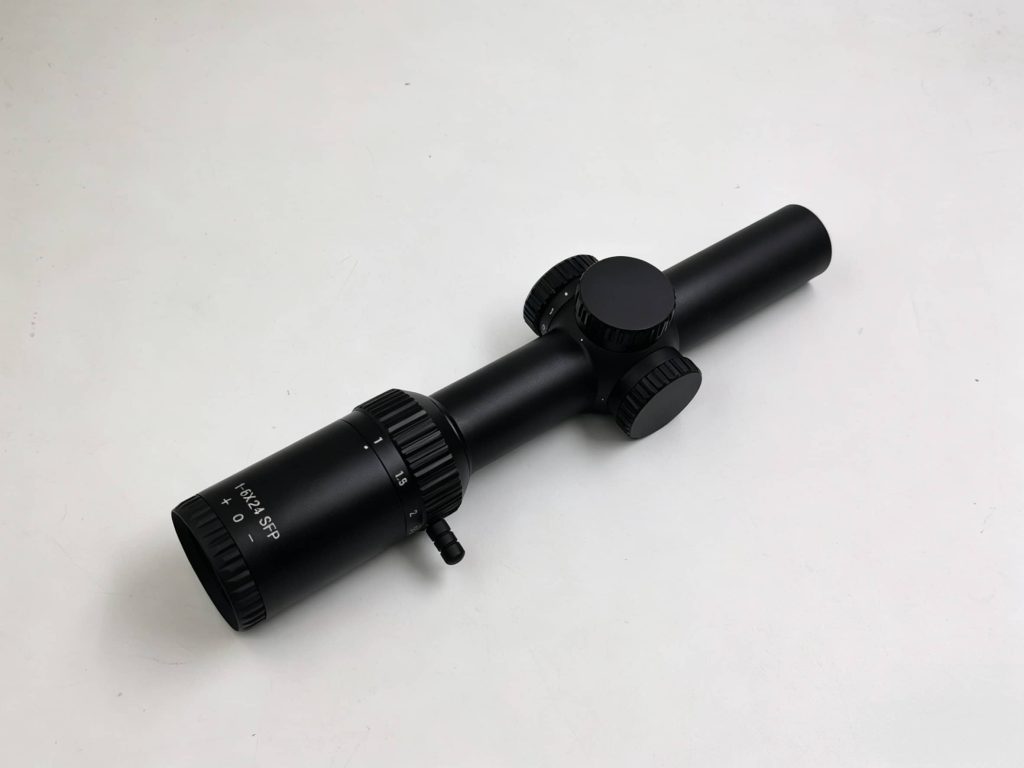
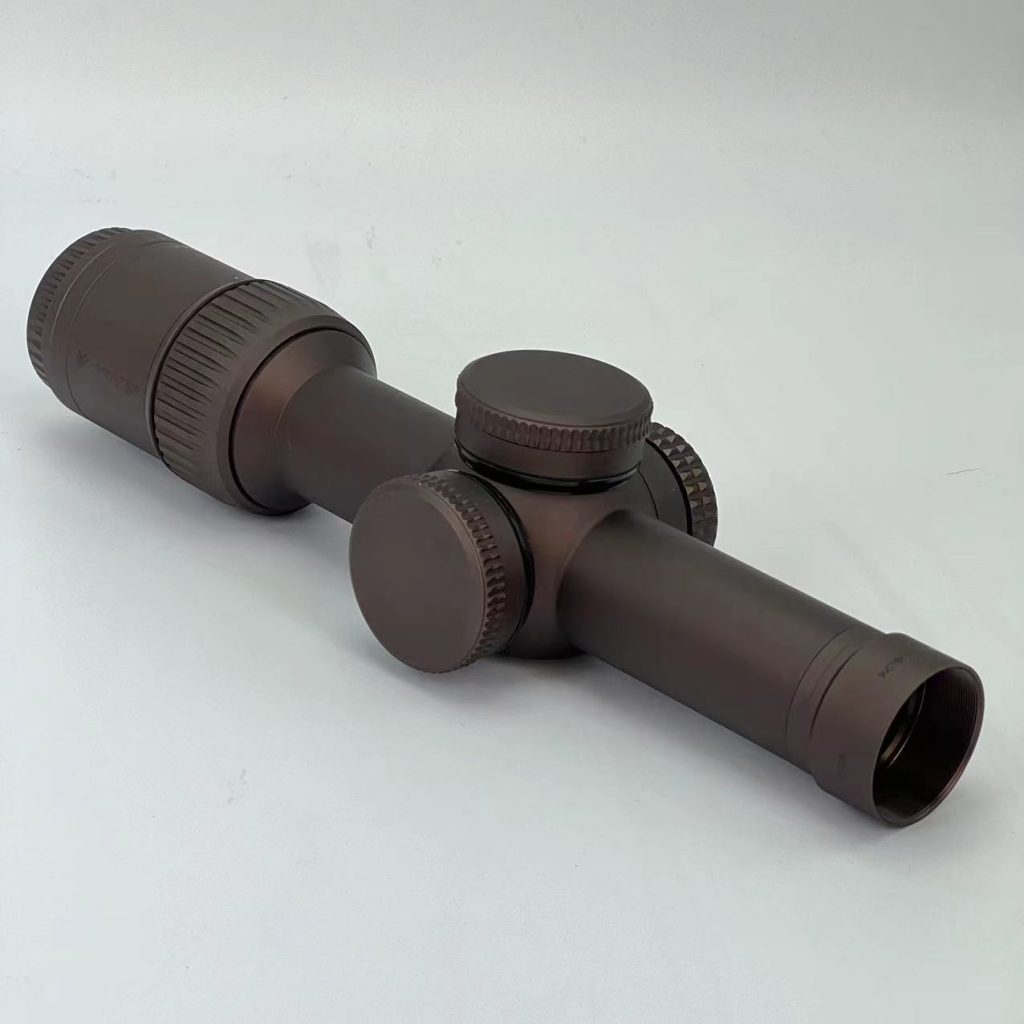
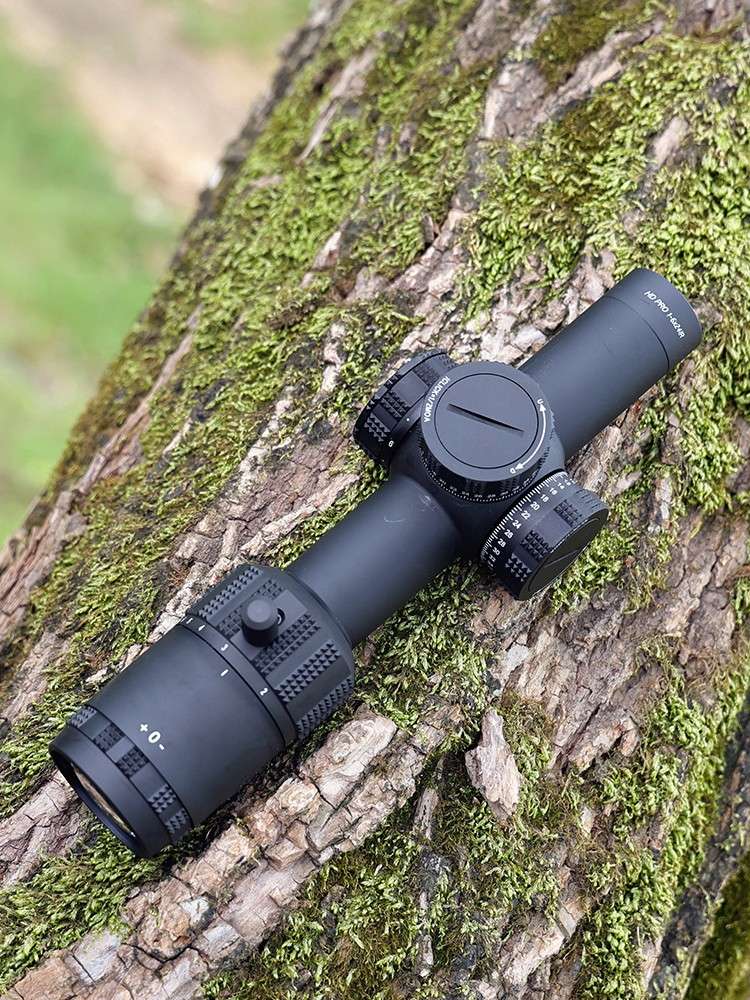
For mountainous hunting grounds in Japan, low weight, field of view, forgiving eye relief, and reliability usually matter more in practice than very high magnification or a complex reticle.
FORESEEN’s current Driven & Short Range Hunting product system already covers 1.2-6×24, 1.5-8×28, and higher-magnification LPVO platforms. Reticles, coatings, illumination, turrets, exterior design, and packaging can all be adjusted through OEM/ODM, making these proven platforms well suited as a foundation for a brand entering a new market.
It is worth clarifying what a platform means. For a brand entering optics for the first time, the largest cost is often not each individual scope but the one-time investment required to start from zero: tooling, the optical system, rounds of trial and error, and waiting time. A proven platform removes much of that risk. The customer can first define the specifications and appearance on an existing platform, validate the market with minimal investment, and then decide whether to proceed to proprietary development.
FORESEEN can currently provide seven categories of customization: logos, labels, packaging, colors, dimensions, graphics, and material substitutions, as well as design services based on samples or drawings. New-product development generally takes 60-90 days depending on the category, the R&D team has ten members, and design work uses CAD and UG. These capabilities were verified in a supplier assessment by TÜV Rheinland. The assessment covered the Chongqing factory; the riflescope factory in which we later invested in Nantong was not included, and we do not describe it as certified.
A Second Direction Worth Considering: A Low-Profile Red Dot for Shotguns
For hunters using shotguns and slugs, the value of a red dot is not tactical styling. It is:
Finding the target faster.
At close range, in dense cover, or during driven hunts, a low-mounted red dot with a clear window that can be used with both eyes open may feel more natural than a traditional high-magnification scope.
From a factory-development perspective, however, we do not recommend simply selecting a standard pistol red dot and adding a Picatinny base.

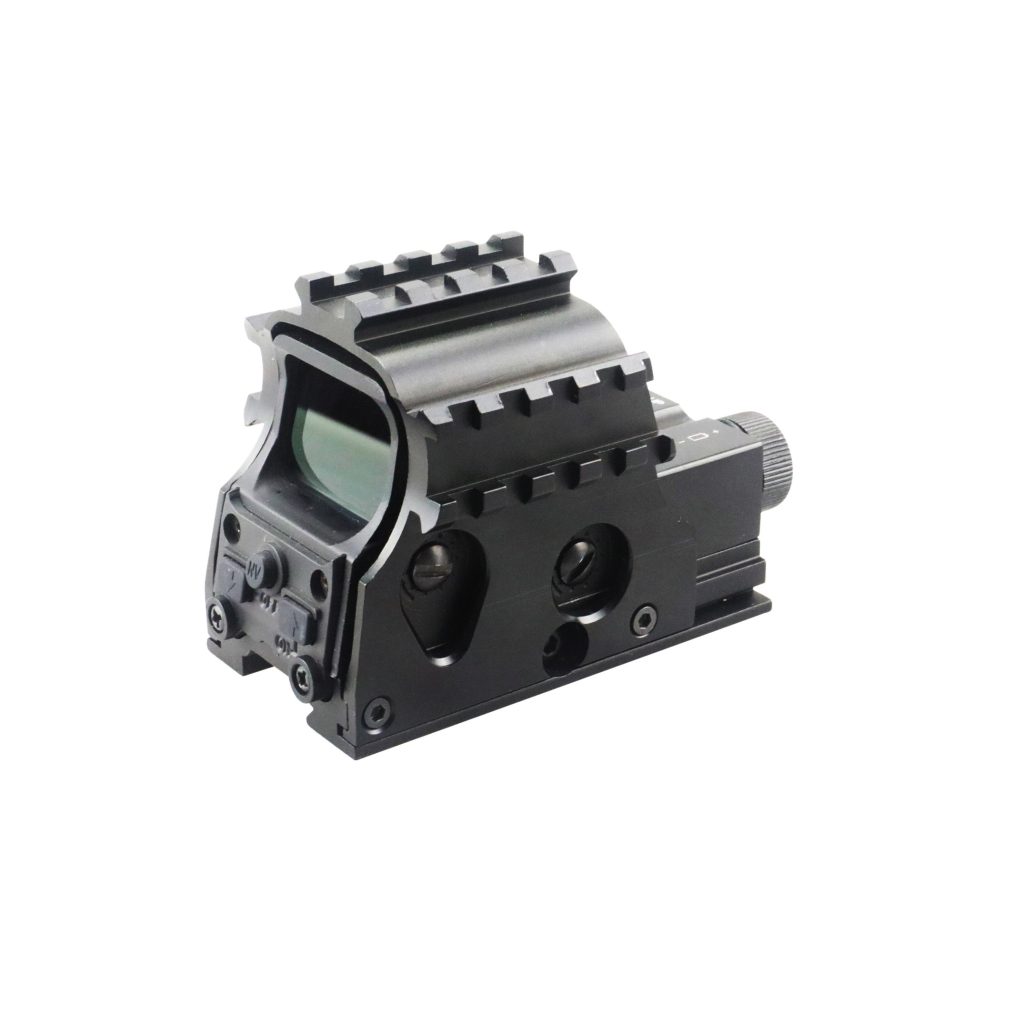
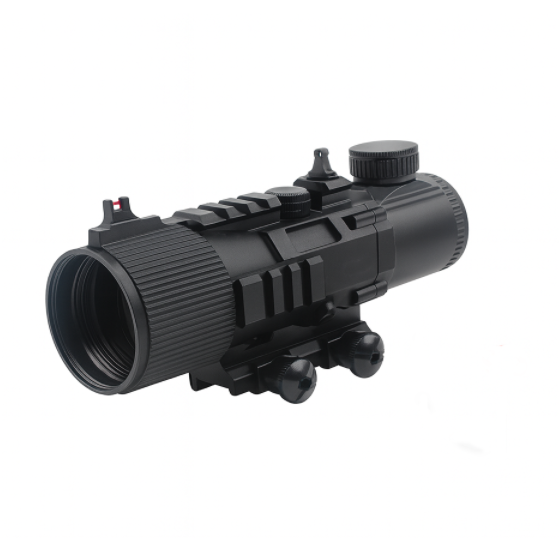

A product genuinely intended for shotgun hunting should address three issues:
1. Mounting Height
The higher the red dot sits, the more it disrupts the hunter’s cheek weld on a traditional shotgun stock.
Therefore:
Low-profile mounting is itself an important part of the product design.
2. Heavy-Recoil Reliability
Shock-test data for an ordinary electronic red dot cannot fully substitute for testing in an actual shotgun environment.
For slug use, we recommend adding:
Repeated recoil testing and a zero-retention test.
In other words, verify whether the aiming point remains stable after repeated actual or simulated heavy-recoil impacts.
One point must be stated clearly: we do not currently have a formal, externally presentable report for repeated recoil and zero retention. We would rather test first and make claims afterward than substitute generic industry language for our own measured results. If this will be your first core category, we recommend including this test in the sample-stage acceptance checklist instead of adding it after mass production.
3. Firearm Compatibility
If a direct vent-rib mounting solution is developed, the differences in rib width, thickness, and structure among common shotguns from Miroku, Browning, Beretta, and other manufacturers must also be confirmed.
From a brand perspective, the greatest opportunity may not be making a cheaper red dot. It may be:
Creating a low-profile mounting solution that genuinely understands Japanese shotgun platforms.
This can create stronger brand differentiation than competing on specifications alone.
This direction aligns precisely with the structural strengths of the Chinese supply chain. A low-profile mounting solution requires simultaneous changes to optical parts, machined parts, surface treatment, and packaging. Only when these processes sit within the same factory can changes be made quickly and economically. Our Chongqing and Nantong footprint was designed for products that combine optics, mechanics, and exterior design in this way.
Thermal Imaging: Enter First as an Observation Tool, Not a Weapon Sight
Thermal imaging is a promising new direction in Japan, but product positioning requires particular care.
Ordinary hunters in Japan are subject to restrictions on nighttime hunting with firearms. Defining a thermal product directly as a night-hunting weapon sight would therefore significantly narrow its permissible use.
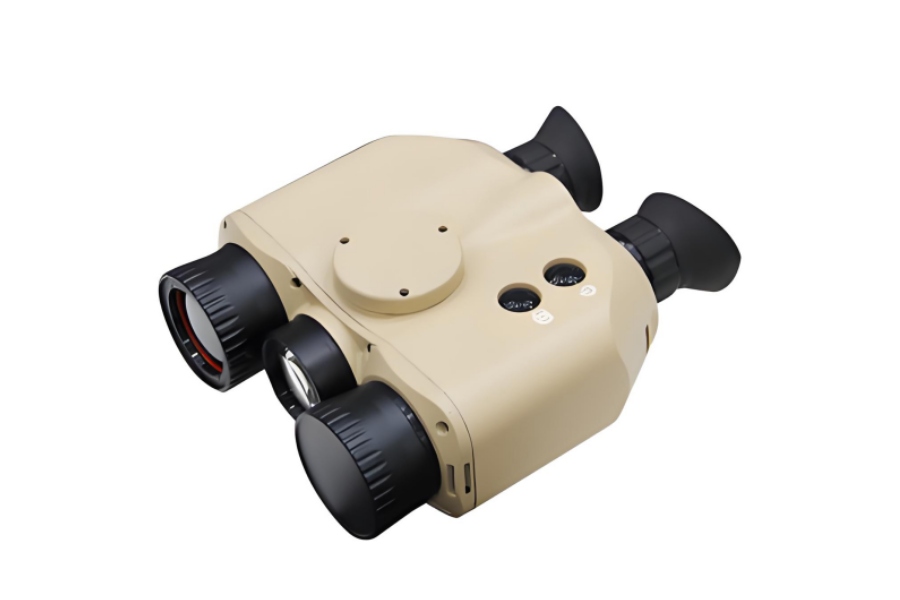
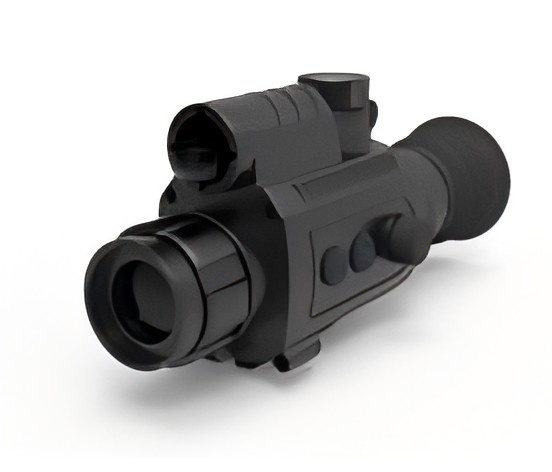
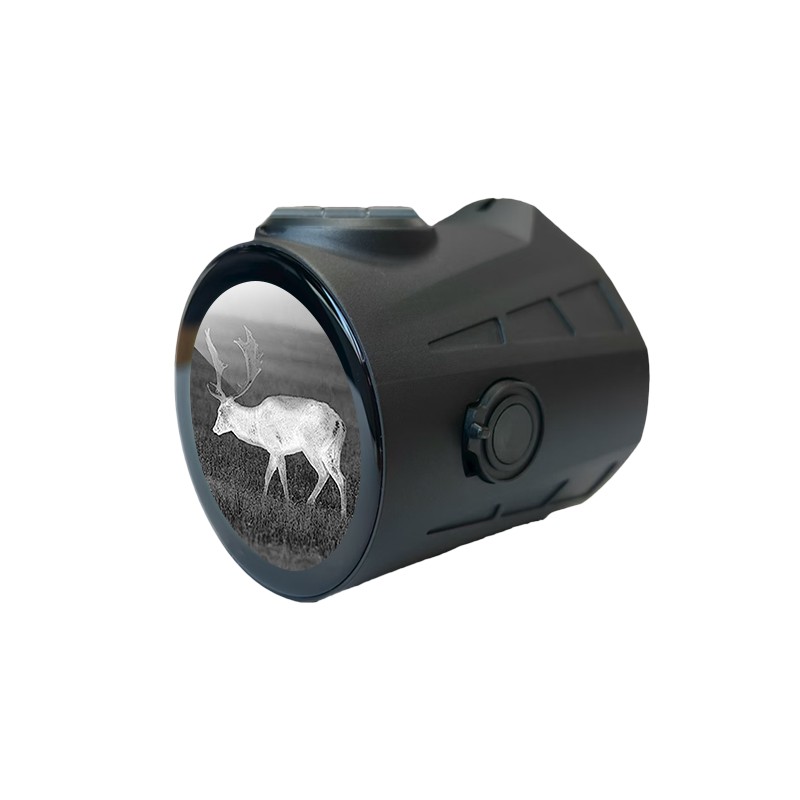
At the same time, local industry feedback in Japan shows a real need to find, detect, and observe wildlife at night, including surveys of deer and wild-boar activity, observation of agricultural and forestry pests, hunting-ground patrols, and identification of wildlife movement routes.
This becomes even clearer in light of the activity structure described above: most annual field days for Japanese hunters are devoted to nuisance-wildlife control, observation, and patrol. Their problem is not how to shoot at night, but how to locate, identify, and continuously monitor animals after dark.
For a Japanese brand entering thermal imaging for the first time, we therefore recommend:
Start with a handheld thermal monocular.
For example:
384×288 + 35 mm
This can provide a well-balanced mid-range solution.
It supports animal detection at short and medium range without sacrificing field of view as noticeably as a 50 mm system, while achieving a good balance among cost, weight, and identification distance.
The product definition can focus on:
- Low NETD;
- Fast startup;
- A clear OLED display;
- Low weight;
- IP67 protection;
- Cold-weather battery life;
- Photo and video recording;
- Wi-Fi and app connectivity;
- A replaceable battery;
- One-handed operation;
as its core features.
If target customers have a clear need to judge distance at night, an LRF function can be added.
The key is not to make the product look more like a thermal weapon sight, but to define it clearly as a:
Wildlife Detection & Observation Tool
In other words, a tool for locating and observing wildlife.
This both broadens the customer base and reduces the regulatory-explanation and sales-education costs of entering the market.
Observation optics are already our largest shipment category. Annual binocular output is in the hundreds of thousands of units, while rangefinders and spotting scopes also ship consistently. Positioning thermal imaging first as an observation tool fits our existing product structure and does not require building an unfamiliar capability from scratch.
Japanese Brands Entering Optics for the First Time Should Not Develop Too Many SKUs at Once
From a manufacturer’s perspective, we often see one particular risk:
A brand entering the optics market for the first time wants to develop all of the following at once:
1-6×24, 3-18×50, and 5-25×56 scopes, red dots, prism sights, thermal imaging, and rangefinding products.
The product line may look complete, but the usual result is:
Fragmented inventory, higher testing costs, a more complex after-sales system, and no single product that achieves clear market recognition.
We recommend instead a:
2+1 launch structure
That is:
Core product
1-6×24 Hunting LPVO
Covering the broadest range of slug use and short- to medium-range hunting needs in mountain and forest terrain.
Differentiated product
Low-Profile Shotgun Red Dot
Establishing the brand’s specialist position in shotgun optics.
New-growth product
384 Thermal Monocular
Entering the market for nighttime animal observation and wildlife management.
If the brand already has access to traditional hunting channels, it can also add:
A traditional 2-7×32 or 3-9×40 hunting scope.
There is no need to launch more than a dozen SKUs in the first stage.
We can make this recommendation because our product pool covers ten categories and 600 models. With enough proven platforms, there is a higher likelihood that an existing product can be adapted into what the customer needs. This is why we advise customers to start with a platform and move to proprietary development later: not to make them compromise, but to confirm what the market actually wants at the lowest possible cost.
The 600 models represent the company’s overall product pool and do not mean that every model is immediately available to every customer at every stage. The actual selection depends on the specific model and order confirmation.
Who Should Develop the Product: Japanese Factories and the Chinese Supply Chain Play Different Industry Roles
Once the product structure is set, the next question is who should develop it.
Japan has a group of highly experienced optical factories that can be described as the industry’s hidden foundation. Their operating models should be understood before simply comparing prices.
Kenko Tokina(ケンコー・トキナー)
Founded in Tokyo in 1957, Kenko Tokina is one of Japan’s largest optoelectronic-instrument companies. It is both a brand owner and a major global optical OEM, and it owns the riflescope brand Sightron, which was established in North Carolina in 1993 as a joint venture backed by the Kenko system’s manufacturing capabilities.
More important than the number of brands it owns is how it allocates capacity. Flagship series such as SIII and SV remain in Japanese factories, while lower- and mid-priced series are made by its wholly owned Kenko factory in the Philippines. In other words, Made in Japan products serve as the brand’s showcase, while this Japanese company itself chooses to move volume mid-range production outside Japan.
Light Optical Works (commonly known in the industry as LOW)
Founded in Suwa, Nagano Prefecture, in 1956, with a group workforce of roughly 200, LOW is a pure OEM/ODM factory. It has no consumer brand of its own and develops and manufactures riflescopes, binoculars, and spotting scopes exclusively for brand customers. Lens grinding, coating, precision machining, sandblasting, anodizing, assembly, and even the production of packaging boxes and manuals are all handled within its own system. It promotes structural reliability capable of withstanding repeated impacts at the 1,000 G level. Industry supply-chain analyses generally consider factories of this type to be the source of flagship series for several high-end North American and European riflescope brands.
Its publicly listed product range consists entirely of riflescopes: 1-6×24, 1.5-9×45, 2.5-15×50, and 4-24×50.
Kamakura Koki(鎌倉光機)
Founded in 1950, Kamakura Koki is another long-established Japanese factory producing high-end optics on an OEM basis. It established a factory in China as early as 1990.
Taken together, these three companies reveal an industry fact:
Manufacturing in Japan has never constituted an entire supply chain; it represents the top tier of that chain. Even Japan’s longest-established optical companies moved mid-range capacity outside Japan long ago.
How the Two Divisions of Labor Differ
| Dimension | Established Japanese Domestic Factories (Kenko Tokina / LOW / Kamakura Type) | Chinese Platform-Based Customization Factory (FORESEEN Model) |
| Business Model | Build to specification: The customer supplies specifications and design; the factory realizes them as a precision-manufacturing partner. | Start from a platform: The customer selects and configures a proven platform, or can develop from scratch. |
| Market Access and Scheduling | Capacity prioritizes long-term major customers; new brands and small batches are harder to schedule. | Start with an in-stock combination and small-batch validation, then scale after validation. |
| Price Band | Concentrated in high-end and flagship products; lower- and mid-priced products are handled by their own overseas factories. | One factory covers Entry → Professional → Advanced, filling an entire retail shelf. |
| Modification Cost | Japanese labor and tooling costs are high; changes to reticles or exterior design are costly and slow. | Reticles, coatings, illumination, turrets, exterior design, and material substitutions can be adjusted individually with a fast response. |
| Capacity Ownership | In-house brands and OEM customers share the same capacity pool; priorities are not externally transparent. | OEM manufacturing is the core business; house products are shown as open-market designs and do not compete with customers in retail channels. |
| Brand and OEM Alignment | A brand customer’s specifications enter a corporate system that also owns competing brands. | No proprietary retail brand competes with customers. |
| Category Breadth | Public catalogs focus on riflescopes and premium binoculars. | 10 categories and 600 models, with optics, precision machining, surface treatment, electronics, and packaging in one chain. |
| Supply-Chain Geography | The premium comes from the words “Made in Japan,” with a rigid cost structure. | Optical design (Chongqing) × precision machining and assembly (Nantong), with lenses, LED electronics, and packaging sourced from their respective industrial clusters. |
Why the Chinese Supply Chain Has a Product Advantage in Routine Applications Such as Shotgun Hunting with Slugs
This is not a question of who is better. This category of demand simply falls outside the structure of Japanese domestic factories.
First, it is a high-volume, mid-priced category that needs to fill a retail shelf, not a flagship category.
Japanese domestic capacity is optimized for high-end and flagship products. Even Japanese companies themselves send mid-range products to overseas factories. Assigning this category to domestic Japanese capacity means using the most expensive production lines for the most routine products, producing a price point that will not work in the channel.
Second, it requires a system, not just a scope.
Shotgun optics need an integrated solution combining low mounting, rib compatibility, a slug-appropriate reticle, and recoil-resistant construction. Rib width, thickness, and structure differ among common models from Miroku, Browning, Beretta, and other manufacturers. The solution spans optical components, precision machining, surface treatment, exterior design, and packaging. These elements must be adjustable within one chain, which is difficult for a single-purpose optical factory to cover.
Third, the demand inherently involves multiple specifications and rapid model adaptation.
Shotguns have the largest installed base among Japanese hunting platforms, while firearm models are fragmented and user needs range from fast aiming in woodland drives to medium-range identification during farmland wildlife control. Low-cost, rapid adaptation matters more than leadership in a single specification. This is the structural advantage of a platform-based factory: new-product development in 60-90 days, with reticles, appearance, coatings, turrets, and material substitutions adjustable one by one.
Fourth, the price band is determined by the channel, not by the specifications.
Japanese gun shops and hunting channels need room for both brand margin and channel margin. The rigid cost structure of domestic manufacturing leaves little room at mid-market prices. An industrial-cluster supply chain, by contrast, can provide a continuous range from entry level to upper mid-range within one factory, allowing the brand to assemble traffic-driving, profit-generating, and image-building products at once.
The Boundaries Must Be Explained Just as Honestly
If the brand wants a flagship whose selling point is Made in Japan itself, pursuing the upper limit of optical and mechanical reliability and benefiting from the trust premium that Japanese channels attach to domestic manufacturing, then a Japanese domestic factory remains the best choice. Cost does not change that conclusion, and we do not advise customers to abandon it.
The correct answer is therefore not to replace Japanese factories with Chinese factories, but to use a layered approach:
- Flagship and image-building models can be made in Japan to establish the brand’s technical stature and channel trust;
- Core volume models and the entire mid-range shelf, including shotgun and slug optics, can be produced by a platform-based supply chain to establish price bands and channel margins.
If a brand builds only the first layer, its shelf is empty; if it builds only the second, the brand lacks stature. Both layers are needed for a complete hunting-optics line. Our role is to keep the brand from having to build the second-layer supply chain from scratch.
OEM Does Not Mean Printing a Logo on an Existing Product
For brands entering the optics market for the first time, we generally divide cooperation into three levels.
Stage One: Rapid Private Label
Select a proven platform already validated in mass production and customize:
- Logo;
- Product color;
- Packaging;
- Instruction manual;
- Accessory set;
The goal is to complete the first round of market testing with relatively low development risk.
Stage Two: Configuration Upgrade
After the brand has received end-user feedback, adjust:
- Reticle;
- Light transmission and coatings;
- Illumination brightness;
- Turret design;
- Eye relief;
- Mounting interface;
- Accessory set;
- Exterior details.
This is usually the most effective stage for creating genuine market differentiation.
FORESEEN’s current riflescope platforms support customization at different levels, including reticles, coatings, illumination configurations, turrets, exterior design, branding, and packaging.
Stage Three: Deep ODM
Only after market demand has been validated do we recommend proceeding to:
- A completely new industrial design;
- A proprietary structure;
- New tooling;
- A new optical system;
- A dedicated mounting structure;
- Electronic-function development.
For a mature, small, and specialized hunting market such as Japan, this sequence is usually more robust than investing in large-scale tooling development from the outset.
The third stage also has clear boundaries. Our ten-person R&D team and 60-90-day development cycle can support the development of structures, optical systems, and dedicated mounting systems. Electronic functions such as sensors and displays, as well as exclusive joint development, are evaluated case by case and are not promised by default. Clarifying these boundaries up front is better than discovering midway through development that a requirement cannot be met.
Before Mass Production, Field Testing Is What Truly Matters
The greatest difference between optical products and ordinary outdoor goods is that many problems are not obvious in the laboratory.
This is especially true for products intended for hunting in Japan, where the following can expose weaknesses in the design:
- Heavy recoil from slugs;
- Mountain rain;
- Low temperatures;
- High humidity;
- Frequent transport;
- Impacts in woodland;
All of these conditions can magnify weak points in the product design.
We therefore strongly recommend giving samples to local Japanese hunters for field testing before formal mass production.
Key feedback can include:
Optical clarity, low-light contrast, eye box, mounting height, weight, red-dot brightness, zero stability, turret feel, wet-weather experience, and ease of operation.
After final changes are made based on the test results, confirm the:
Golden Sample
This Golden Sample should become the uniform quality benchmark for future mass production.
All subsequent production batches should then be inspected against the same:
- Optical standards;
- Appearance standards;
- Adjustment standards;
- Functional standards;
- Reliability standards.
These standards should govern inspection.
For a brand, this matters far more than simply discussing the MOQ.
What we can provide is the process itself: 100% inspection, patrol inspection by four QC staff, on-site incoming-material inspection records, batch traceability from finished products and packaging back to raw materials, product-warning and recall procedures, complaint records and closed-loop corrective action, and eleven items of testing and calibration equipment. These are not slogans; every item can be checked against the third-party assessment report.
We also state one point proactively. In the third-party assessment report, the answer to whether designed products have been tested by third-party institutions is that only some have been tested. We will not rewrite that as all products having passed. We would rather define the Golden Sample inspection items together with the customer than provide an attractive checklist that does not identify what was actually tested.
The Japanese Market Ultimately Competes on Complete, Trustworthy Products, Not the Lowest Price
Japanese users compare more than specifications when choosing hunting optics.
Local feedback shows that consumers also care greatly about optical performance, mechanical reliability, weight, waterproofing, after-sales support, and overall value. Gun shops and specialist channels remain influential. Although cross-border purchasing is increasing, after-sales service, repair, and quality assurance remain major concerns.
A Japanese brand newly entering the hunting-optics market therefore needs to establish one central promise:
This product was designed for Japanese hunters, and someone will take responsibility if a problem occurs.
Beyond the product itself, this requires:
- A Japanese-language instruction manual;
- Localized packaging;
- A clear warranty policy;
- Wear parts;
- After-sales spare parts;
- Technical documentation;
- Dealer training materials;
- Product application guidance.
This is why we have always believed that:
An excellent OEM partnership is not about completing one production run. It is about helping a brand build a product line that can evolve over the long term.
To make the promise of accountability verifiable, original copies of the following information are available on request:
Company
- Established in 2007 as a manufacturing and trading company, with an owned factory in Beibei, Chongqing, China; 6,800 m² of factory space; eight production lines; approximately 50 pieces of equipment; and 68 full-time employees, according to the third-party supplier assessment report.
- Products cover ten categories and 600 models. Main customer types include brands, wholesalers, retailers, manufacturers, and private users, under the same reporting basis.
- Capacity under the same reporting basis: 80,000 binoculars per month, 10,000 spotting scopes per month, 15,000 astronomical telescopes per month, 3,000 night-vision devices per month, and 3,000 rangefinders per month.
Qualifications
- TÜV Rheinland Alibaba Verified Supplier assessment, renewed over multiple years. The assessment covers the Chongqing factory. The riflescope factory in which we invested in Nantong is outside the scope of that assessment, which we disclose proactively.
- ISO 9001:2015 quality-management-system certification covering the design, production, and sale of telescopes and binoculars. The current certificate does not cover riflescopes or red dots, and we do not obscure that limitation.
- RoHS 2.0 test report for optical sights, covering 30 magnification specifications, with no regulated hazardous substances detected.
- Five additional CE/CPC product sub-certificates covering children’s observation binoculars, astronomical telescopes, and binoculars.
Customization and Delivery
- Simple customization verified by third-party assessment includes seven categories: logos, labels, packaging, colors, dimensions, graphics, and material substitutions, plus design services based on samples and drawings.
- New-product development takes 60-90 days depending on category; average lead time is 15 days, and the shortest sample time is four days.
- Business languages supported: English, German, Spanish, and Japanese.
Conclusion: Start with One Product Truly Suited to Japanese Hunting Grounds
Japan is not a market that can be entered successfully through large specifications and low prices alone.
It is better suited to brands that understand local hunting practices and are willing to optimize product details over the long term.
For Japanese companies that already have hunting-equipment, firearm-accessory, or outdoor channels, the most reliable route into hunting optics is not to build a vast product catalog at once. It is to:
Start from real hunting environments, select a proven product platform, validate it in small batches, obtain feedback through local field testing in Japan, and then proceed step by step to configuration upgrades and proprietary ODM development.
FORESEEN OPTICS has long specialized in OEM/ODM manufacturing for shooting and hunting optics. Its current product range includes riflescopes, red dot sights, binoculars, and other optoelectronic products, developed and manufactured through different optical and electronic industrial clusters in China.
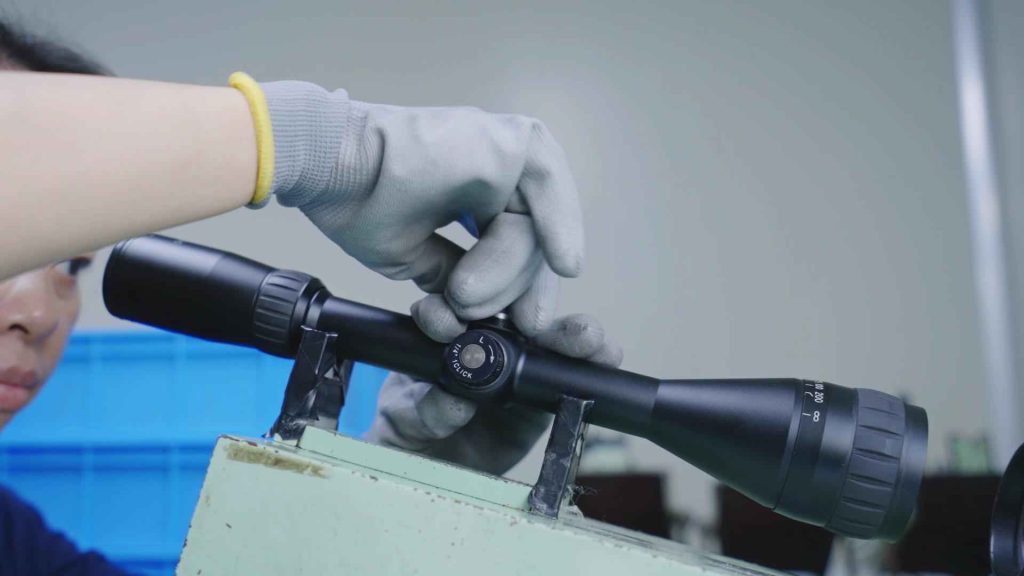
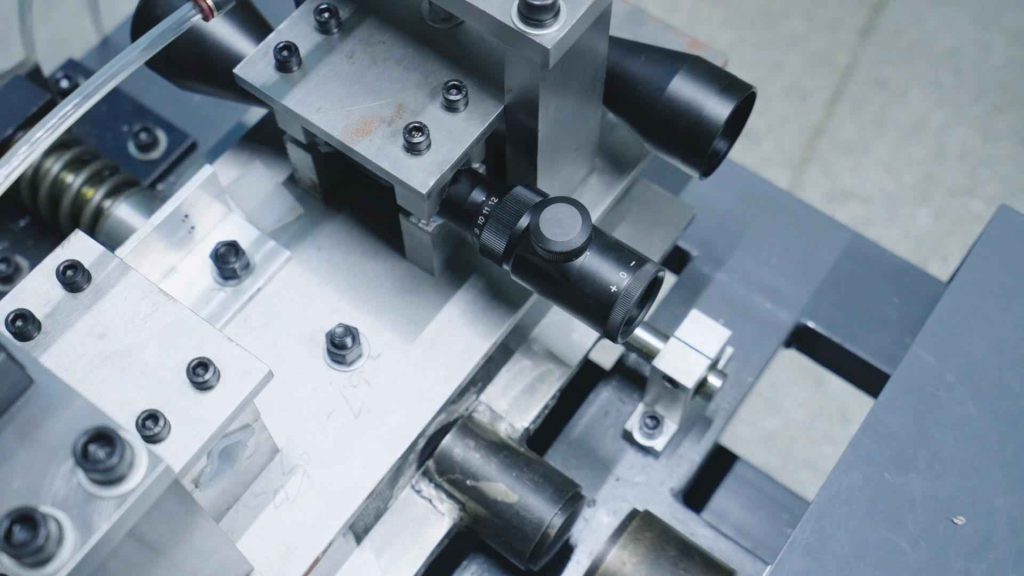
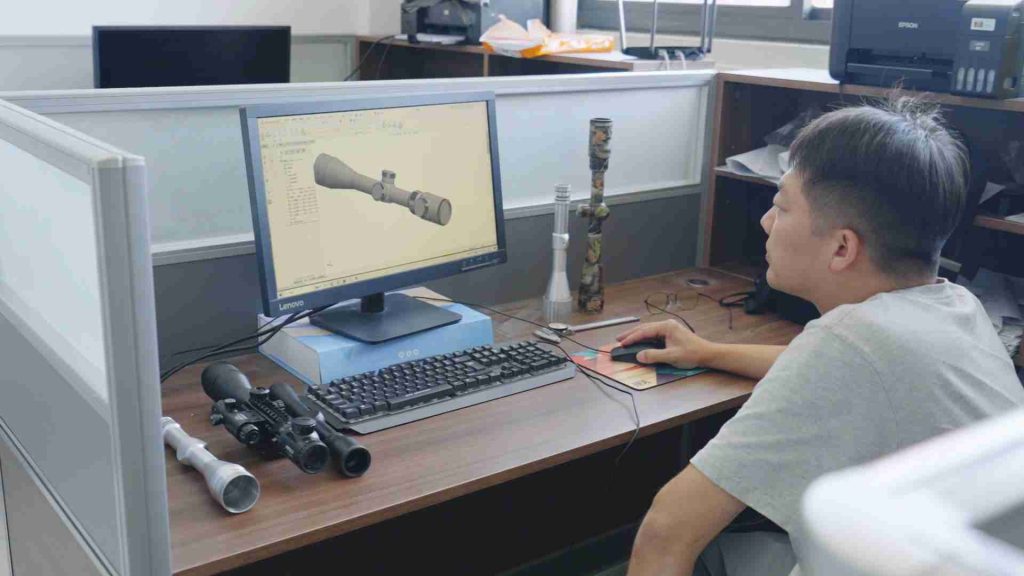
For Japanese brands seeking to build their own hunting-optics lines, we aim to provide not merely a product catalog, but a complete path from:
Use-Case Definition → Product Selection → Sample Testing → Local Validation → Configuration Adjustment → Golden Sample → Small-Batch Production → Market Feedback → Product Upgrade
This is a step-by-step product-development path.
Once the first-stage objective is clear, we are also willing to recommend a candid division of work between what we should complete and what should be produced domestically in Japan, including how flagship and volume models should be allocated.
The goal is not to sell existing optical products into Japan, but to work with Japanese brands to create optical products truly suited to Japanese hunters.