A rifle scope that looks sharp at 4x but blurry at 16x does not necessarily have a defect. Before replacing it, identify what is blurry: the reticle or the target.
If the reticle is unclear, start with the eyepiece diopter. If the reticle is sharp but the target is blurry, check target focus, parallax settings, and eye position. These are troubleshooting starting points, not definitive diagnoses.
Working through these checks in order can help you identify the cause before considering a repair or replacement.
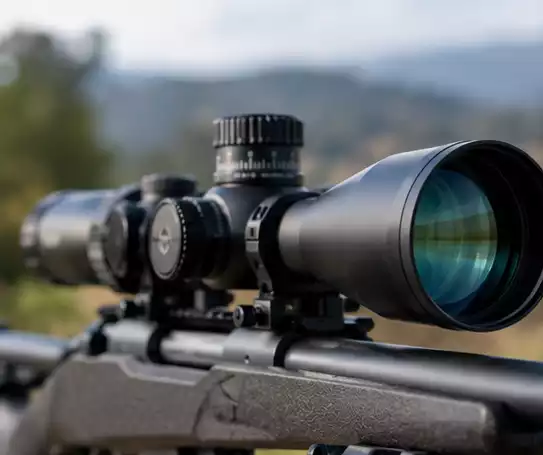
Why Does a Rifle Scope Become Blurry at Higher Magnification?
Higher magnification makes small focus errors and optical limitations easier to notice. It also makes the image more sensitive to viewing conditions.
Higher Magnification Makes Image Limitations More Noticeable
Increasing the magnification only enlarges the image, without adding more details to the target. At high magnifications, the effects of optical aberrations, contrast reduction, and atmospheric disturbances will be more pronounced.
If the target is clearly imaged at 6x, but becomes blurry when switched to 18x, compare the images at the two magnifications first, and then determine if the scope is faulty.
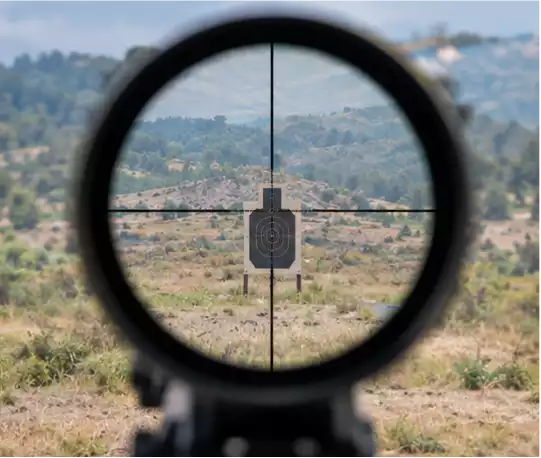
Focus and Viewing Position Become More Important
During high-power observation, the allowable deviation range of the eyes is very small. Even a slight movement of the image can cause it to become blurry; improper focusing can also make it difficult to discern the details.
Therefore, please check the focusing parameters and the observation eye position. Do not assume that the higher the magnification, the clearer the image will be.
Exit Pupil, Depth of Field, and Mirage
High magnification observation has a lower operational fault tolerance rate for the following three reasons:
- Aperture diameter: As the magnification increases, the aperture diameter decreases, thereby reducing the tolerance for eye position errors.
- Depth of field: The range of distances where clear images can be formed in the field of view usually narrows.
- Mirage: The rising hot air on the ground can distort the images of distant objects, especially at high magnifications.
These are physical limitations, not necessarily indications of inherent defects in the telescope itself.
First, Separate Two Kinds of Blur: Reticle and Target
The distinction helps determine which adjustment to check first.
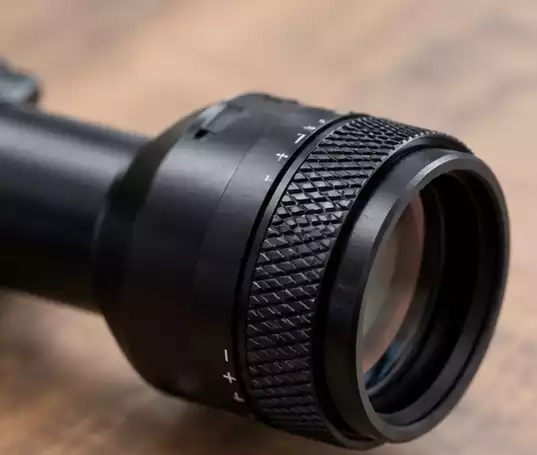
Reticle Blur: Start With the Diopter
The eyepiece diopter adjusts the reticle’s apparent sharpness for your eyesight. Follow the manufacturer’s instructions, usually checking the reticle against a plain, bright background with brief glances.
If it remains unclear throughout the appropriate adjustment range, further assessment may be necessary.
Target Blur: Check Focus, Parallax, and Eye Position
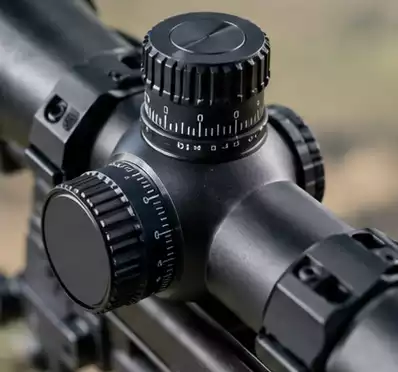
When the crosshair is clear but the target is blurry, if your scope has side focusing or adjustable objective lenses, please check the settings and align the distance parameters with the actual distance of the target.
Also, pay attention to the eye position. The eyes should be at the appropriate exit pupil position of the eyepiece. If the eye position is incorrect, the field of view is likely to have dark spots and the image will be unclear.
Target Focus Is Not the Same as Parallax Elimination
Target focus can affect the clarity of the target. Parallax refers to the visual movement of the crosshair of the scope relative to the target as your eyes move.
Even if the target appears clear, there may still be residual parallax. If your scope has a mechanism for adjustable parallax, please check it according to the manufacturer’s instructions. Fixed parallax models may still have some parallax at other distances.
How to Troubleshoot a Rifle Scope That Looks Blurry at High Magnification
Before adjusting the installation or conducting inspection and maintenance, start the troubleshooting from simpler items:
Check Whether the Reticle Is in Focus
Adjust the refractive power according to the standard procedures. During the debugging process, quickly scan the division without staring at it for a long time – after the eyes adapt, the problem of improper adjustment will be masked.
What this checks: Inappropriate refractive power setting causing the division to be blurry.
Check the Target Focus and Parallax Settings
If the sight supports side focusing / objective focusing, set it according to the actual distance of the target. For models with parallax adjustment, slightly move the eyes and observe if the division is offset relative to the target.
What this checks: Whether the focusing and parallax settings cause image blurriness.
Make Sure Your Eye Position Is Consistent
Keep a stable viewing position and look through the centre of the exit pupil. Check for dark edges, shadows, or changes in the image when you move your head.
What this checks: Eye position deviation affecting imaging.
Check the Lenses and Shooting Environment
Inspect the accessible lens surfaces for fingerprints, dust, or moisture. Use appropriate lens-cleaning materials, following the manufacturer’s instructions.
Heat shimmer, haze, and poor lighting can also reduce clarity. Compare the imaging in various environments first, and then determine if it is a fault of the sight itself.
What this checks: Lens dirtiness and environmental factors interfering with image quality.
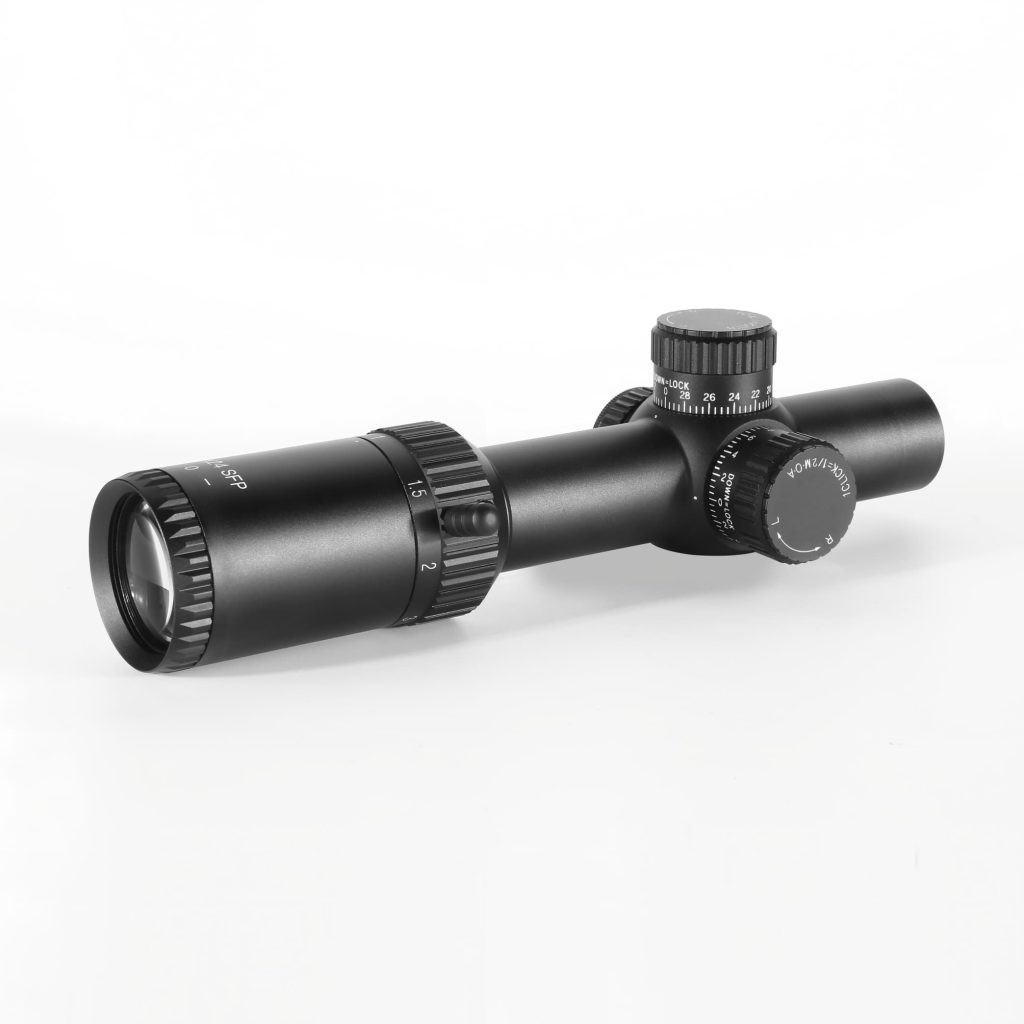
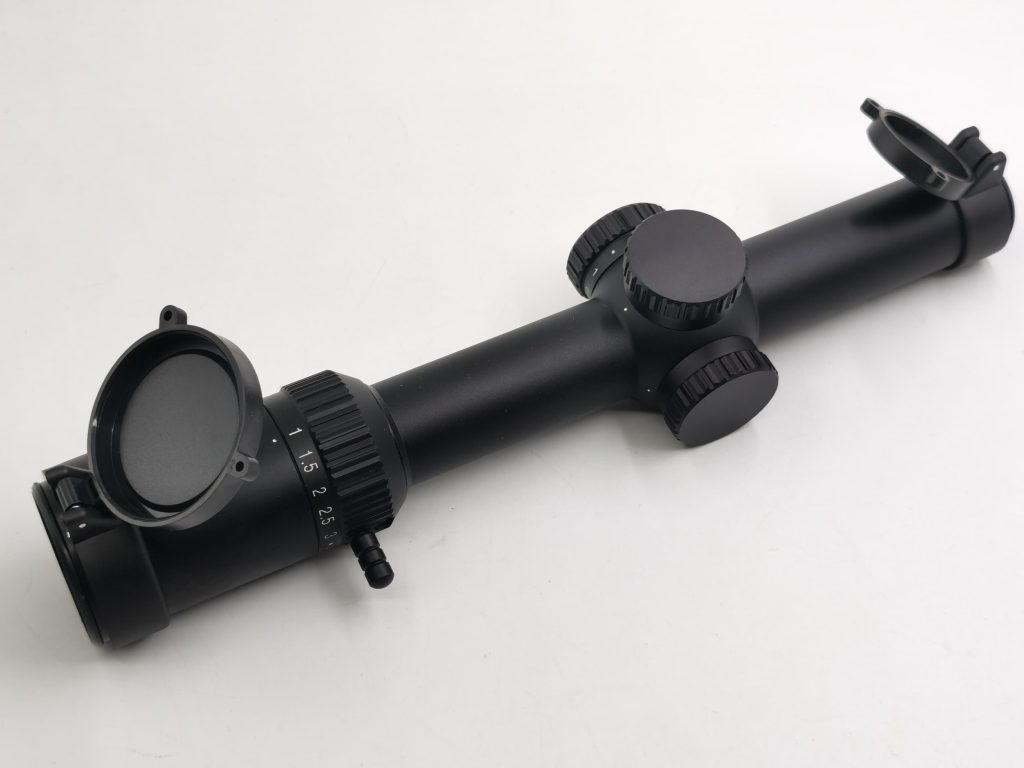
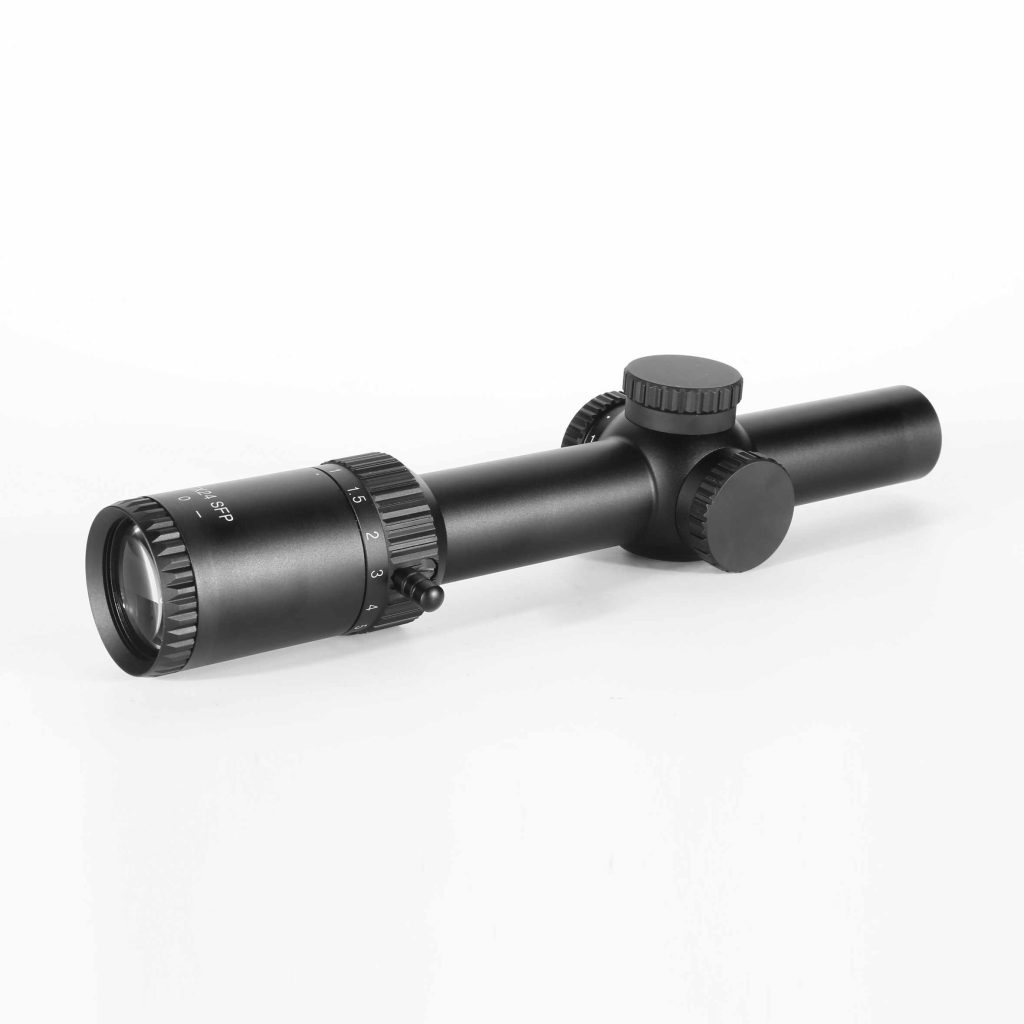
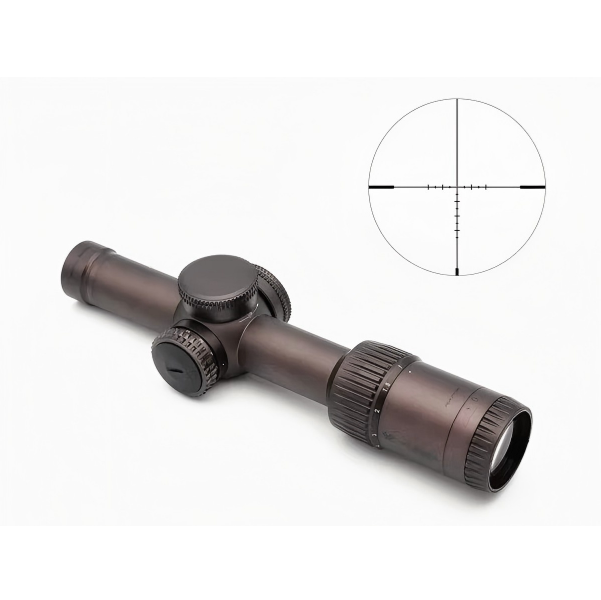

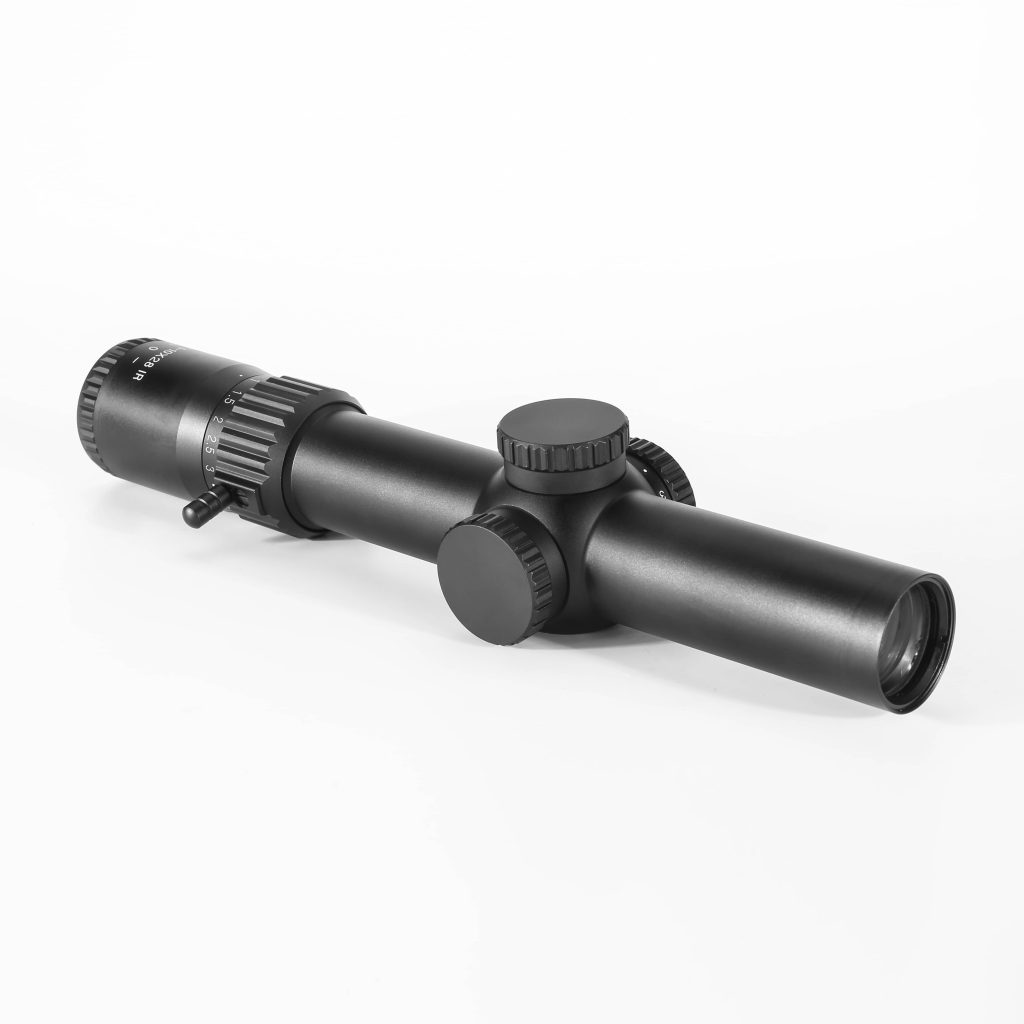
How to Tell a Setup Issue From a Possible Optical Problem
The key is to check whether the blur changes after an appropriate adjustment and whether the problem can be reproduced under consistent conditions.
| Symptom | What to check | When to suspect an optical issue |
| Reticle and target both blurry | Diopter and viewing conditions | Reticle remains unclear after correct adjustment |
| Reticle sharp, target blurry | Target focus and parallax | Target remains unclear at suitable settings and distances |
| Reticle shifts as the eye moves | Parallax and eye position | Abnormal movement persists after correct setup |
| Only blurry at high magnification | Exit pupil, focus, and environment | Fine details remain unresolved under controlled conditions |
| Blurry mainly on hot days | Mirage and atmospheric conditions | Blur persists when environmental effects are reduced |
| Edges blurry, centre clear | Optical design and mounting condition | Edge blur is unusually severe or inconsistent with expected performance |
These phenomena are merely as clues for investigation and cannot directly indicate that the scope is faulty. Some scope views naturally have normal blurring; environmental conditions and improper settings can also cause false appearances similar to optical faults.
Blur That Changes After Adjustment
If the blurriness is reduced after adjustment, it indicates that the problem is likely caused by the initial settings. However, just because there is an improvement this time does not mean that all potential problems have been ruled out.
During the debugging process, only one parameter should be changed at a time, and the effect should be recorded simultaneously.
Blur That Persists Under Consistent Conditions
Try to keep the observation distance, magnification, target and light conditions constant, and conduct repeated tests to confirm that the scope settings are correct and the lenses are clean.
If the image is still extremely blurry, record the fault phenomenon and contact the dealer or manufacturer for further testing.
When the Blur First Appears Tells You Where to Look
If the blurring occurs only after installation, check the concentricity of the mirror ring and the locking torque according to the manufacturer’s parameters. Excessive clamping force or uneven force application can all affect the optical performance.
If the issue appears from the first inspection or develops later, check the setup, product condition, and viewing environment. Timing helps narrow the investigation but does not establish the cause by itself.
Why High Magnification Can Reveal Optical Quality Differences
Heat shimmer affecting long-distance visibility on a sunny outdoor range
High magnification can reveal differences in resolution, contrast, lens coating and manufacturing consistency.
However, image blurring does not necessarily indicate poor optical quality. Even a well-made telescope can be affected by inaccurate focusing, mirages and unstable observation conditions, which can all impact the imaging result.
For buyers and dealers, the more important issue is the telescope’s ability to resolve details within its available magnification range, rather than just the maximum magnification specified on the specification sheet.

What to Check Before Replacing Your Rifle Scope
Before replacing a scope, complete four basic checks:
- Compare observers: Ask another person to inspect the image under the same conditions.
- Review mounting: Check installation and clamping requirements.
- Repeat the test: Keep distance, magnification, and lighting consistent.
- Compare conditions: Test again when atmospheric disturbance is lower.
If the problem persists, provide the supplier with the scope model, magnification, target distance, and checks already completed.
What to Inspect When a Shipment Arrives
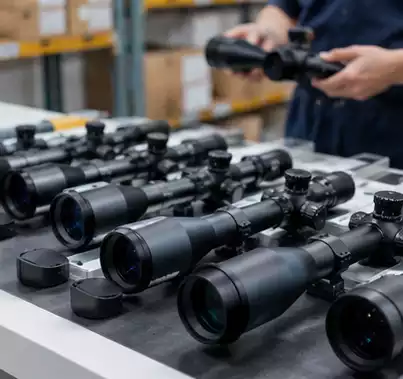
For distributors receiving multiple batches of sighting devices, a unified incoming inspection process is beneficial for early detection of potential issues.
Inspect the clarity of the sighting devices, the image performance at typical magnification levels, and any visible physical damages. A clear sampling plan and written acceptance criteria should be adopted instead of relying solely on a single sample to determine the quality of the entire batch of goods.
The Distributor’s Problem: Blur Complaints That Are Not Defects
For distributors, unclear images can lead to unnecessary returns, additional inspection work, and repeat customer complaints.
Three Questions to Ask Before Authorising a Return
Start with three questions:
- Is the reticle blurry, the target blurry, or both?
- Does the image change after the correct focus adjustment?
- Does it change when the observer’s eye position changes?
Record the model, magnification, distance, viewing conditions, and results. This helps the technical team investigate the issue without dismissing the customer’s concern.
Reduce Unnecessary Returns With Clear Instructions
Return shipping fees, testing periods and logistics delays will all increase the after-sales costs. If only the problem is reported and the product is returned directly, the customer is likely to encounter the same fault again.
The fault troubleshooting card included with the product is used to guide users to self-check and inform them of when to contact technical support. It is a supplement to the warranty inspection and cannot replace the warranty process.
Still Seeing a Blurry Image? Talk to FORESEEN OPTICS
If the image remains unclear after the relevant checks, FORESEEN OPTICS can help customers and distribution partners discuss their riflescope requirements and potential technical issues.
When contacting the team, provide five details:
- Scope model and mounting platform
- Magnification range where blur appears
- Target distance
- Viewing conditions
- Checks already completed
Clear information makes it easier to determine the next steps, whether the issue requires further setup guidance or product inspection.
FAQ
Why does the scope become blurry when the magnification is increased, while it was clear at lower magnifications?
When the magnification is increased, the effects of focusing deviation, optical limitations, and thermal air turbulence will be magnified. First, check the diopter, target focusing, and eye position.
If the scope image is blurry, does it mean it is damaged?
Not necessarily. After conducting all the checks in the same environment, if the blurriness persists, contact the manufacturer or dealer.
Can mid-range scopes also provide clear imaging at high magnifications?
Yes, it’s possible. The quality of imaging is not only determined by the price, but also depends on the optical design, component quality, processing accuracy and observation environment.
Why does the scope become blurry only when it’s hot?
The hot air currents will distort the distant images, and the higher magnification will amplify this disturbance effect.
Under what conditions should it be sent back to the manufacturer for repair?
After excluding all settings and environmental factors, and if the blurring problem can be consistently reproduced, then it can be submitted for warranty inspection.