For brands, importers, and wholesalers, ordering custom binoculars takes more than approving a quotation and receiving a sample before placing a bulk order. A reliable process translates market needs into workable specifications, verifies optical and mechanical performance with samples, locks down appearance, packaging, acceptance criteria, and the production revision, and finally checks that the bulk order consistently matches the approved sample. The clearer the process, the easier it is to control rework, delays, and variation in mass production.
Custom Binoculars Require Staged Risk Reduction, Not a Single Sampling Round
A mature OEM project usually begins with a review of requirements and feasibility, followed by platform selection, sample validation, golden-sample approval, pilot production, and quality control in volume production. Each stage should have clear inputs, deliverables, and customer sign-off points instead of leaving every question until after the sample is complete.
Here is a small-batch binocular OEM customization guide, on how to separate customization scope, MOQs, and sample approval.
Level One: Confirm Requirements and Assess the Product Concept
Define the Market, Price Range, and Use Case First
At the start of a project, the buyer should define the target country or region, end user, sales channel, target retail price, initial order quantity, and intended launch date. Birding products may prioritize field of view, close focus, and comfort. Hunting or outdoor products place more weight on low-light performance, waterproofing and fog resistance, and a steady grip. Travel models may put more emphasis on size, weight, and packaging presentation.
These details affect magnification, objective diameter, prism design, coatings, housing material, accessories, and packaging. If requirements are still evolving, select from proven Roof, Porro, or Compact platforms first, then decide step by step which elements need customization.
Know more about FORESEEN OPTICS binocular OEM/ODM product line.
Level Two: Select a Platform and Define Specifications and Cost Limits
Before sampling, record the critical specifications in a product requirements sheet: magnification, objective diameter, field of view, eye relief, focusing method, diopter adjustment, waterproofing and fog-resistance requirements, exterior color, logo placement, accessories, and packaging. If the project involves a new structure, special color, or custom packaging, calculate product, process, dedicated-material, and packaging MOQs separately.
The quotation should distinguish one-time development or tooling charges, sample costs, the volume unit price, and price tiers at different quantities. That lets buyers see which costs are one-time investments and which recur with every unit. It also helps avoid introducing too many development variables into the first order merely to make the product different.
Level Three: Develop Samples and Approve Them in Stages
Stage One: Functional Sample
The functional sample’s first job is to validate core performance, not to present finished packaging. Check image clarity, left-right collimation, field of view, focus feel, diopter adjustment, eyecup operation, handling, and any agreed waterproofing or fog-resistance performance. If problems emerge at this stage, correct the technical solution before approving branding details.
Stage Two: Branding and Appearance Sample
Once the functional direction is approved, check logo size and placement, body color, surface finish, strap, lens caps, carrying case, manual, and packaging artwork. Ideally, both parties should approve color against the same color swatch or physical sample. For packaging, verify that the model designation, barcode, language version, accessory list, and warnings are consistent.
Stage Three: Golden Sample Sign-Off
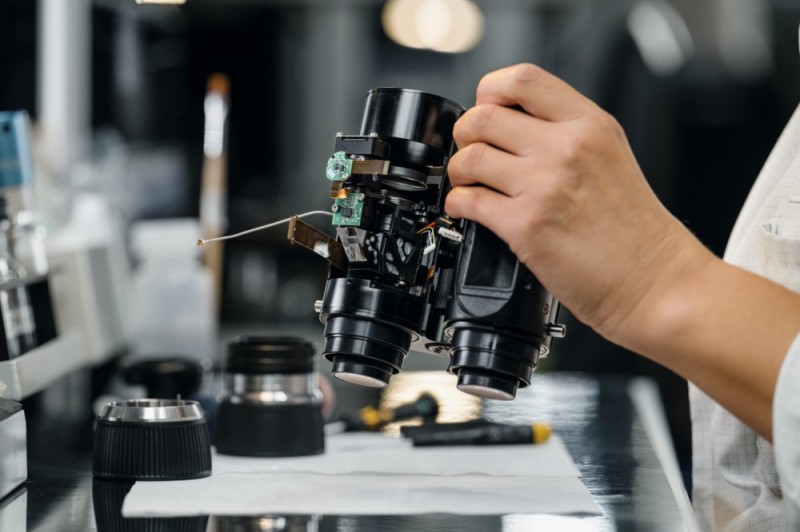
After the product’s functions, appearance, and accessories have all been approved, both parties should sign off the final golden sample and lock the BOM revision, critical components, color standard, logo process, packaging files, and inspection points. The golden sample is the physical benchmark for pilot production and bulk-order acceptance. Record every change and reassess whether a new sample is required.
Level Four: Sample Testing, Changes, and Revision Control
Sample evaluation should use repeatable test conditions where possible, rather than relying on one subjective observation. Record the viewing environment, test distance, lighting, focus setting, field of view, and image-quality issues. Classify feedback as required fixes, recommended improvements, or acceptable differences. This helps engineers prioritize problems and prevents too many variables from changing in each sampling round.
Every modification should identify the sample revision, what changed, and its approval status. If only the eyecup structure is being adjusted, for example, coatings, color, and packaging should not also change without a record. Clear revision control reduces misunderstandings among the customer, sales team, engineers, and factory.
You can refer to Nikon’s explanation of binocular development from concept to prototype, which shows how optical design, appearance models, and functional validation inform each other through iteration.
Level Five: Pilot Production and Quality Approval Before the Bulk Order
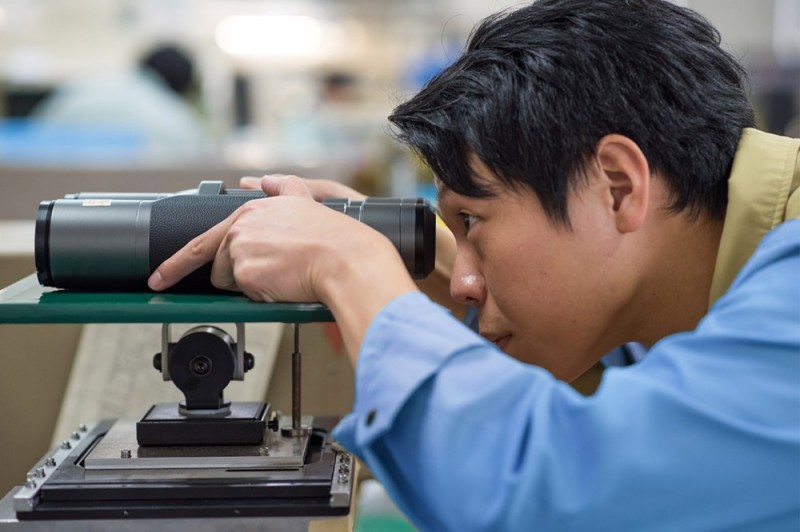
Approval of a sample does not automatically guarantee consistent bulk production. Pilot production tests whether the approved sample can be reproduced reliably through the normal manufacturing process. During the pilot run, confirm that incoming materials match the golden sample, assembly steps are repeatable, critical performance such as collimation and focusing meets requirements, appearance and logo application are consistent, and no packaging accessories are missing.
Both parties should agree in advance on definitions of critical and general cosmetic defects, sampling methods, AQL or other acceptance rules, and how nonconforming lots will be handled. Higher-risk items such as collimation and basic function may warrant stricter inspection. The exact approach should reflect the product design, order size, and buyer’s requirements.
Level Six: Confirm Packaging, Check Shipment, and Prepare for Reorders
Before shipment, confirm the actual quantity, models, accessories, manual language, packaging revision, barcodes, carton markings, and shipping protection. If the products will enter e-commerce warehouses or cross-border logistics networks, validate packaging tests and labeling requirements before mass production. Otherwise, a mismatch in pack size, barcode, or information version may surface only after production is complete.
Recommended handover documents include the final specification sheet, BOM revision, golden-sample approval record, inspection report, packing list, and agreed after-sales terms. After the first order, use actual sales feedback, return reasons, and replenishment speed to decide whether to adjust specifications or extend the range, rather than continuing to add SKUs without data.
From Sample to Bulk Order: Key Milestones
| Stage | What the buyer must confirm | Recommended record | Condition for moving on |
| Requirements and feasibility | Market, use case, budget, quantity, launch date | Requirements brief, initial quotation | Specifications and scope broadly agreed |
| Platform and specifications | Core parameters, materials, color, accessories, packaging | Specification sheet, draft BOM, cost breakdown | Sampling approach approved by both parties |
| Functional sample | Imaging, collimation, focusing, construction, agreed tests | Sample feedback form, issue list | Critical performance passes |
| Branding sample and sign-off | Logo, color, accessories, manual, packaging | Golden sample, final BOM and document revisions | Written golden-sample approval |
| Pilot and bulk production | Production consistency, critical defects, packaging, quantity | Pilot record, inspection report, packing documents | Acceptance criteria met; shipment approved |
How FORESEEN OPTICS Supports Custom Binocular Projects
FORESEEN OPTICS can assess whether an existing platform meets the customer’s needs based on the target market, price range, initial order size, and depth of customization. We then confirm the optics, construction, color, logo, accessories, packaging, and quality standards step by step. For a first collaboration or small-batch project, approving the functional sample, branding sample, and golden sample in separate stages usually makes time and cost easier to control than changing everything in the first round.
Conclusion
Moving a custom binocular from sample to bulk order is not about placing the order as quickly as possible. It is about setting clear approval criteria at every stage: define the requirements and cost limits, validate the functions, lock the branding details and golden sample, then use pilot production and bulk inspection to confirm repeatability. For brands and wholesalers, a sound sample-approval process, revision control, and quality acceptance system form the basis for turning a one-off custom project into a stable long-term product line.