As many shooters grow older, they all encounter the same problem: they can clearly see the target, but it is difficult to align the sight properly. The smooth shooting movements of the past now require more effort, it takes longer to capture the target, and maintaining concentration becomes more challenging.
This does not mean a decline in shooting skills; it is mostly a normal change in vision brought about by age. The ability of the human eye to switch focus between distances gradually weakens, and traditional iron sights become increasingly difficult to use.
This is also the reason why many experienced shooters choose red dot sight scopes. Unlike iron sights, the red dot comes with an illuminated aiming point, making the aiming process easier to focus on, allowing shooters with deteriorating vision to achieve faster and smoother shooting.
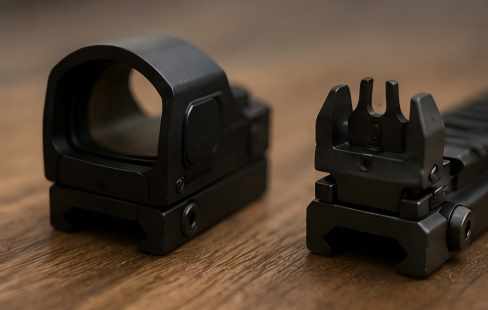
Why Iron Sights Become Harder to Use with Age
Around the age of 40, most people will develop presbyopia, which is a normal physiological phenomenon. The eyes’ ability to focus at close distances decreases. This not only affects the viewing of mobile phones and menus, but also significantly interferes with aiming when shooting.
When using traditional iron sights for aiming, one needs to align the sight, the crosshairs, and the target at three points. The distances of these three points vary, but the human eye can only clearly focus on one distance at a time. The shooter must repeatedly switch the focus between the crosshairs and the target.
As the eye’s adjustment ability declines, a series of problems arise:
- The front crosshairs have blurry images
- The time it takes to switch between near and far focal points becomes longer
- It is difficult to stabilize the aiming baseline
- Eye fatigue is more likely to occur during long shooting sessions
Many shooters mistakenly think that their shooting accuracy has declined. In fact, it is merely a natural change in vision.
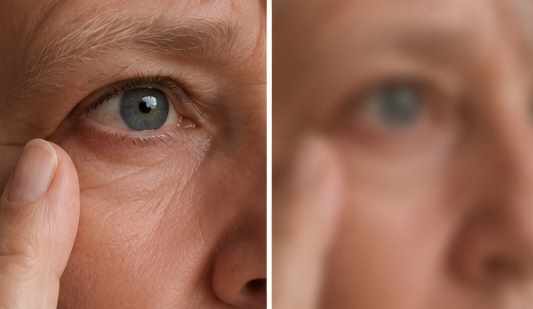
How Red Dot Sights Help Compensate for Age-Related Vision Changes
The red dot sight simplifies the aiming process, eliminating the need for frequent eye adjustments between near and far focus.
Shooting enthusiasts no longer need to align the front and rear sights; they only need to position the illuminated red dot over the target, allowing the line of sight to continuously lock onto the target, making it more friendly for shooters with deteriorating eyesight.
The intuitive advantages it brings:
- Faster target acquisition
- Less eye fatigue during long shooting sessions
- Easier tracking of moving targets
- Greater confidence in high-pressure shooting scenarios
- Better visibility in low-light conditions
It should be noted: The red dot sight cannot repair or correct vision; it merely simplifies the visual operations required for aiming, avoiding the focusing problems caused by presbyopia.

Shooting enthusiasts with astigmatism may see star-like patterns or distortions in the red dot. The specific effects vary from person to person. They can try adjusting the brightness level or replace the sight with one with a different optical structure to improve the observation experience.
Related Articles: Why Does My Red Dot Look Blurry? Common Causes and How to Fix Them
Red Dot vs. Iron Sights: Which Is Better for Aging Eyes?
Many shooters with deteriorating vision are suitable for switching to red dot sights, but this is not a universal solution.
The best aiming method depends on individual vision, shooting scenarios, experience and usage habits. Although red dots can handle most problems caused by vision decline, iron sights still have advantages in some situations.
By comparing the pros and cons of both, one can choose the aiming device that suits them, rather than blindly following the trend.
Real-World Perspective: Red Dot vs. Iron Sights for Aging Eyes
Many shooters are initially skeptical about switching from iron sights to a red dot. After years—or even decades—of using traditional sights, changing to a new aiming system can feel unnecessary.
For many experienced shooters, this real-world perspective closely matches what they discover after spending time behind both sighting systems.
Where Red Dot Sights Offer a Clear Advantage
Red dot sights are particularly beneficial in situations where speed and target awareness matter.
Common advantages include:
- Faster target acquisition by eliminating traditional sight alignment.
- Target-focused shooting, allowing the shooter to keep attention on the threat or target.
- Improved performance in dynamic shooting where targets move or multiple targets are engaged.
- Better low-light visibility thanks to an illuminated aiming point.
- Reduced visual fatigue, especially during longer practice sessions.
These advantages become increasingly valuable as shooters experience natural changes in their eyesight.
When Iron Sights Are Still the Right Choice
Despite the growing popularity of red dots, iron sights remain an excellent option in many situations.
They continue to offer benefits such as:
- Complete independence from batteries or electronics.
- Mechanical simplicity with very little maintenance.
- Reliable backup if an optic becomes damaged.
- Compliance with certain competition divisions or training requirements.
- Familiarity for shooters who have spent years mastering traditional sight alignment.
Rather than asking whether a red dot can completely replace iron sights, it’s often more useful to ask which system better fits your intended use.
Many experienced shooters ultimately choose to use both, with iron sights serving as backup while relying primarily on a red dot for everyday shooting.
Choosing the Right Red Dot for Aging Eyes

Choosing a red dot sight is not merely a replacement of the mechanical sight. After confirming that the red dot better meets your shooting needs, the key is to select the model that suits your own vision and shooting habits.
Shooting enthusiasts with deteriorating vision need not blindly pursue high-resolution scales or complex functions. The color of the red dot, the brightness level, the scale size and the optical quality all directly affect the aiming speed and comfort. Due to factors such as vision aging and astigmatism, a shooting scope that suits someone else may not be suitable for you.
When choosing, do not focus solely on a single parameter. Instead, consider the overall effect of the various configurations, so as to gain a better perspective, alleviate eye fatigue, and make the aiming process more convenient.
Red vs. Green vs. Gold: Which Dot Color Is Best?
One of the most common questions among shooters is whether the color of the aiming dot makes a noticeable difference. The answer is yes—but not always in the same way for everyone.
As we age, our eyes process contrast and color differently. Some shooters find certain colors easier to distinguish against various backgrounds, while others notice differences in brightness or visual comfort. Although personal preference plays a role, understanding the characteristics of each reticle color can help narrow down the best option.
Red Dot: Strong Contrast and Low-Light Performance
Red is the most widely used reticle color and remains the standard choice for many shooters. It provides strong contrast against most backgrounds and performs particularly well in low-light environments.
For aging eyes, a red dot often offers quick target acquisition and reliable visibility indoors or during dawn and dusk shooting. However, if the brightness is set too high, some shooters—especially those with astigmatism—may notice the dot appearing larger or slightly star-shaped. Adjusting the brightness usually helps reduce this effect.
Green Dot: Easier to See in Bright Conditions
The human eye is generally more sensitive to green light than red light. Because of this, a green dot often appears brighter at the same brightness setting and can be easier to locate in bright daylight or outdoor environments.
Many older shooters find a green reticle more comfortable for extended practice sessions because it stands out clearly without requiring maximum brightness. However, in very dark environments, some users may still prefer the stronger contrast provided by a red dot.
Gold (Amber) Dot: A Softer Alternative for Some Shooters

Some modern optics also offer amber or gold-toned reticles as an alternative to traditional red and green dots. Although they are less common, these warmer-colored reticles are designed to provide a softer aiming point while maintaining good contrast.
Some shooters report that gold or amber reticles produce less perceived glare and feel more comfortable during extended shooting sessions. Whether this provides a noticeable advantage depends largely on individual vision and personal preference, making it worthwhile to compare different reticle colors whenever possible.
What Matters More Than Dot Color
While reticle color can improve visibility, it is only one part of the overall shooting experience. Several other features often have an even greater impact on comfort and performance, particularly for shooters with aging eyes.
Adjustable Brightness
Brightness adjustment is one of the most important features to consider. A reticle that is too bright may create glare or make the dot appear larger than it actually is, while one that is too dim can be difficult to see. Multiple brightness settings allow shooters to adapt quickly to changing lighting conditions.
Choosing the Right Dot Size (MOA)
Dot size affects both aiming precision and visibility. Smaller dots, such as 2 MOA, are ideal for precise shooting at longer distances. Larger dots, such as 3 to 6 MOA, are generally quicker to locate and may be easier for shooters with aging eyes to acquire during defensive or recreational shooting.
Lens Clarity and Anti-Reflective Coatings
High-quality lenses improve contrast, reduce glare, and produce a sharper reticle image. Anti-reflective and fully multi-coated lenses can make the aiming point appear cleaner and reduce eye fatigue during extended use.
Multiple Reticle Options
Some red dot sights allow users to switch between different reticle patterns, such as a single dot, circle-dot combination, or larger aiming circle. These options provide greater flexibility, allowing shooters to choose the reticle that best matches their eyesight and intended application.
Ease of Operation
Simple controls, long battery life, and intuitive brightness adjustments become increasingly valuable in real-world use. A sight that is easy to operate under different conditions often provides a better overall shooting experience than one packed with features that are rarely used.
Ultimately, there is no single “best” red dot sight for every shooter. The right choice depends on how well the optic matches your vision, shooting environment, and personal preferences rather than on any single specification.
Final Thoughts
If you’re beginning to notice that your front sight isn’t as crisp as it once was, exploring a quality red dot sight may be one of the most effective upgrades you can make—not because your shooting has changed, but because your eyes have.
Vision decline is a normal physiological process, but it doesn’t have to reduce the shooting experience and performance.
The main challenge most people face is not in the shooting accuracy, but in the difficulty of focusing on traditional iron sights. red dot sights simplify the aiming logic, using a single light source to keep the line of sight locked on the target, and are therefore highly favored by experienced shooters.
However, the red dot is not a perfect substitute for iron sights. Both systems have their own advantages, and the final choice depends on your shooting scenario, usage habits, and comfort level.
If you notice that the front sight is becoming blurry, replacing it with a high-quality red dot sight would be a practical solution. The problem is not that your shooting skills have declined, but that your vision has naturally changed.