Long-Term Quality Problems Are Often Invisible at the Sample Stage
A new binocular may appear sharp, smooth, and flawless during short-term evaluation, but differences in materials and assembly often emerge only after repeated focusing, outdoor temperature changes, rain, sweat, UV exposure, and transportation vibration. For wholesalers and private-label brands, the real question is not whether one sample looks good when first unboxed, but whether the product can still maintain collimation, operating feel, and environmental sealing after one or two years of use.
Long-term quality should therefore be divided into optical stability, mechanical durability, material aging, and environmental reliability, with each category defined separately in the BOM, Golden Sample, life-cycle testing, and AQL acceptance criteria.
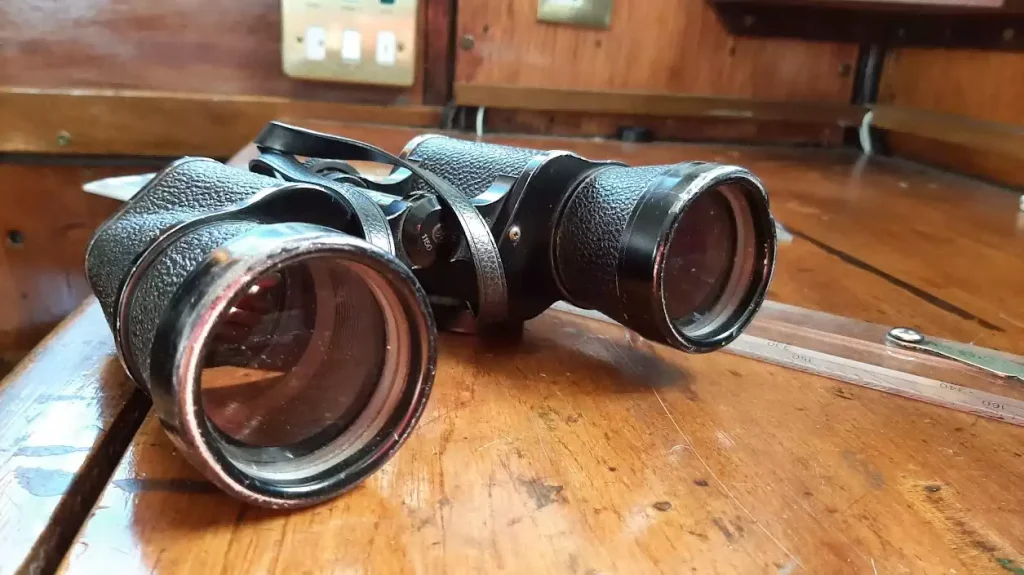
Issue 1: Collimation Drift, Double Images, and Viewing Fatigue
Drops, Vibration, and Structural Loosening Can Alter Left-Right Barrel Alignment
Binoculars depend on the left and right optical systems working together to produce a naturally merged image. If prism retention, barrel connections, or the center hinge lack sufficient rigidity, prolonged carrying vibration, accidental drops, and repeated interpupillary-distance adjustment can gradually shift collimation. A slight deviation may not immediately appear as obvious double vision, but users may have to force their eyes to merge the images, causing eye strain, dizziness, and fatigue during extended viewing.
Buyers should require suppliers to specify allowable collimation tolerances, adjustment methods, and retest criteria before and after impact testing. Aligning the binocular only at the end of assembly is not enough; the prism mounting and housing structure must also be verified to remain stable after transportation and drops.

Issue 2: Focus Wheel, Diopter Ring, and Eyecups Gradually Lose Their Original Feel
After long-term use, the focus wheel may become too loose or too stiff, develop free play, unusual noise, or backlash; the diopter ring may no longer stay securely at its set position; and twist-up eyecups may lose clear click stops, become uneven in height, or loosen and slide down. Common causes include wear of threads and transmission parts, grease migration or viscosity changes, spring fatigue, and accumulated dimensional tolerances.
For birding, hunting, and travel channels, these problems directly affect target acquisition speed and continuous-use comfort. B2B sample evaluation should not stop after a few dozen operations. Buyers should specify cycling tests for the focus wheel, eyecups, and hinge, and check resistance changes after low-temperature, room-temperature, and high-temperature exposure.
Issue 3: Sealing Performance Declines, Causing Internal Fogging or Water Ingress
Waterproofing and nitrogen filling are not permanent conditions once completed. O-rings age, sealing compounds can be affected by temperature cycling, and valves, focus shafts, and barrel joints may develop slow leaks. As sealing performance declines, dry internal gas gradually escapes and humid outside air enters the binocular, increasing the risk of internal condensation during rapid temperature changes.
Suppliers should combine waterproof testing with temperature-and-humidity cycling rather than performing a one-time immersion demonstration only on a new sample. For marine, tropical, and high-humidity markets, salt spray, mold, and long-term storage risks should also be considered. The ISO 9022 series covers environmental testing for optical instruments, including cold, heat, humidity, mold growth, condensation, vibration, and solar radiation, and can serve as a reference when defining project-specific test conditions.
External Reference: ISO Environmental Testing for Optical Instruments (https://www.iso.org/ics/37.020.html)
Issue 4: Rubber Armor Becomes Sticky, Chalky, Cracked, or Delaminated
After prolonged exposure to UV light, sweat, sunscreen, insect repellent, oils, and high temperatures, rubber armor may become sticky, develop a chalky white surface, change color, lift at the edges, crack, or lose adhesion. Low-cost materials may feel soft and comfortable at the sample stage but lack sufficient weathering and chemical resistance, with failures becoming concentrated only after several months of mass-market use.
During procurement, buyers should lock the rubber formulation, hardness, color, and adhesive system, and require UV, damp-heat, and common-chemical contact testing. Upgraded materials increase BOM cost, but can reduce channel returns, cosmetic complaints, and replacement-part management.

Issue 5: Lens Scratches, Coating Damage, and Internal Mold
Incorrect Cleaning Can Turn Dust and Salt Crystals into Abrasive Particles
After dust, oil, and salt accumulate on optical surfaces, repeatedly wiping them directly with clothing or a dry cloth can leave fine scratches on the coating or glass and reduce backlight contrast. ZEISS specifically warns against rubbing sand, dust, or salt particles across optical surfaces because they can immediately scratch the coating or glass. SWAROVSKI likewise recommends rinsing the binocular with clean water first and then drying it carefully.
External References: ZEISS Guide to Cleaning the Outer Optical Surfaces of Binoculars (https://cop-community.zeiss.com/s/article/What-is-the-best-way-to-clean-the-outer-optical-surfaces-of-binoculars); SWAROVSKI OPTIK Product Care (https://www.swarovskioptik.com/us/en/hunting/optics101/get-quick-answers-on-my-service-from-swarovski-optik)
High-Humidity Storage and Seal Failure Can Encourage Internal Mold Growth
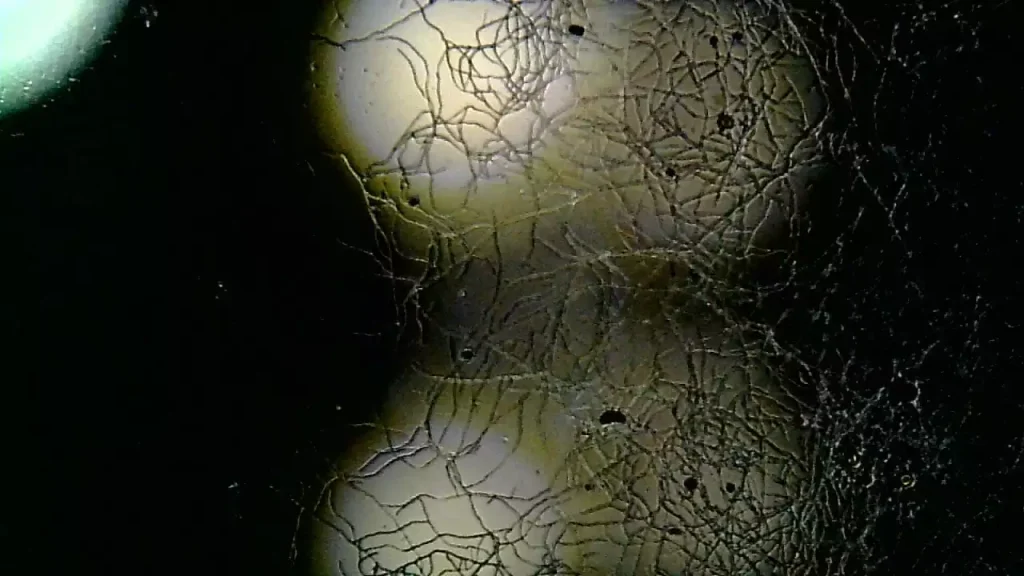
Once fungal hyphae develop on lens or prism surfaces, the image may become hazy and lose contrast; in severe cases, the coatings can also be damaged. Storing a damp binocular directly in a closed soft case, or using it in tropical environments without adequate moisture control, significantly increases the risk. If mold develops internally, professional disassembly, cleaning, and recollimation are usually required, making repair far more expensive than routine moisture prevention.
Related Articles: How to Focus and Test Binoculars: A Practical Field Guide
How Should Wholesalers Build Long-Term Risks into Acceptance Standards?
| Long-Term Issue | Common Cause | Recommended Verification | B2B Control Document |
| Double Images & Collimation Drift | Insufficient prism retention, hinge rigidity, or barrel rigidity | Retest collimation before and after impact/vibration | Golden Sample; collimation tolerances |
| Loose Focus & Eyecups | Transmission wear, lubricant changes, spring fatigue | Life-cycle testing and low/high-temperature operation | Part tolerances; cycle-life requirements |
| Internal Fogging or Water Ingress | Aged seals or leakage at adhesive joints or valves | Immersion, temperature/humidity cycling, airtightness checks | BOM; test conditions; sampling ratio |
| Sticky or Delaminated Rubber | UV, sweat, chemicals, and high-temperature aging | UV, damp-heat, and chemical-contact testing | Material grade; hardness; color standard |
| Scratches & Mold | Incorrect cleaning, high-humidity storage, seal failure | Cleaning validation, mold, and storage testing | Manual; moisture-proof packaging; after-sales standard |
A More Effective Durability Evaluation Should Be Divided into Three Stages
- Sample Stage: Establish baseline requirements for collimation, focusing, eyecups, waterproofing, and appearance, while retaining a Golden Sample that has not undergone destructive testing.
- Pilot-Production Stage: Draw samples from an actual small production batch for cycling, impact, temperature-and-humidity, and material-aging tests to verify process and batch consistency.
- Mass-Production Stage: Use AQL inspection, critical-process records, batch traceability, and field-failure analysis to continuously refine the BOM and inspection standards.
Long-term quality is not guaranteed by simply calling a product “durable.” It depends on material selection, structural design, process control, and a closed verification loop. If a supplier can provide only good-looking new samples but cannot explain life-cycle testing, change management, or the causes of after-sales failures, the buyer’s risk often becomes visible only after the product reaches the market.
FORESEEN OPTICS Recommendation: Move After-Sales Risks Forward into the Product-Definition Stage
For binocular OEM/ODM projects, FORESEEN OPTICS recommends that buyers define collimation stability, focusing life, sealing, mold resistance, and rubber-weathering requirements in advance according to the target channel, warranty period, use environment, and retail price range. For first orders, low-MOQ pilot production and targeted destructive testing can establish a reliable baseline before purchase volumes are gradually increased.
Binocular Focusing & Sample Testing Guide (https://www.foreseenoptics.com/how-to-focus-and-test-binoculars-a-practical-field-guide)
Typical long-term binocular problems include collimation drift, loose focusing and eyecup mechanisms, seal failure, rubber aging, lens scratches, and internal mold. Although these issues appear in different parts of the product, they are fundamentally connected to material life, structural stability, assembly tolerances, and the use environment. For B2B buyers, mature procurement means establishing repeatable durability tests and clear responsibility boundaries during the sample, pilot-production, and mass-production stages rather than waiting for after-sales data to reveal the problems.