In the outdoor optics market, birdwatching binoculars and general outdoor binoculars may seem to solve the same basic problem: helping users see farther. But from the perspective of B2B purchasing, channel sales, and product line planning, the logic behind these two categories is completely different.
General outdoor users often use binoculars for casual viewing, occasional observation, and light-duty experiences. Birdwatchers, however, usually need to quickly locate subjects in complex backgrounds, continuously track moving targets, and maintain a comfortable, natural, and stable viewing experience over long periods of time.
This means birdwatching binoculars should not simply be understood as a “higher-end version” of regular outdoor binoculars. It is not just about increasing magnification, using a larger objective lens, or raising the price. Instead, birdwatching binoculars require a product route built around field of view, focusing performance, color reproduction, edge control, handling balance, eye comfort, and long-term reliability.
For brands, distributors, and OEM/ODM manufacturers, understanding this difference is extremely important. Birdwatching users are usually more knowledgeable, and repeat purchases and word-of-mouth growth depend heavily on real user experience. Channels also care more about whether a product can form a clear market position, generate stable sales, and build long-term differentiation.
In this article, we will look at birdwatching binoculars from a B2B perspective and explain why birdwatching places very different demands on binoculars compared with general outdoor use. We will also explore how brands can redefine their product lines around real birdwatching scenarios.
- Why don’t birdwatching users only care about magnification and objective lens size?
- What special requirements does birdwatching place on field of view, focusing, color performance, and viewing comfort?
- Why is it difficult for general outdoor binoculars to directly serve professional birdwatching channels?
- How should B2B brands and distributors plan specifications, price ranges, and selling points for a birdwatching binocular product line?
- In OEM/ODM development, how can manufacturers turn birdwatching needs into scalable product platforms?
The Real Difference Between Birdwatching and General Outdoor Use: Casual Viewing vs. Continuous Searching, Fast Tracking, and Accurate Identification
In general outdoor scenarios, people usually use binoculars to view distant mountains, landmarks, animals, or travel scenery. The usage is often occasional, and the subjects are usually larger, slower, or relatively stationary. In this case, lightweight design, basic image clarity, affordable pricing, and easy portability are often key factors in the purchasing decision.
Birdwatching is very different.
Birds are usually small, fast-moving, and do not stay in one place for long. They are often hidden among branches, reeds, backlit environments, water reflections, or other complex backgrounds. Users are not simply trying to “see farther.” They are constantly scanning, locating, tracking, confirming, and identifying.
That is why the core task of birdwatching binoculars is not just to magnify the image, but to improve the user’s overall observation efficiency over time. If a B2B brand defines birdwatching binoculars in the same way as general outdoor binoculars, it may easily end up with a product that looks good on paper but fails to win real birdwatchers.
- General outdoor use: More focused on occasional viewing, with greater emphasis on portability, price, and basic image quality.
- Birdwatching use: More focused on frequent scanning, with greater emphasis on wide field of view, fast focusing, and long-term viewing comfort.
- General outdoor use: Users usually have higher tolerance because the viewing time is shorter.
- Birdwatching use: Users are more sensitive to chromatic aberration, edge performance, glare control, and focusing feel.
Birdwatching Users Care Less About Distance and More About Finding the Bird Faster
Why a Wide Field of View Matters First
In birdwatching, the subject often appears suddenly, moves quickly, and may only stay among treetops or bushes for a few seconds. A wider field of view helps users scan faster, locate birds more easily, and reduce the time spent searching. It can also make binoculars much easier and less frustrating for beginners to use.
From a B2B product development perspective, field of view is not just a specification to list on a product sheet. It is a key foundation for channel education, end-user experience, and long-term user retention. A binocular with higher magnification but a narrow field of view may not be the best product for birdwatching channels to promote.
Why Fast Focusing Makes Tracking Easier
In many general outdoor situations, users only need to focus once on a distant, fixed object. Birdwatching is different. Users often need to switch focus repeatedly between different distances and different layers of branches, leaves, or reeds.
This means focus travel, resistance, smoothness, and tactile feedback all affect whether the user can keep up with the subject in time.
Why Handheld Stability Often Beats Higher Magnification
Specifications such as 8×42, 8×32, and 10×42 are commonly used for birdwatching, not because they look the most impressive on paper, but because they offer a better balance between field of view, stability, brightness, weight, and viewing comfort.
For most mainstream channel products, a stable and clear image is more suitable for long-term sales than simply pushing magnification higher.

Birdwatching Is More Sensitive to Color, Contrast, and Edge Performance
When general outdoor users look at mountains, buildings, or distant animals, they usually care most about whether the image is clear. Birdwatchers, however, need to identify feather colors, fine markings, eye rings, wing bars, back patterns, and body shapes. This makes color reproduction, contrast, and detail separation especially important.
Why Color Reproduction Affects Species Identification
Birdwatching is not just about enjoying the scenery. Many bird species have very subtle differences. If a binocular produces obvious color bias or unnatural colors, users will quickly feel that the product is not professional enough.
For brands, messages such as natural color, true-to-life reproduction, and reduced color bias often carry more value in birdwatching channels than simply emphasizing high light transmission.
Why Contrast Control Matters in Complex Backgrounds
Leaves, branches, wetland reeds, shadows, and backlit environments can easily cause the subject to blend into the background. Good contrast control helps the outline of the bird stand out more clearly, improving the user’s identification efficiency.
Why Edge Comfort Matters During Long Scanning Sessions
Birdwatchers often scan large areas of woodland, wetlands, or open water for extended periods of time. Poor edge image quality, obvious distortion, or uncomfortable eye relief can all lead to visual fatigue.
For channels, these experience-related issues directly affect user reviews, repeat purchases, and word-of-mouth recommendations.

From a B2B Purchasing Perspective, Birdwatching Product Lines Need to Be Redefined — Not Simply Selected from General Outdoor Models
Many brands, especially in the early stage, tend to take a regular 8×42 or 10×42 outdoor binocular and simply market it as a birdwatching model. But as users become more experienced, this approach is becoming less effective in building professional trust.
What birdwatching channels need is not a vague “multi-purpose outdoor binocular,” but a product line with a clearly explainable usage logic.
- Product positioning: Clearly define whether the model is designed for entry-level birdwatching, advanced birdwatching, lightweight birdwatching, or professional nature observation.
- Specification logic: Build the product around field of view, focusing performance, color reproduction, and viewing comfort, rather than only segmenting by magnification and objective lens size.
- Channel communication: Explain clearly why this model is better for finding birds, tracking birds, and watching birds comfortably over long periods of time.
- After-sales control: Birdwatching users use their binoculars more frequently, so they are more sensitive to focusing feel, hinge resistance, and sealing stability.
- Product consistency: When channels place repeat orders, mass production performance must remain stable. The sample cannot be excellent while the bulk order becomes inconsistent.
For B2B brands and distributors, birdwatching should therefore be planned as an independent product route, not just used as a marketing label within a general outdoor product line.
Five Questions Brands Should Answer Before Planning a Birdwatching Binocular Product Line
Before developing or sourcing a birdwatching binocular product line, brands should first answer five key questions:
- Who is the target channel? Is it a professional birdwatching store, a nature education organization, an outdoor retail chain, or an e-commerce platform?
- Who is the target user? Is the product designed for beginner birdwatchers, experienced birders, travel birdwatching users, or ecological education users?
- What is the main specification? Is it an 8×42 all-round comfort route, an 8×32 lightweight route, or a 10×42 long-distance identification route?
- How should the core selling points be communicated? Should the focus be wide field of view, fast focusing, natural color, lightweight portability, or long-time viewing comfort?
- Can the factory platform support long-term mass production? This includes optical consistency, focusing feel, coating stability, and structural reliability.
If these questions are not clarified first, the final product can easily become just a stack of specifications. It may not feel professional enough for birdwatching, yet it may also fail to fit the general outdoor market. In the end, both channel communication and user perception become unclear.

B2B Positioning Strategies for Different Types of Birdwatching Binoculars
| Product Route | Core Users | Key Selling Points | B2B Purchasing Focus |
| Entry-Level Birdwatching Binoculars | Beginner birdwatchers, nature education programs, family and parent-child channels | Easy to use, wide field of view, price-friendly | Low after-sales risk, stable supply, lower channel education cost |
| Mid-Range Mainstream Models | Advanced birdwatchers, outdoor retail chains, professional channels | Natural color, fast focusing, comfortable eye relief | Stable sell-through, positive repeat purchase feedback, clear product differentiation |
| Lightweight Birdwatching Binoculars | Hiking birdwatchers, travel birdwatching users, female users | Lightweight design, 8×32 / 8×30 specifications, comfortable carrying experience | Carrying system, exterior design, real usage frequency |
| Professional Birdwatching Binoculars | Experienced birders, ecological observers, brand image models | ED / APO optics, edge control, low chromatic aberration, high contrast | Brand premium, stable product platform, mass production consistency |
A mature B2B birdwatching product line should not be segmented only by price. Each level should correspond to a clear user group, usage scenario, and channel role.
Key Technical Trade-Offs Between Birdwatching and General Outdoor Binoculars
| Technical Dimension | General Outdoor Binoculars Focus More On | Birdwatching Binoculars Focus More On |
| Magnification | Seeing farther, with a simple and easy-to-understand selling point | Handheld stability, field of view, and identification efficiency are more important |
| Objective Lens Size | Brightness and a stronger specification impression | Balance between brightness, weight, and long-time viewing comfort |
| Field of View | Usually acceptable as long as it is available, with lower user sensitivity | A core experience indicator that directly affects how quickly users can find birds |
| Focusing | General smoothness is usually enough | Speed, resistance, close focus, and frequent distance switching are all critical |
| Color and Contrast | Clear image quality is usually enough | Directly affects feather color identification and professional user perception |
| Structural Reliability | Basic protection is usually acceptable | Consistent focusing, hinge performance, eyecup durability, and sealing stability under high-frequency use |
This table shows that the difference between birdwatching binoculars and general outdoor binoculars is not simply about “higher specifications.” The real difference lies in what users are sensitive to.
If B2B brands continue to define birdwatching products with a general outdoor product logic, it will be difficult to build long-term advantages in professional birdwatching channels.
How Can Manufacturers Turn Birdwatching Needs into Scalable Product Platforms?
Build a Product Platform First, Not Just a Single Model
Birdwatching products need long-term iteration. Manufacturers can build entry-level, mid-range, lightweight, and premium versions based on the same optical platform, then create a full product series through different combinations of glass, coatings, structure, exterior design, and accessories.
Treat Focusing and Handling as Core Structural Priorities
Birdwatching users are highly sensitive to focusing feel and handling balance. During product development, manufacturers should pay close attention to focusing speed, damping consistency, focusing feel under temperature changes, and grip comfort for users with different hand sizes.
Include Optical Consistency in Mass Production Control
Birdwatching channels are more likely to face side-by-side product comparisons from users, so batch-to-batch consistency is extremely important. Center resolution, color tendency, left-right barrel consistency, assembly cleanliness, and coating stability should all be included as key quality control points.
Treat Accessories and Packaging as Channel Assets
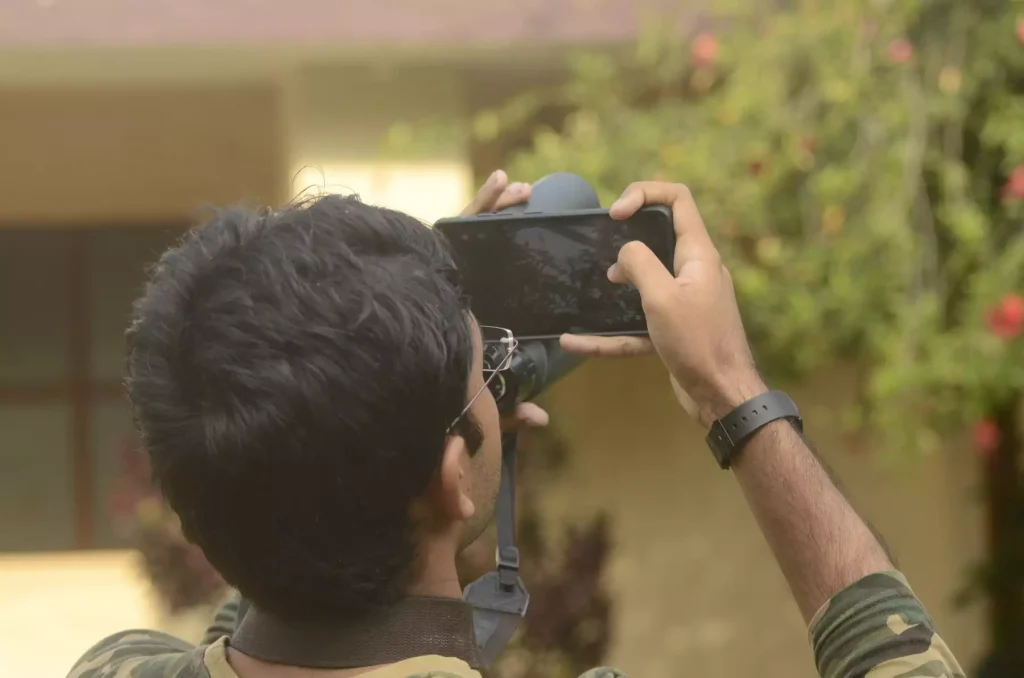
Birdwatching users may need wide neck straps, binocular harness systems, lens protection, quick-access carrying cases, smartphone recording adapters, and nature education materials.
For B2B brands and channels, accessories should not be seen as low-value giveaways. They are part of what makes the product feel complete, supports channel positioning, and increases perceived value.
How Should Birdwatching Binoculars Be Balanced Across Different Price Ranges?
| Price Range | Product Definition Focus | B2B Product Line Strategy |
| Entry-Level | Wide field of view, easy focusing, basic clarity, low after-sales risk | Suitable for nature education, gift channels, and beginner users. Avoid overemphasizing high magnification. |
| Mid-Range Mainstream | Balanced 8×42 / 8×32 specifications, natural color, comfortable eye relief | Use as the main channel product to build word of mouth and stable sell-through. |
| High-End Professional | ED / APO optics, low chromatic aberration, high contrast, edge control, precision structure | Suitable for brand image building, professional channels, and high-margin product lines. |
From a purchasing perspective, mid-range mainstream models are usually the most valuable area to invest in. They offer enough market volume while also allowing users to clearly feel the difference between a real birdwatching binocular and a general outdoor model.

How Should Brands and Channels Communicate Birdwatching Binoculars?
The sales message for birdwatching binoculars should not stop at a simple list of specifications such as “8×42, ED, FMC, waterproof.” Instead, brands need to translate technical specifications into scenario-based value that users can easily understand.
- Wide field of view means users can find flying or moving birds faster.
- Fast focusing means users can switch more smoothly between branches, leaves, and subjects at different distances.
- Natural color reproduction means users can identify feather colors and fine details more accurately.
- Comfortable eye relief means less eye fatigue during long viewing sessions, and a more friendly experience for users who wear glasses.
- Lightweight structure means the binocular is more suitable for travel birdwatching and long outdoor carrying.
- Stable mass production means more reliable channel replenishment, lower after-sales pressure, and more controllable long-term cooperation.
This way of communication is more suitable for B2B channel training, product detail pages, dealer catalogs, and brand website content. It also helps end users understand the real value of the product more easily.
Birdwatching Is Not Just a Subcategory of General Outdoor Use — It Is an Independent Product Route
So, why does birdwatching require a very different binocular from regular outdoor viewing, even though both are about seeing far?
Because the core task of birdwatching is not simply to magnify distant subjects from time to time. It is about quickly finding birds in complex natural environments, tracking them steadily, identifying fine details accurately, and maintaining a comfortable viewing experience over long observation sessions.
For B2B brands, the competitiveness of a birdwatching binocular comes from clear scenario definition, mature product segmentation, and stable mass production capability. For channels, a truly sellable birdwatching product is not just one with attractive specifications. It is a product that can turn “find faster, see more accurately, use longer, and carry more easily” into clear user value.
Therefore, the future opportunity for birdwatching binoculars is not about giving a general outdoor product a new category name. It is about building a professional product line around real birdwatching scenarios, covering optics, structure, accessories, content, and channel communication.
The brands that complete this product definition upgrade earlier will be more likely to build long-term sales advantages in the birdwatching market.
Frequently Asked Questions
Q: Is higher magnification always better for birdwatching binoculars?
A: No. Birdwatching places more emphasis on wide field of view, handheld stability, and fast target location. Too much magnification can narrow the field of view and increase image shake, which may reduce observation efficiency.
Q: Why is 8×42 often considered a good specification for birdwatching?
A: 8×42 offers a strong balance between field of view, brightness, stability, and long-time viewing comfort. That is why it is often used as a mainstream birdwatching specification by many brands.
Q: Is 8×32 suitable for birdwatching channels?
A: Yes. 8×32 is suitable for lightweight birdwatching and travel birdwatching product routes. It is more portable than 8×42, while still offering a more serious observation experience than compact pocket binoculars.
Q: Do birdwatching binoculars always need ED glass?
A: Not always. Entry-level models do not necessarily need ED glass. However, in mid-range and high-end birdwatching products, ED glass helps reduce chromatic aberration, improve professional perception, and support channel premium.
Q: What do manufacturers most often overlook when developing birdwatching binoculars?
A: Focusing feel, field-of-view experience, and long-time viewing comfort are often overlooked. Birdwatching users are very sensitive to these details, and they often affect word of mouth more than a single specification.