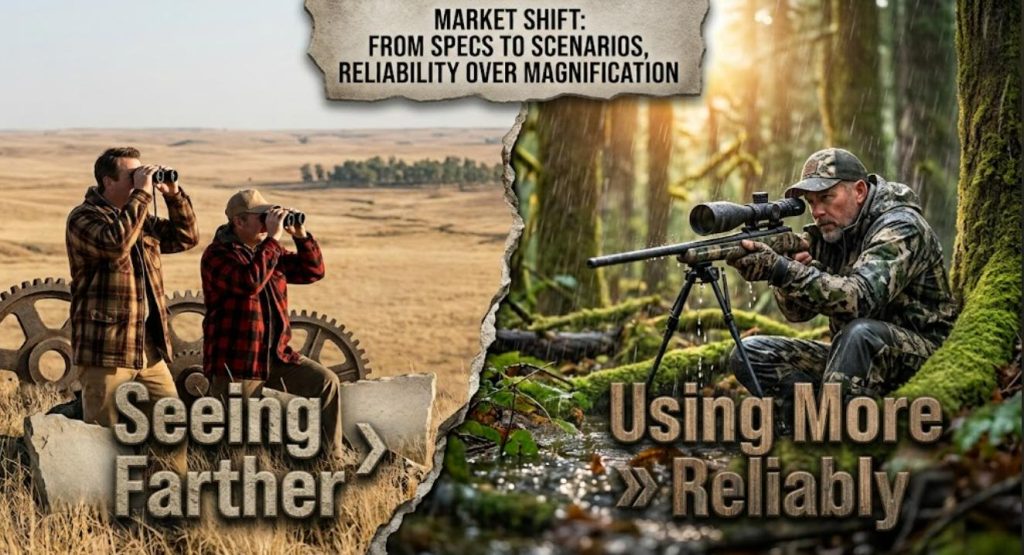
When we look at the hunting optics market through the changes of the past few years, one trend has become increasingly clear: the core driver of market growth is moving away from simply “seeing farther” or offering higher specifications, and toward more stable performance, real-world usability, and long-term reliability.
In the past, many product definitions and sales messages were built around basic specifications such as magnification, objective lens size, and field of view. It often felt as if once a product could “see farther,” the market would naturally accept it. But as end users and channel buyers become more experienced, they are starting to realize that the real value of an optical product is not determined by the numbers people see at first glance, but by how consistently it performs in real hunting conditions.
Hunting-related applications are fundamentally different from general outdoor observation. They often take place in tougher, more unpredictable environments where there is very little room for error. Low light at dawn and dusk, rain, fog, temperature changes, long periods of waiting followed by a very short observation window, and continuous handheld use across complex terrain — all of these factors require an optic to remain dependable even when conditions are far from ideal.
This is why hunters and channel customers are no longer satisfied with products that only look strong on paper. What they care about more is whether the product remains stable and trustworthy when it is actually being used in the field.
For brands, distributors, and manufacturers, this shift is highly significant. It means the market is no longer simply chasing higher magnification or longer viewing distance. Instead, it is redefining what makes a hunting optic worth buying, recommending, and purchasing again over the long term.
In the future, the most competitive hunting optics will not be the ones that only help users “see farther,” but the ones that allow them to use confidently and reliably in real hunting scenarios.
Why the Market Growth Logic Is Shifting
Because what the hunting market really buys is not a specification, but a dependable result in the field.
In many early market perceptions, the competitiveness of hunting optics seemed to come mainly from magnification power, viewing distance, and basic imaging performance. This logic did make sense at certain stages, because “seeing farther” is indeed one of the most direct and easiest-to-understand capabilities of an optical product.
But as the market becomes more mature, users are beginning to realize something important: if a product only performs well under ideal conditions, but shows obvious weaknesses in low light, humidity, fog, cold weather, or long hours of use, then no matter how far it can see, it is still difficult for it to become a truly high-value product.
The core of a hunting scenario is not to display specifications, but to complete a task. What users need is the ability to obtain effective observation steadily at the right moment and in the right environment. At this point, low-light performance, resistance to environmental interference, handheld stability, external structural reliability, and long-term consistency quickly become higher priorities.
As a result, the market’s attention is naturally shifting from “stronger single-point performance” to “more stable overall usability.”
What Does “Using More Reliably” Mean for Hunting Channel Customers?
From the perspective of channel customers, “using more reliably” is not a vague idea. It can be broken down into several very practical requirements.
First, it means the product still provides effective observation in low-light conditions. Many hunting activities take place during times when lighting is far from ideal. So an optic should not only look “bright”; it also needs to deliver an image that is clear enough and detailed enough for users to make a confident judgment under marginal light.
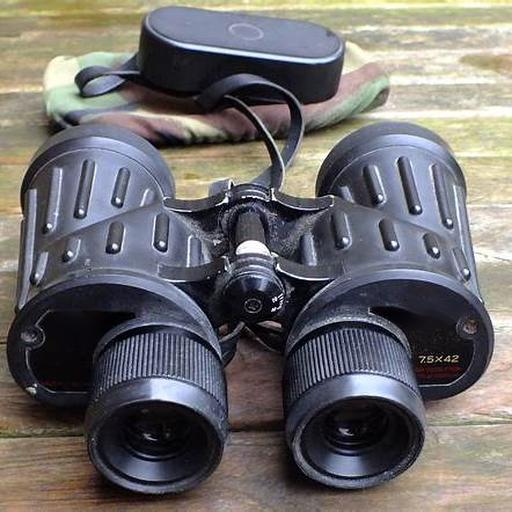
Second, it means strong adaptability to complex environments. Rain, morning fog, temperature changes, mud, and long hours of outdoor carry are all real conditions that hunting optics have to face. Waterproof performance, anti-fog capability, a non-slip exterior, solid construction, and stable operation are not just extra selling points. They are basic requirements for a product to truly enter this market.
Third, it means reliability over long-term use. Channel customers are paying less attention to the first impression alone. Instead, they care more about whether the product can remain stable after repeated use, and whether it can continue to deliver a consistent user experience over time.
In this sense, “using more reliably” is not just a marketing phrase. It reflects a new value ranking in the hunting optics market. The ability to work effectively, steadily, and consistently in real outdoor environments is becoming more important than simply helping users “see farther.” This shift is also having a direct impact on purchasing decisions, recommendations, and repeat orders.

The Real Upgrade Logic I See Across Six Key Dimensions
Low-Light Performance
From a “Spec Highlight” to the Foundation of a Hunting Product Line
The most common observation moments in hunting are often not when the sunlight is at its best. Early mornings, dusk, forest edges, and shaded areas all require optics to deliver more stable low-light performance.
This means low-light capability is no longer just a selling point to mention in marketing. It has become a fundamental requirement that determines whether a product is truly suitable for hunting applications.
Weather Resistance
The Market Cares More About “Not Being Affected by the Environment”
For the general outdoor market, waterproofing, fog resistance, and rubber armor may still be seen as additional advantages. But for hunting channels, these features have almost become basic requirements.
Users are paying more attention to practical questions: Can the product still be used in the rain? Will it fog up when the temperature changes? After being carried outdoors for a long time, does it still feel secure in the hand?
All of these questions are essentially part of what “using more reliably” really means.
Grip and Operation
From “Easy to Hold” to “No Mistakes at the Critical Moment”
Many products may look quite similar in a static display. But once they enter a real hunting scenario, details such as exterior texture, anti-slip design, focusing feel, and one-handed operating stability become much more important.
Hunters are not slowly testing a product indoors. They need to use it quickly, accurately, and steadily in real outdoor conditions. Whether the operation feels natural and dependable directly affects the product’s actual value.
Long-Term Reliability
Channels Care More About Whether the Product Stays Stable After Repeat Purchases
As channel customers become more mature, they will not continue to recognize a product just because the first unit looks good at first glance. What truly matters is whether the product remains stable and reliable after long-term use.
This is why the hunting market is placing more importance on structure, sealing, materials, and overall durability. These are the factors that truly support long-term trust.
Sales Messaging
From “See Farther” to “More Stable, More Reliable, More Reassuring”
In the past, market communication was often built around visible specifications such as magnification, lens size, and optical parameters. Today, however, the hunting market is more easily convinced by scenario-based value — for example, more effective low-light observation, more stable performance in complex weather, and more reliable use over long periods.
This shows that the logic of market communication is also changing. It does not mean specifications are no longer important. Instead, specifications need to be translated into stability and reliability that users can actually feel.
Product Direction
Truly Competitive Products Are No Longer Just “General Outdoor Upgrades,” but Clearly Hunting-Oriented Solutions
The stronger products in the future will not simply be upgraded versions of general outdoor optics. They will be product lines clearly designed around the actual logic of hunting tasks.
The brands that can combine low-light performance, weather resistance, stable grip, long-term reliability, and scenario-based messaging into one complete solution will have a better chance of building a real product barrier in the hunting optics market.
What Does This Shift Mean from the Manufacturing Side?
From the manufacturing side, this change in the hunting optics market is actually pushing the entire product development mindset to upgrade.
In the past, many projects were defined around questions such as: Are the specifications easy to explain? Is the price range complete? Is the product series easy to build? These factors still matter, but they are no longer enough on their own.
Today, the more worthwhile direction is to define products around real user tasks:
- Can this product help users make faster judgments in low-light conditions?
- Can it stay stable in rain, fog, and changing temperatures?
- Is it truly suitable for long hours of repeated and demanding use?
When these questions become the starting point of product development, product upgrades are no longer about simply stacking one stronger specification on top of another. Instead, they become a process of systematic balance and optimization.
For brands, this means a clearer product direction.
For channel customers, it makes professional product positioning easier to build.
And for factories, it means that truly valuable competitiveness will come from understanding real hunting scenarios and having the ability to keep improving products over time.
Three Key Trends for the Next 12–24 Months
First, hunting optics will continue to move toward more clearly defined product upgrades around low-light performance, weather resistance, and long-term reliability. The brands that can build a stable reputation in real field conditions will be more likely to achieve sustainable growth.
Second, channel customers will place more importance on how well a product communicates its scenario-based effectiveness. In the future, what will truly convince customers is not abstract high specifications, but a stable user experience that can be tested, felt, and trusted.
Third, cooperation between brands and supply chains will move beyond simple OEM supply and further toward targeted development based on real hunting scenarios. This is because the market does not really need more products that look similar. What it needs are products that solve real task-based problems more clearly and effectively.
Conclusion
The growth logic of the hunting optics market is shifting from “seeing farther” to “using more reliably.” This is not just a marketing slogan, but a natural result of a maturing market.
Users and channel customers are becoming increasingly clear about what truly makes a product valuable. It is not simply about looking impressive on a specification sheet. What really matters is whether the product can still perform reliably in early mornings, at dusk, in rain and fog, in cold weather, and during long hours of use.
For brands, distributors, and manufacturers, this shift sends a very clear signal. The future is not about competing on one single specification, but about building product lines that are more scenario-driven, more systematic, and more reliable over the long term.
Those who understand this earlier will have a better chance of taking the lead in the next round of competition in the hunting optics market.