First, Be Clear: A Trading Company Is Not Necessarily Unreliable, and a Manufacturer Does Not Need to Perform Every Process In-House
International buyers often treat “factory” and “trading company” as direct indicators of quality, but this is not accurate. A professional trading company may have excellent supply-chain integration, communication, and after-sales capabilities, while some manufacturers outsource lenses, prisms, rubber components, or packaging. The real question is which critical processes the supplier controls and whether it can take responsibility for quality, lead time, cost, and intellectual property.
For binocular projects, a more useful classification is not simply “factory or trading company,” but rather a pure manufacturer, an integrated manufacturing-and-trading company, or a pure trading/procurement company. Buyers should select the appropriate cooperation model according to the required OEM/ODM depth, MOQ, development schedule, and risk tolerance.
Step 1: Verify Whether the Company Identity Matches the Transaction Entity
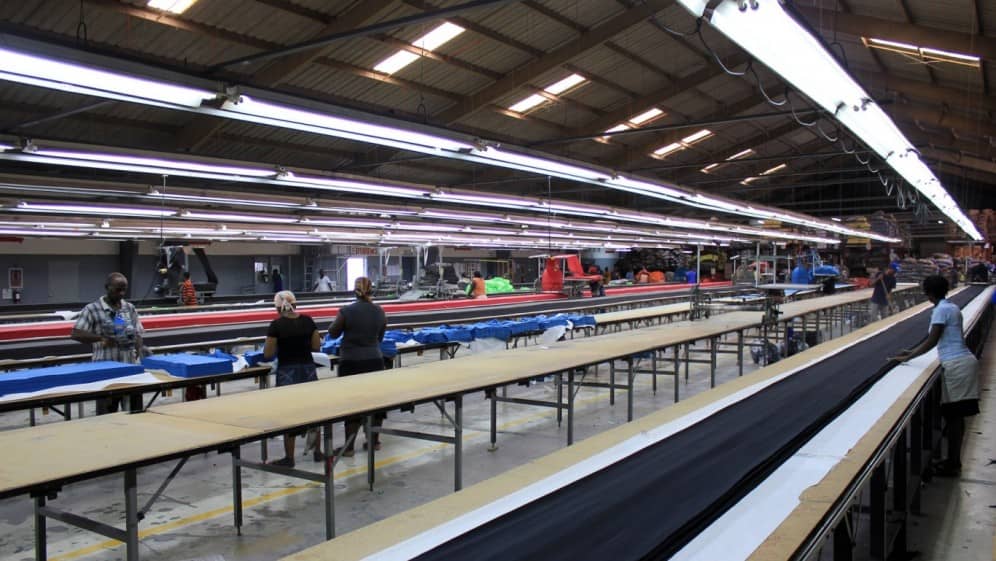
Start by checking the business license, registered address, business scope, establishment date, export entity, and receiving bank account. Long-term differences among the contracting company, invoicing company, payment account, and factory name do not necessarily indicate fraud, but the supplier must be able to explain the relationship among these entities and provide authorization or affiliation documents.
• Confirm the relationship among the quotation, PI, contract, bank account, and export declaration entity.
• Check whether the company name, address, telephone number, and factory location shown in the supplier’s public information have remained consistent over time.
• For management-system certificates such as ISO 9001, do not review only the scanned copy. Verify the certification scope, production address, validity period, and certification body.
Step 2: Ask the Supplier to Explain “Which Processes It Controls Directly”
Genuine manufacturing capability should be broken down into specific processes. A binocular supplier does not need to melt optical glass itself, but it should clearly state who is responsible for lens processing, coating, prisms, structural components, assembly, collimation, nitrogen sealing, and final inspection.
The Key Is Not the Number of Machines, but Whether Critical Processes Form a Closed Control Loop
Buyers should request process flowcharts, production records, equipment lists, workstation photographs, and quality documents. The equipment must match the product. Binocular manufacturing, for example, requires capabilities for assembly, cleaning, collimation testing, and airtightness or waterproof testing. Showing only CNC machines or a packaging line, without being able to explain optical alignment and inspection procedures, is not sufficient proof of binocular manufacturing capability.
Step 3: Use the Quality System to Determine Whether the Supplier Can Support Mass Production
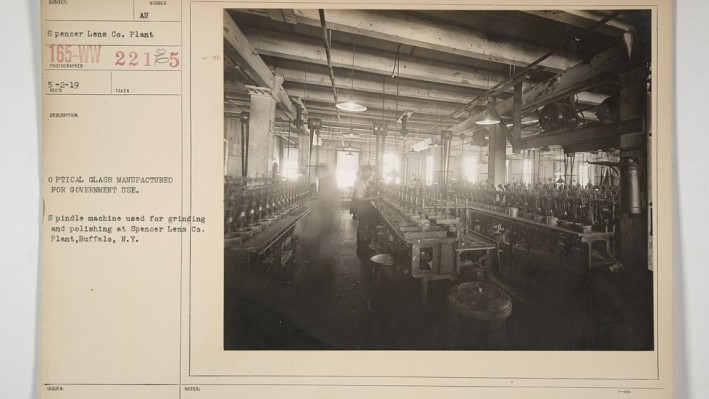
Trading companies can often provide attractive samples, but a manufacturing-oriented supplier must explain how consistency will be maintained in bulk production. International buyers should review incoming inspection, in-process inspection, final inspection, nonconforming-product handling, equipment calibration, batch traceability, and the customer-complaint closed loop.
• Is there a clearly defined IQC, IPQC, and FQC/OQC process, rather than only a visual check before shipment?
• Can the supplier provide a Golden Sample, inspection specifications, AQL standards, and batch test records?
• If double images, water ingress, loose eyecups, or focusing problems occur, can the issue be traced to the workstation, batch, and component supplier?
• Does the supplier allow the customer or a third party to conduct an on-site audit, during-production inspection, and pre-shipment inspection?
Step 4: Verify Through a Live Video Audit or an On-Site Factory Inspection
When an immediate visit is not possible, arrange a live video factory audit. Ask the supplier to begin at the company sign and film continuously through the warehouse, incoming-material area, assembly line, inspection area, and finished-goods area, while randomly checking production records from that day. A pre-edited video can help introduce the company, but it cannot replace real-time verification.
For larger orders or in-depth ODM projects, consider appointing SGS, Intertek, TÜV, or another third party to conduct a Vendor Assessment or Factory Quality Assessment. SGS describes factory quality audits as a systematic evaluation of production-site processes that identifies strengths and weaknesses in the manufacturing system. Platform-based supplier verification reports also commonly cover company type, production capacity, R&D, quality control, subcontractors, and testing capability.
Five High-Risk Warning Signs
• The supplier claims that every lens, prism, structural component, and package is produced entirely in-house, but cannot show the corresponding processes or supply-chain records.
• Its product catalog spans an unusually broad range, from toys and home appliances to professional optics, without clear technical boundaries.
• It refuses live video verification, third-party factory audits, or during-production inspections, and is willing to show only the showroom and sample room.
• Its quotation is significantly below a reasonable market cost, but it cannot explain the materials, testing, MOQ, or after-sales responsibilities.
• All sample communication is handled by sales staff, and engineers cannot participate when questions arise about collimation, waterproofing, coatings, or structural design.
Supplier Types and Suitable Projects
| Supplier Type | Typical Capabilities | Suitable Projects | Key Controls for Buyers |
| Specialized Manufacturer | Controls assembly, inspection, processes, and mass-production management | In-depth OEM/ODM and long-term product lines | R&D resources, capacity, and transparency of critical outsourced processes |
| Integrated Manufacturer and Trader | Operates its own core production lines while integrating adjacent product categories | Multi-category procurement and combined orders | Distinguish in-house products from externally sourced products and establish separate acceptance standards |
| Professional Trading Company | Supply-chain integration, communication, low MOQs, and multi-factory coordination | Small batches, multiple SKUs, and market testing | Actual production factory, price transparency, and quality responsibility |
FORESEEN OPTICS Recommendation: Verify “Manufacturing Control,” Not Just the Factory Label
For binocular wholesale and OEM/ODM projects, buyers should ask the supplier to submit a Manufacturing Capability File covering the legal entity, product processes, in-house and outsourced operations, equipment and personnel, quality control, monthly capacity, typical lead times, and third-party inspection arrangements. This produces a more verifiable answer than simply asking, “Are you a factory?”
Conclusion
Determining whether a binocular supplier is a genuine manufacturer or a trading company requires more than reviewing its website, showroom, certificates, or self-introduction. A more reliable approach is to verify the transaction entity, control of critical processes, quality system, subcontracting transparency, and third-party audit results. For international buyers, the ultimate goal is not to find the company that looks most like a factory, but to identify a partner that can take responsibility for product definition, mass-production consistency, lead time, and after-sales outcomes.