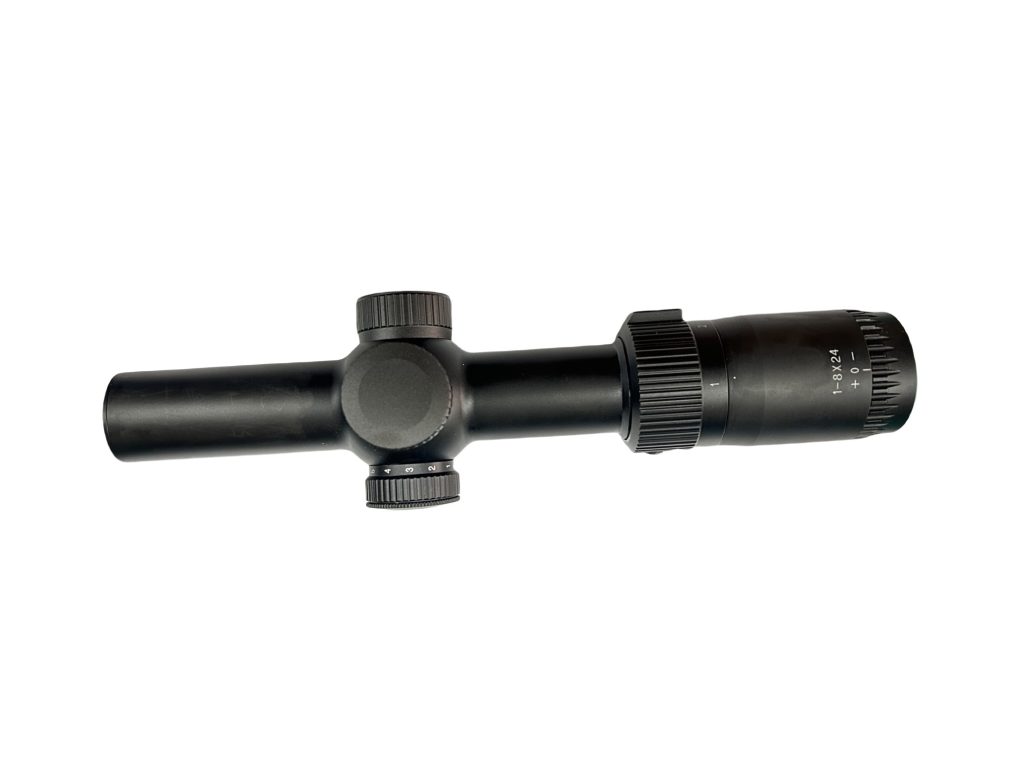
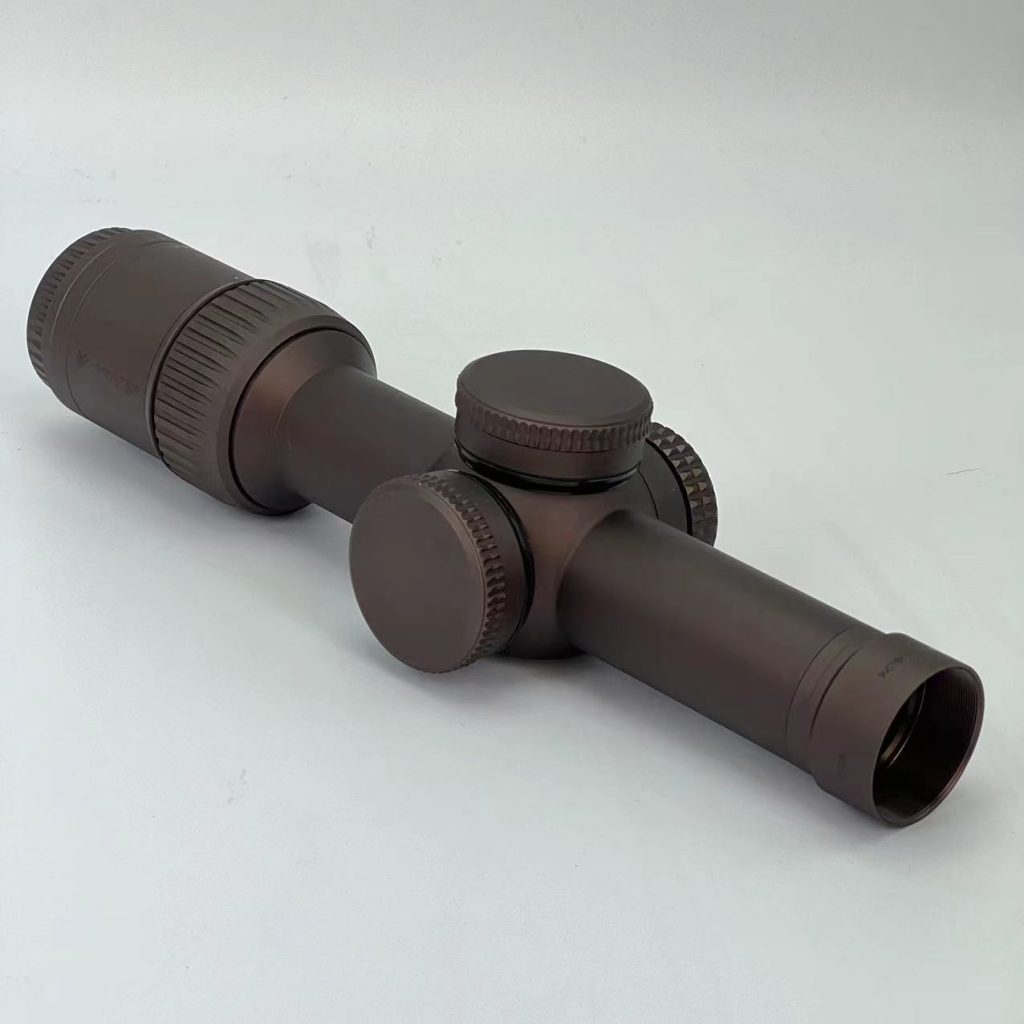
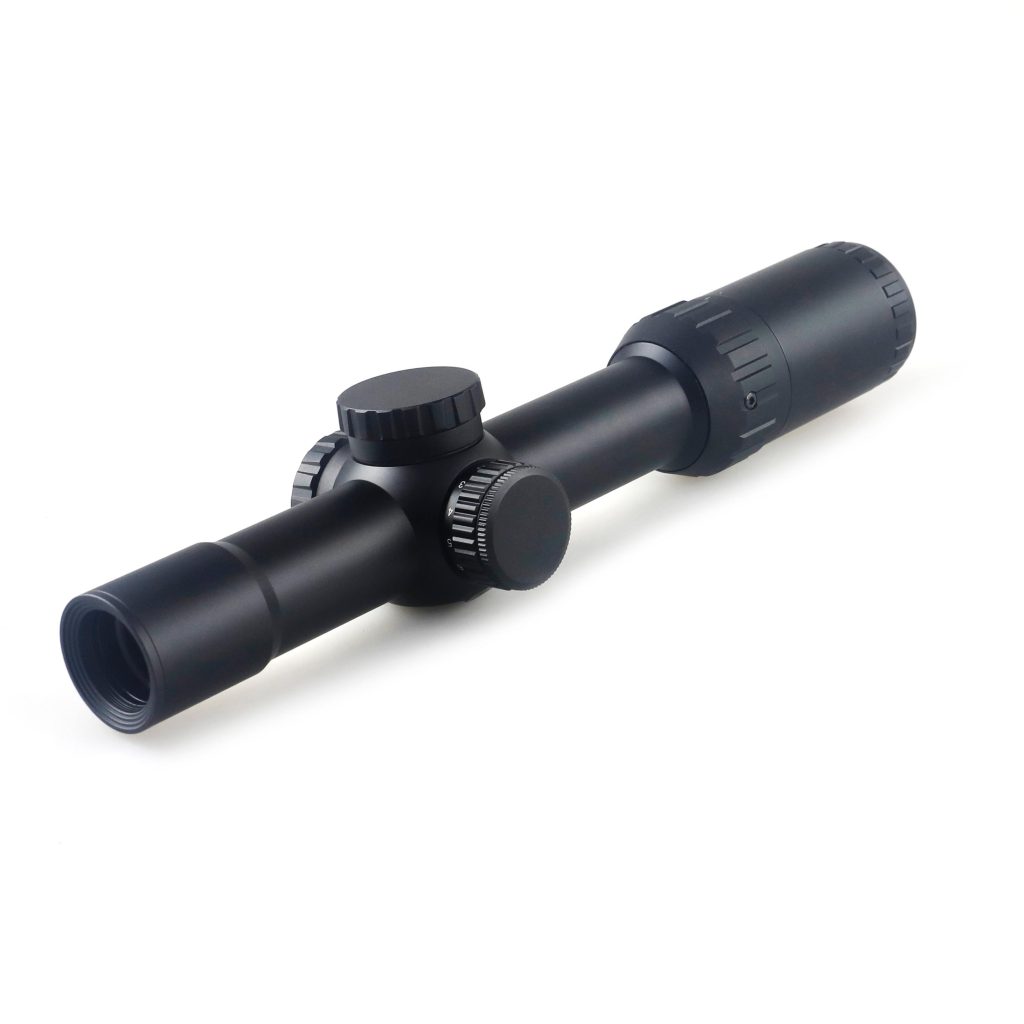
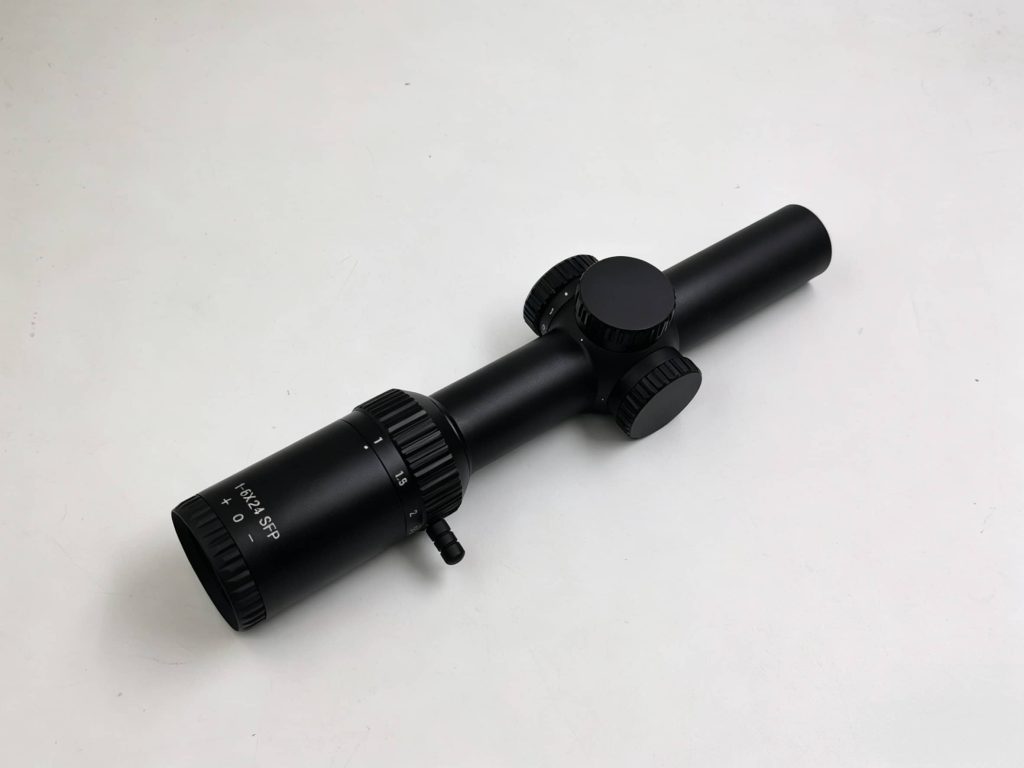
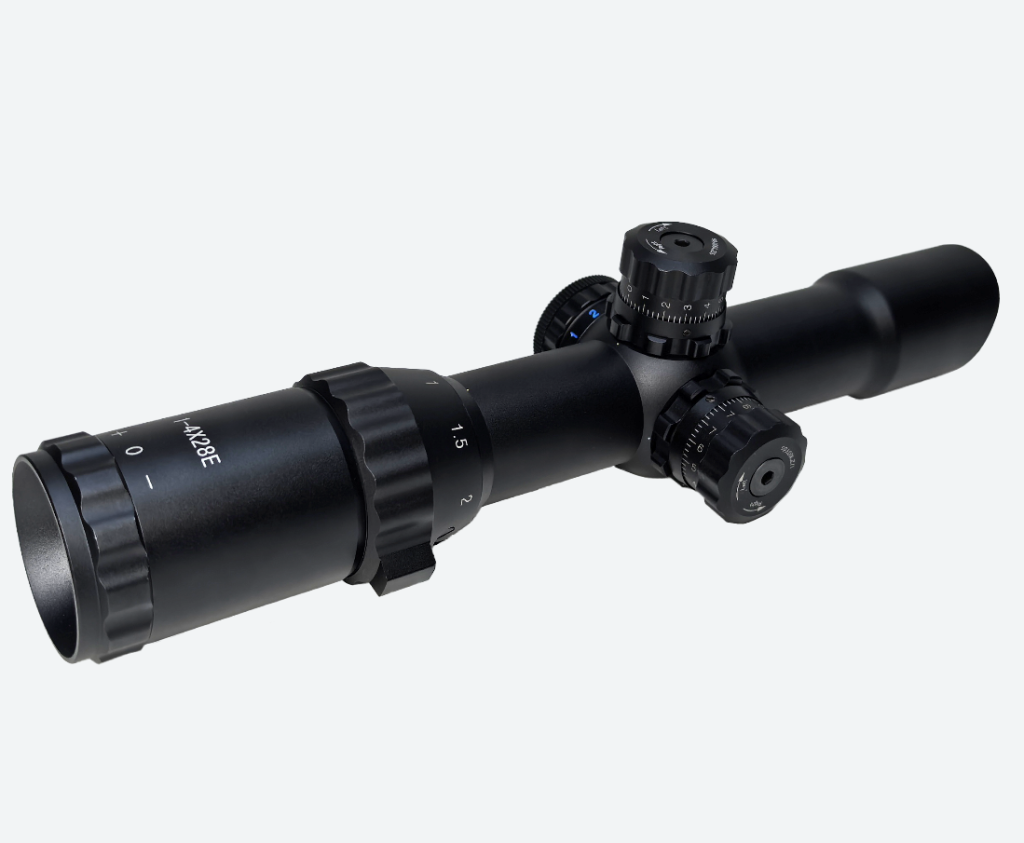
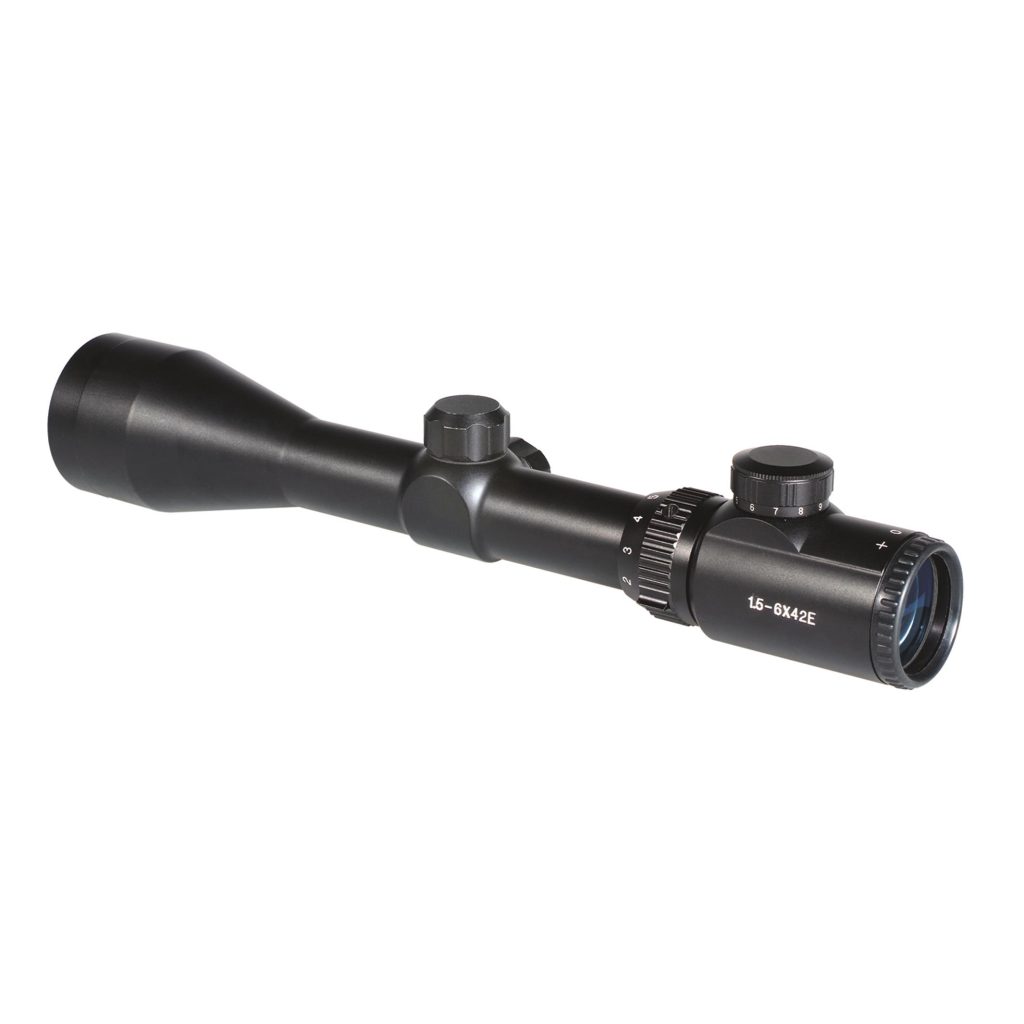
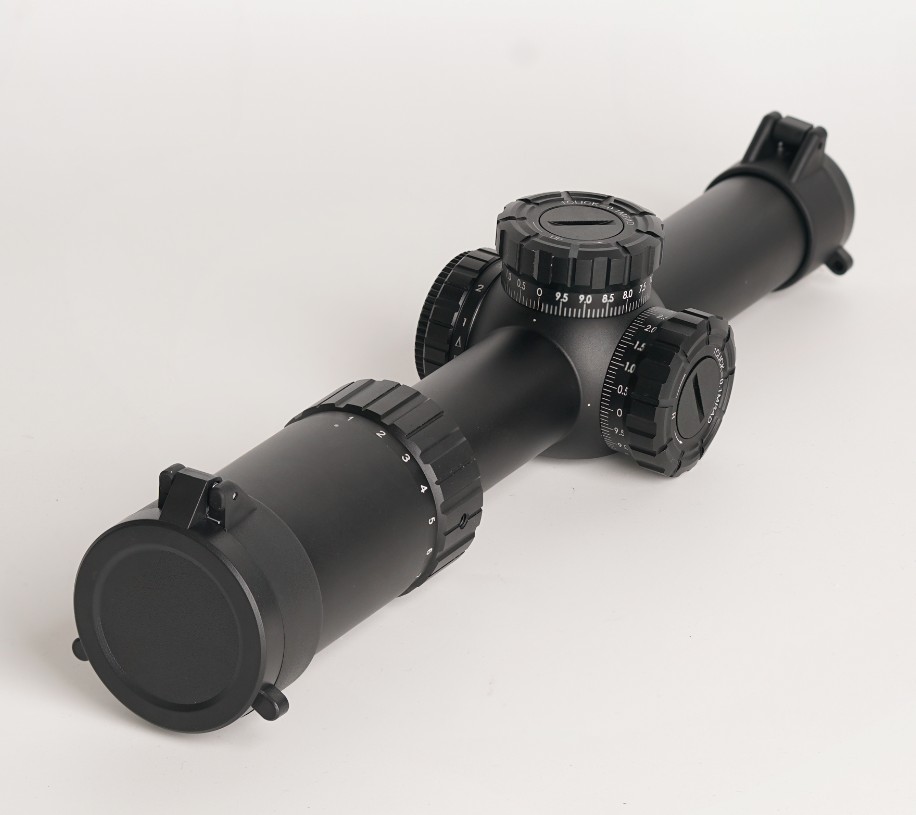
In LPVO (Low Power Variable Optic) product planning, the illumination system is often one of the most overlooked parts of the design. At the same time, it is also one of the features that most directly affects user experience, product positioning, and buying decisions.
When developing an LPVO, many brands naturally focus first on things like magnification range, overall length, reticle style, turret feel, or target retail price. But once the project moves into sampling, quotation, and production evaluation, it usually becomes clear that the illumination system is not just a small add-on feature. It affects the end-user experience, but it also has a direct impact on supply chain maturity, development lead time, validation difficulty, cost structure, and how well the product will be accepted by the market later on.
This matters even more in the current market, because LPVOs are no longer simply an extension of traditional hunting-scope logic. More and more, they are being used for range training, dynamic shooting, 3-gun competition, law enforcement applications, and, to some extent, tactical environments as well. In that context, illumination is no longer just a question of whether the scope has it or not. It has become a core part of the product, one that directly affects target acquisition speed, daytime visibility, control logic, price-point fit, and a brand’s ability to differentiate itself.
For that reason, this article is not only meant to explain the basic knowledge behind LPVO illumination systems. More importantly, it will focus on several practical questions that brand owners and sourcing teams tend to care about most:
- If I want to develop a mainstream commercial LPVO, which type of illumination system should I prioritize?
- If I want to build a more tactical-oriented product, which structures are worth investing in, and which ones may simply be over-designed?
- In an OEM / ODM project, how does the illumination system affect cost, development timeline, and mass-production stability?
- When a procurement team is communicating with a factory, which points should be confirmed first?
Starting from the fundamentals, this article will go through the development path of LPVO illumination technology, the main ways these systems are categorized in the market, the strengths and weaknesses of different solutions, the use cases they are best suited for, and the key decision logic behind brand customization and sourcing evaluation.
The goal is to help readers build a clearer understanding of the following:
- what problem the illumination system in an LPVO is actually solving
- why different illumination structures exist in the market
- which product directions are better matched with 6-level, 11-level, off-between-clicks, fiber-optic, and tritium-based designs
- why daylight bright matters more than the number of brightness settings by itself
- how brands should make sourcing and customization decisions across different price segments
What Is an LPVO Illumination System?
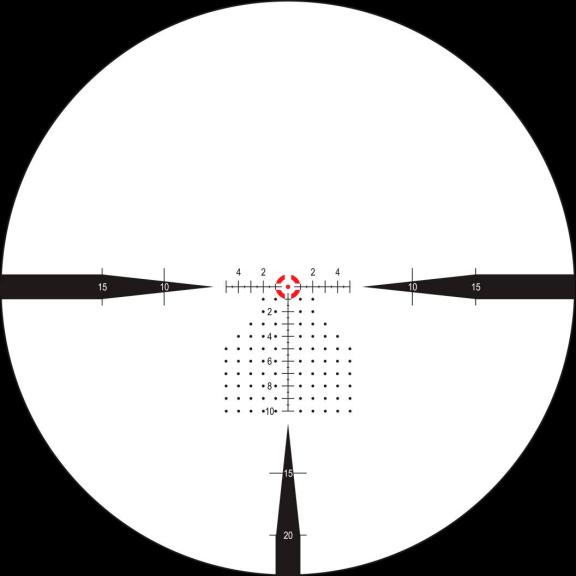
Put simply, the illumination system in an LPVO is designed to make the center of the reticle—or the optic’s key aiming area—easier for the shooter to pick up under different lighting conditions.
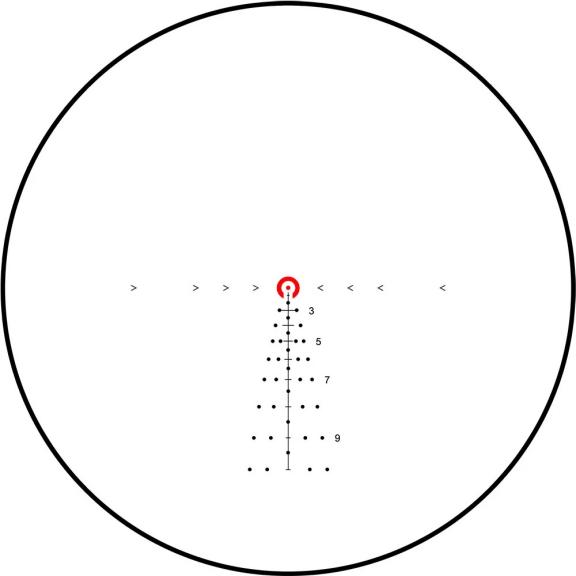
Its purpose is not just to “make the reticle light up.” More importantly, it is meant to improve performance in several practical ways depending on the use environment, including:
- faster recognition of the center aiming point
- better visibility against complex backgrounds
- improved aiming assistance in low-light conditions
- quicker target acquisition at true 1x
- more efficient operation across different user scenarios
At its core, an LPVO illumination system is a combined design involving the light source, circuitry, mechanical adjustment structure, light-guiding method, and the logic behind how the optic is actually used.
That is why it should never be seen as just a simple electronic feature. In practice, it is a system-level design issue that is closely tied to the product’s overall positioning.
Why Is the LPVO Illumination System Important?
When many users first come across LPVOs, they tend to think of illumination as a feature mainly meant for nighttime use. In reality, though, the more important value of a modern LPVO illumination system often shows up in daytime and fast-moving shooting scenarios.
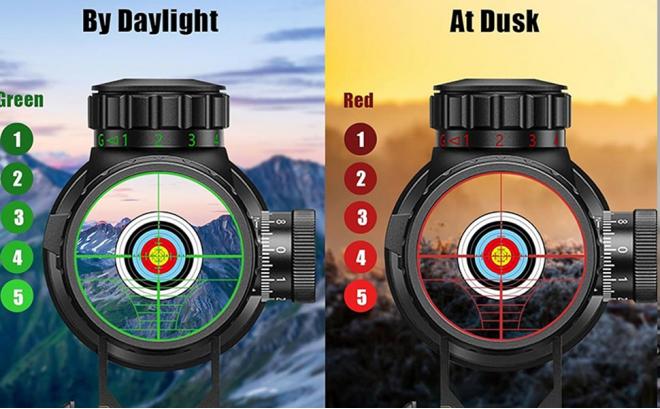
The reason is simple: one of the main selling points of an LPVO is its ability to deliver, especially at low magnification and particularly at 1x, a shooting experience that comes as close as possible to the speed of a red dot sight. In that kind of use, if the center of the reticle does not stand out clearly enough, the shooter has to spend extra time “finding the aiming point,” and that directly affects close-range shooting speed.
For that reason, the importance of the illumination system is mainly reflected in the following areas:
It improves fast target acquisition in daytime, especially at close range
If an LPVO is expected to give a better close-range shooting experience at 1x, the center illumination needs to be clearly visible in daylight. Otherwise, even if the glass is good and the reticle design is well thought out, the optic may still feel slower than it should in actual use.
It improves visibility against complex backgrounds
In environments such as woods, brush, dark walls, or areas where light and shadow meet, a fine reticle can easily get lost in the background. Illumination helps the key aiming area stand out more clearly.
It makes the optic more usable in low-light conditions
At dusk, dawn, indoors, or in dim surroundings, illumination makes the center aiming point easier to pick up and reduces the amount of visual search time needed before taking the shot.
It helps define whether the product follows a more hunting-oriented logic or a more tactical one
Traditional illumination systems are usually more focused on low-light assistance, while modern high-brightness illumination places more emphasis on daylight visibility and fast response. In that sense, the illumination system itself is already a strong indicator of the product route.
The Evolution of LPVO Illumination Technology
If you want to fully understand the different LPVO illumination systems on the market today, it helps to first understand how they developed over time.
The early stage: an extension of traditional hunting-scope design
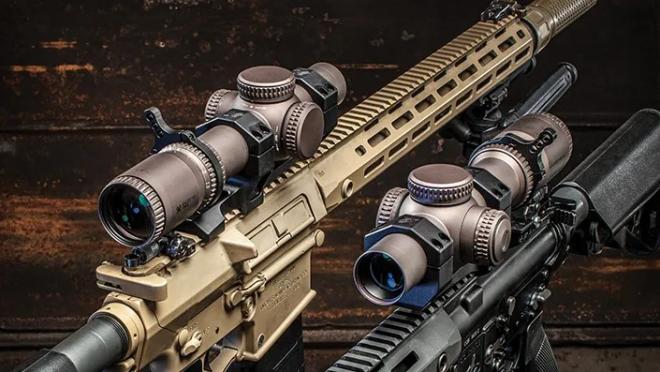
LPVOs did not emerge as a completely separate product category independent from traditional riflescopes. Many of the factories that began producing LPVOs had already been making hunting scopes for years, so their early illumination designs were often carried over directly from mature hunting-scope platforms.
This stage was generally characterized by the following:
- illumination was used mainly as a low-light aid
- the main user base was hunters and the broader civilian market
- maximum brightness was still limited
- red-and-green illumination was fairly common
- adjustment structures followed a more traditional dial-based brightness logic
At that stage, the goal of the illumination system was not to create a red-dot-like speed advantage. It was mainly there to help users pick up the center aiming point more easily in darker conditions or against visually busy backgrounds.
The middle stage: better LED efficiency made red illumination the mainstream choice
As LED technology, circuit control, and reticle illumination structures continued to improve, LPVO illumination systems gradually entered a more mature phase.
The most noticeable changes during this stage included:
- single-color red illumination became increasingly common
- brightness settings became more refined
- interfaces such as 11-level red illumination became familiar to the market
- more users began to care about daytime visibility
- LPVOs started to see wider use in range training and competition shooting
The real shift in this period was not simply that there were more brightness levels. More importantly, illumination was beginning to move away from its traditional role as a low-light aid and toward a design that placed greater emphasis on daytime usability.
The next phase: tactical demand drove the rise of faster-response control structures
As LPVOs became more widely used in law enforcement, patrol work, military and police training, and dynamic shooting environments, expectations for illumination systems also started to change.
Users were no longer focused only on brightness. They also cared about things like:
- how quickly the optic could go from off to ready
- whether the control could be operated by feel under stress
- whether a preferred brightness setting could be returned to quickly
That demand helped drive the development of tactical-style adjustment structures with off positions between brightness settings. The point of this design was not just finer adjustment. It was about making operation faster, more direct, and more in line with real-world tactical use.
A different path: passive illumination and high-reliability systems
Alongside battery-powered LED illumination, the market has also continued to support another design path: illumination systems built around fiber optics, tritium, or a combination of both, with the goal of reducing or even eliminating dependence on batteries.
What these systems emphasize is not complex electronic control, but rather:
- no battery requirement, or much lower battery dependence
- higher reliability in extreme environments
- a design philosophy more often associated with premium products or specialized applications
These solutions usually do not become the dominant choice in the mainstream mid-range market. Even so, they still hold clear value in products where reliability is a major selling point or where a brand wants to follow a more distinctive technical direction.
5 Questions That Brands Should Answer Before Defining an LPVO Illumination System
Before getting into specific illumination options, brands and sourcing teams should first think through the following five questions. In many projects, later-stage revisions happen not because the factory cannot deliver, but because the product goals were never clearly defined at the beginning.
Q1: Who is your target market?
Are you aiming at the mainstream civilian market, the competition and training market, or the law enforcement / tactical segment? Different markets respond to illumination systems in very different ways, and what one group sees as a selling point may matter much less to another.
Q2: What are your target retail price and target sourcing cost?
Even within the LPVO category, the priorities are very different for an entry-level product around the USD 200 range, a mid-range product in the USD 300–400 segment, and a higher-end tactical product. Your sourcing cost directly determines how much structural complexity, component quality, and validation work you can realistically afford to put into the illumination system.
Q3: Is your main goal broad market acceptance or product differentiation?
If the goal is strong mainstream sales volume, a mature and widely accepted illumination solution is often the better choice than a niche or overly complex one. If the goal is to strengthen a brand’s technical image or tactical identity, then a more advanced structure may be worth considering.
Q4: Does your use case place more value on adjustment comfort or fast response?
For range use, competition, and general civilian users, the focus is often on whether the brightness settings are clear and whether it is easy to find a comfortable level. For law enforcement and tactical users, what matters more is whether the optic can move from off to ready quickly and with minimal thought.
Q5: Do you want illumination that simply looks good on paper, or illumination that delivers real daylight-bright usability?
This is one of the most easily overlooked questions in product definition, but also one of the most important. It directly determines whether the product ends up with illumination that only helps in low light, or whether it can provide real speed and usability at 1x in daytime conditions.
Once these five questions have been answered clearly, discussions about whether to go with a 6-level, 11-level, or fiber-optic-based route become much more efficient.
The Right Way to Classify LPVO Illumination Systems
When discussing LPVO illumination systems, one of the most common mistakes is mixing together concepts that actually belong to different levels of the design.
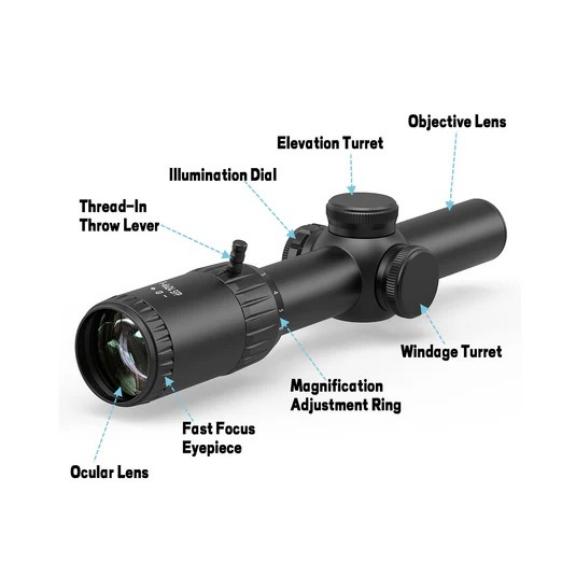
To understand the mainstream options on the market more clearly, it is better to look at LPVO illumination systems from two separate dimensions.
The first dimension: brightness adjustment method
This refers to how the user adjusts, remembers, and switches between brightness settings.
The main types include:
- 6-level red + 6-level green
- 11-level red illumination
- 6-level brightness with off positions between settings
The second dimension: illumination and light-guiding method
This refers to where the light comes from and how it is delivered into the reticle.
The main types include:
- LED active illumination
- fiber-optic illumination (this can include fiber + LED designs, or more aggressive approaches that use fiber to bring in ambient outdoor light)
- fiber optic + tritium passive illumination
The advantage of using this kind of classification is that it helps explain not only the differences users notice in operation, but also the structural logic behind each technical route and the kinds of applications each one is best suited for.
3 Main Types of Brightness Adjustment Systems
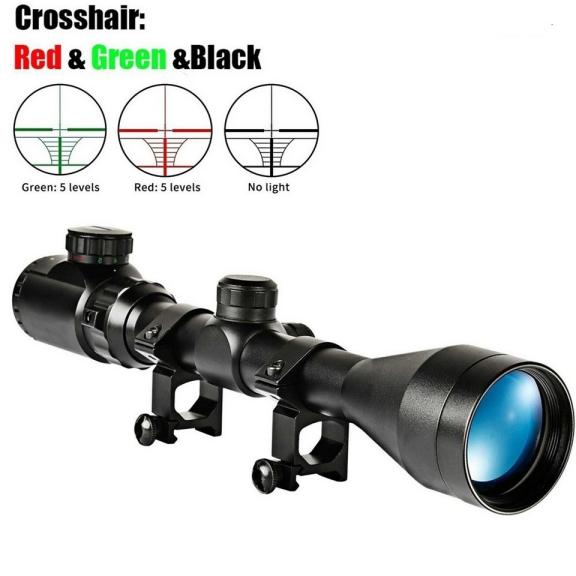
6-level red + 6-level green: a traditional and proven solution
This type of system is most commonly associated with designs carried over from the traditional hunting-scope supply chain. Because many factories already had mature red-and-green illumination platforms in place, this became a very common structure in early LPVO products.
Main characteristics
- dual-channel illumination with both red and green
- usually built around a traditional step-by-step rotary dial
- mature supply chain support
- relatively low development risk
- cost is generally easier to control
Advantages
- gives users the option to choose between red and green illumination
- in some visually busy environments, green may subjectively stand out from the background more easily
- mature technology with relatively stable mass-production performance
Limitations
- demand for green illumination is declining in the modern market
- a dual-color structure does not always create higher real-world value
- if maximum brightness is not high enough, the system still tends to remain in the low-light-assistance category
Typical applications
- hunting
- visually complex environments such as woodland or brush
- markets that still prefer more traditional user habits
- entry-level LPVOs or products following a more conventional product route
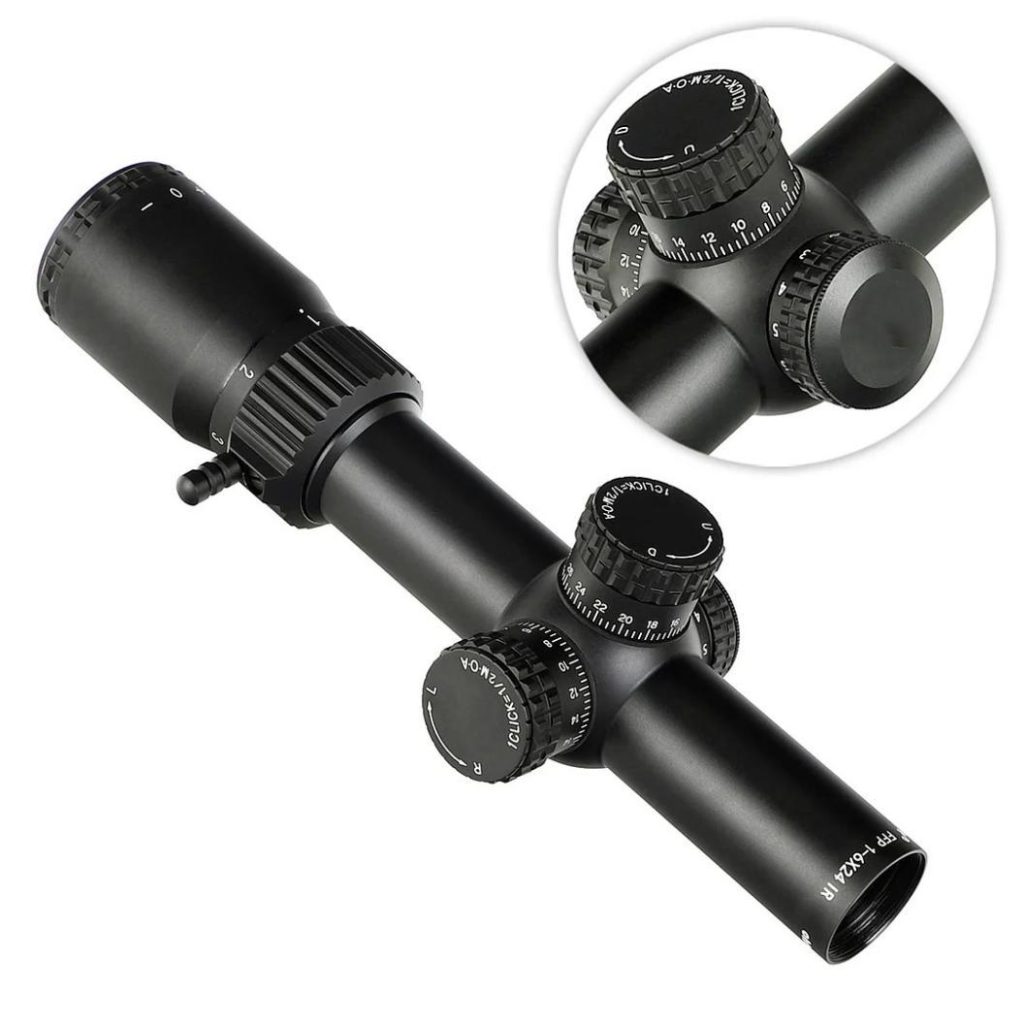
11-level red illumination: the mainstream option for the civilian market
An 11-level red illumination system is one of the easiest formats for the current market to recognize and accept. Its value is not simply that it offers more brightness levels. More importantly, the dial logic feels clearer, and users tend to find it easier to remember and use.
Main characteristics
- single-color red illumination
- more finely divided brightness levels
- dial positions are easier to remember in a clock-like way
- generally more user-friendly for range shooting, competition, and the broader civilian market
Why it became the mainstream choice
For a large number of civilian users, the priority is not a highly tactical control logic. What they care about more is:
- whether their commonly used brightness setting is easy to remember
- whether brightness changes feel intuitive
- whether it is easy to find a comfortable brightness level
The 11-level format fits these habits very well.
Advantages
- high user acceptance
- lower market education cost
- easier to cover brightness needs across different environments
- well suited to mainstream commercial product lines
Limitations
- an 11-level design does not automatically mean advanced technology
- if the maximum brightness is not high enough, having more levels still cannot replace true high-visibility performance
- in scenarios where fast return to a preset brightness matters most, it is less efficient than an off-between-settings structure
Typical applications
- range training
- 3-gun competition
- the mainstream civilian market
- mid-range commercial LPVOs around the USD 300 price segment
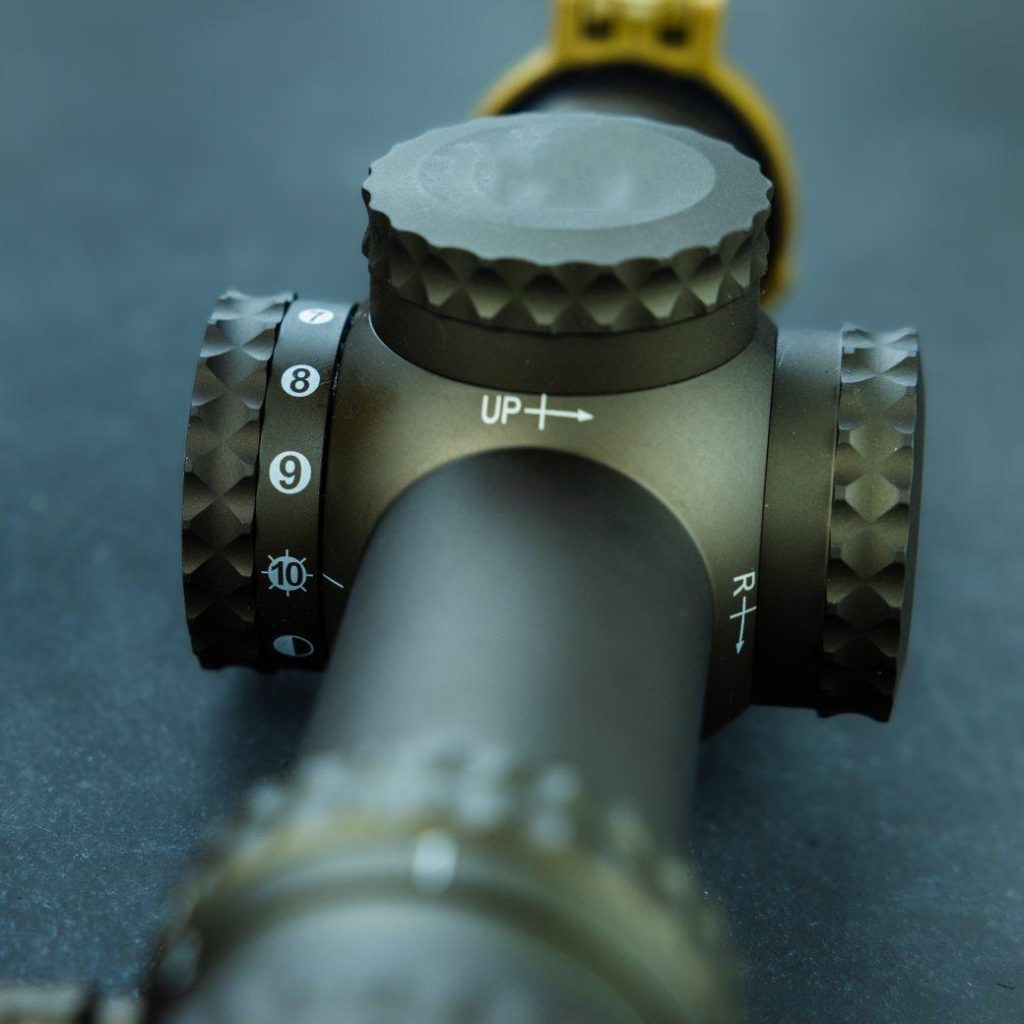
6-level brightness with off positions between settings: a fast-response tactical solution
This type of system is usually seen as a better fit for tactical use. Its main value is not the number of brightness levels itself, but the fact that it allows the user to return quickly from the off position to a preset brightness level.
Main characteristics
- an OFF position is placed between each brightness level
- users can preset a commonly used brightness setting
- switching between off and on is faster
- greater emphasis on blind operation and efficiency under stress
Advantages
- well suited to high-pressure situations
- reduces unnecessary dial searching
- better matched to users who already have a fixed brightness preference
Limitations
- higher structural complexity
- tighter requirements for mechanical and electrical coordination
- greater pressure on cost, assembly, and reliability validation
- may be seen as over-engineered for the mainstream mid-range commercial market
Typical applications
- law enforcement use
- military and police training
- patrol and tactical deployment
- CQB (close-quarters battle)
3 Main Types of Illumination and Light-Guiding Approaches
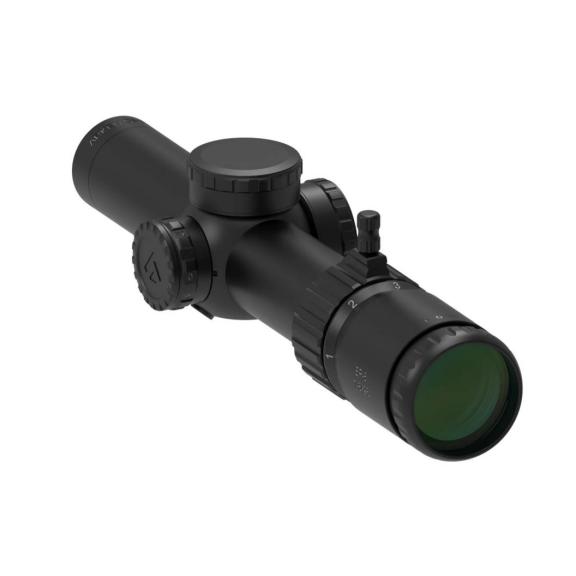
LED active illumination: the dominant solution today
LED-based active illumination is currently the most common and most mature approach in the LPVO market. Its biggest advantage is that brightness can be precisely controlled and adjusted, making it easier to position products at different levels through circuit design and light-guiding optimization.
Advantages
- adjustable brightness
- well suited for multi-level control
- fast response
- can support a wide range of product tiers, from low-light assistance to daylight bright performance
- easy to adapt to mainstream commercial products
Limitations
- relies on batteries
- requires a balance between high brightness and battery life
- places higher demands on light-guiding structure, optical path design, and overall engineering capability
Typical applications
This solution works across almost all mainstream LPVO product directions, especially:
- civilian market products
- mid-range offerings
- tactical-oriented models
- range and competition use
Fiber-optic illumination: a solution that leans toward passive brightness
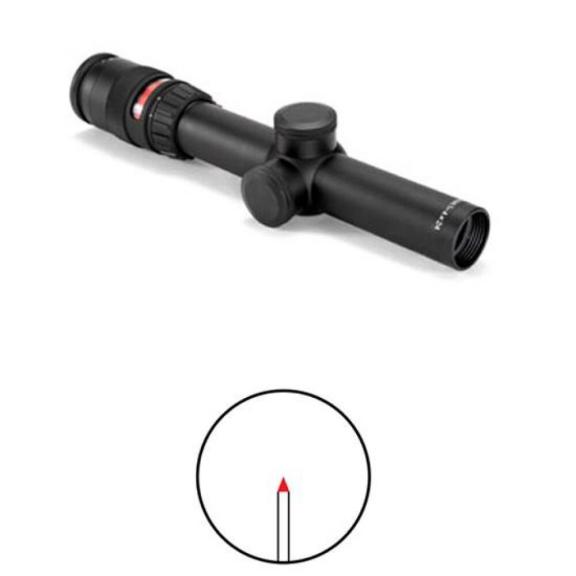
Fiber-optic illumination works by bringing ambient light into the illuminated area, allowing the center aiming zone to appear subjectively brighter under certain conditions. It is usually better suited to designs with a simpler center structure and a stronger focus on fast close-range target acquisition.
Main characteristics
- uses ambient light to illuminate the reticle area
- gives the center a stronger perceived brightness
- is more commonly used in SFP designs
- works better with a simpler center aiming structure
Why it is more common in SFP designs
Under current real-world design constraints, if a similar illuminated point is placed in a first focal plane system, its apparent size changes as magnification changes. That can affect both perceived brightness and overall usability. For that reason, this type of solution is more commonly seen in SFP optics and in designs with a simpler illuminated center.
Advantages
- can provide a strong sense of center brightness in daylight conditions
- does not rely entirely on high electronic brightness
- helps support faster target acquisition
Limitations
- performance depends on ambient light conditions
- brightness is less controllable than with LED systems
- its application range is not as broad as active illumination
Typical applications
- daytime outdoor use
- fast close-range shooting
- product concepts that emphasize quick center pickup
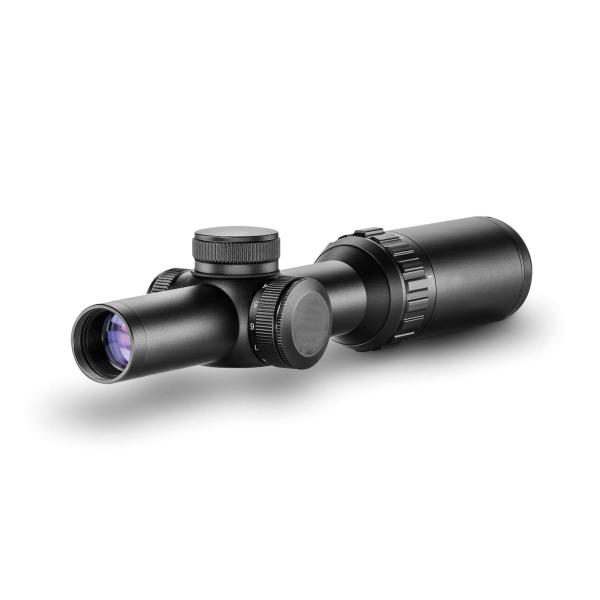
Fiber optic + tritium: a passive illumination route built around reliability
A fiber-optic-and-tritium system is usually seen as an illumination approach that places more emphasis on reliability and low maintenance. Its basic logic is straightforward:
- during the day, the fiber optic brings in ambient light
- at night, tritium provides self-luminous illumination
Advantages
- does not rely on a conventional battery
- has fewer failure points in extreme environments
- better suited to product lines that emphasize long-term deployment and reliability
Limitations
- brightness cannot be adjusted as freely as with an LED system
- daytime performance is still affected by environmental conditions
- difficult to match the peak brightness of a strong active-illumination system
- relatively high cost
Typical applications
- high-end tactical products
- specialized products that prioritize long-term reliability
- premium product lines that place value on technical brand image
What Does “Daylight Bright” Mean, and Why Does It Matter More Than the Number of Brightness Levels?
In any serious discussion of modern LPVOs, daylight bright is a term that cannot be ignored.
That said, daylight bright does not necessarily mean the optic reaches the extreme brightness level of a top-tier standalone red dot sight.
A more accurate way to understand it is this:
- the illumination remains clearly visible in daylight
- the center aiming point still stands out under daytime conditions
- at 1x, it can make a real difference in target acquisition speed
For many mid-range LPVOs, especially those in the around-USD 300 price segment, a realistic and well-judged product goal is not always to match the peak brightness of a high-end standalone red dot. The more important goal is to deliver daylight-bright illumination that has real practical value.
That matters far more than simply claiming “11 levels” or “12 levels.” If the maximum brightness is not high enough, then no matter how many settings the dial has, the system may still function mainly as a low-light aid rather than a true fast-acquisition tool for daytime use.
So when judging whether an LPVO illumination system is actually good enough, the first thing to look at is not how many brightness levels it offers. The more important question is
whether its maximum brightness can still provide clear and usable center visibility in real daylight conditions.
How to Choose Illumination Systems for Different Use Scenarios?
For hunting and outdoor search use
For traditional hunting users, the main priorities are usually:
- being able to pick up the center aiming point against complex backgrounds
- maintaining visibility in woodland, brush, or dusk conditions
- having an operating logic that is not overly complicated
These users are often more comfortable with:
- 6-level red + 6-level green
- basic red-illumination step settings

For range training and civilian dynamic shooting
Users in this category tend to care more about:
- whether the brightness steps are clear and easy to understand
- whether it is easy to find a comfortable setting
- whether the center stands out well enough in daytime use
- whether the product is stable and easy to use
They are usually better matched with:
- 11-level red illumination
- a mature LED active-illumination system
- a mid-range LPVO with real daylight-bright performance
For 3-gun competition and high-frequency training
These scenarios place more emphasis on:
- fast close-range target acquisition
- frequent shifts between different use environments
- higher demands on brightness and center visibility
Users in this group often prefer:
- the mainstream 11-level red-illumination format
- high-brightness LED active illumination
- a center design that leans more toward fast close-quarters acquisition

For Law enforcement, military/police training, and tactical deployment
For these users, the real concern is not how many brightness levels the optic has, but rather:
- how quickly it can move from off to a usable brightness setting
- whether it can be operated easily by feel
- whether it works well under stress
- whether it offers a higher level of reliability
These applications are generally better suited to:
- 6-level brightness with off positions between settings
- tactical-style LED control structures
- fiber optic + tritium systems in certain specialized use cases
For High-reliability and specialized applications
If the user places special emphasis on:
- long-term deployment
- stability in extreme environments
- reducing battery dependence as much as possible
then it makes more sense to consider:
- fiber-optic illumination
- fiber optic + tritium combinations

How to Choose the Right Illumination System for LPVOs at Different Price Segment?
Entry-level segment
At this level, the main goal is usually to control cost, reduce development risk, and make sure the basic function is solid and usable. For that reason, it makes more sense to choose an illumination system that is mature, stable, and supported by a well-established supply chain.
Mid-range segment
The key word in this segment is balance. The product needs to offer a complete feature set, but it also has to balance market acceptance, mass-production stability, and real-world user experience. At this price level, mainstream red-illumination step systems are usually the more practical choice. The real point is not how many brightness levels are listed on the spec sheet, but whether the optic delivers daylight-bright performance with real practical value.
High-end segment
At the high end, brands can give more consideration to things like:
- tactical fast-response control structures
- higher brightness performance
- more complex structural optimization
- passive illumination routes with stronger reliability characteristics
That said, these approaches usually come with higher development and manufacturing costs, and they depend much more heavily on the brand’s product direction and its target user group.
How to Evaluate the Reliability of an Illumination System When Sourcing or Customizing
For brands, understanding how LPVO illumination systems are classified is only the first step. What really affects the success or failure of a project is whether you can communicate your requirements clearly to the factory—and whether you can judge if the supplier’s proposed solution truly fits your product direction.
Do not just ask whether it can be made—ask whether it is suitable for mass production
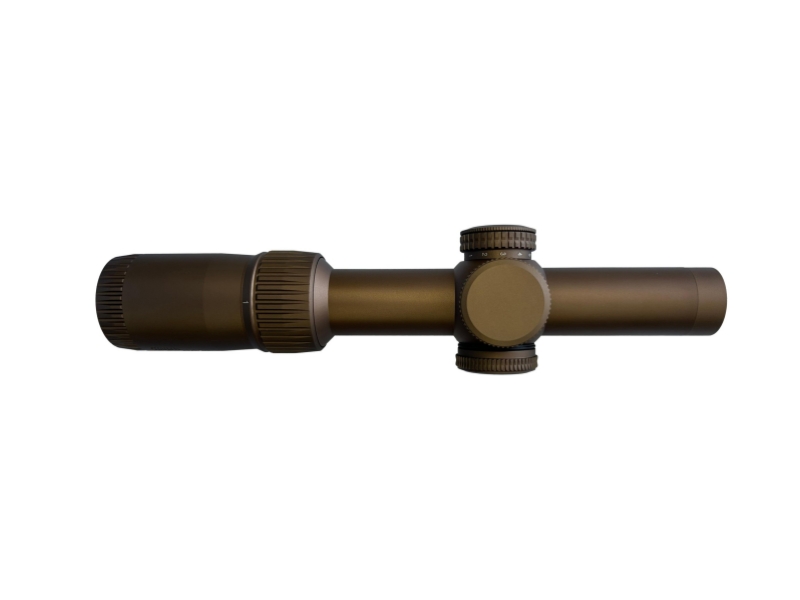
Many factories can produce a sample of a certain structure, but being able to make a sample does not automatically mean the design will be stable in mass production. During the sourcing stage, you need to separate three different questions:
- whether it is technically feasible
- whether it is manufacturable on an engineering level
- whether it makes commercial sense for your target price segment
Confirm the brightness goal first, then the structure
If a brand becomes fixated too early on terms like “11-level” or “off-between-settings,” the discussion can easily go in the wrong direction. A more practical sequence is:
- first confirm whether the target market actually needs daylight-bright performance
- then confirm whether fast return to a preset brightness is necessary
- only after that decide which adjustment structure makes the most sense
6 key questions to confirm during sourcing
Q1: Is the maximum brightness truly usable in real daylight conditions?
Do not rely only on indoor samples, and do not judge based only on lab photos. Ask the supplier:
- whether real outdoor daytime testing has been done
- how visible the center illumination is at 1x
- whether the highest setting merely “looks illuminated,” or whether it actually provides meaningful fast-acquisition value
Q2: Does the illumination structure come from a mature platform, or is it a new development?
This directly affects:
- development lead time
- first-sample success rate
- the pressure of reliability validation
- mass-production stability
Q3: How reliable are the dial structure and electronic system?
You should confirm:
- consistency between brightness positions
- stability of adjustment feel
- resistance to accidental activation
- results for waterproofing, shock resistance, and durability testing
Q4: Does the supplier really understand your target use case?
If you are building a mainstream commercial LPVO, but the supplier keeps pushing niche tactical-style structures, that usually suggests they may not fully understand your product route.
Q5: Will the illumination system drive up BOM cost and assembly difficulty?
An illumination solution does not exist in isolation. It can affect:
- BOM cost
- assembly time
- yield rate
- repair rate
- long-term after-sales pressure
Q6: Can this solution be accepted quickly by the end market?
Sourcing is not just about buying technology. It is also about buying future market fit. Even if a solution works from a technical point of view, it may still be a poor choice for a mainstream commercial product if users are unfamiliar with it or if the education cost is too high.
A practical rule of thumb for brands
If your project is:
- aimed at the mainstream civilian market
- positioned in the mid-range price segment
- expected to launch quickly with stable execution
- intended for end users who care more about ease of understanding and ease of use
then choosing a mature mainstream red-illumination solution is usually the safer decision than chasing a more complicated structure.
If your project is:
- clearly intended for law enforcement or tactical use
- backed by a brand willing to take on higher development and validation cost
- meant to build a stronger tactical product identity
then it makes more sense to consider a fast-response control structure or a more specialized illumination route built around higher reliability.
Conclusion: There Is No Universally Best LPVO Illumination System—Only the Right Match for the Intended Use
An LPVO illumination system is never just a simple spec defined by the number of brightness levels. It is a broader design choice shaped by intended use, user habits, brightness requirements, cost control, and overall product positioning.
Looking back at the development of LPVO illumination technology, a clear pattern emerges:
- early solutions were built more around traditional hunting-scope logic and low-light assistance
- later designs gradually shifted toward more mature red-illumination step systems
- tactical demand helped drive the emergence of fast-response control structures
- the need for higher reliability preserved the unique value of fiber-optic and tritium-based routes
Because of that, the more important question when evaluating an LPVO illumination system is not which one is the most advanced, but rather:
- who the intended user is
- what kind of use scenario the product is built for
- whether the system delivers the most sensible balance within its target price segment
In today’s market, a mature LPVO illumination system should at least answer the following questions clearly:
- is it mainly a low-light aid, or does it offer true daylight-visible brightness?
- does it follow a more hunting-oriented logic, or a more tactical one?
- does it prioritize intuitive operation, or faster tactical response?
- is it meant for a mainstream commercial product, or for a high-reliability specialized route?
Once those questions are clearly sorted out, the positioning and best-fit use case of each illumination system become much easier to understand.
FAQ
Does an LPVO illumination system always need to be as bright as possible?
Not necessarily. What matters more is whether the brightness level matches the product’s intended positioning, and whether it actually improves center visibility and target acquisition speed in real-world conditions.
Is 11-level red illumination always more advanced than a 6-level red-and-green system?
Not necessarily. An 11-level red system is often more in line with mainstream user habits, but whether it is actually better still depends on factors such as maximum brightness, control logic, product positioning, and the intended use scenario.
Does “daylight bright” mean the same brightness level as a standalone red dot sight?
Not exactly. Daylight bright mainly refers to having genuinely usable center visibility in daytime conditions. It does not necessarily mean reaching the peak brightness level of a high-end standalone red dot.
Can fiber optic and tritium completely replace LED illumination?
In most cases, no. They are better understood as an alternative technical route that emphasizes reliability and lower maintenance dependence, rather than a full replacement for LED illumination.
What should buyers focus on first in an LPVO around the USD 300 price range?
In most cases, the first priorities should be whether the optic offers daylight-bright illumination with real practical value, whether the adjustment logic is clear, whether the design is mature enough for stable mass production, and whether the overall solution fits mainstream use scenarios.
If you are planning an LPVO product line for your brand, or evaluating different illumination-system options across different price segments, feel free to continue the conversation with us. The real decision often comes down to how each illumination solution fits the product definition, market positioning, and intended application.
When it comes to LPVOs, the best illumination system is never simply the one with the most complex specifications. It is the one that best fits the target user and the target use scenario.