Specifications Describe the Conditions; Real-World Viewing Evaluates the Entire System
Magnification, objective diameter, BAK4 prisms, ED glass, and fully multi-coated optics are all important, but these specifications only describe what components or configurations a product uses. What end users actually experience—clarity, natural color, target-acquisition speed, and long-term viewing comfort—depends on whether the objective lenses, prisms, eyepieces, mechanical structure, and optical alignment work together as a complete system.
As a result, two binoculars that are both specified as 8×42, ED, and BAK4 can still produce noticeably different images. A specification sheet can easily highlight individual features, while system design and batch-to-batch consistency are much harder to summarize with a single term.

Five Common Reasons Why Good Specifications Can Still Produce an Average Viewing Experience
1. High Resolution, but Insufficient Contrast Transfer
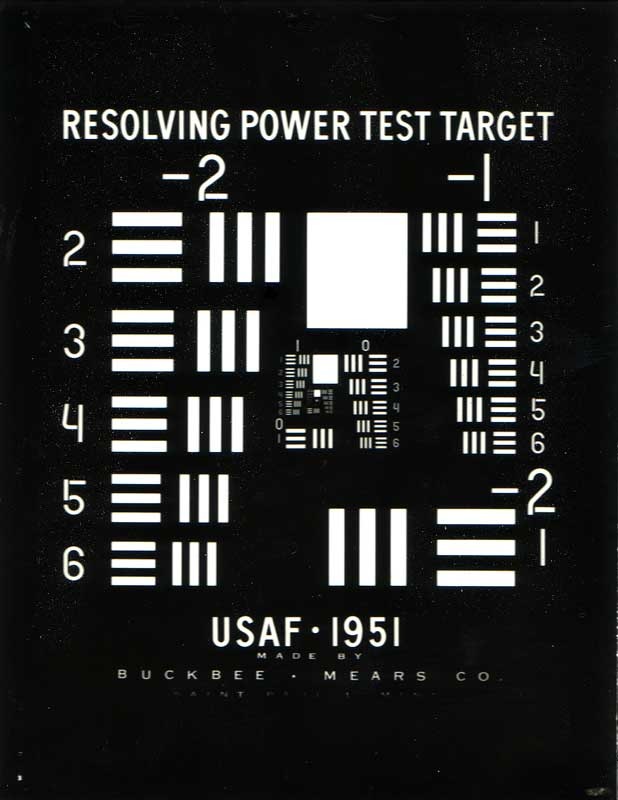
Being able to separate fine lines on a resolution chart does not necessarily mean that feather texture in a shaded forest will appear equally clear. The human perception of “sharpness” depends on both resolution and contrast. Edmund Optics defines MTF as the ability of an optical system to transfer contrast at different spatial frequencies, so looking only at limiting resolution can easily overestimate real-world viewing performance.
2. ED Glass Is Present, but the Overall Aberrations Are Not Fully Corrected
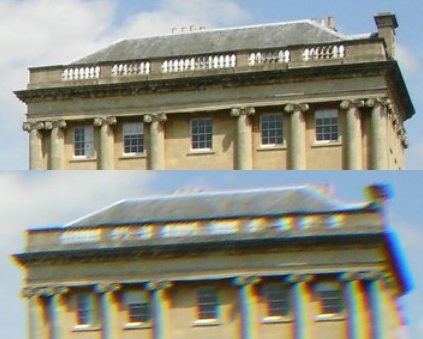
ED glass primarily helps control chromatic aberration, especially color fringing along high-contrast edges. Spherical aberration, coma, astigmatism, field curvature, and distortion are still determined by the complete optical design. Nikon notes that field curvature can cause the center of the image to be in focus while the edges remain blurred, which is particularly noticeable in wide-field binoculars.
3. The Coating Name Is the Same, but the Actual Coating System Is Not
“Fully Multi-Coated” only indicates that multiple optical surfaces receive multilayer coatings. It does not specify the spectral range, average transmission, color bias, coating uniformity, or durability. Roof-prism systems also require buyers to verify phase-correction coatings and reflective prism coatings. Nikon likewise notes that binocular brightness depends on factors including reflective coatings, the number of lenses, and the overall quality of the coating system.
Further Reading: How to Focus and Test Binoculars: A Practical Field Guide. Use this guide for a deeper look at coatings, contrast, glare, and field-testing methods for samples.
4. Field-of-View and Eye-Relief Numbers Look Good, but the Usable Area Is Limited
A binocular may have a wide stated field of view, but if the edges show strong distortion, blur, or vignetting, the portion users can comfortably use becomes much smaller. Eye relief must also be tested together with eyecup height, eyepiece diameter, and tolerance for eye position. Eyeglass wearers are especially likely to experience a cropped field of view, frequent blackouts, or difficulty aligning their eyes quickly.
Further Reading: How Eyeglass Wearers Can Get the Full Field of View and Reduce Blackouts. A useful follow-up on eye relief, eyecup design, and effective field of view.
5. The Sample Performs Well, but Mass-Production Alignment Is Inconsistent
Binoculars also depend on left-right collimation, prism positioning, synchronized focusing, and the diopter zero position. Small deviations may not immediately appear as obvious double images, yet they can cause eye strain and discomfort during extended observation. If samples are carefully selected while mass production lacks stable tolerances and inspection records, the end-user experience can fluctuate from batch to batch.
Which Viewing Experiences Should B2B Buyers Convert into Acceptance Criteria?
| Paper Specification | What Still Needs to Be Verified in Practice | B2B Output |
| ED / BAK4 / Coatings | Chromatic aberration, backlight performance, contrast, color bias, and low-light tonal detail | Confirmed BOM, comparison samples, coating-system description |
| Field of View / Eye Relief | Usable edge area, blackouts, and full field of view for eyeglass wearers | Measured records, Golden Sample |
| Resolution | Center and edge detail; recognition of low-contrast targets | Resolution chart results, outdoor blind-test scoring |
| Waterproofing / Nitrogen Filling | Condensation after temperature changes; function and collimation after immersion | Test conditions, AQL requirements, and batch reports |
| Weight / Dimensions | Grip, balance, focusing efficiency, and fatigue during extended use | Scenario testing, accessory and packaging definition |
Wholesalers Should Combine “Scenario-Based Blind Testing + Specification Verification”
Sample evaluation can use targets such as branches, feathers, distant text, and backlit buildings. Several testers can score the samples without knowing the configuration or price, and the results can then be compared with the ED glass, coating system, field of view, and structural specifications. This helps determine whether a cost upgrade has actually translated into value that end users can perceive.
• In daylight, test center sharpness, edge image quality, chromatic aberration, and speed of target acquisition.
• In shadows and at dawn or dusk, test contrast, shadow detail, color rendering, and glare control.
• Observe continuously for 10–15 minutes, and include eye fatigue, blackouts, focusing feel, handling, and Golden Sample requirements in the AQL standard.
Further Reading: Why Higher Specifications Do Not Always Deliver a Better Binocular Experience. This supports the procurement logic that scenario-based blind testing should complement specification verification.
FORESEEN OPTICS Recommendation: Define the Viewing Objective First, Then Select the Specification Combination
For birding, hunting, travel, and target-observation markets, the value of the same specification can rank very differently. Based on the target channel, retail price range, MOQ, and use case, FORESEEN OPTICS can match standard glass or ED solutions, different prism coating systems, fields of view, and structural platforms, then use blind sample testing, a Golden Sample, and mass-production inspection to lock in a repeatable viewing experience. The internal links below correspond to product selection, structural platforms, ED solutions, and quality control, allowing them to be distributed naturally by topic when the article is published on the website.
Further Reading and Product Matching
1. Binoculars Wholesale & OEM/ODM Product Line — Explore FORESEEN OPTICS binocular categories, application scenarios, and customization capabilities.
2. Roof Prism Binoculars OEM/ODM — Learn more about roof-prism structures, coating configurations, and platforms for different price ranges.
3. High-Clarity ED 8×42 / 10×42 Roof Binoculars MIZR842-2 — A product example combining ED glass, BAK4 prisms, and phase/dielectric coatings.
4. FORESEEN OPTICS Quality Management Process — Learn more about optical inspection, assembly-tolerance control, and mass-production quality management.
Conclusion
Binocular specifications define the theoretical starting point; system design, optical alignment, and application matching determine actual performance. Procurement teams should continue breaking down labels such as “ED,” “BAK4,” “wide field of view,” and “fully multi-coated,” then verify contrast, aberration control, usable edge performance, eye-position comfort, and batch consistency. Only advantages that can be reproduced reliably in real-world conditions deserve to become product selling points and justify a higher price tier.