In the past, outdoor binocular product planning often started with a specification sheet: What is the magnification? How large is the objective lens? Can the price fit a certain sales channel? Is there enough profit margin?
This logic worked well in the early stages of the market. At that time, users had a relatively limited understanding of product differences, and brands also tended to use a few general-purpose models to cover a wider range of customers.
But now, the market is clearly changing.
More and more brand clients and channel buyers are no longer only asking, “Is this an 8×42 or a 10×42?” Instead, they are asking more practical questions: Is it better suited for birdwatching or target observation? Is there a lighter option for hiking and travel? What kind of real-world use scenario was this product actually designed for?
This is not simply a matter of having more product categories. It is a sign that the outdoor optics market is becoming more mature.
Users are starting to judge products by scenarios. Channels are organizing their product selections around scenarios. And brands must also rebuild their product lines around scenarios.
For manufacturers, this means future competition will no longer be only about “who can offer more models.” It will be about “who can turn real user needs into clear, scalable, and easy-to-communicate product directions.”
From this perspective, birdwatching, target observation, and hiking are not just three simple marketing labels. They represent three completely different product development logics.
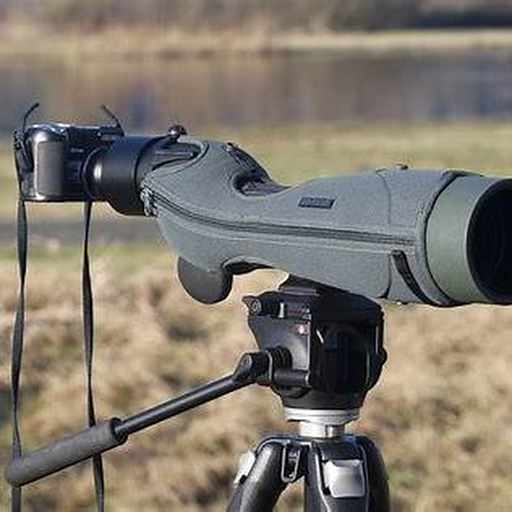
Three Types of Users Are Speaking Three Completely Different “Need Languages”
Birdwatching Users: It Is Not About “Seeing Bigger,” but About “Finding Faster and Watching More Comfortably”
Birdwatching users certainly care about magnification and objective lens size. But what truly influences purchase decisions and long-term reputation is often a more refined set of experience-based factors: Is the field of view wide enough? Is the focusing fast enough? Are the colors natural? Is the edge performance comfortable? Will the binoculars cause fatigue during long handheld use?
Birdwatching combines continuous scanning with quick target capture.
Birds often move quickly, stay visible only briefly, and appear against complex backgrounds. Users need to switch frequently between trees, wetlands, open sky, and bushes. Because of this, a mature birdwatching binocular product line should not simply emphasize magnification. Instead, it should be defined around continuous observation efficiency.
For brands, the core selling points of a birdwatching-oriented product line should include a wide field of view, fast focusing, comfortable eye relief, natural color reproduction, good handheld balance, and long-session viewing comfort.
For factories, this means optics, mechanical structure, and ergonomics all need to work together. It is not enough to simply push one single specification higher.
Related Articles: What Birdwatching Beginners Often Overlook Is Not the Brand, but Whether the Binoculars Fit How They Actually Use Them
Target Observation and Long-Range Users: The Core Need Is “Detail Recognition” and “Stable Viewing”
When binoculars are used for target observation, shooting training, or long-range fixed-point viewing, the usage logic becomes very different.
In these scenarios, the key is not fast scanning. Instead, the question is whether the user can clearly identify details at a longer distance and maintain stable viewing over an extended period of time.
These users care more about center resolution, image contrast, long-range detail recognition, compatibility with tripods or support systems, and overall stability during long observation sessions.
For them, higher magnification does not automatically mean a more professional product. If higher magnification leads to an unstable image, insufficient resolution, or an unreliable support structure, the actual user experience may become worse instead.
Therefore, a target observation product line is closer to developing a long-range observation system, rather than just making a regular outdoor binocular.
When brands communicate this type of product, the message should also shift from “higher magnification” to “clearer details, more stable viewing, and more reliable long-session interpretation.”

Hiking Users: The Core Need Is Not “Maximum Specifications,” but “Whether Users Are Willing to Carry It All Day”
Hiking, travel, and general outdoor users follow a completely different logic.
For them, binoculars are first and foremost a piece of gear they need to carry for long periods of time, rather than a tool used from a fixed position. Because of this, weight, size, storage efficiency, strap comfort, intuitive operation, and basic durability often enter the decision-making process earlier than extreme optical specifications.
Even if a product looks strong on paper, it will struggle to become a frequently used piece of gear if users are unwilling to put it in their backpack, hang it around their chest, or carry it throughout the day.
The core of a hiking-oriented product line is not simply making the binoculars smaller. It is about finding the right balance between lightweight design, compact size, basic image quality, durability, and ease of use.
For channels, hiking binoculars must deliver a clear message: easy to carry, easy to use, capable of handling real outdoor environments, and good enough to provide a satisfying viewing experience when users actually need to observe something.
Why Must Brands Rebuild Their Product Lines Around Use Scenarios?
In the past, one general-purpose series might have been expected to cover birdwatching, travel, outdoor observation, and even some target observation needs.
But as users become more aware of what they actually need, this kind of vague positioning is becoming less competitive.
Birdwatching users are not willing to pay for unnecessary weight. Target observation users will not accept “good enough” detail performance. Hiking users will not automatically accept a heavier product just because it has higher specifications.
When user decisions begin to split by scenario, brand product lines must also be rebuilt accordingly.
A truly mature product line is not about simply arranging 8×32, 8×42, 10×42, and 10×50 into a specification ladder. Instead, each product route should clearly answer three questions: Who is it for? What problem does it solve? And why is it more suitable for this scenario than a general-purpose model?
- Birdwatching route: Build the product direction around a wide field of view, fast focusing, comfortable viewing, and natural color reproduction.
- Target observation route: Build the product direction around long-range detail recognition, center resolution, image contrast, and stable support.
- Hiking route: Build the product direction around lightweight design, compact size, portability, durability, and quick access.
This kind of restructuring does not make the product line more complicated. It makes the product line clearer.
The better a product can explain who it is made for, the easier it is for channels to recommend it — and the easier it is for users to make a confident choice.
Six Technical Dimensions Determine Whether Scenario-Based Products Can Truly Work
Magnification and Objective Lens Size: No Longer a Universal Standard, but Scenario-Based Variables
Magnification and objective lens size are still important, but they should not be treated as one universal answer for every scenario.
Birdwatching requires a balance between field of view and handheld stability. Target observation places more emphasis on long-range detail recognition. Hiking, on the other hand, must start with weight and size.
The same 8×42, 10×42, or 8×32 configuration can follow completely different product logic in different scenarios.
A truly effective development approach is to work backward from the use scenario to define the right specification combination, rather than deciding the specifications first and then looking for a market label that can be attached to them.
Field of View and Focusing: The Source of Efficiency for Birdwatching Products
Birdwatching users need to find targets quickly and keep tracking them while they move.
A wide field of view helps users locate birds faster, while focusing speed and focusing damping determine how efficiently they can follow the target. Eyecup design, eye relief comfort, and edge image quality also affect whether users feel tired during long periods of scanning.
Resolution, Contrast, and Stability: The Core Differences in Target Observation Products
For target observation users, the biggest concern is whether distant details can be clearly identified.
Center resolution, image contrast, support system compatibility, and long-session viewing stability are the areas where this type of product truly stands apart.
Simply emphasizing high magnification is usually not enough to build a professional product position.

Weight and Size: The First Principle That Hiking Products Cannot Compromise
For hiking users, the frequency of use first depends on whether they are willing to carry the product.
Lightweight materials, a compact structure, simplified operation, and a comfortable carrying system are the foundation of a hiking-oriented product line.
In this scenario, the competition is not about having stronger specifications on paper. It is about whether users are more willing to take the binoculars outdoors and use them regularly.
Structural Reliability: The Foundation of Long-Term Reputation, Not a Premium Add-On
Whether the product is used for birdwatching, target observation, or hiking, users will eventually come back to one basic question: Is this binocular durable enough?
Can it handle real outdoor environments? Will it remain stable after long-term use?
Reliability should not only be treated as a selling point for high-end models. It should be a basic capability across the entire product platform.
However, the reliability focus varies by scenario.
Birdwatching products need a smooth and consistent experience under frequent use. Target observation products need structural stability during fixed-position viewing. Hiking products need weather resistance and impact resistance during long-term carrying and outdoor movement.
Platform-Based Development: What Brands Are Really Buying Is Scenario-Based Development Capability
More and more brand clients are not simply looking for a few ready-made models. They want factories to have the ability to extend different product routes from the same technical platform.
For example, the same basic platform can be developed into three different routes — birdwatching, target observation, and hiking — through adjustments in materials, structure, accessories, appearance, and communication focus.
This means future factory competition will no longer be only about the number of SKUs. It will be about whether a factory can turn real-world scenarios into clear product routes.
Platform-based development capability is becoming an important standard for brand cooperation and channel product selection.
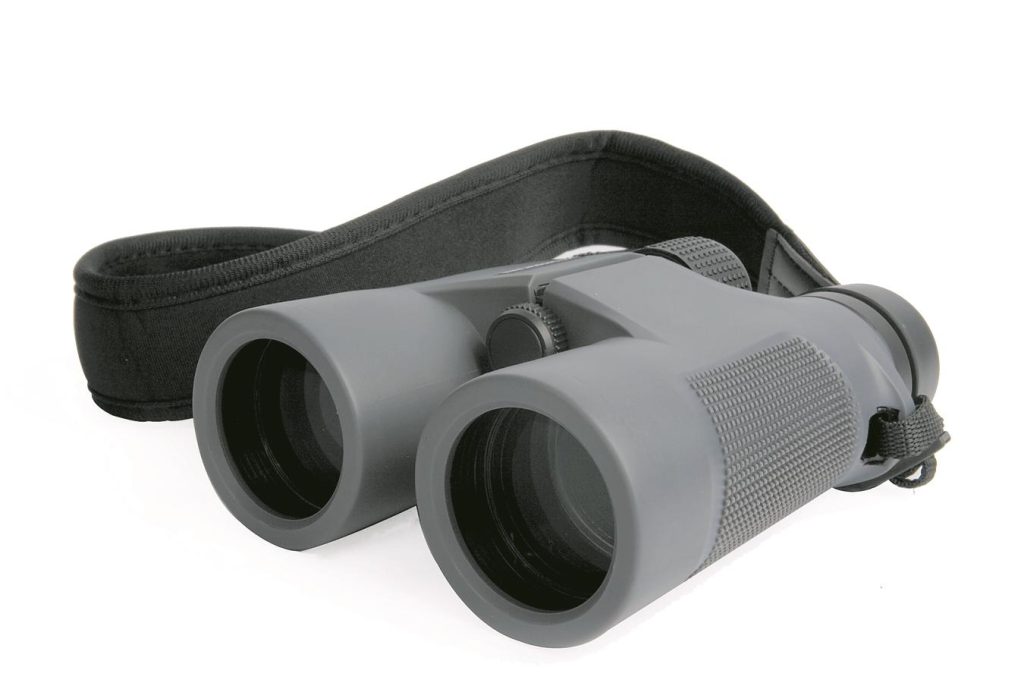
A Suggested Framework for Rebuilding Scenario-Based Product Lines
To make this approach easier for brands, channels, and manufacturers to apply, outdoor binocular product lines can be rebuilt around the following three main routes.
| Product Route | Core Users | Key Capabilities | Product Definition Focus |
| Birdwatching Route | Birdwatching enthusiasts and nature observation users | Wide field of view, fast focusing, natural color reproduction, comfortable eye relief | Improve continuous viewing efficiency and target capture speed |
| Target Observation Route | Shooting training, long-range observation, and fixed-point viewing users | Center resolution, image contrast, support compatibility, stable viewing | Build long-range detail recognition and professional stability |
| Hiking Route | Hiking, travel, and general outdoor users | Lightweight design, compact size, durability, easy carrying, simple operation | Increase users’ willingness to carry the product and improve real-world usage frequency |
The key to this framework is not to blindly add more models.
Instead, it is to give each product route a clear role. Channels can explain the product more easily when recommending it, and users can quickly understand which option fits their real needs.
How Can Manufacturers Upgrade from “Producing Models” to “Defining Product Direction”?
From a factory perspective, the biggest change brought by the scenario-based trend is that manufacturers can no longer simply wait for customers to provide specifications. Instead, they need to take a more active role in product definition.
The value of a mature factory is moving from “Can you make it?” to “Can you help customers make the right product?”
- First, identify the target scenario: Clarify whether the customer wants to enter the birdwatching, target observation, hiking, or general outdoor market.
- Then, define the specification combination: Magnification, objective lens size, weight, field of view, and structure should all serve the specific use scenario.
- Then, evaluate cost priorities: Within different price ranges, decide which configurations must be kept and which features can be developed later.
- Then, assess platform extension: Can one basic platform be extended into different versions through changes in appearance, accessories, and positioning?
- Finally, check market communication: Are the product selling points clear enough for channels and end users to understand quickly?
In the future, truly competitive factories will not be defined only by how many molds or specifications they have.
They will be defined by whether they can integrate user needs, structural solutions, optical systems, and brand positioning into a complete product route.

Three Directions Worth Watching Over the Next 12–24 Months
Platform-Based Development Around Major Use Scenarios Will Become the Mainstream Cooperation Model
Birdwatching, target observation, and hiking will no longer be just labels on a product page. They will become the basic framework for brands and factories to jointly develop product lines.
The faster a factory can translate scenario-based needs into clear product routes, the easier it will be to build long-term cooperation with brand clients.
The Combined Optimization of Lightweight Design, Stability, and Reliability Will Continue to Create Differentiation
The most competitive products in the future may not be the ones with the most exaggerated specifications.
Instead, they will be the products with a clearer direction, more reasonable trade-offs, and a more stable long-term user experience.
This will be especially important in the mid-range market, where the balance between lightweight design, stable viewing, and reliable structure will become increasingly critical.
Channel Content and Sales Communication Must Upgrade at the Same Time
Once products are defined by scenarios, channels can no longer rely only on specification sheets.
They need to explain who the product is designed for, which scenarios it fits, and what real user pain points it solves.
Product line restructuring will naturally drive changes in content expression, shelf classification, and sales messaging.
The Market Is Not Becoming More Complicated — It Is Entering a More Mature Stage of Competition
Together, these two articles point to one core conclusion: the outdoor binocular market is moving from general specification competition to scenario-based product capability competition.
The market is not becoming more chaotic. Instead, user needs are finally being identified more accurately.
Birdwatching, target observation, and hiking are not just simple categories. They help brands redefine what a “good product” really means.
Birdwatching products need to improve continuous viewing efficiency. Target observation products need to strengthen long-range detail recognition and viewing stability. Hiking products need to solve the issues of carrying willingness and ease of use.
For brands, this means product lines need to be rebuilt.
For channels, it means product selection and selling-point communication need to be upgraded.
For manufacturers, it means the development logic must move from “making one product” to “building a complete product direction.”
When products are truly defined around real use scenarios, the industry can move beyond low-level competition based only on specifications and price.
It can enter a more mature stage built around system capability, scenario understanding, and long-term user experience.
FAQ: Questions Brands and Channels Often Ask
Q: Do magnification and objective lens size still matter?
A: Yes, of course. But they should be seen as scenario-based variables, not universal standards. In different use scenarios, the same specification can play completely different product roles.
Q: Why can’t one general-purpose product continue to cover all users?
A: Because users are becoming much clearer about their own needs. A general-purpose product often struggles to build a strong enough advantage in any one scenario, whether it is birdwatching, target observation, or hiking.
Q: What capabilities should factories improve the most?
A: Factories should not focus only on adding more SKUs. More importantly, they need to improve their platform-based development capability, scenario understanding, and product definition capability.
Q: How should channels communicate product selling points?
A: Channels should not only show the specification sheet. They need to explain who the product is designed for, what scenario-based problem it solves, and why it is more suitable than a general-purpose model.
Q: Will product line restructuring lead to too many SKUs?
A: Not necessarily. Mature restructuring is not about blindly adding more models. It is about using a platform-based approach to give each product a clear role.