For many beginners in birdwatching, the first binocular purchase is often influenced by external labels such as brand name, price, magnification, or whether the product looks “high-end.” However, from the perspective of B2B channels and manufacturers, what truly determines user satisfaction, long-term use, repeat purchase, and word-of-mouth is often not the brand itself, but whether the binoculars actually fit the way the user observes.
Birdwatching is different from general outdoor viewing. Birdwatchers often deal with moving targets, complex backgrounds, quick hand movements, frequent focusing, and long periods of continuous observation. If beginners choose binoculars only based on brand awareness or a single specification, they may easily end up with a product that looks good on paper but feels uncomfortable or inefficient in real use.
For brand owners, distributors, and OEM/ODM purchasing teams, this is also one of the most common misunderstandings when building a birdwatching binocular product line.
Therefore, when targeting the beginner birdwatching market, B2B customers should not simply define the product as an “entry-level low-cost binocular.” Instead, they should start from the user’s actual usage habits, including observation frequency, carrying scenarios, target distance, handholding comfort, and budget range. These factors should then guide decisions on specifications, structure, accessories, and product segmentation.
This article will look at several key questions:
- Why do birdwatching beginners often overvalue brand name and magnification?
- How does the user’s observation style affect the real viewing experience?
- How should specifications such as 8×32, 8×42, and 10×42 be positioned in the beginner market?
- How can B2B brands and distributors turn “fit for actual use” into clearer product selling points?
- How can factories support OEM/ODM customers in reducing the decision-making difficulty for beginner users?

Why Do Birdwatching Beginners Often Focus on Brand First and Overlook How They Will Actually Use the Binoculars?
When beginners buy their first pair of binoculars, they often do not yet have enough real experience with different birdwatching scenarios or optical specifications. As a result, brand awareness, product appearance, price range, magnification numbers, and online reviews can easily become their main criteria for judging whether a product is good or not.
However, birdwatching is a use case that depends heavily on actual user habits. The same pair of binoculars may deliver very different experiences for different users. Some people mainly observe birds in city parks, some prefer forest trails, some join wetland birdwatching activities, while others only use binoculars occasionally during travel. When the usage style changes, the suitable specification, weight, field of view, and focusing structure also change.
For B2B customers, this means the core of an entry-level birdwatching product is not simply to make the brand story sound more premium. The real key is to make the buyer’s decision path clearer, so that distributors and retail channels can explain: who this product is suitable for, why it is suitable, and what real usage problem it is designed to solve.
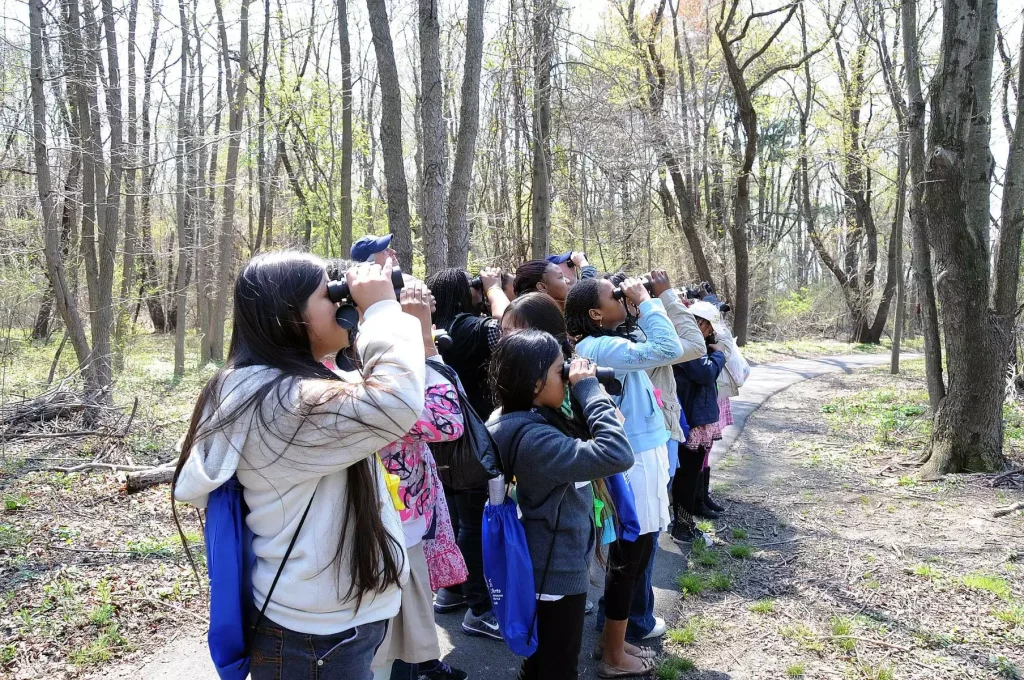
What Are the Main Usage Types for Beginner Birdwatchers?
City Parks and Nearby Nature Observation
These users usually observe birds at relatively short to medium distances. However, the birds often move quickly, the background can be busy, and the observation time may be fairly long. For this type of user, a wide field of view, fast focusing, comfortable handling, and lighter weight are often more important than simply having higher magnification.
Wetlands, Lakes, and Open Areas
In wetland and lakeside environments, birds are often farther away, and users may need better center sharpness and stronger low-light performance. In this case, 8×42 or 10×42 binoculars may offer clear advantages. However, handholding stability and long-time viewing comfort should still be considered carefully.
Travel and Light Outdoor Use
These users may not be frequent birdwatchers. They often care more about portability, easy storage, and simple operation. Specifications such as 8×25, 8×30, or 8×32 are more likely to fit into their backpack or everyday carry bag, making them easier to bring along on trips.
Parent-Child Activities, Nature Education, and Group Use
For these channels, safety, durability, easy maintenance, and consistent configuration are often more important. The product does not necessarily need to push specifications to a very high level, but it should be stable, easy to adjust, comfortable to hold, and durable enough for frequent shared use.
Therefore, the beginner birdwatching market is not a single, uniform market. It is a multi-layered channel market shaped by different ways of using binoculars.
Why Is “Fit for Actual Use” More Important Than a Single Specification?
Higher Magnification Is Not Always Better for Beginners
Beginners often assume that higher magnification means better performance. But in birdwatching, the target is usually moving, and the background can be complex. Too much magnification can narrow the field of view, make hand shake more noticeable, and make it harder to locate the bird in the first place. For many beginners, 8x binoculars often provide a more stable and comfortable viewing experience than 10x models.
Field of View and Focusing Efficiency Affect How Quickly Users Can Find Birds
The first step in birdwatching is not seeing every detail clearly, but finding the bird first. A wide field of view and a smooth, fast focusing system can greatly reduce frustration for beginners. When B2B channels promote entry-level birdwatching binoculars, “easier target acquisition” should be one of the key selling points.
Weight and Handling Decide Whether Users Can Keep Observing for a Long Time
A binocular may have good optical performance, but if it is too heavy or uncomfortable to hold, beginners will quickly feel tired. This is especially important during guided walks, forest trails, and wetland activities, where users need to raise and lower their binoculars repeatedly. Weight and grip comfort directly affect the user experience, repeat purchase potential, and word-of-mouth feedback.
Eye Relief and Eyecup Design Affect How Many Users the Product Can Serve
Many beginner users wear glasses. The beginner market may also include children, women, and users with different facial structures. Eye relief, eyecup positions, diopter adjustment, and interpupillary distance range all influence how well the product fits different users. These details can directly affect how easily a channel accepts and recommends the product.
Five Questions B2B Customers Should Answer Before Defining an Entry-Level Birdwatching Product
Before defining an entry-level birdwatching binocular, B2B customers should first answer five key questions:
- Is the target user a beginner watching birds in city parks, a travel user, a nature education organization, or a more advanced birdwatching community?
- Will the product mainly be used for quick searching at short to medium distances, or for long-distance observation in open areas and wetlands?
- Does the user need to hold the binoculars for a long time? Are they sensitive to weight, grip comfort, and eye relief?
- Is the channel strategy based on a single e-commerce product, offline retail guidance, educational group purchasing, or a full branded product series?
- Does the target price range support better coatings, sealed construction, eyecup design, packaging, and accessories?
Only after these questions are answered can the product definition move beyond rough labels such as “entry-level 8×42” or “premium 10×42.” A truly mature B2B purchasing logic is to evaluate the product within the user’s actual way of using it.
How Should Birdwatching Binoculars Be Positioned for Different Usage Styles?
| Usage Style | Recommended Specification Direction | Key User Experience | B2B Selling Point | Development Notes |
| City parks / woodland areas | 8×32 / 8×42 | Wide field of view, fast focusing, comfortable eye relief | Easier and faster to locate moving birds | Focusing resistance and edge-viewing comfort should be stable |
| Wetlands / lakeside areas | 8×42 / 10×42 | Low-light performance, resolution, center sharpness | Easier identification of distant details | Control the weight and avoid excessive hand shake with 10x models |
| Travel with occasional birdwatching | 8×25 / 8×30 / 8×32 | Portable, easy to store, basic image clarity | Lightweight and easy to carry for spontaneous observation | Do not sacrifice basic field of view and handling comfort |
| Parent-child activities / nature education | 6×30 / 8×30 / 8×32 | Easy to use, durable, safe, easy to maintain | Suitable for group activities and beginner teaching | Drop resistance, waterproofing, and accessory management are more important |
| Advanced birdwatching communities | 8×42 / 10×42 ED | Color performance, contrast, comfortable long-time viewing | Designed for long-term birdwatching enthusiasts | Build a clear mid-to-high-end upgrade path |
This table shows that the beginner birdwatching market is not simply a low-end market. It needs to be clearly segmented by actual usage style. For B2B customers, the clearer the product segmentation is, the easier it becomes for channels to build effective sales language.
Structural Details Often Overlooked in Entry-Level Birdwatching Binoculars from a Manufacturing Perspective
Focusing Wheel Feel
Birdwatching users often need to track moving targets. If the focusing wheel is too tight, too loose, or uneven in resistance, it can quickly reduce the viewing experience for beginners. In B2B product definition, focusing feel should be treated as a key user experience factor, not simply described as “center focusing.”
Eyecup and Eye Relief Design
Many entry-level users wear glasses. If the eyecup positions are not clear, the eye relief is insufficient, or the eyecups feel uncomfortable, users may easily think the binoculars are “not clear enough.” In many cases, the issue is not the optical system itself, but the ergonomic details around the eyepiece.
Grip and Balance
Beginners usually do not yet have a stable habit of holding binoculars. This makes the grip shape, center of gravity, anti-slip housing, and ease of one-hand operation very important.
Waterproofing, Fog Resistance, and Durability
Birdwatching often takes place in the early morning, wetlands, woodlands, and environments with temperature changes. Basic protection not only affects the user experience, but also influences after-sales costs for the channel.
Accessories and Packaging Completeness
A neck strap, soft case, lens caps, cleaning cloth, user manual, and basic educational content can all affect the beginner user’s unboxing experience and the channel’s professional image. For OEM/ODM projects, these are also valuable customization points for B2B customers.
Choosing the right OEM/ODM partner is just as important as choosing the right product specifications. At FORESEEN OPTICS, we combine optical engineering expertise, flexible customization capabilities, and reliable manufacturing to help brands develop binoculars that match real market needs. From product planning and platform development to packaging customization and consistent quality control, we support customers throughout the entire product development process, helping them bring competitive binocular products to market with greater efficiency and confidence.
How Can B2B Brands Turn “Fit for Actual Use” into a Product Line?
For brand owners and distributors, the most effective approach is not to guide all beginner birdwatching users toward the same product. Instead, brands should build product line levels based on different usage styles.
- Lightweight Entry Line: Designed for travel users, city park users, and low-frequency nature observers. The key selling points are portability, easy carrying, and simple operation.
- Comfort Viewing Line: Designed for frequent park birdwatching and woodland observation. The focus should be wide field of view, fast focusing, and long-time viewing comfort.
- Wetland Long-Distance Line: Designed for lakeside areas, wetlands, and open environments. The main selling points are low-light performance, center sharpness, and easier target identification.
- Education and Group Purchase Line: Designed for nature education, study tour organizations, and activity-based channels. The product should emphasize durability, easy maintenance, consistent configuration, and stable after-sales support.
- Advanced Upgrade Line: Designed for beginners who have already developed a stronger interest in birdwatching and are ready to upgrade. The focus can be ED glass, color reproduction, edge control, and stronger brand image.
This type of product line structure can help channels build a clearer sales guidance system. It also allows factories to develop different configurations and packaging solutions around the same product platform.

What B2B Support Can Factories Provide in OEM/ODM Development?
Reverse Specifications from Usage Scenarios
Factories can recommend more suitable magnification, objective lens size, field of view, close focus distance, eye relief, and weight range based on the customer’s target market. Instead of simply following a parameter sheet, the factory can help define the product from real usage scenarios.
Platform-Based Specification Development
The same optical platform can be extended into a standard model, lightweight model, ED model, education model, or gift-box version. This helps brands reduce development costs while building a more complete product line.
Packaging and Content Customization
For the beginner market, the user manual, quick-start card, birdwatching beginner guide, cleaning kit, and accessory combination can all become part of the B2B differentiation strategy.
Channel Sales Language Support
Factories can help customers organize clear sales guidance around “who it is suitable for, why it is suitable, and how to choose.” This allows channels to sell based on usage needs, rather than only magnification and price.
Quality Control and After-Sales Stability
Entry-level products often involve larger order volumes and a wider range of user habits. Stable focusing, eyecup quality, waterproof performance, and assembly consistency are important foundations for reducing after-sales issues.
How Should Beginner Birdwatching Products Be Positioned Across Different Price Ranges?
| Price Range | Suitable Product Logic | Key B2B Purchasing Focus |
| Entry Level | Basic clarity, easy operation, durable and stable performance | Control cost, but do not sacrifice focusing feel, eyecup design, and basic protection |
| Mainstream Mid-Range | Comfortable viewing, wide field of view, and more complete structural details | Suitable as a key channel model and a long-term brand sales product |
| Advanced Upgrade | ED glass, better color reproduction, edge control, and improved accessories | Build an upgrade path for beginners and birdwatching communities |
For most B2B customers, the mainstream mid-range model is the most valuable segment for long-term investment. It does not set the price too high for beginners, while still offering better comfort and structural details than low-cost products. This helps create stronger repeat purchase potential and better word-of-mouth feedback.
What Should Brands and Factories Confirm When Developing Beginner Birdwatching Products?
When brands and factories discuss beginner birdwatching products, they should focus on several key points:
- What is the main usage scenario of the target user: city parks, woodlands, wetlands, travel, or educational activities?
- Does the target user wear glasses? Do they need to hold the binoculars for a long time? Are they sensitive to weight?
- Are the product selling points built around “easier to find birds, more comfortable to observe, and more willing to carry outdoors”?
- Is it necessary to develop a standard model, lightweight model, ED model, and education model based on the same platform?
- Have key structural parts been tested for stability, such as the focusing wheel, eyecups, hinge, waterproofing, and lens caps?
- Do the packaging, user manual, and accessories support channel education, rather than simply completing shipment?
If these questions are clearly confirmed at the early stage of development, brands will have a much better chance of building a mature product line. Channels will also find it easier to create a clear and convincing sales guidance path.
Beginners Are Not Buying a Brand Label. They Are Buying a Lower Barrier to Use.
What birdwatching beginners often overlook is not the brand, but whether the binoculars fit the way they actually use them. For B2B customers, this points to a deeper shift in product definition: the beginner birdwatching market is not simply a low-price market. It needs to be re-planned through usage style, scenario segmentation, and key experience priorities.
In the future, beginner birdwatching binoculars with long-term sales potential will not necessarily be the products with the loudest brand voice, the highest magnification, or the most complicated specifications. Instead, they will be the products that help beginners find birds faster, observe more comfortably, continue using the binoculars more easily, and allow channels to explain and recommend the product with confidence.
For factories, the opportunity is not just to produce a standard binocular model. It is to help brands divide beginner birdwatching users into different usage types, and then provide more suitable optical specifications, structural designs, accessories, and packaging solutions for each type. Only in this way can a product move from a one-time sale to long-term sales.

Frequently Asked Questions
Q: Should birdwatching beginners choose a well-known brand first?
A: A well-known brand can be a useful reference, but it should not be the only standard. What matters more is whether the binoculars fit the user’s observation scenario, handholding habits, and frequency of use.
Q: Is 8x or 10x better for beginner birdwatching?
A: In most cases, 8x is easier for beginners to use. It usually offers a wider field of view, better handholding stability, and a more comfortable experience for quickly finding birds and observing for longer periods.
Q: Which is more suitable for the entry-level market, 8×32 or 8×42?
A: 8×32 binoculars are lighter and more portable, making them suitable for parks, travel, and light outdoor use. 8×42 binoculars usually offer better low-light performance and viewing comfort, making them more suitable for frequent use or wetland observation.
Q: How can B2B channels avoid product homogenization?
A: Channels should not classify products only by magnification and objective lens size. Instead, they should segment products by usage style, such as lightweight entry models, comfort viewing models, wetland long-distance models, education and group purchase models, and advanced upgrade models.
Q: What should factories focus on most when developing entry-level birdwatching binoculars?
A: In addition to basic optical performance, factories should pay close attention to focusing feel, eye relief, eyecup design, grip comfort, protection, accessories, and packaging content. These details directly affect the beginner user experience and the channel’s repeat purchase potential.