Market Overview
This report was compiled by FORESEEN OPTICS based on a combination of official data from Amazon US and non-sensitive sales data shared by our Amazon partners.
Our goal is to provide:
- Practical product selection and marketing guidance for brands entering the binoculars category on Amazon US, and
- A reference framework that can also be applied to other Amazon marketplaces.
We welcome more customers and partners to discuss this report with us in depth and continue to improve it together.

An analysis of the Top 100 bestselling binoculars on Amazon US shows a highly stratified, multi-segment market, where entry-level and premium products coexist.
At the very top of the ranking, most items are low-priced entry models and kids/teen binoculars. For example:
- Rank #1: Occer 12×25 Compact Binoculars (optical spec is actually 8×25) at around USD 35.98, with 32,000+ reviews.
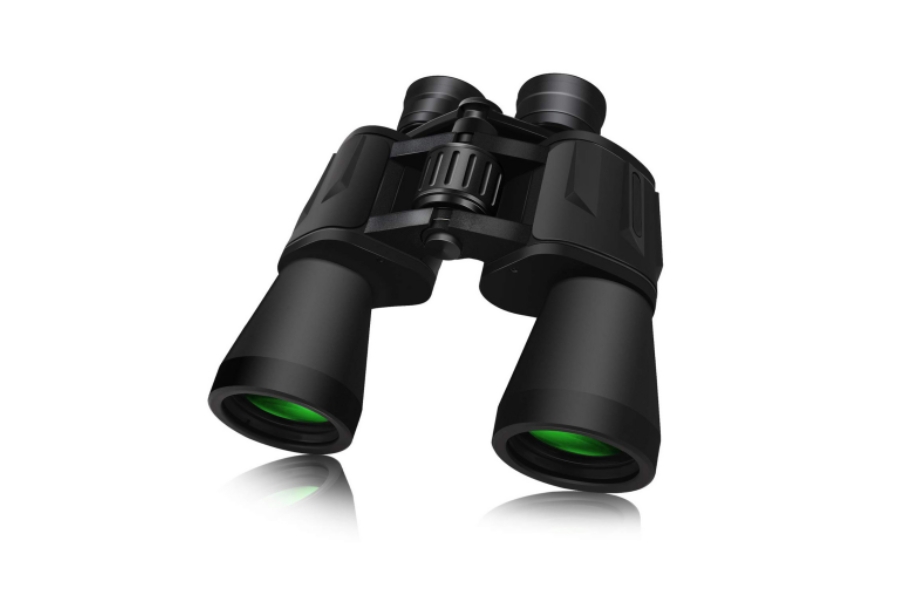
- Rank #2: a “20×50” binocular (optically more like 10×50) also at USD 35.98, with about 3,600 reviews.
Most of these products are manufactured in China, with:
- Simple designs
- Compact size
- Positioning focused on casual travel, sightseeing, and general leisure use
In contrast, well-known U.S. and European brands represent a smaller share of the Top 100 and mostly appear in the mid to lower parts of the ranking. Within the Top 100, we see five major international brands:
- Bushnell – about 10 SKUs
- Vortex – 8 SKUs
- Nikon – 6 SKUs
- Celestron – 6 SKUs
- Pentax – 1 SKU
In total, these account for roughly one-third of the Top 100. Among them, Vortex appears three times in the Top 10 (ranks #3, #4, #9). Most of the other big brands start from around rank 20 and below.
Overall, value-oriented brands manufactured in China and sold directly on Amazon dominate the top positions. Roughly one-third of these are operated as U.S. e-commerce brands, while about two-thirds are run as Chinese e-commerce brands. These brands win primarily through aggressive pricing and scale, while legacy optics brands focus more on mid- to high-end users.
Product Categories & Key Characteristics
Within the Top 100, product types are diverse. They can roughly be grouped into the following segments:
1. Entry-Level / Kids Binoculars
These are typically low-magnification, compact models such as 8×21, 8×25, 10×25, emphasizing:
- Lightweight & portable
- Durable enough for casual use
- Very easy to operate
Many listings clearly target children and families, using phrases like “for kids” or “toy binoculars,” and often feature:
- Cartoon-style designs
- Multiple color options
- Basic but adequate optics
Reviews frequently highlight:
- Very low price
- Stable sales over a long period
- Unique, recognizable exterior designs

2. General Purpose / Traditional Viewing Binoculars
This group covers mainstream specs such as 10×42, 10×50, 12×42, suitable for:
- Birdwatching
- Hiking and camping
- Sports and stadium events
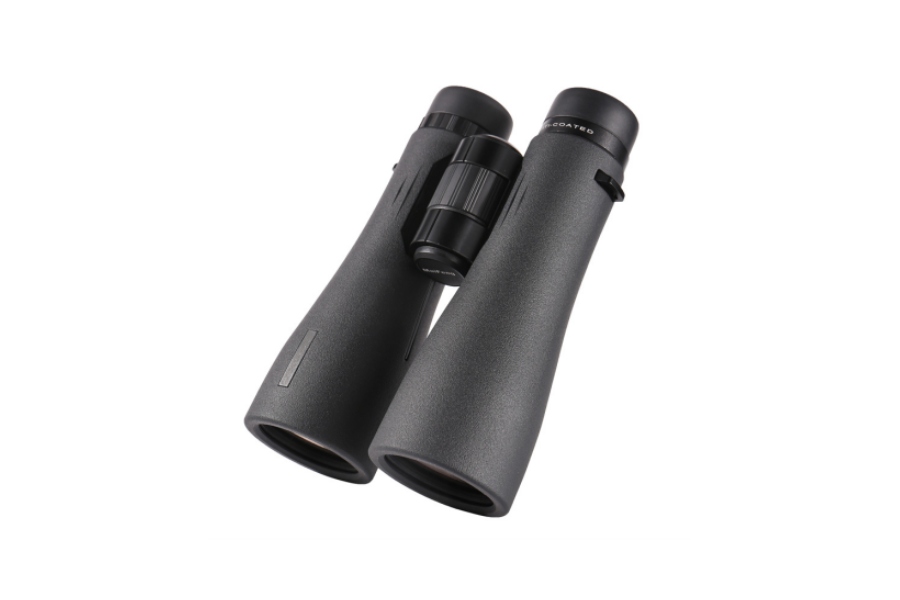
For example, Celestron 15×70 and 20×80 high-power binoculars appear in the ranking, appealing to users who want entry-level astronomy or long-distance observation.
Mid- and low-priced brands also offer many 10×50 “high power” binoculars, which are popular as an accessible entry point for male users who associate “big objective, big power” with “serious gear.”

3. Astronomy-Oriented Binoculars
High-magnification astronomy series such as Celestron 15×70, 20×80, 25×70 are priced from several tens to over one hundred dollars.
Although these products have a smaller user base, they still occupy visible positions in the Top 100, reflecting real demand from amateur astronomy enthusiasts.

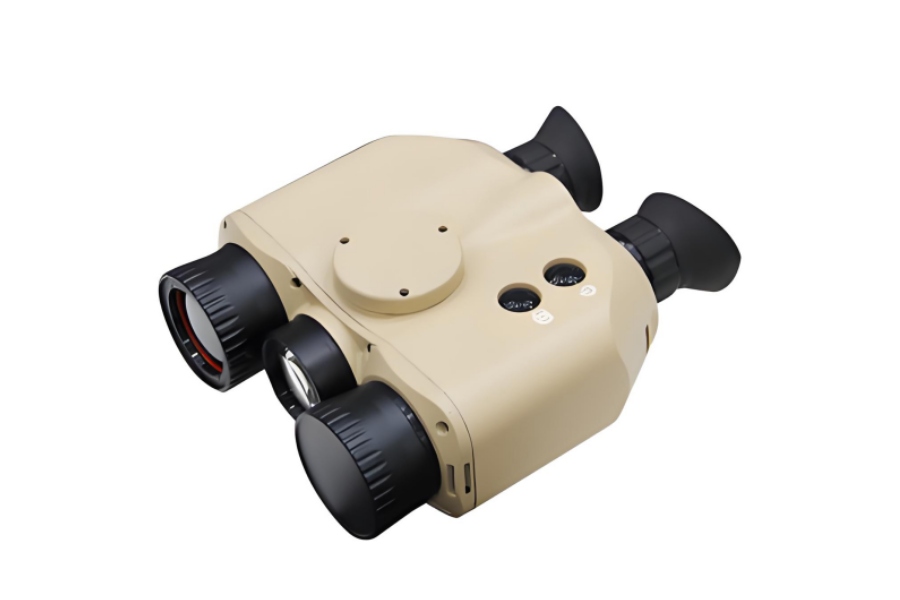
4. Night Vision Devices
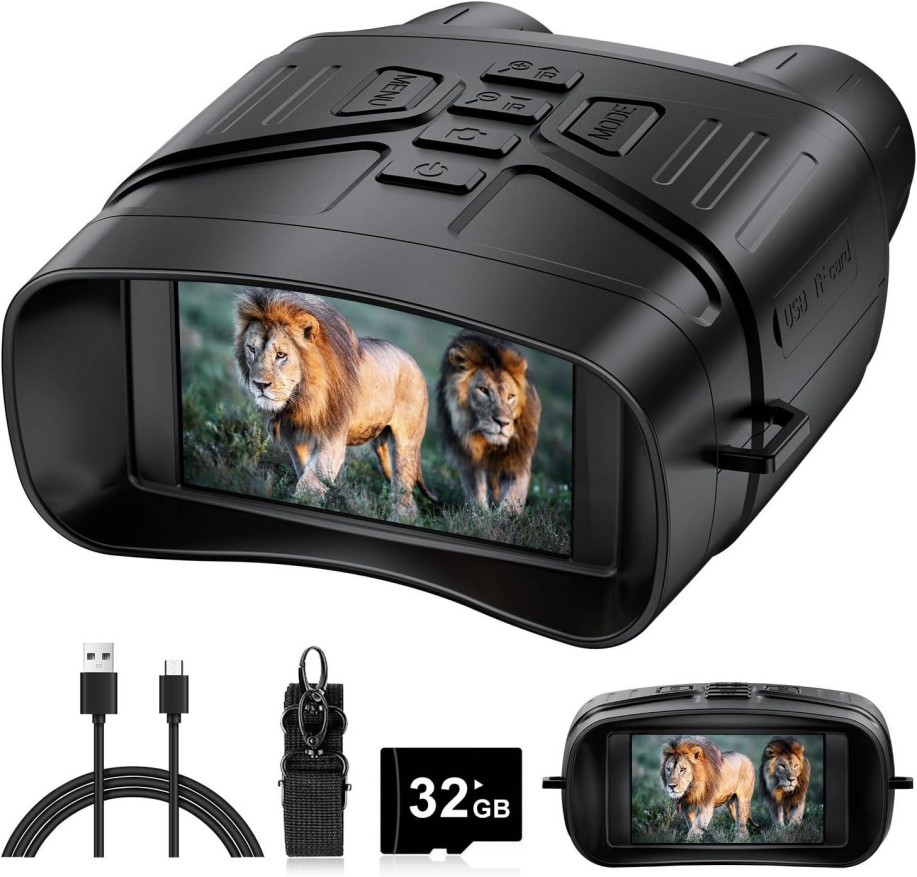
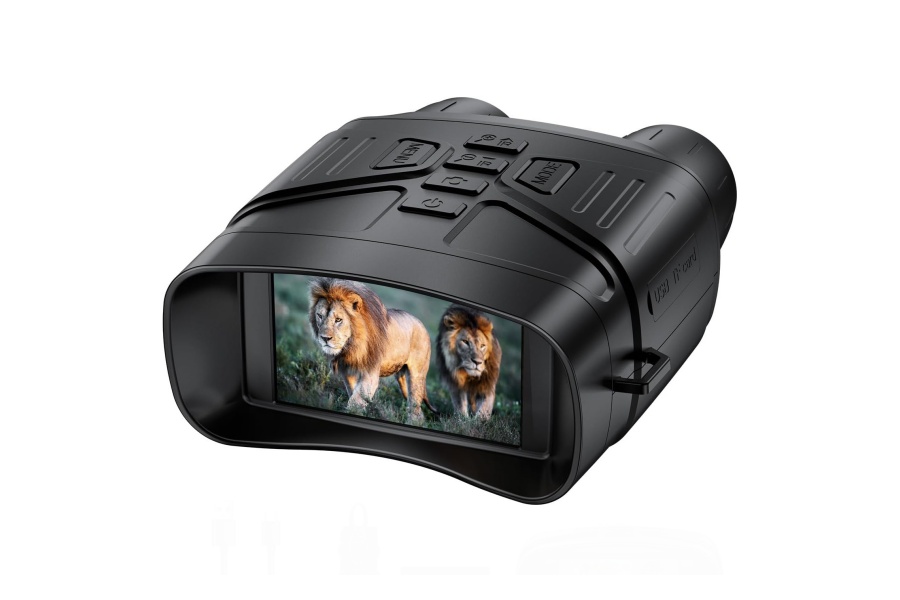
Several night-vision binoculars / goggles (such as “4K night-vision goggles”) appear in the ranking.
Reviews often point out that these are not traditional optical binoculars, but more like entry-level digital entertainment devices. Their positioning is quite different from classic binocular users.
However, because most Amazon shoppers in this category are non-professional first-time buyers, many users searching for “binoculars” are easily attracted by “night-vision” features and end up purchasing digital night-vision binoculars instead of traditional optics.
5. Other Specialty Binoculars
Some products include smartphone adapters for photography, or other added features that appeal to modern users.
A small number of kids’ toy binoculars are essentially sold as ultra-low-cost, safety-certified toys, not as serious optical instruments.
What Makes Best Sellers Stand Out: Product Traits
Across the Top 100, certain keywords repeatedly show up in reviews and product commentary, such as:
- “Unique exterior design”
- “Factory direct”
- “Stable listing”
This suggests many bestsellers are:
- OEM/ODM products made by Chinese factories
- Designed with a distinctive exterior, not generic “copy-paste” housings
- Supported by reliable, long-term supply chains
At the same time, phrases like “brand premium” also appear, indicating that big brands are priced higher even when basic specs look similar on paper.
Taken together, the Top 100 covers a range of needs from: Casual, low-frequency use (travel, kids, occasional sports) to Quasi-professional observation (birding, hunting, astronomy).
The category is clearly multi-layered, with clear segmentation by price, spec, and target user.
Price & Review Volume Analysis
Prices among the Top 100 bins vary widely:
- Lowest price: around USD 7.99
- Highest price: up to USD 457.72
- Median price: around USD 45.99
- Average price: around USD 72.25
This reveals a strong polarization:
- A cluster of high-volume, low-priced products, and
- A smaller set of premium-priced products with strong brand backing
Most high-ranking bestsellers fall into the lower price bands. In the Top 10, prices are typically below USD 36—for example:
- Rank #1 and #2 are both around USD 35.98
In contrast, major brands usually price at USD 100+, for example:
- Vortex Diamondback – roughly USD 178
- Vortex Crossfire – roughly USD 133
- High-end Celestron astronomy models – USD 80+
From a review count perspective (as a proxy for sales):
- Rank #1 has about 32,600 reviews
- Rank #7 about 23,600 reviews
- Rank #6 about 15,000 reviews
- Rank #8 about 10,200 reviews
Six out of the Top 10 products have over 10,000 reviews, confirming very large cumulative sales.
By comparison, big-name products at ranks #3 and #4 have around 10,000 and 9,600 reviews respectively—still strong, but below some cheaper competitors.
Importantly, the relationship between rank and review count is not strictly linear. For example, the product at rank #2 has only ~3,603 reviews but still ranks second; this indicates that recent sales velocity, pricing, and conversion rate also play major roles.
However, as a general rule, high review volume strongly correlates with high total sales and listing stability, which is critical for long-term bestseller status.
Occer 12×25 – A 7+ Year Case Study
Data from recent years show that the Occer 12×25 Compact Binoculars (actual optical spec 8×25), priced around USD 35.98, has held the #1 position for more than seven years.
This long-term performance clearly proves:
- Compact, 25 mm class binoculars are extremely popular with U.S. casual, non-professional users.
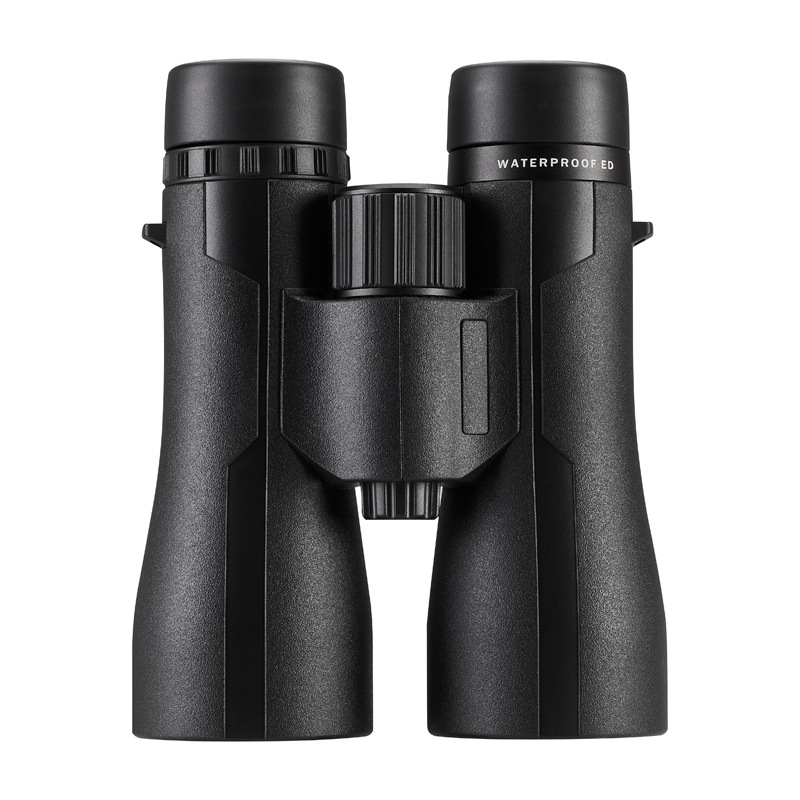
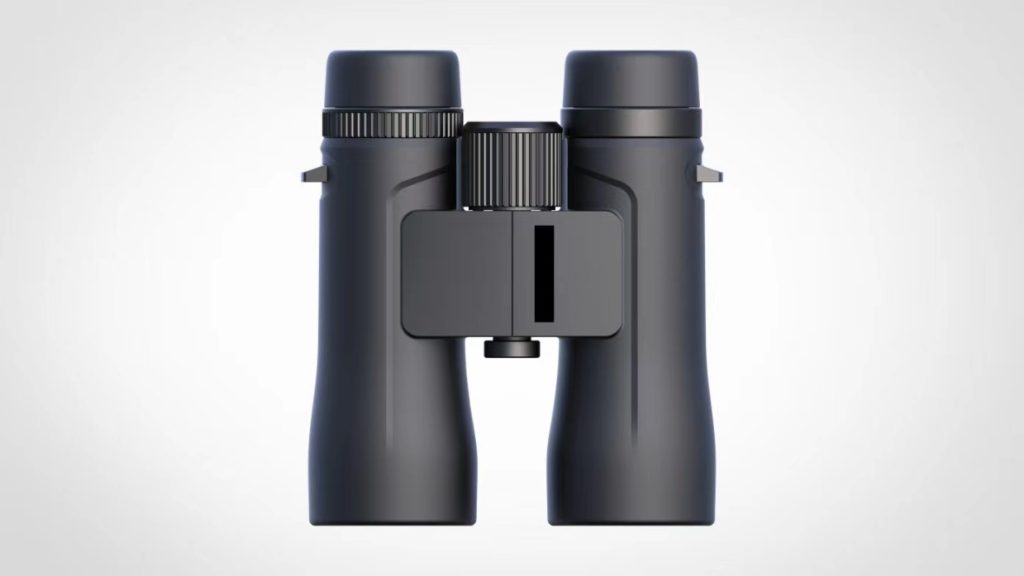
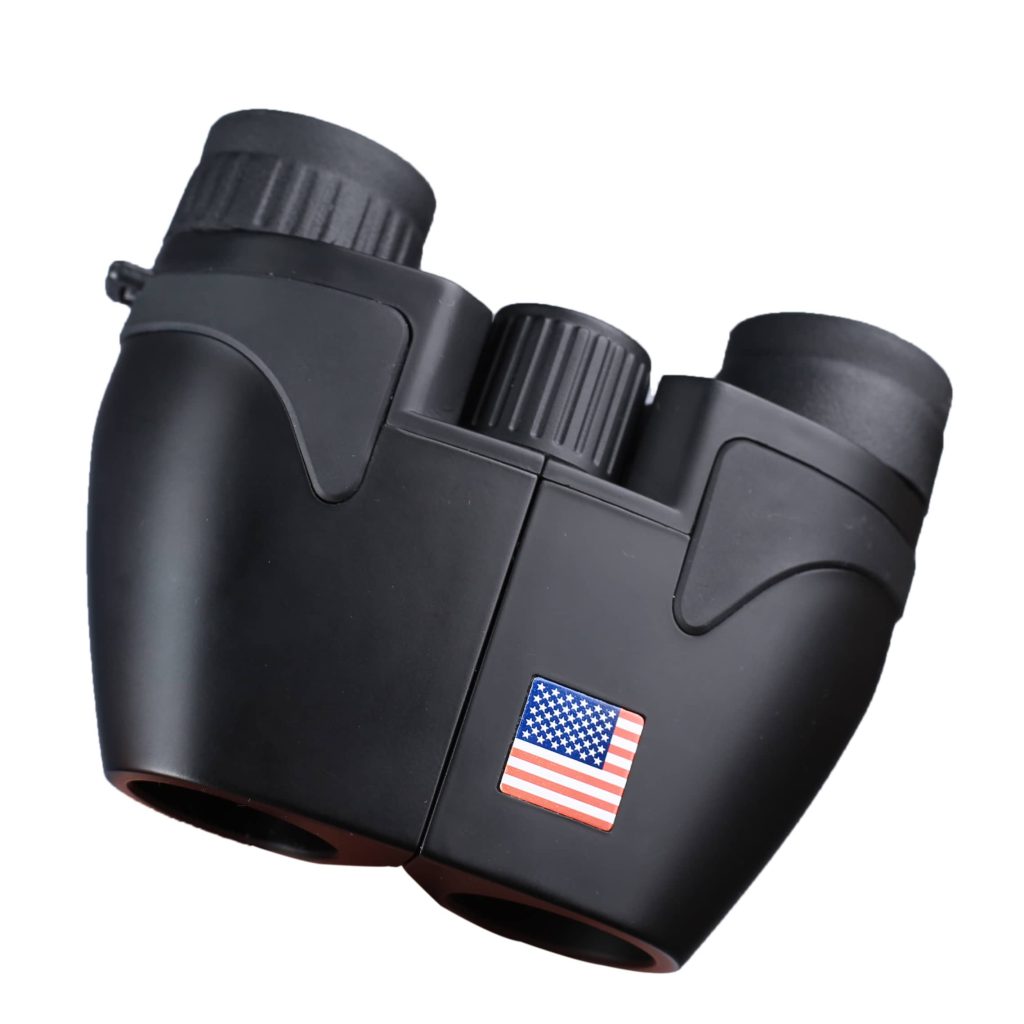
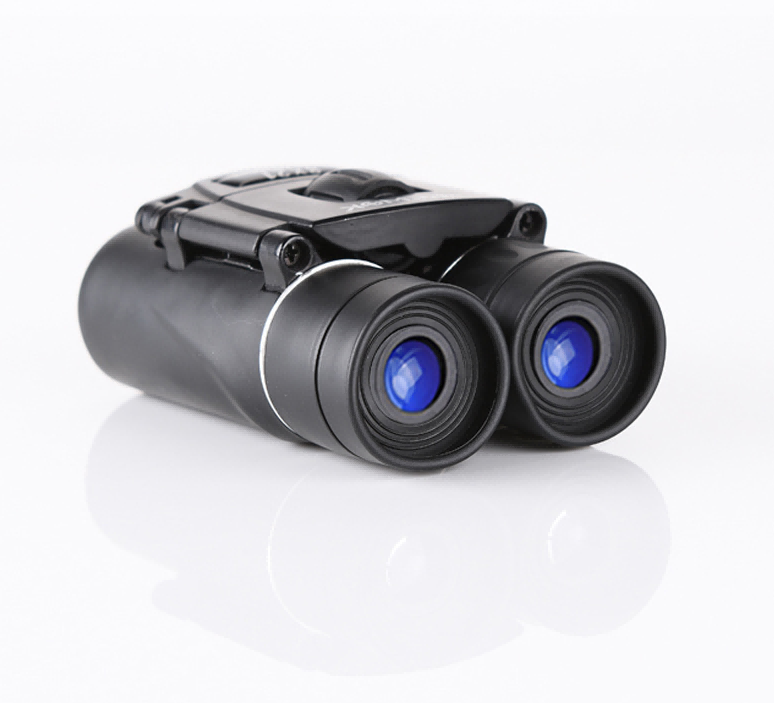
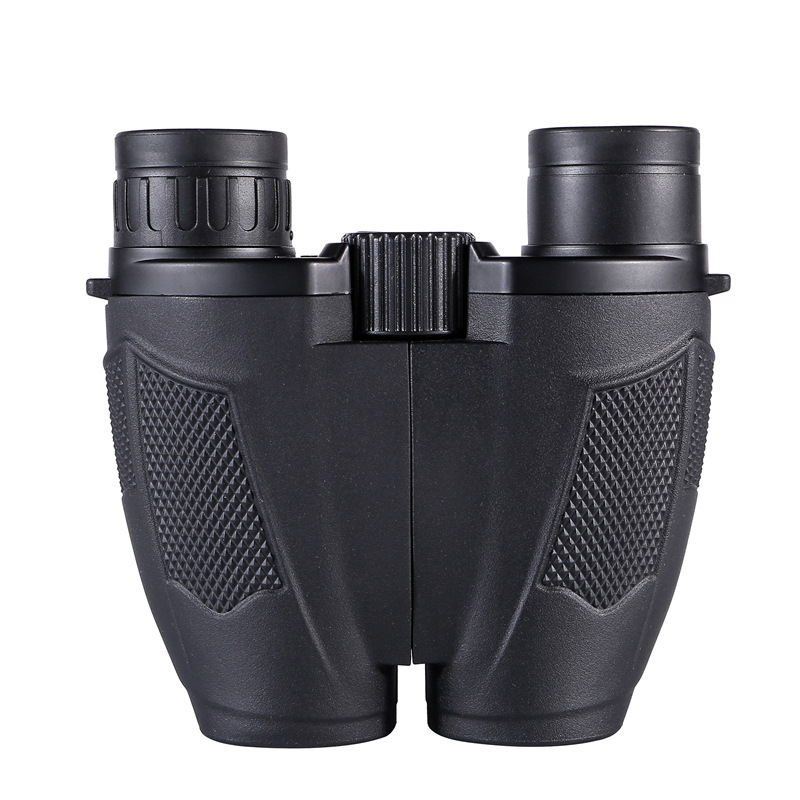
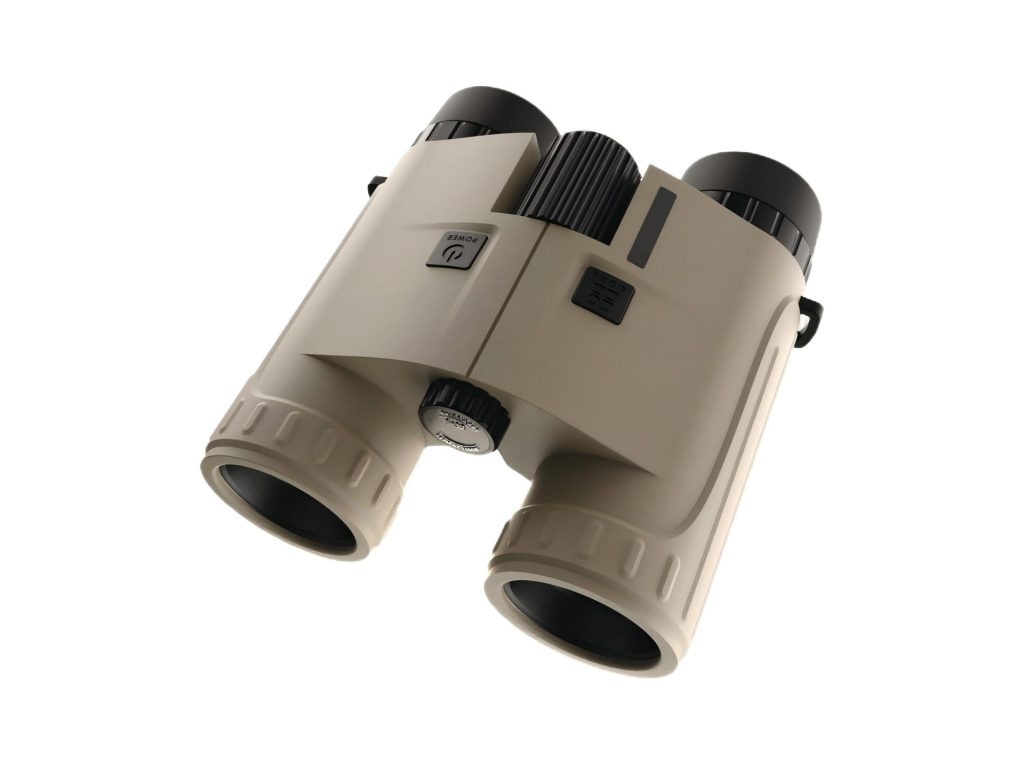
Within the Top 100, 25 mm Porro-style compact binoculars occupy a very large share. Because competition in this size is so intense, most stable brands have invested in tooling for their own distinctive housings to stand out visually.
At FORESEEN OPTICS, we have already developed 10+ different exterior designs in this category to help different brands build their own unique identity while sharing a proven, stable optical platform.

Brand Landscape
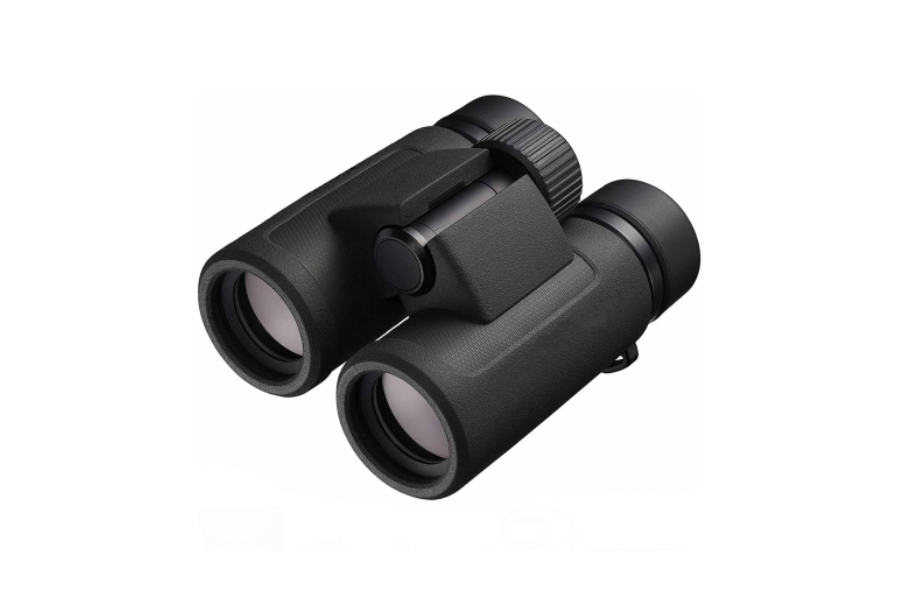
Within the Top 100, Chinese-made products represent the majority.
Multiple listings are described in commentary as “factory direct” or “Chinese company,” indicating many top-selling designs are export-oriented OEM/ODM products.
In contrast, the number of U.S. home-grown brands is relatively small—examples include Vortex and some Nikon-branded products (though the manufacturing is also in China).
In total, there are 31 SKUs from internationally recognized optics brands:
- Bushnell – 10 SKUs
- Vortex – 8 SKUs
- Nikon – 6 SKUs
- Celestron – 6 SKUs
- Pentax – 1 SKU
These companies are professional optics manufacturers with:
- Strong product quality control
- Established brand image and channel presence
In practice, most of these SKUs are also produced through Chinese OEM factories, but the brand equity and pricing power enable them to maintain decent sales at higher price points.
The data show that:
- These big-brand products are generally priced higher
- They target more experienced or serious users
- Review counts are lower than the mass-market budget items, but they still occupy important positions in the category
For example:
- Vortex appears several times in the Top 10. This reflects the brand’s strong momentum in recent years and its willingness to fully leverage and deepen partnerships with Chinese supply chains. Among U.S. mainstream optics brands, Vortex is a representative case of combining brand strength with China-based manufacturing.
- Nikon and Celestron (now under Chinese ownership) typically appear around rank 20 and beyond.
Many of the highest-volume listings, however, come from relatively new or niche brands such as Occer, Aurosports, Hontry, POLDR, etc. These brands often emphasize:
- Extreme value
- Compact designs
- Targeting ordinary consumers who are not brand-sensitive and are driven mainly by price and appearance
In short, the brand landscape is one of multi-brand coexistence:
- On one side, professional brands use optimized Chinese supply chains plus brand premium to serve the mid- to high-end segments;
- On the other side, Chinese OEM-backed value brands capture the mass market with low cost and fast iteration.
Strategic Recommendations
Overall, the Top 100 on Amazon US reveals three key patterns:
- Rich, layered demand – Entry and kids’ binoculars dominate in volume at the low end, while professional and high-power models serve specific, higher-value niches.
- China OEM dominance – Many top sellers are manufactured by Chinese factories with differentiated housings and stable supply chains. International brands are fewer in number but maintain strong positions in the mid- to high-end range.
- Price–review polarization – Low-priced products often carry extremely high review counts, while big brands rely more on product quality and brand trust than on sheer volume.
Based on this, we suggest the following product and market strategies:
1. Strengthen Differentiated Product Design
Follow market trends and launch models with:
- Unique exterior design
- Practical add-on features (e.g., smartphone adapter)
to avoid competing as yet another generic binocular.
Multiple reviews mention “unique design” or “exclusive exterior,” indicating that ownable industrial design significantly improves click-through and recall.
2. Focus on Entry-Level & Kids Segments
Within the Top 100, compact low-power and kids’ binoculars show very strong sales.
Future product lines can be optimized for these segments by:
- Using safe materials and rounded designs
- Offering multiple colorways
- Positioning products as travel essentials or “first binoculars for kids”
Scenario-based marketing and “easy to use” messaging will help capture share quickly.
3. Balance Quality and Price
Since high review volume and high sales are heavily concentrated in the value price range, it’s critical to:
- Maintain a cost advantage, while
- Ensuring basic optical performance and durability
For example, consider:
- Upgrading glass and coatings where it matters most
- Using stable mechanical structures
to keep the price aggressive but user satisfaction high.
For higher-end products, emphasize:
- Superior viewing experience
- Warranty and after-sales support
and adjust pricing accordingly.
4. Optimize Brand & Channel Strategy
Consider partnering with reputable Chinese factories for OEM/ODM, while building a consistent brand identity:
- Learn from “stable listing” practices of current top sellers
- Continuously optimize product pages and images
- Use Amazon tools to build and protect review assets
At the same time, use official channels and authorized distributors to:
- Maintain brand image
- Increase consumer trust
5. Marketing & Review Accumulation
Given how critical reviews are to ranking and conversion:
- Plan early-stage promotion and sampling programs
- Encourage buyers to leave feedback
- Closely monitor reviews and iterate product features quickly
Combine this with social media, influencers, and review sites to grow visibility and create a positive feedback loop.
Special Topic – Mislabeling & Exaggerated Claims: A Double-Edged Sword
From a technical optics perspective, for hand-held use in typical outdoor scenarios (travel, birding, concerts, etc.), a magnification of 8×–10× and an objective size of 21–42 mm are generally the best balance of field of view, brightness, and stability.
Higher magnification often leads to:
- More handshake
- Narrower field of view
- Darker images
However, looking at reviews across the Top 100, it is clear that most Amazon shoppers for binoculars are first-time, non-expert buyers. They have very limited understanding of optical fundamentals.
As a result, the category is full of:
- Mislabeling of core specs, and
- Aggressive marketing claims
which do drive short-term clicks and conversions.
Mislabeling “Hot Spots”
- Magnification
- Actual optical systems might only be 6×, 8×, or 10×,
- But the title claims 12×, 20×, 30× or even more, reinforcing the naive belief that “higher power = better.”
- Objective Diameter
- The true lens diameter is smaller,
- But titles and images emphasize a larger objective size, signaling “brighter, more professional” even when not true.
- Optical Specs (BAK4, Fully Multi-Coated, etc.)
- Standard glass or partially coated optics are advertised as BAK4 prisms, fully multi-coated (FMC),
- With multiple technical terms stacked together to create a pseudo-high-end impression.
Exaggerated Marketing “Hot Spots”
- Protection Ratings
- Only basic rain resistance or splash protection is present,
- But the listing claims “fully waterproof” or “professional IPX rating.”
- Shock Resistance
- The main function of rubber armor is grip and scratch protection,
- Yet marketing often calls it “mil-spec shockproof” or “impact-resistant,” which the actual structure cannot reliably support.
- Image Quality Claims
- Average clarity is described as “HD” or “4K-like,”
- With heavily retouched sample images that promise a viewing experience far beyond reality.
The Double-Edged Sword: Short-Term Gain vs. Long-Term Cost
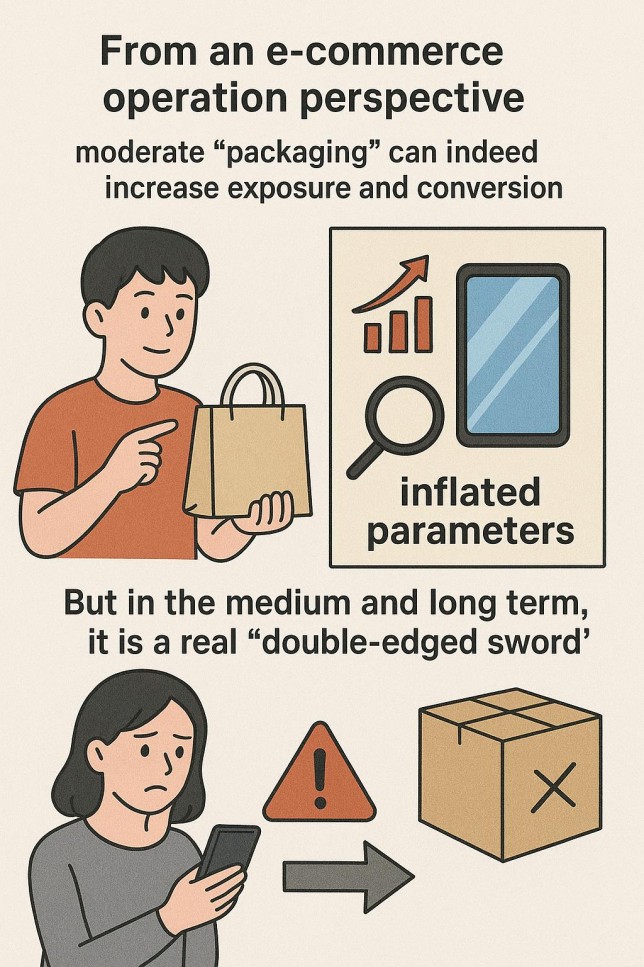
From a pure e-commerce perspective, mild “over-packaging” can indeed bring:
- Faster click-through
- Higher short-term conversion
This is especially true in low price bands where:
- Users have almost no comparison experience, and
- Very few buyers will invest the effort to have a product lab-tested
So, in practice, the return rate often remains manageable.
However, in the medium to long run, this behavior is a real double-edged sword:
If claims are too far from reality, the gap between expectations and actual product will Drive up returns:
- Accumulate negative reviews
- Damage the listing’s long-term ranking
For example, claiming “night vision” for a standard binocular that only appears a bit brighter in low light due to larger objectives will quickly lead to frustration and returns.
In contrast, calling BAK7 glass “BAK4” is much harder for an average user to detect, and is less likely to trigger returns — but it still erodes trust once discovered.
When a brand eventually wants to move into higher price segments or more professional users, early-stage mislabeling and over-promising will severely weaken brand credibility:
- Create a reputation drag that is hard to reverse
- Become a risk once platform rules tighten (e.g., potential penalties or forced delisting)
For any brand that wants to build a long-term business in the binoculars category, the question is not just whether to use this double-edged sword, but how far to go.
Our recommended direction:
- Keep technical specs as close to real performance and market norms as possible, avoiding claims that clearly violate common sense.
- Shift marketing focus from “inflated numbers” to clear use-case positioning + honest user experience.
- Rely on consistent product quality, ownable industrial design, and sustained positive reviews to gradually replace any dependence on exaggerated claims.
In the end, short-term sales spikes can be driven by copywriting tricks, but long-term ranking and brand premium must be built on real product capability.
In summary, the binoculars category on Amazon US is highly competitive yet full of opportunity. Brands that:
- Choose the right sub-segment,
- Invest in distinctive, defensible designs,
- Align pricing with real performance, and
- Build trust through honest positioning and strong supply chains
will be best positioned to achieve sustainable growth in an increasingly crowded market.