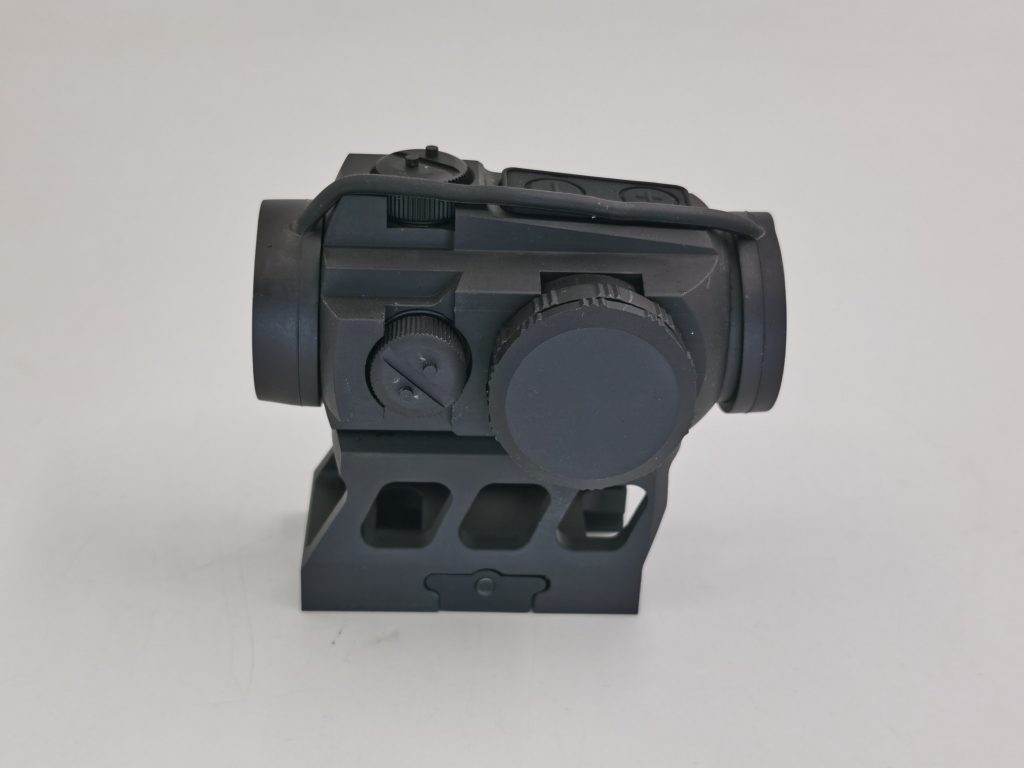
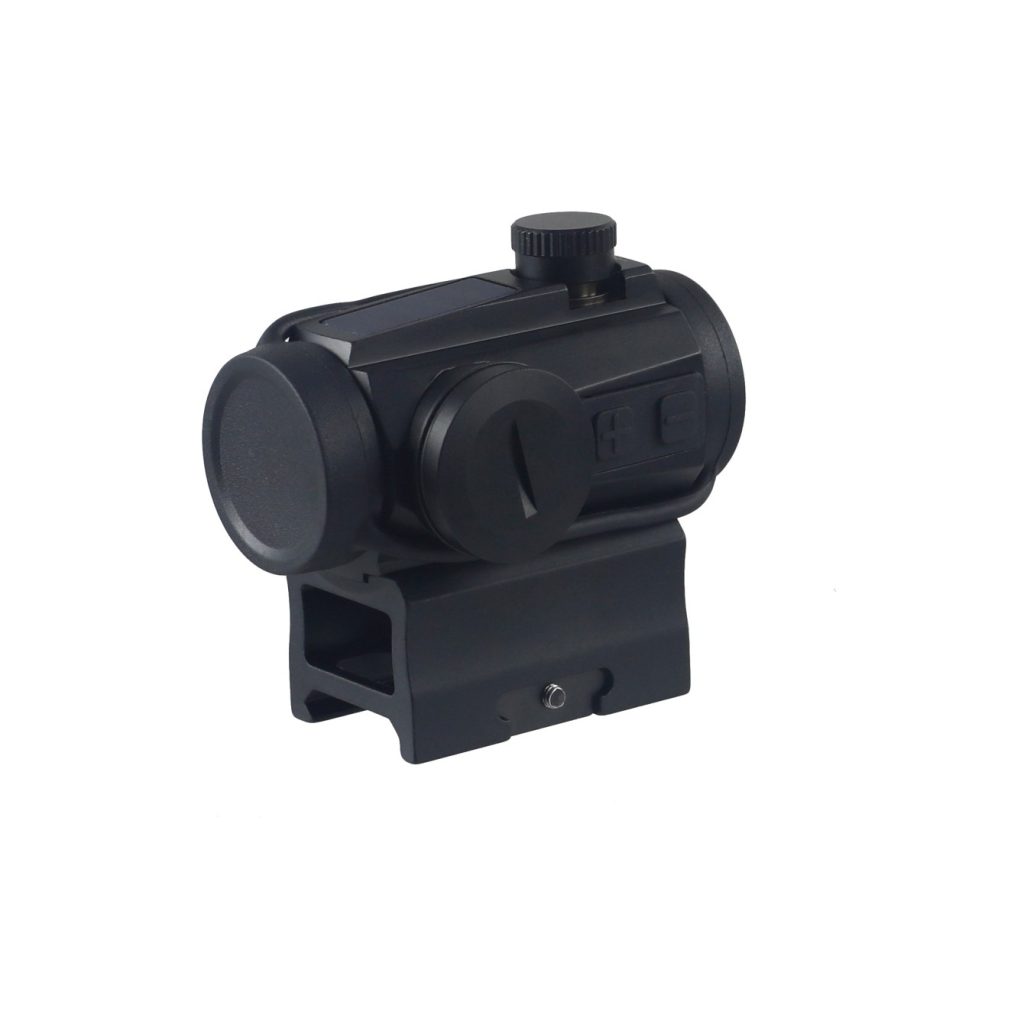
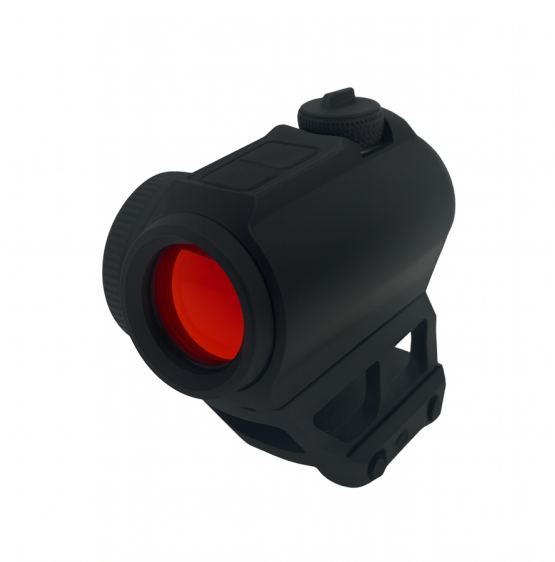
The modern rifle is a masterpiece of modularity, but it is only as effective as the optic sitting on its rail. While high-power scopes have their place, the red dot sight for rifles has become the gold standard for everything from home defense to tactical carbine courses.
But when you transition from a pistol to a long gun, the rules change. You have a stock, a longer barrel, and a much higher velocity. This raises the critical question: How do you maximize the range of a red dot on a rifle platform?
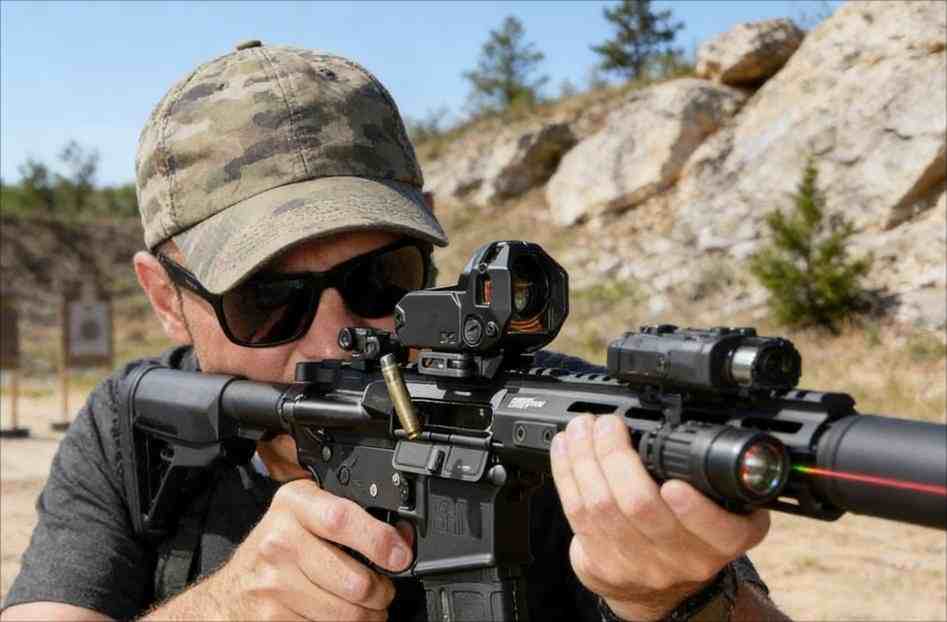
How Does a Red Dot Rifle Sight Work?
To understand how the red dot sight on a rifle works, one must first understand the principle of collimated light.
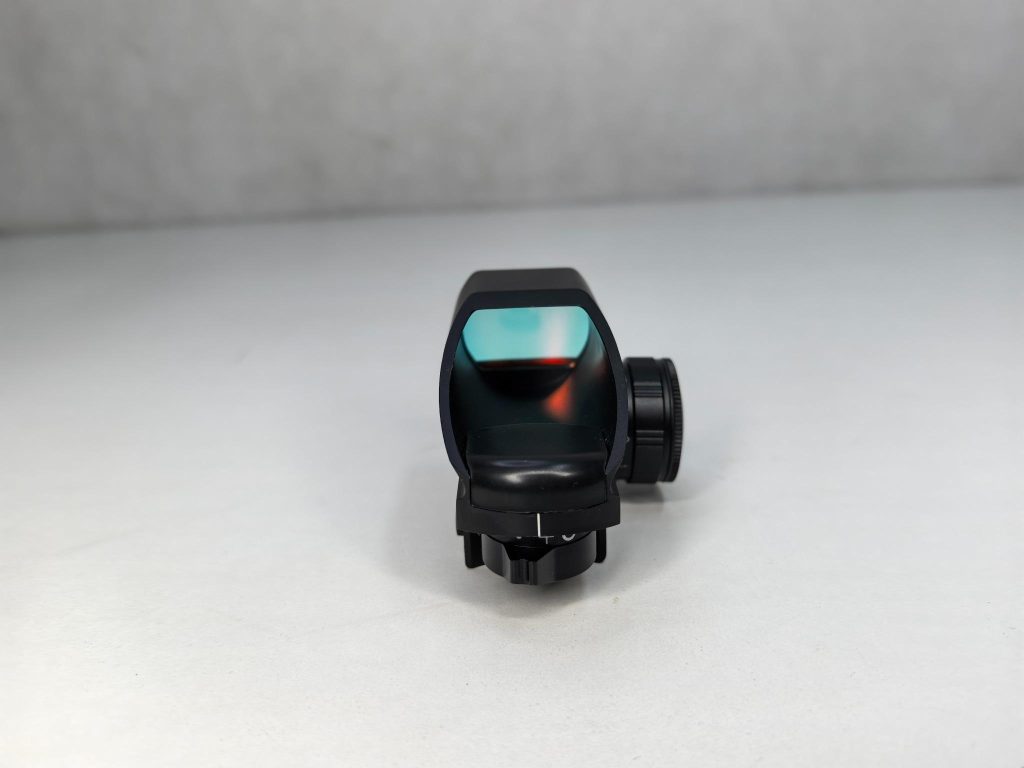
Inside the barrel of a rifle-specific red dot sight (such as Trijicon MRO or Aimpoint), the focused LED light will reflect the light onto the spherical half-reflective mirror. Due to the rifle’s stable three-point contact (shoulder, cheek, and hand), the “ignore aberration” feature of the red dot sight enables extremely fast target switching.
Why Rifle Optics Differ from Pistol Optics
Although the technical principles are similar, the design of the rifle’s red dot sight is tailored to different actual situations:
- Larger objective lens: Unlike the small window on a pistol, the red dot sight on a rifle typically uses a 20mm to 30mm barrel. This provides a larger field of view, allowing for “capturing” the red dot during rapid aiming.
- Post-swing control: The vibration frequencies produced by rifles like the AR-15 or AK-47 are different from those of pistols. The internal structure of rifle-specific sights is reinforced to withstand the impact of thousands of 5.56 or 7.62 rounds.
How Far is a Red Dot Good for on a Rifle?
The “effective range” of a rifle is usually over 500 yards, but the red dot sight is a 1x (no magnification) optical sight. This creates a gap between the effective range of the rifle and the shooter’s vision.
For standard rifles, red dot scopes are considered highly effective within 200 yards. Beyond this distance, the human eye has difficulty distinguishing small targets (such as a 6-inch steel plate) from the surrounding environment. However, through the use of the correct zeroing strategy, the effective range can be extended to 300 yards.
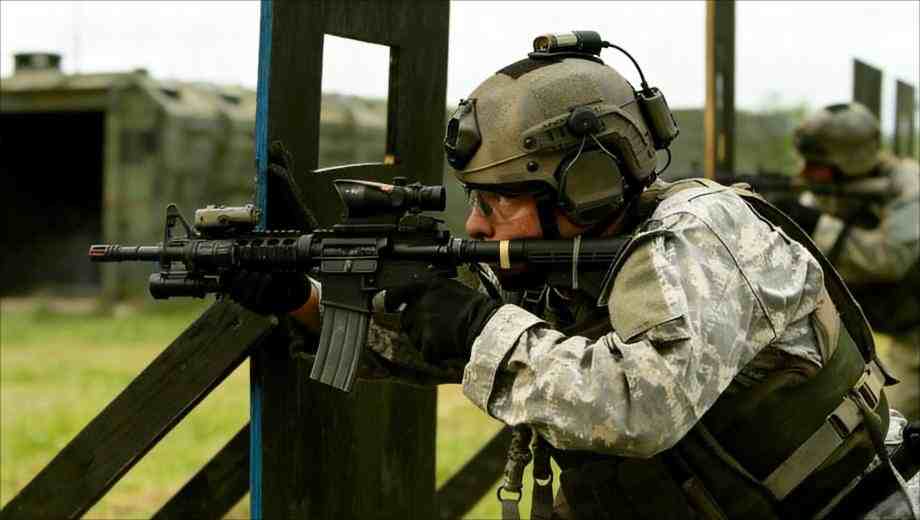
The 0–50 Yard Performance: The CQB Dominance
For a rifle designated for home defense or “Close Quarters Battle” (CQB), the red dot is the undisputed king.
- Height Over Bore: On a rifle, the optic sits about 2.5 inches above the barrel. At 5 or 10 yards, your bullet will hit 2 inches lower than the dot. Professional rifle shooters practice “offset” to account for this.
- Target Focused: Unlike iron sights, where you focus on the front sight post, a rifle red dot allows you to keep your focus entirely on the threat. Your brain simply “superimposes” the dot onto the target.
The 50/200 Yard Zero: The Rifleman’s “Sweet Spot”
If you are running a red dot on a rifle, the 50-yard zero is the industry standard for a reason. Because of the 5.56mm’s velocity and the height of the optic on the rail, the bullet’s trajectory crosses the line of sight twice.
Why this matters for rifles: You can aim “center mass” on a human-sized target from 0 to 250 yards without ever having to “hold over.” This makes the rifle incredibly simple to operate under stress.
The 200–300 Yard Challenge: Precision on the Rail
At 300 yards, a standard 2 MOA (Minute of Angle) dot will cover 6 inches of the target. If you are shooting at a 10-inch plate, more than half of your target is obscured by the red glowing reticle.
To succeed at this range with a rifle:
- Lower the Brightness: On a rifle, a “blooming” or overly bright dot looks larger than it is. Dimming the dot makes it crisper for long-range precision.
- Stable Posture: Use the rifle’s handguard on a barrier or bipod. A red dot shows every bit of “reticle shake” at 300 yards.
How to Shoot Further: Red Dot Magnifier for Your Rifle
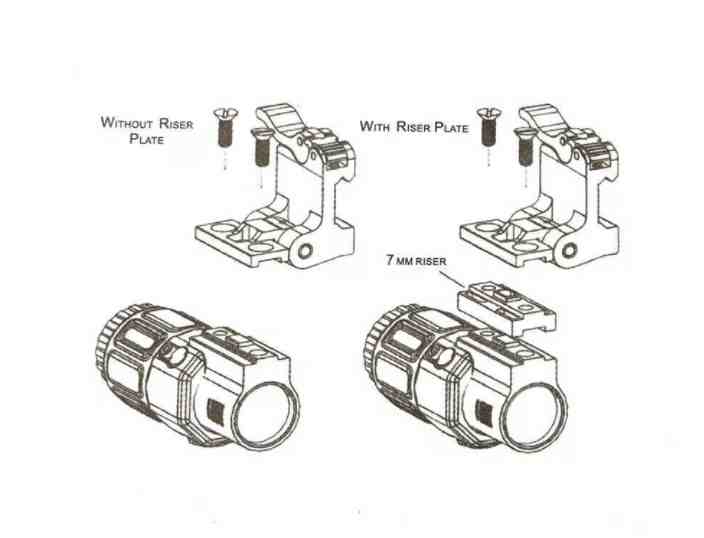
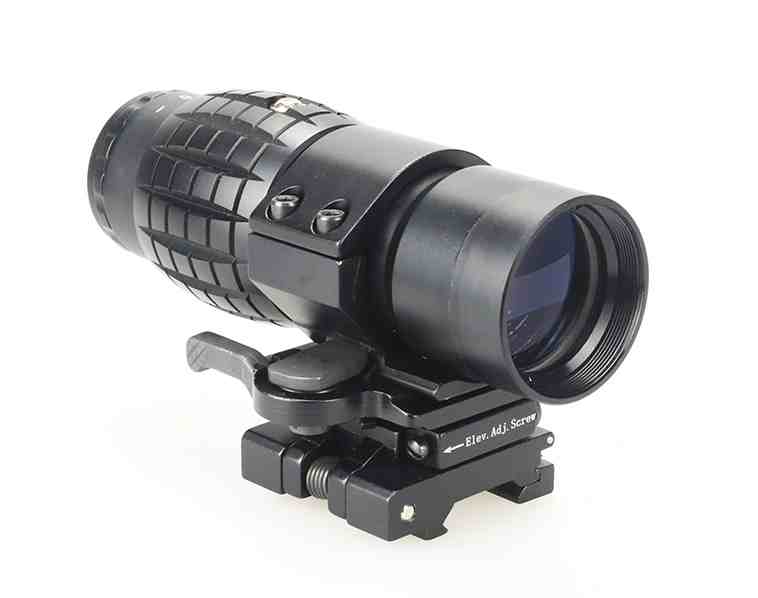
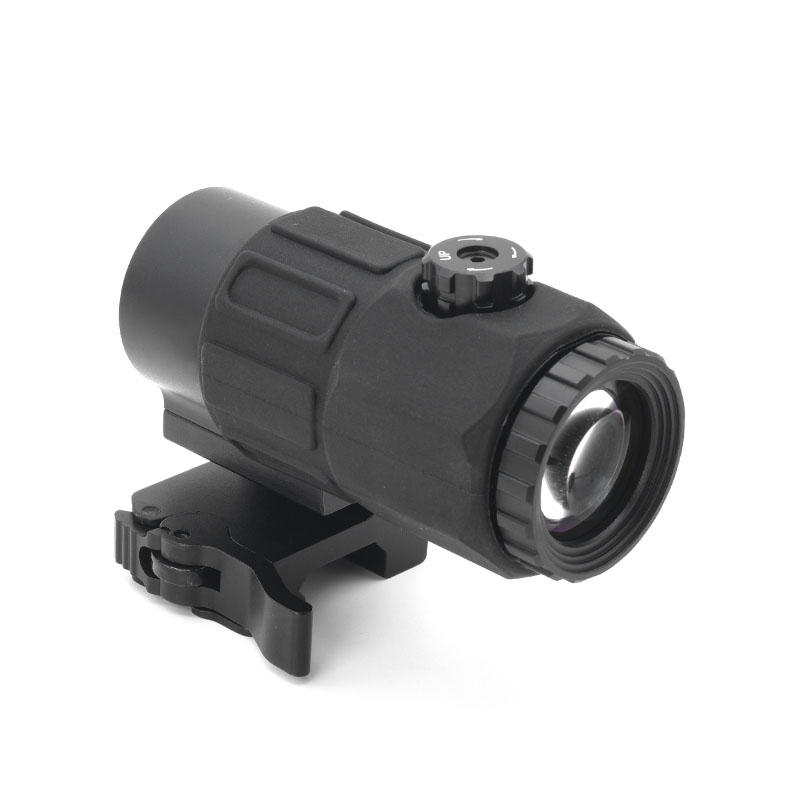
The most effective way to increase the range of a rifle is to use a flip-to-side magnifier. It can instantly transform your 1x dot sight scope into a precise optical sight with magnifications of 3x, 5x, or even 6x. However, adding lenses behind the dot requires extremely high precision to avoid the deviation of the impact point.
To ensure that your rifle remains accurate when shooting at long distances, please choose professional-level solutions such as FORESEEN. Their expertise in optics and mechanical engineering guarantees a seamless connection:
- Optical clarity: FORESEEN employs advanced multi-layer coating technology, optimizing the lens system from 2x to 6x, providing industry-leading brightness and eye distance, which is crucial for rapid aiming of the rifle at targets.
- Mechanical reliability: The performance of the magnifying glass depends on its installation method. The side-reversing mechanism of FORESEEN – offering a button-style or rotating-locking design – has undergone thousands of durability cycle tests to ensure that it will not loosen or shift even under the powerful recoil force of the rifle.
- Factory calibration accuracy: To address the common “red dot offset” issue, FORESEEN employs laser alignment technology during assembly. Each unit is individually fine-tuned to align with the optical axis, ensuring that your magnifying glass is ready to use out of the box and perfectly coaxial with the red dot sight.
Choose the high-quality magnifying glass with a CNC precision-machined 7075 aluminum alloy casing. You will enjoy the flexibility of a sniper rifle while also having the rapid firing rate of a close-range carbine.
Choosing the Right Red Dot for Your Rifle: 3 Things to Check
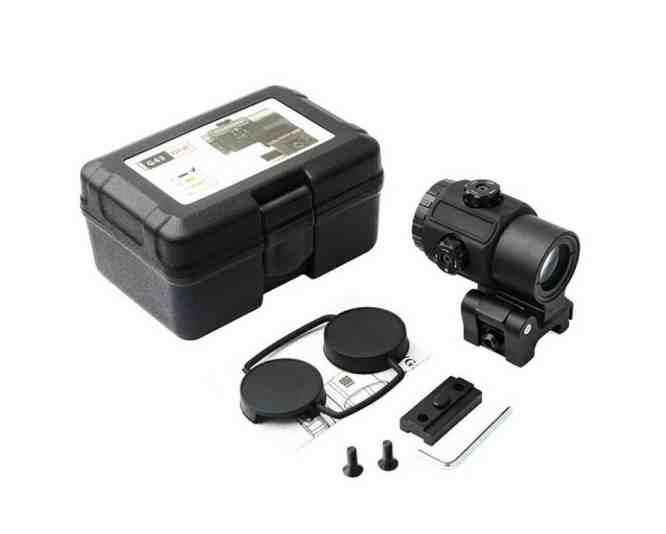
When shopping for a red dot sight for a rifle, you aren’t just buying glass; you are buying a mounting system.
1. Mount Height (The “Rifleman’s Weld”)
Because rifles have stocks, the height of the optic is everything.
- Absolute Co-witness: The dot aligns perfectly with your iron sights. Best for those who want a consistent cheek weld.
- Lower 1/3 Co-witness: The dot sits higher, leaving the iron sights in the bottom 30% of the window. This is the preferred setup for modern tactical rifles because it provides a less cluttered view.
2. Dot Size (2 MOA vs. 6 MOA)
For a rifle, 2 MOA is the gold standard. A 6 MOA dot is too large for a rifle, as it will cover a 12-inch target at 200 yards, effectively ruining your ability to take a precise shot.
3. Battery Life & “Shake Awake”
Rifles often need to be stored for a long time or used in high-intensity environments.
- Duty Grade: Optical sights like the Aimpoint PRO can operate for several years with just one battery.
- Motion Sensing: Many modern rifle red dot scopes (such as Holosun and Sig Sauer) are equipped with motion sensors. These sensors can automatically activate when the rifle is in motion, which not only saves battery power but also ensures constant usability.
Summary
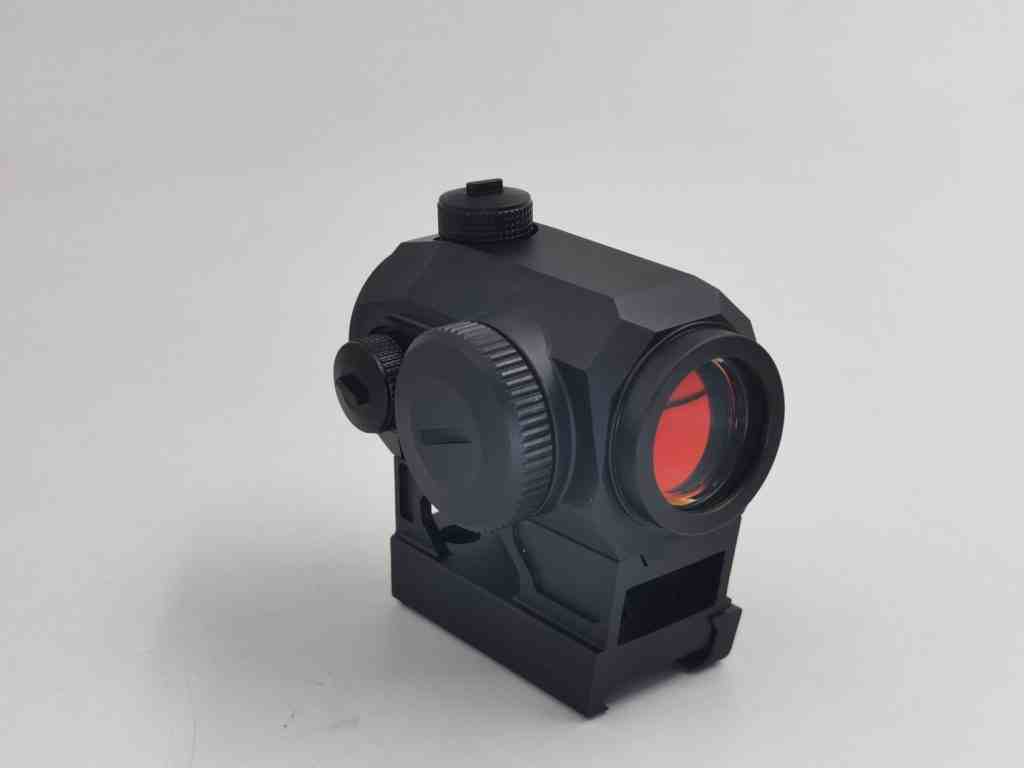
The rifle red dot sight is a power multiplier. It can transform an ordinary carbine into a close-range combat weapon, while maintaining “human eye level” accuracy at a distance of 300 yards (approximately 274 meters). By choosing a 2 MOA red dot, setting the zero at 50/200 yards (approximately 45/91 meters), and installing a magnifying glass, the versatility of the rifle platform can be maximized.
Whether it is conducting cleaning indoors or engaging in combat at a distance of 300 yards (approximately 274 meters), the Red Dot Sight is always the most intuitive aiming solution for modern rifle shooters.