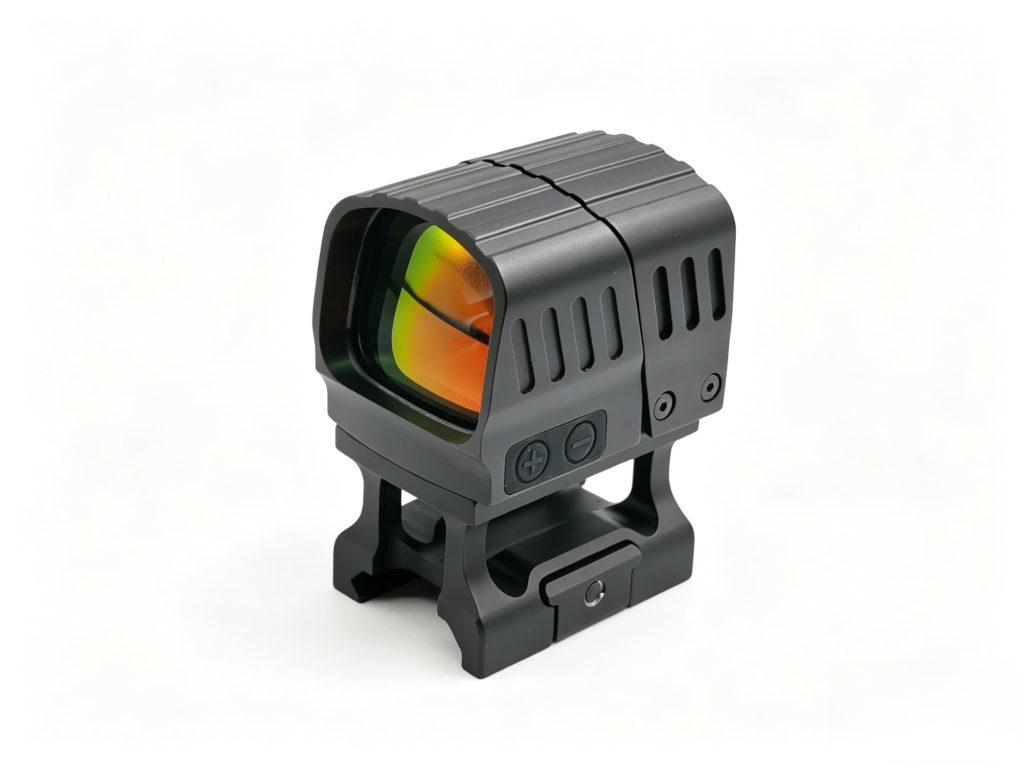
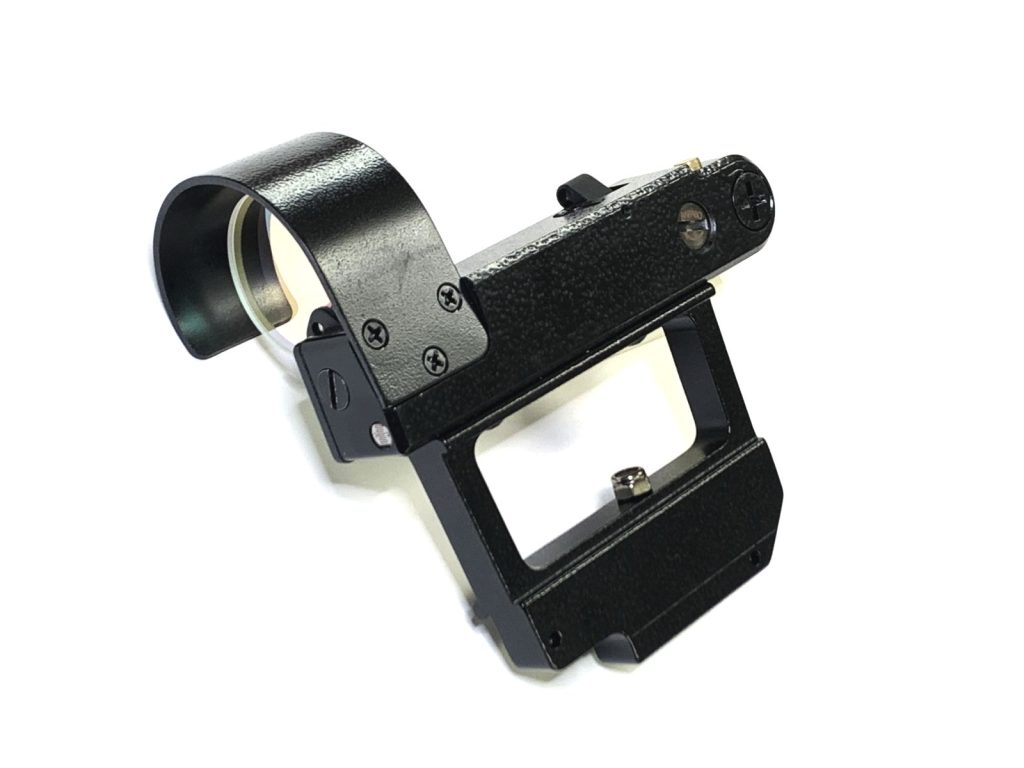
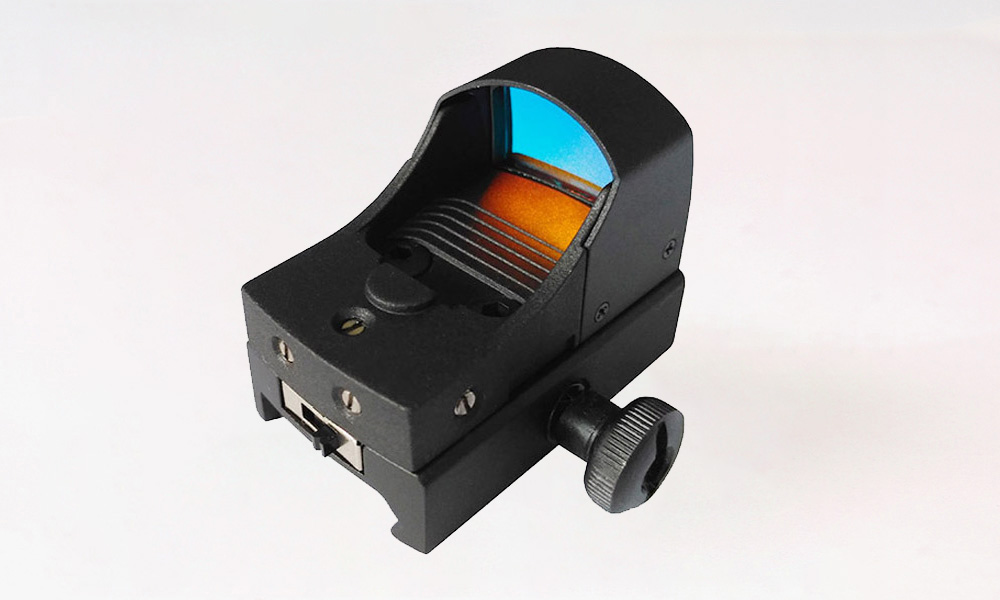
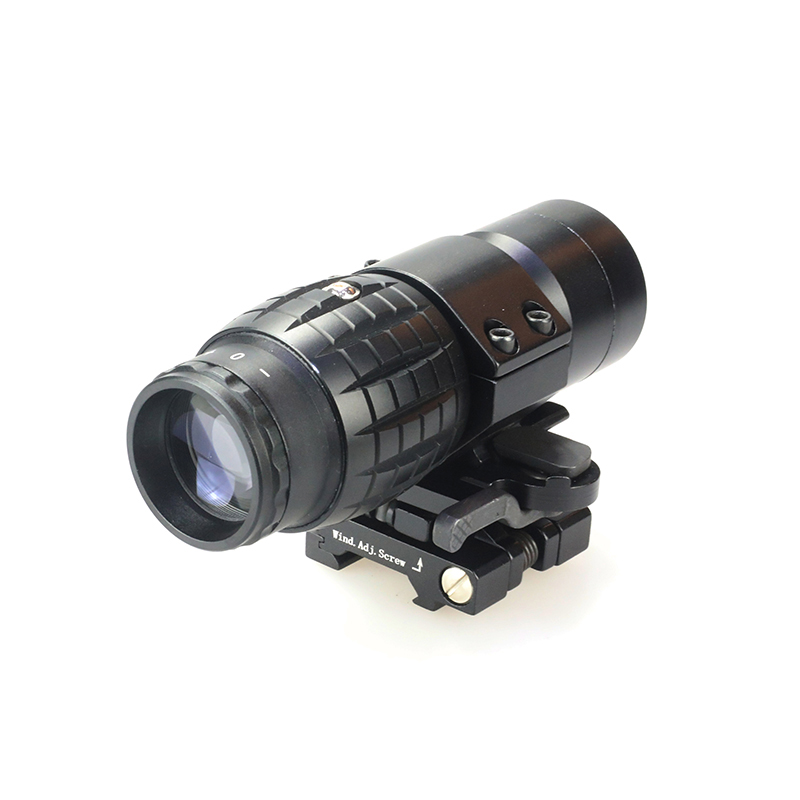
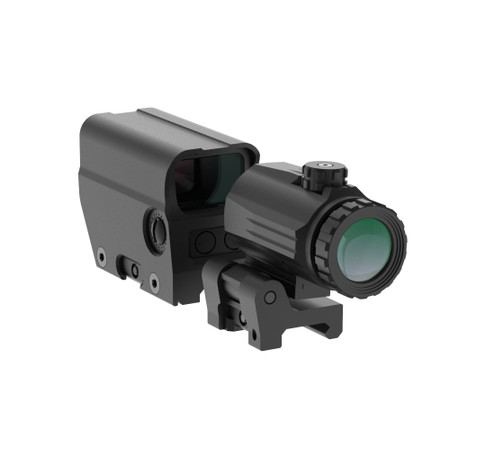
Unlike hunting or recreational optics, military red dot optics, military rifle optics, and even military grade thermal optics must perform reliably under harsh environmental and operational stress. Recoil from high-caliber platforms, sudden temperature shifts, water exposure, vibration during transport—these are not theoretical scenarios but real conditions.
At the same time, procurement often involves bulk purchasing, private labeling, or long-term framework agreements. This makes supplier capability and risk control just as important as product specifications.
If you are currently vetting military optics manufacturers, here are the 5 non-negotiable factors you need to evaluate before signing a purchase order.
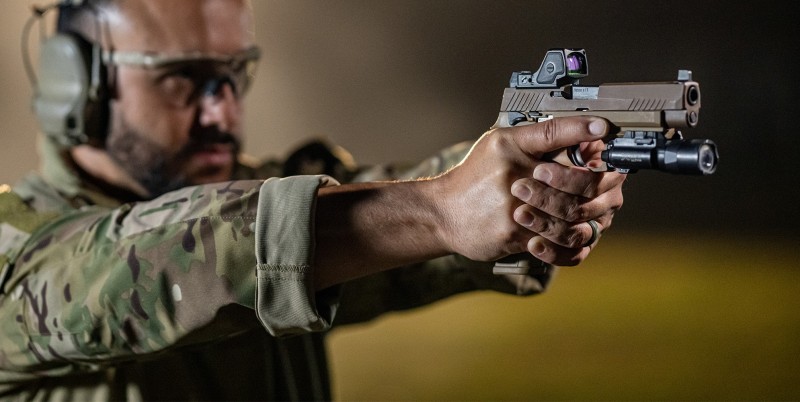
1. Technical Performance Dimensions
Technical performance is the foundation. If the product cannot meet operational requirements, no level of branding or marketing can compensate for it.
Optical Performance Indicators
Buyers evaluating military optics manufacturers should look beyond general descriptions like “clear glass” or “high brightness.” Focus on measurable performance factors:
| Optical Indicator | Why It Matters in Military Use | Typical Military Red Dot Configuration | Practical Procurement Notes |
| Light Transmission Rate | Determines image brightness and visibility in low-light or dusk conditions | ≥ 85% overall transmission (multi-layer coated lenses) | Ensure coating consistency across batches, not just sample performance |
| Lens Coating Type | Reduces glare, improves contrast, enhances durability | Fully Multi-Coated (FMC) or broadband multi-layer coating | FMC is standard for military grade optics; avoid single-coated budget options |
| Dot Size (MOA) | Affects target acquisition speed and precision | 2 MOA (precision-focused) or 3–4 MOA (faster acquisition) | 2 MOA is commonly preferred for military rifle optics; confirm real measured MOA |
| Brightness Adjustment Range | Ensures usability under strong sunlight or low-light/night conditions | 8–12 daylight settings + 1–2 night vision compatible settings | Confirm whether NV settings are truly compatible with night vision devices |
| Parallax Control | Minimizes aiming error at varying distances | Parallax-free beyond 50 meters (typical spec) | Verify realistic performance, as “parallax-free” is often marketing language |
| Field of View (FOV) | Supports situational awareness in dynamic environments | Wide open-reflex window or compact enclosed design | Larger windows improve awareness but must balance durability |
| Emitter Quality & Stability | Affects dot clarity, roundness, and consistency | High-stability LED emitter with low distortion | Check for starburst effect or dot irregularity under magnification |
| Glass Material Quality | Impacts clarity and scratch resistance | Optical-grade glass with hardened surface treatment | Important for long-term durability in harsh environments |
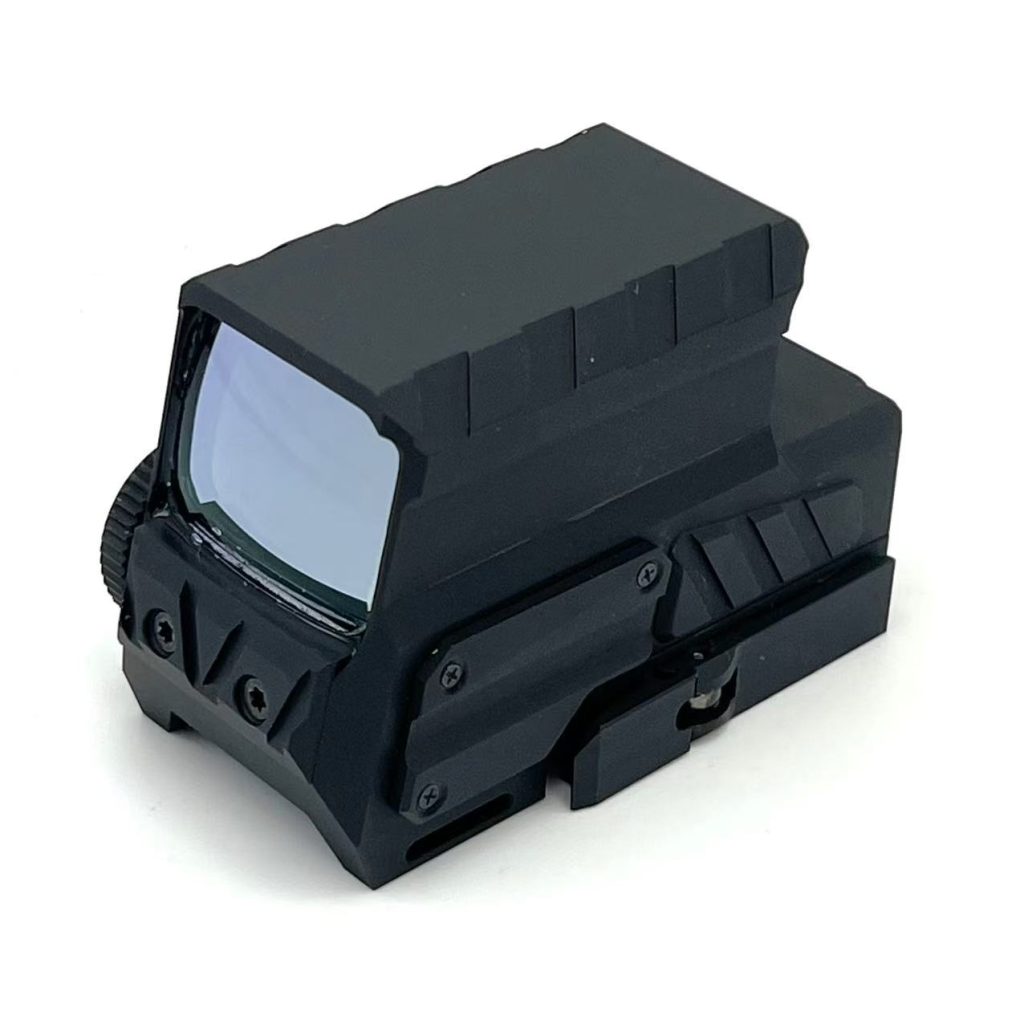
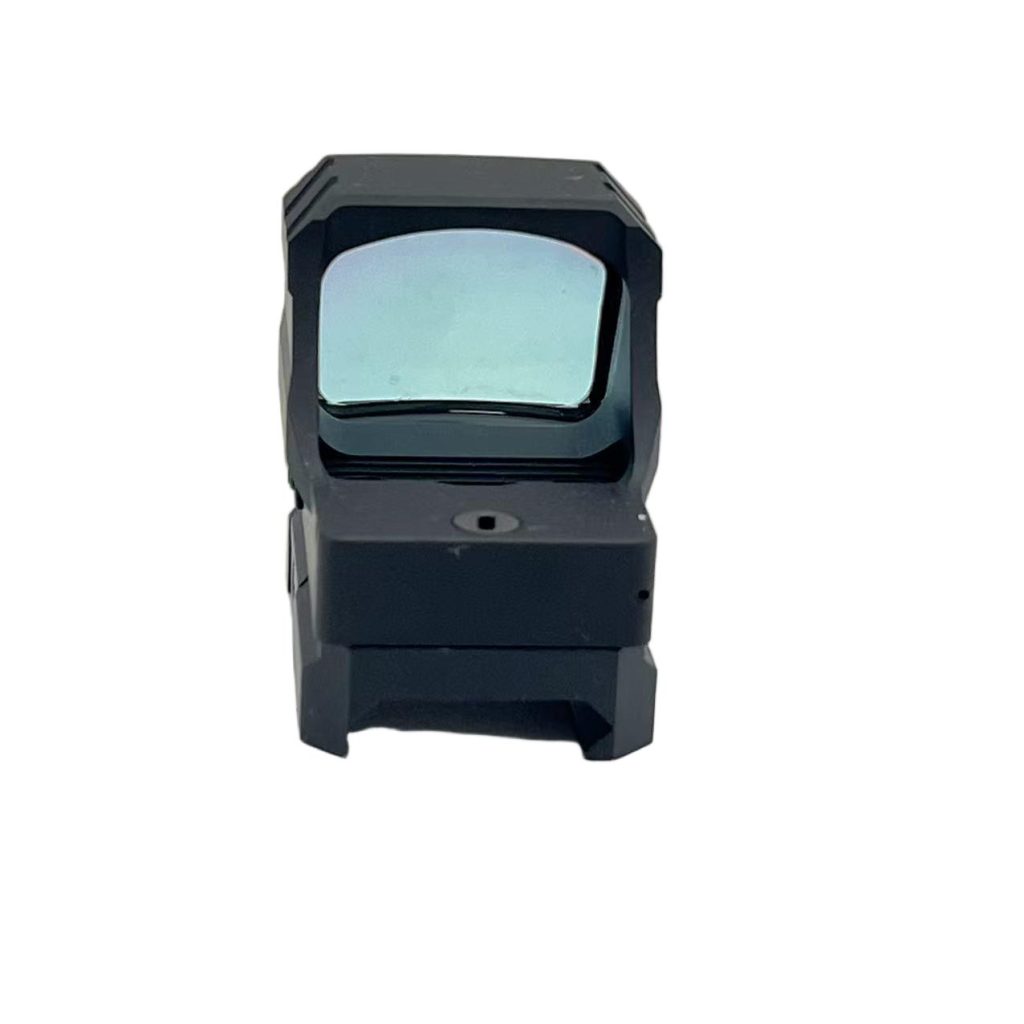

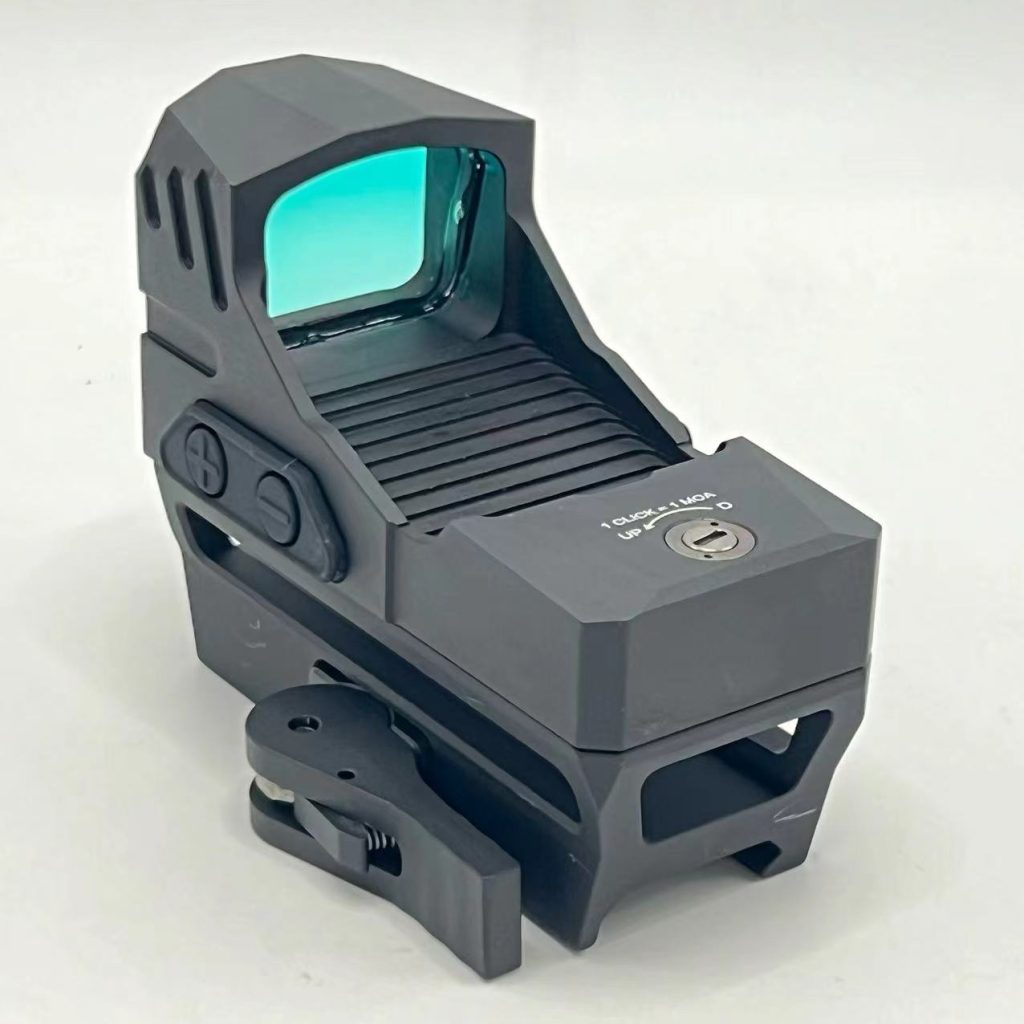
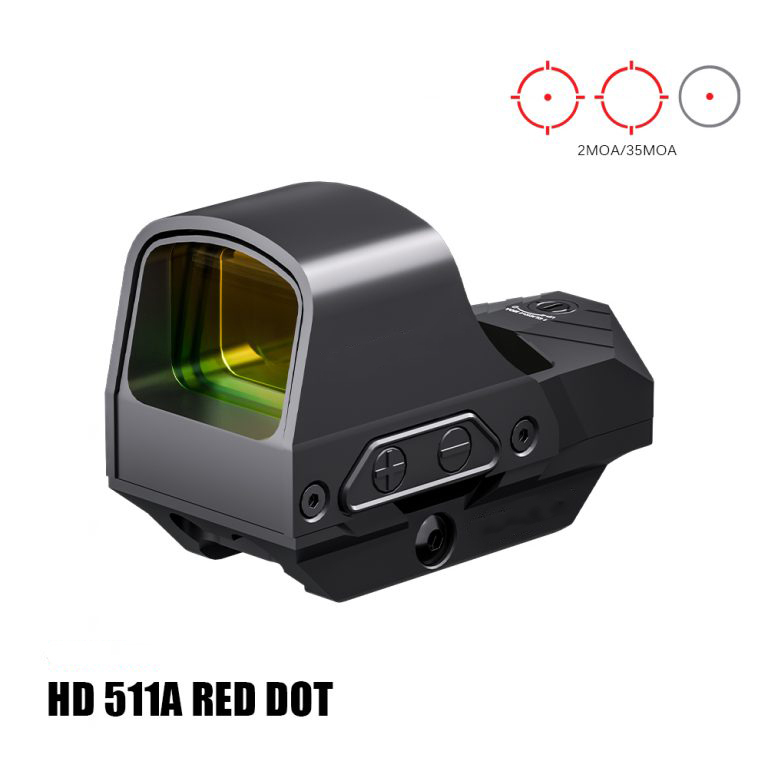
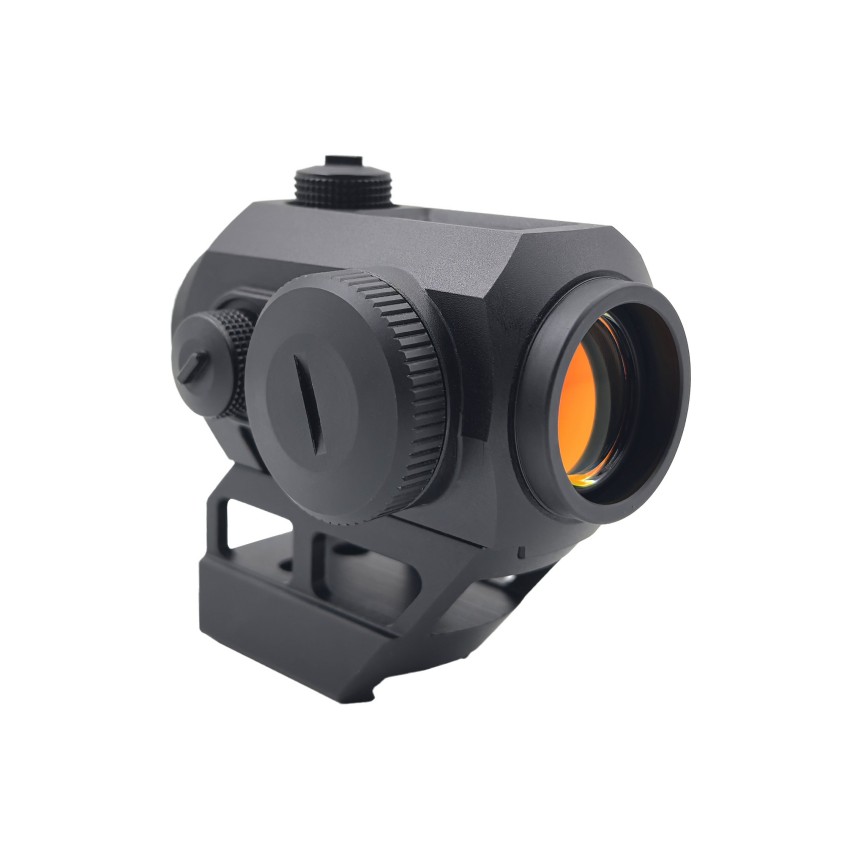
Structural Strength & Shock Resistance
Durability separates military grade optics from commercial-grade products.
Key structural considerations include:
- Compliance with recognized testing standards (e.g., shock and vibration testing aligned with military environments)
- Recoil resistance validation
- Tube material (commonly 6061 or 7075 aluminum)
- One-piece tube construction for improved rigidity
For example, a one-piece CNC-machined housing significantly reduces structural weak points. In platforms that generate strong recoil, such as certain rifle systems, this is not optional—it’s essential.
Buyers often ask, “Which red dot sight does the military use?” While model selection varies by application, the underlying requirement is always the same: structural integrity under repeated stress.
Environmental Adaptability
Operational environments are unpredictable. A qualified military optics company should ensure:
- Waterproof ratings such as IPX7 or IPX8
- Nitrogen or argon purging for anti-fog performance
- High and low temperature testing
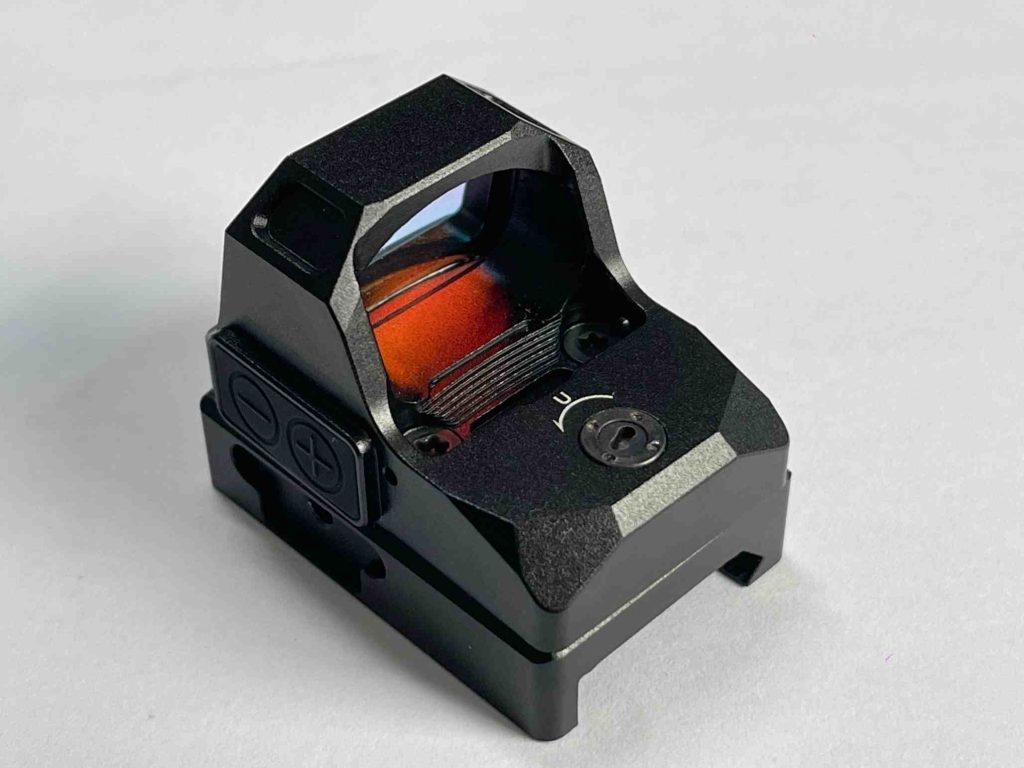
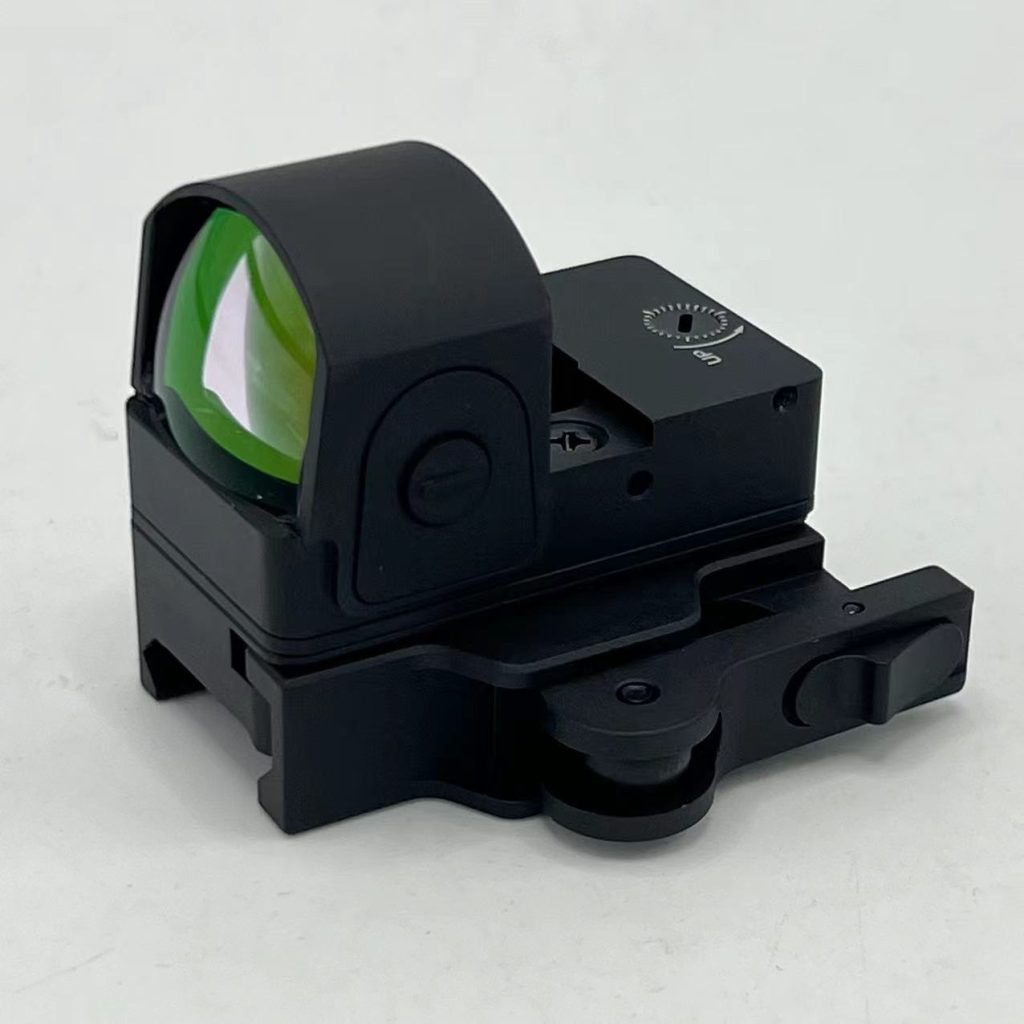
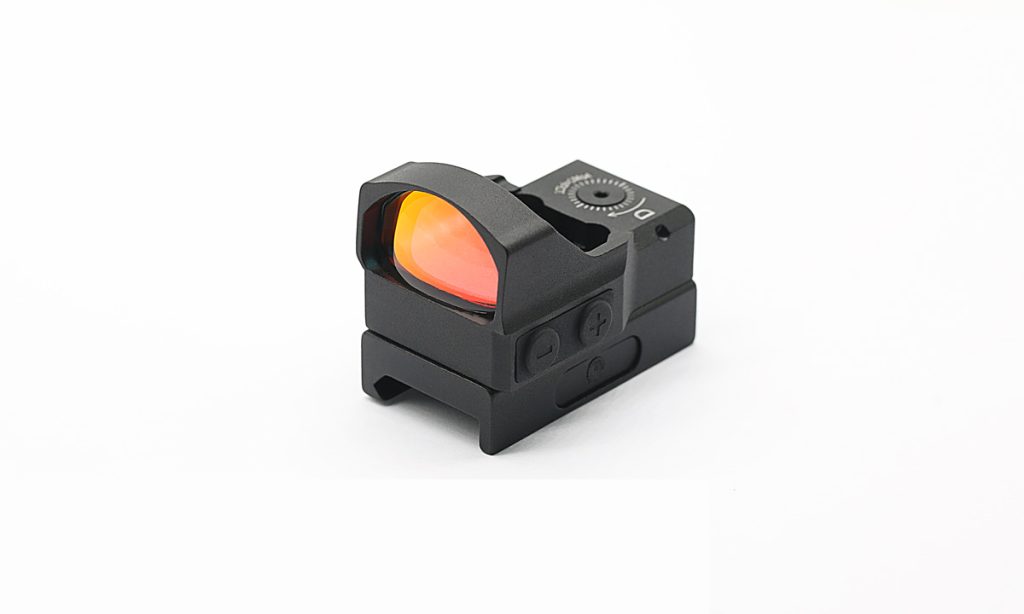
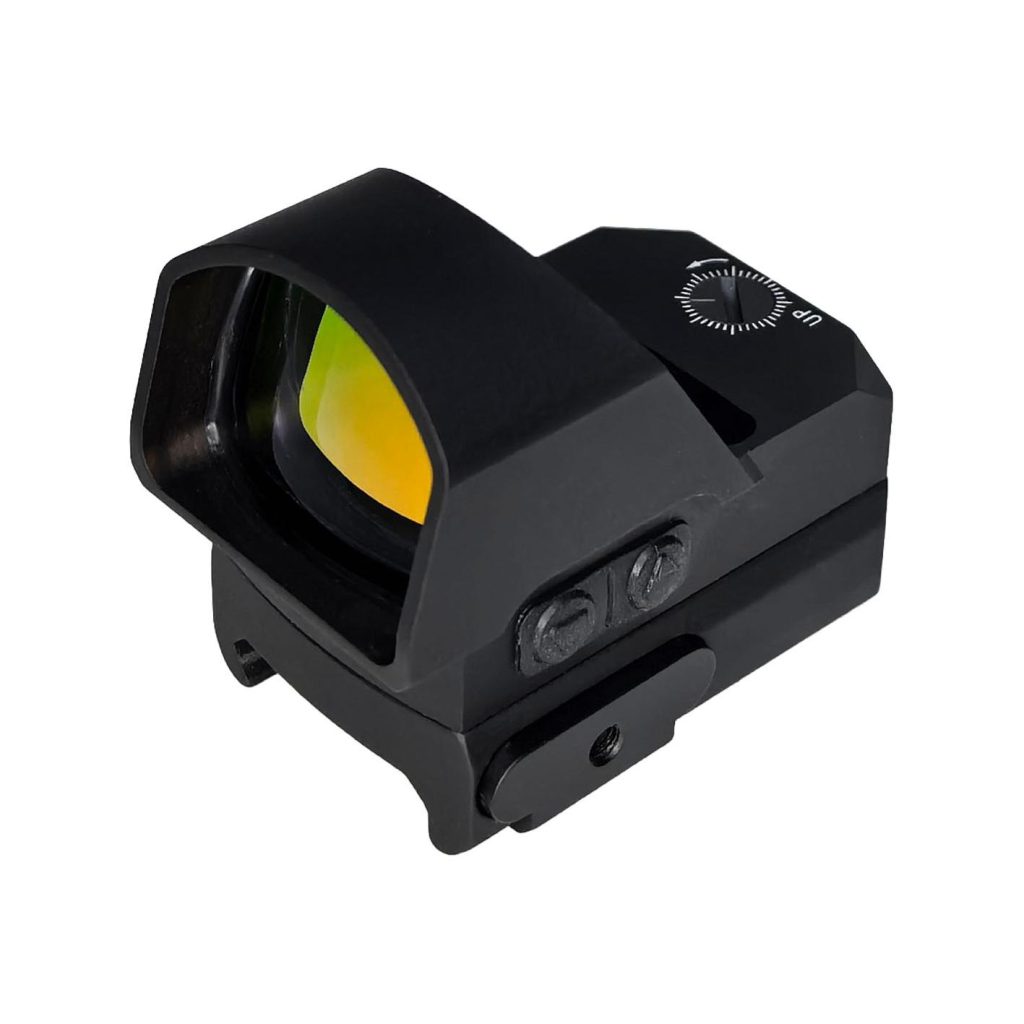
Whether it’s a pistol red dot sight exposed to rain or a thermal red dot system operating in cold environments, environmental sealing determines long-term reliability.



2. Product Customization & OEM Capabilities
For distributors and private brands, procurement is rarely about buying off-the-shelf models only. Differentiation drives margin.
OEM / ODM Support
A reliable partner among military optics brands should offer:
- Logo engraving or laser marking
- Custom packaging solutions
- Tailored manuals and labeling
- Branding alignment for private label projects
At Foreseen Optics, OEM collaboration is structured and documented to ensure consistency across batches.
Customization is not just cosmetic—it strengthens brand positioning in competitive markets.
Reticle & Functional Customization
Reticle design plays a central role in user experience. Buyers may request:
- Custom reticle patterns
- Specific turret marking systems
- Application-oriented adjustments
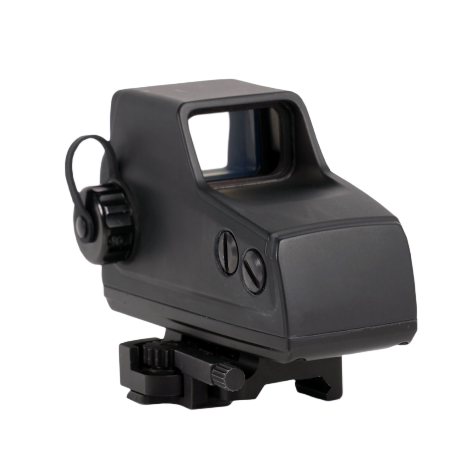
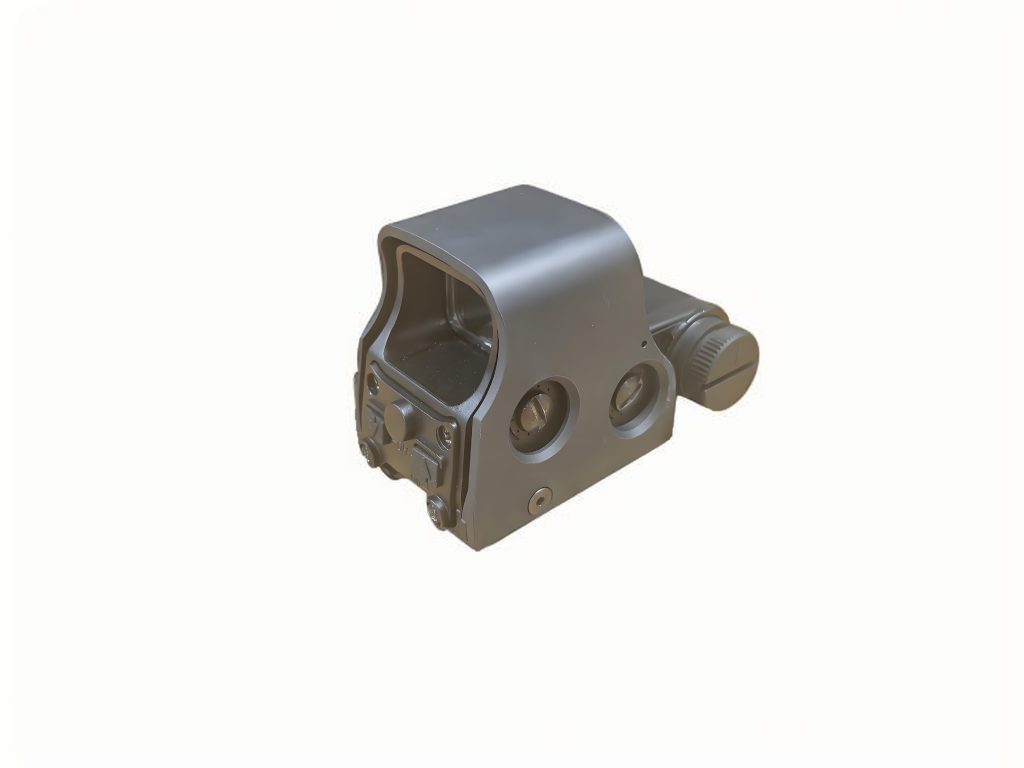
For instance, holographic systems or advanced red dot platforms often require reticle optimization depending on operational distance or intended platform.
From a manufacturing standpoint, reticle customization requires engineering coordination, testing validation, and clear MOQ agreements.
3. Comprehensive Supplier Evaluation
Even the best product design cannot compensate for an unstable supplier.
Manufacturer Authenticity
Before engaging with any of the many military optics companies in the market, buyers should confirm:
- Does the supplier own or operate an actual production facility?
- Is CNC machining performed in-house?
- Are there dedicated assembly lines?
Factory transparency reduces long-term supply risk.
Quality Control System
Consistency matters more than a single good sample.
A structured QC system typically includes:
- Incoming material inspection
- In-process testing
- Final functional inspection
- Shock and environmental sampling tests
Buyers should request documentation, not just verbal assurances.
Production Capacity & Lead Time Stability
Large-scale procurement requires predictable delivery.
Evaluation should include:
- Monthly production capacity
- Ability to handle peak orders
- Stability of raw material supply
A stable supply chain ensures continuity, especially for long-term government or defense contracts.
4. Commercial Terms & Risk Control
Technical capability alone does not complete the procurement equation.
MOQ & Pricing Structure
Pricing of military grade optics depends on:
- Housing material
- Optical components
- Coating processes
- Testing requirements
- Customization level
Understanding the cost structure helps buyers negotiate realistically and avoid hidden risks.
After-Sales Service & Warranty Policy
A professional manufacturer should clearly define:
- Warranty period
- Replacement policy
- Spare parts availability
- Technical support response time
After-sales support reflects long-term accountability.
Export Compliance & Trade Risk Management
For international buyers, export procedures and regulatory compliance are critical.
Professional military optics manufacturers must be familiar with:
- Export documentation requirements
- International shipping standards
- Trade compliance protocols
Working with an experienced exporter like Foreseen Optics ensures that you don’t run into legal hurdles or seized shipments at customs. This minimizes delays and legal risks.
Here are the services that Foreseen Optics can provide to you:
5. Long-Term Partnership Value
Military optics procurement should not be viewed as a one-time transaction.
Strong partnerships offer:
- Continuous product upgrades
- Co-development of new models
- Stable R&D capabilities
As operational requirements evolve, having a manufacturing partner capable of engineering improvements provides long-term strategic value.
Foreseen Optics positions itself not just as a product supplier, but as a long-term manufacturing partner in the field of military optics and advanced sighting systems.
Final Words
In the world of military optics procurement, careful evaluation saves time, reduces risk, and protects reputation. Technical performance, structural durability, customization capability, supplier strength, commercial clarity, and long-term cooperation—each factor plays a role.
If you are sourcing military red dot optics, military rifle optics, or customized OEM sighting solutions, working with an experienced manufacturer can make the entire process smoother and more predictable.
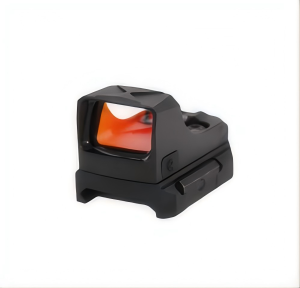
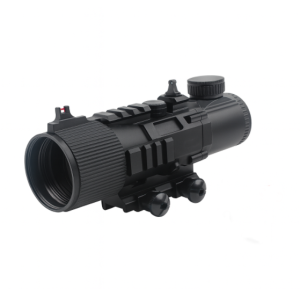
To explore available models or discuss OEM collaboration, visit:
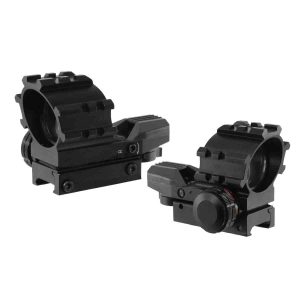
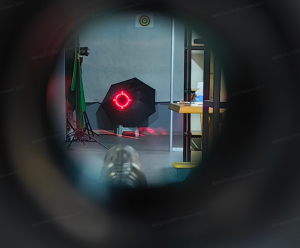
Or contact Foreseen Optics directly to discuss your specific procurement requirements.