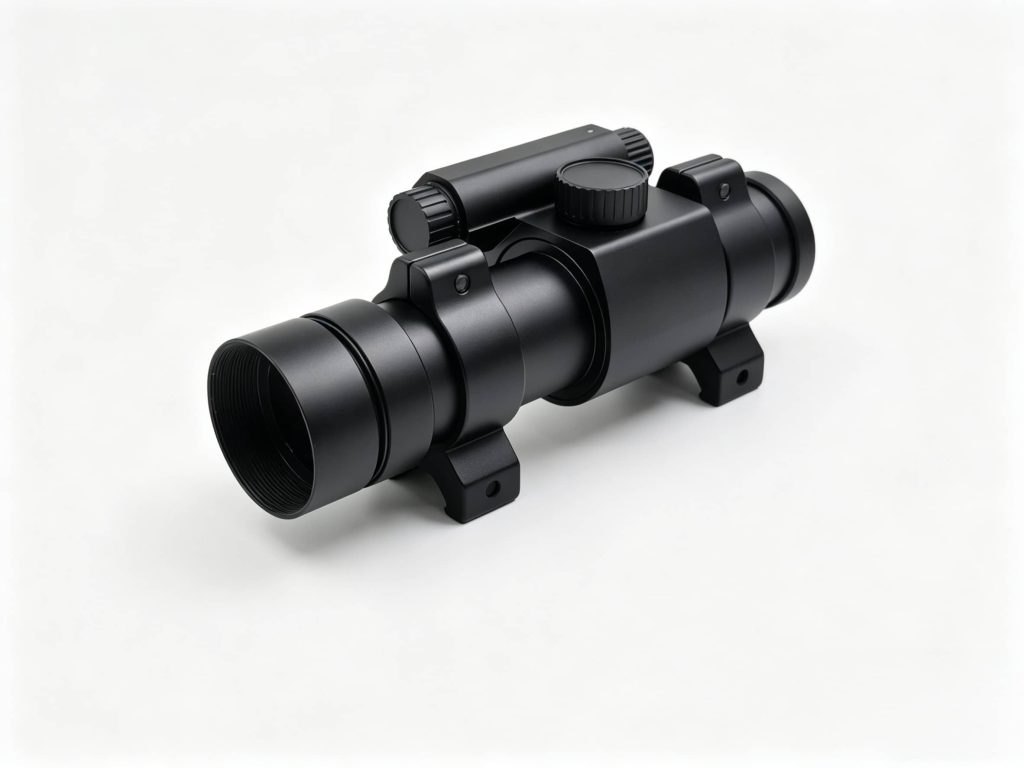
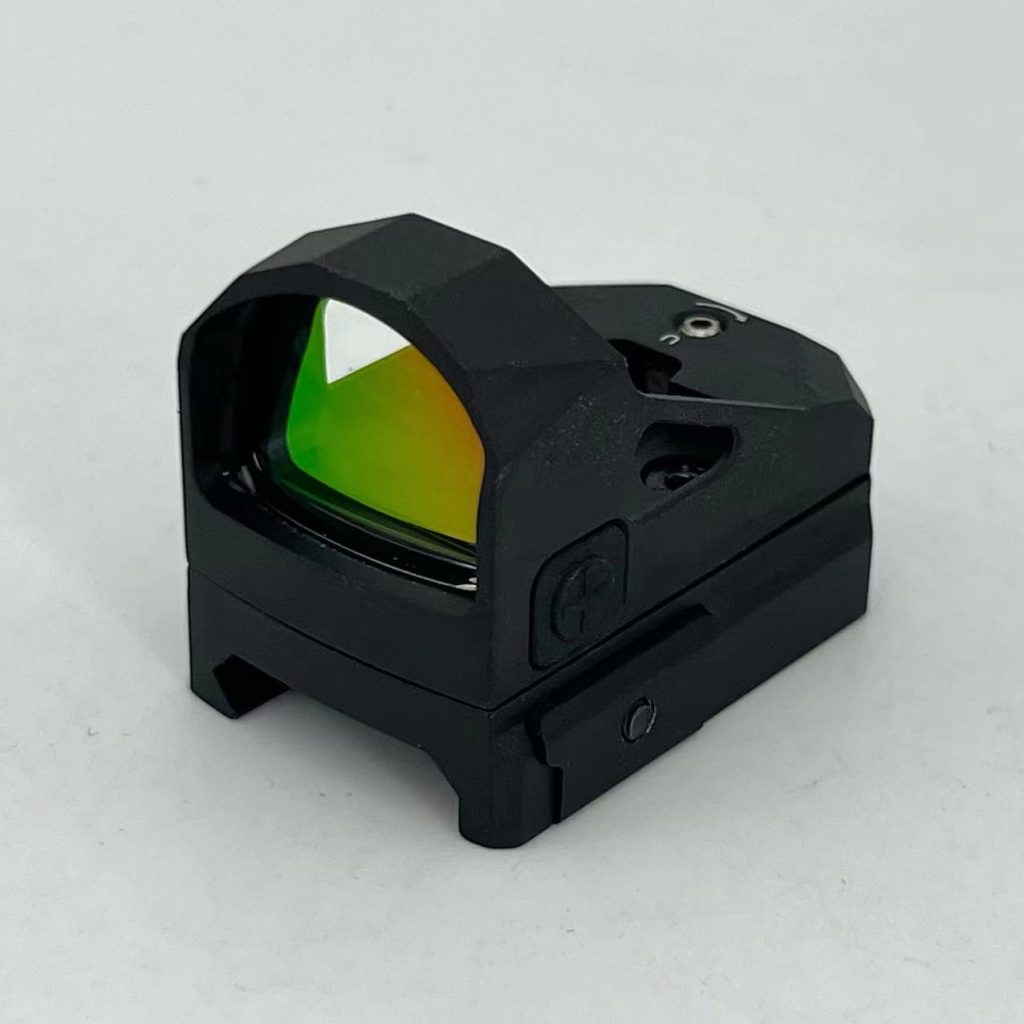
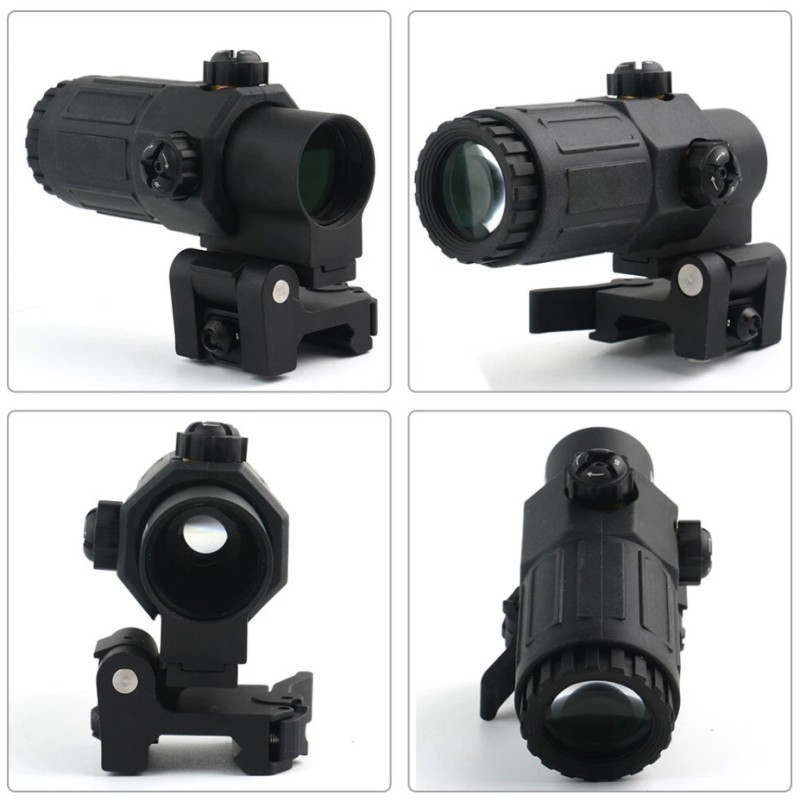
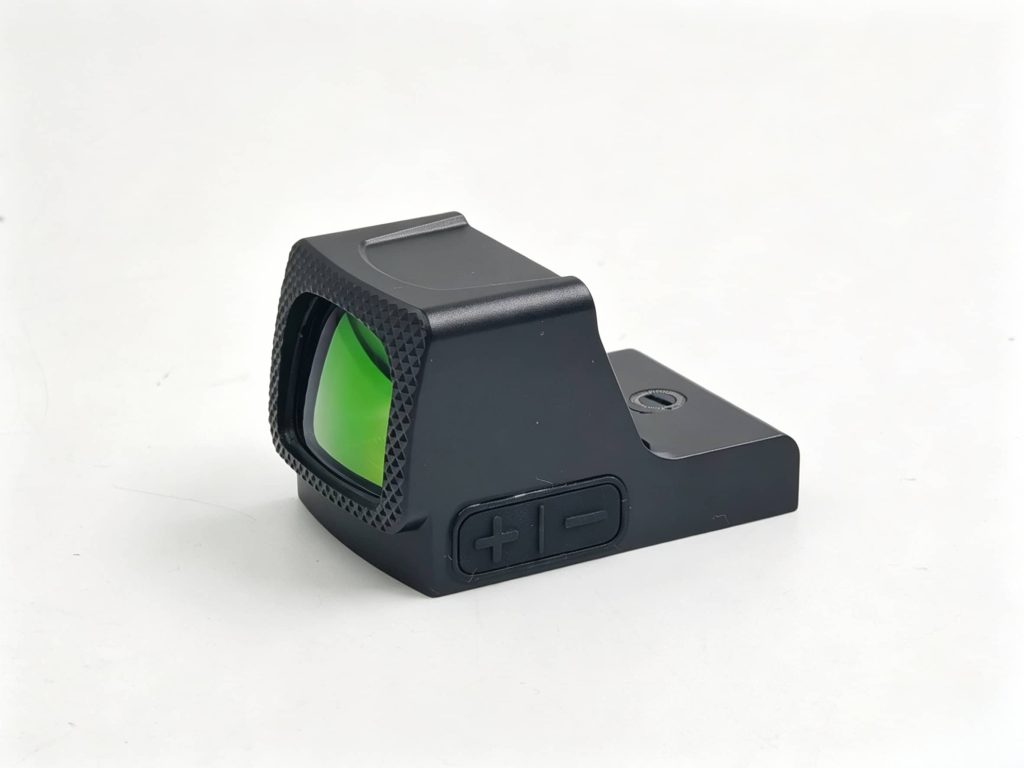
The aiming scope used for home defense has significant differences in range and accuracy compared to other aiming scopes used in different scenarios.
Inside the house, the distance is closer, the light is unstable, and decisions are often made within seconds – and often under extreme stress. Therefore, choosing the right home defense sights is not so much about looking at the parameters, but rather about how the sights feel and perform in the actual living space.
In the most common comparisons, red dot scopes and holographic scopes used for home defense are often compared. From a technical perspective, both seem to be quite powerful. However, once inside the house, the differences between them become more subtle – sometimes even less significant.
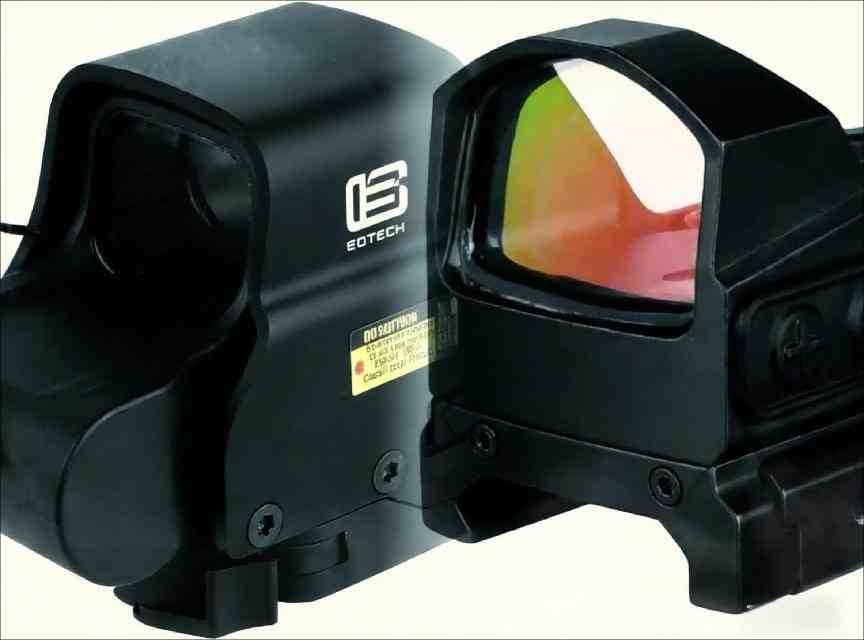
Why Indoor Environments Change How Red Dot and Holographic Sights Feel
The indoor environment has fundamentally changed the way people perceive and use optical equipment. Unlike outdoor or shooting ranges, indoor home defense faces several unique challenges.
Firstly, the distance is compressed. Most of the engagements occur within a few yards, rather than several tens of yards or several hundreds of yards. This significantly reduces the need for extremely high precision and magnification, while highlighting the importance of rapid visual confirmation.
Secondly, the light is unpredictable. Corridors, doorways and rooms often create a stark contrast of light and shadow. The reflected light from walls and furniture can briefly distract one’s attention, especially under stress.
Finally, the pressure itself also plays a crucial role. In a defensive situation, fine motor skills decline, the field of vision narrows, and the brain prioritizes speed over details. The optical equipment that looks great on the shooting range may feel very different when used in a confined space while experiencing an accelerated heartbeat.
Due to these factors, the difference between the red dot sight and the holographic sight does not lie in being “better” or “worse”, but rather in the different types of visual feedback under pressure.
Red Dot Sight vs Holographic Sight for Home Defense: Comparing Indoor Performance
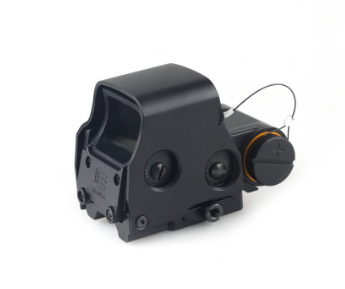
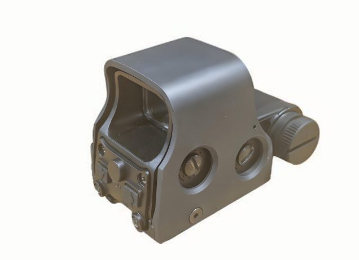
To frame the discussion clearly, the table below summarizes how red dot and holographic sights generally compare in indoor home defense scenarios.
| Aspect | Red Dot Sight | Holographic Sight |
| Visual Simplicity | Very clean, minimal dot | Larger reticle with more visual information |
| Target Acquisition | Extremely fast at close range | Fast, with added visual context |
| Precision Indoors | More than sufficient | Slight advantage, often unnecessary |
| Low-Light Handling | Effective with proper brightness | Excellent visibility in complex lighting |
| Size & Weight | Compact and lightweight | Larger and heavier |
| Cost | More affordable | Significantly higher |
This table sets the stage, but the real insight comes from understanding how these factors feel in actual indoor use.
Reaction Speed and Target Acquisition
When choosing a home defense sight, speed is often the primary factor considered by people. In an indoor setting, the reaction speed is not so much dependent on mechanical performance as it is on the speed at which the eyes can identify the aiming point.
The red dot sight performs exceptionally well in this regard. Even for shooters with limited training, they can immediately recognize that glowing dot. When aiming, the eyes do not need to process other visual elements and can naturally find the dot.
The holographic sight can also quickly lock onto the target, but in a different way. Their larger field of view and crosshair design make the aiming point appear more “real” in space. For some users, this can enhance their confidence when moving quickly.
However, in actual indoor distances, the speeds of both types of sights are fast enough. The difference does not lie in the millisecond-level speed, but rather in individual comfort and familiarity.
Precision and Tracking
When discussing home defense optical sighting devices, accuracy is often overemphasized. At typical indoor distances, the actual required accuracy is not very high.
The red dot sight provides sufficient accuracy under these conditions. When shooting at close range, the red dot may partially obscure more of the target, but this rarely affects its effectiveness in defensive situations.
The holographic sight offers more detailed crosshair details, making it feel more precise when tracking moving targets. This might be advantageous in complex situations, but in an indoor environment, this advantage is not obvious, and it usually depends on the level of training.
For the majority of users, accuracy is not the decisive factor – the key lies in stability and confidence under pressure.
Low-Light and Night Performance
In home defense scenarios, low-light conditions are quite common. Bedrooms, corridors, and stairwells usually rely on indirect lighting or artificial lighting.
As long as the brightness is adjusted properly, the red dot sight can perform well. If the brightness is too high, the red dot will become blurry; if it is too low, it will be difficult to identify. Once the settings are correct, the red dot sight can still function efficiently indoors.
The holographic sight performs better when the light conditions change. Even when switching between bright and dark environments, the sight remains clearly visible, and the larger field of view also helps maintain awareness of the surrounding environment.
That is to say, both of these types of scopes can perform well in low-light conditions. The key difference lies in their tolerance for setup errors and user stress.
Size, Weight, and Handling Indoors
At home, maneuverability is more crucial than in the shooting range. Precise control of movements is required in narrow corners, doorways and around furniture.
The red dot sight is small and lightweight, and it hardly increases the size of the firearm. This makes operation in confined spaces more natural and less prone to fatigue.
The holographic sight is larger in size and heavier in weight. Although this does not prevent its effective use, it may have subtle effects on balance and control during long-term movement.
For users who prioritize ease of operation, red dot scopes usually have an advantage.
Cost and Practical Considerations
Cost is not merely the price; it lies in its value relative to the actual use.
The red dot sight is widely used and reasonably priced, and has been proven effective in numerous home defense systems. It can meet the needs of most users and is easy to operate.
The holographic sight is more expensive due to its technology and structure. For users who frequently engage in training or prefer immersive visual systems, the advantages of the holographic sight are more pronounced.
For many homeowners, the question is not “Which one is better?”, but “Which one is more suitable for my effective use?”
How Red Dot and Holographic Sights Handle Real Home Defense Situations
Imagine that you walk from your bedroom to the corridor at night. The light changes, shadows appear, and you must control your movements carefully.
- In this situation, the red dot sight gives a sense of speed and directness. When you see the red dot, you confirm the aiming line, and then focus on the surrounding environment rather than the sight itself.
- With the holographic sight, the experience is slightly different. The aiming line blends more seamlessly with the surrounding environment, providing a stronger sense of spatial positioning.
The two methods are not inherently superior or inferior to each other. The key lies in how the sight naturally integrates into your decision-making process under stressful circumstances.
FORESEEN OPTICS – Understanding Your Options
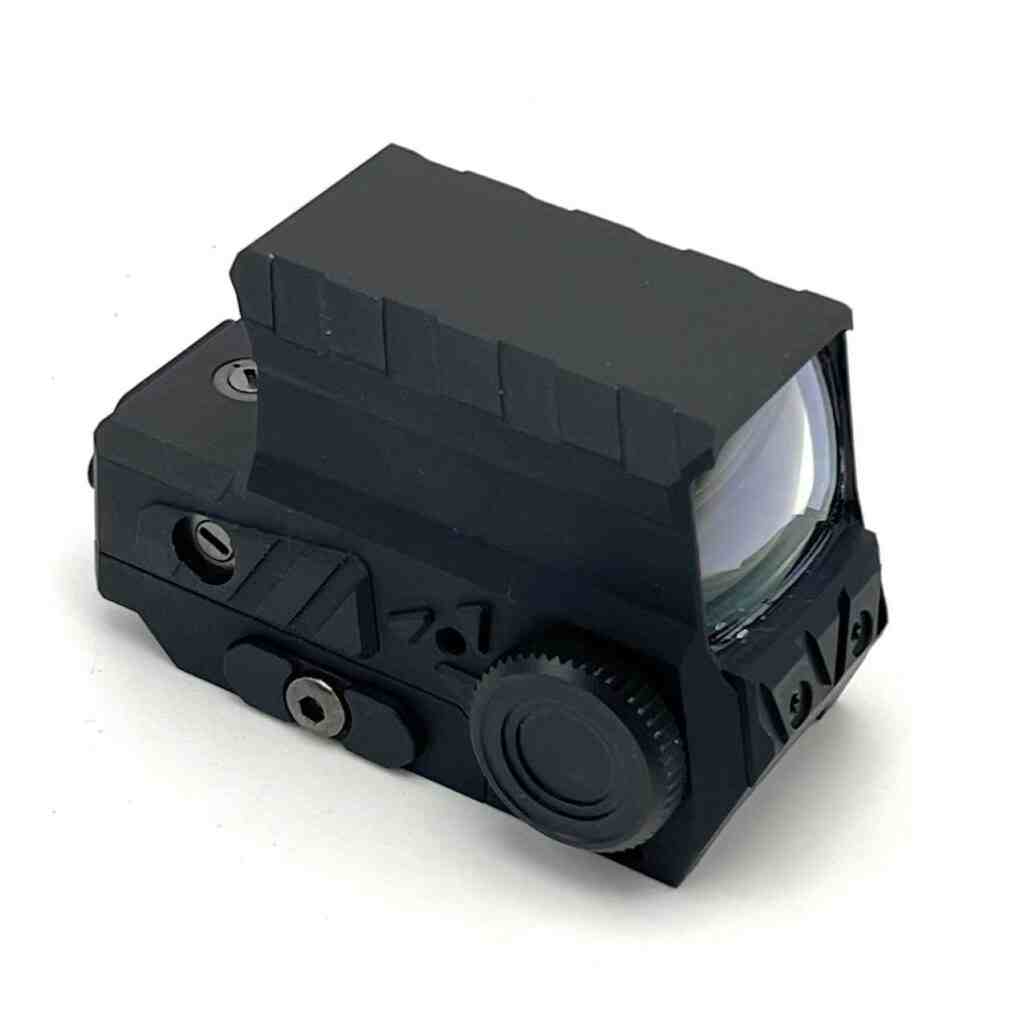
Whether to use a red dot sight or a holographic sight in home defense is not so much a difference in functionality, but rather a consideration based on the specific usage scenario.
In an indoor environment, speed, clarity and ease of use are more important than technical advantages. The Red Dot sight is simple and efficient, while the holographic sight offers an ideal choice for users who seek a richer visual experience.
Ultimately, the best choice is the spotting scope that feels most comfortable to use and is conveniently located in your home, right where you need it the most.