As a lead member of the FORESEEN OPTICS red dot sight R&D team, I have spent the past 12 years working through the complete development process, from LED selection, reflector-lens design, drive circuitry, and recoil-resistant structures to mass-production assembly.
Among these projects, one of the most underestimated product categories is the Gold Dot Sight.
When people first hear the term “gold dot,” many assume it simply means replacing a red LED with a yellow LED. In practice, producing a yellow point of light is not difficult. The real challenge is keeping that point crisp in bright light, low light, complex backgrounds, and high- and low-temperature environments while also controlling power consumption, ghosting, parallax, and batch-to-batch consistency.
This is why the gold dot concept is not new, yet as of 2026, Holosun remains the most prominent mainstream brand to have developed modern electronic gold-reticle sights into a broad product series. Holosun has now applied gold reticles across pistol sights, competition sights, rifle sights, and enclosed-emitter platforms.
At the same time, FORESEEN OPTICS has also advanced gold dot solutions for a small number of partner brands. Because OEM/ODM projects are normally subject to nondisclosure agreements and launch-timing restrictions, we do not disclose specific customer names.
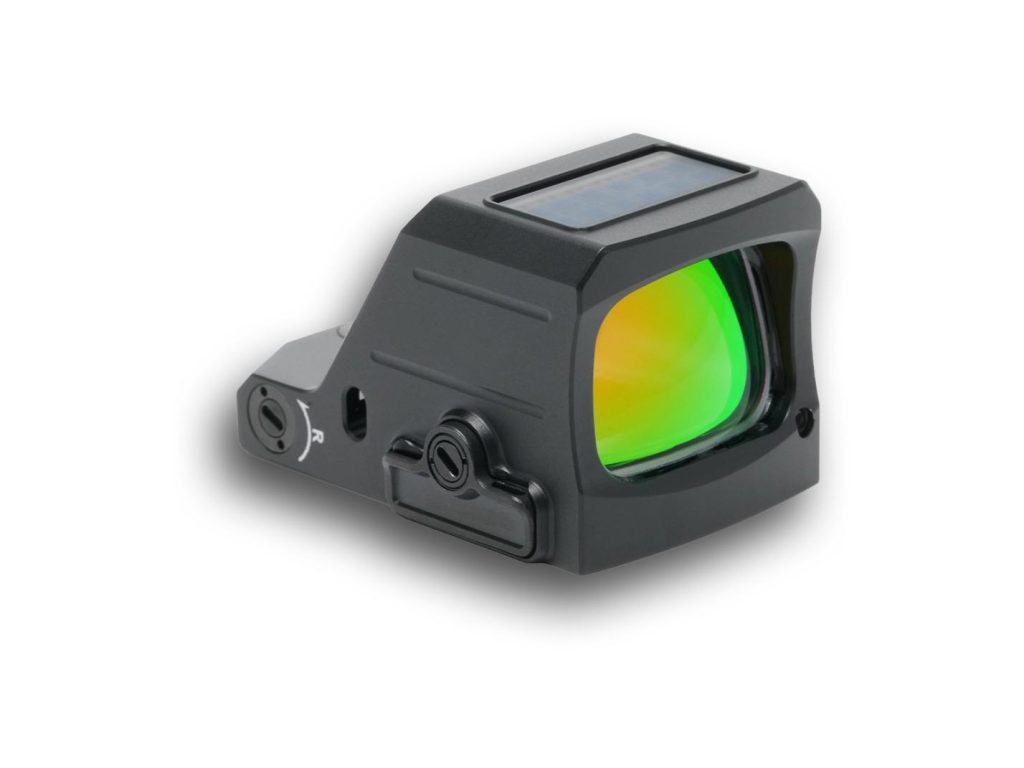
In One Sentence: What Is a Gold Dot Sight?
A gold dot sight is a reflex sight that uses a golden-yellow or amber-yellow electronic reticle.
Most modern gold dot solutions use an LED with a wavelength of approximately 590 nm. This falls between conventional red and green reticles, while the exact narrowband cut-off range remains a proprietary process detail of Holosun or FORESEEN OPTICS:
| Reticle Color | Typical Wavelength | Practical Characteristics |
| Red Dot | Approx. 650 nm | Mature supply chain, low cost, and the widest range of applications |
| Green Dot | Approx. 540 nm | Higher perceived brightness, but may be less distinct against vegetation |
| Gold Dot | Approx. 590 nm | Easier to distinguish from the environment in some bright-light and complex-background conditions |
The main advantage of this gold- or amber-reticle red dot sight is that it can provide stronger reticle contrast against bright targets and visually complex backgrounds.
It is important to clarify that “red dot sight” has become the generic category name for reflex electronic sights. Therefore, the phrase “gold dot red dot sight” is not contradictory. Green-reticle products are also commonly classified as red dot sights. In the market, “red dot sight” usually refers to the overall product category, while the reticle color is specified separately as red, green, or gold; the categories themselves are not normally renamed “green dot sight” or “gold dot sight” in formal product classification.
A Gold Dot Does Not Mean the Lens Is Coated Gold
The gold dot seen by the shooter is a virtual image formed when light from the LED is reflected by a curved lens. It does not come from using gold material on the lens.
The lens surface does require a dedicated selective-reflection coating, but its purpose is to:
- Reflect the narrowband light emitted by an approximately 590 nm gold LED;
- Allow most visible light from the target and surrounding environment to pass through;
- Minimize lens color cast, double images, and glare.
Therefore, the core of a gold dot sight is not a “gold appearance,” but the systematic matching of a 590 nm narrowband emitter, a dedicated reflective coating, and the optical architecture.
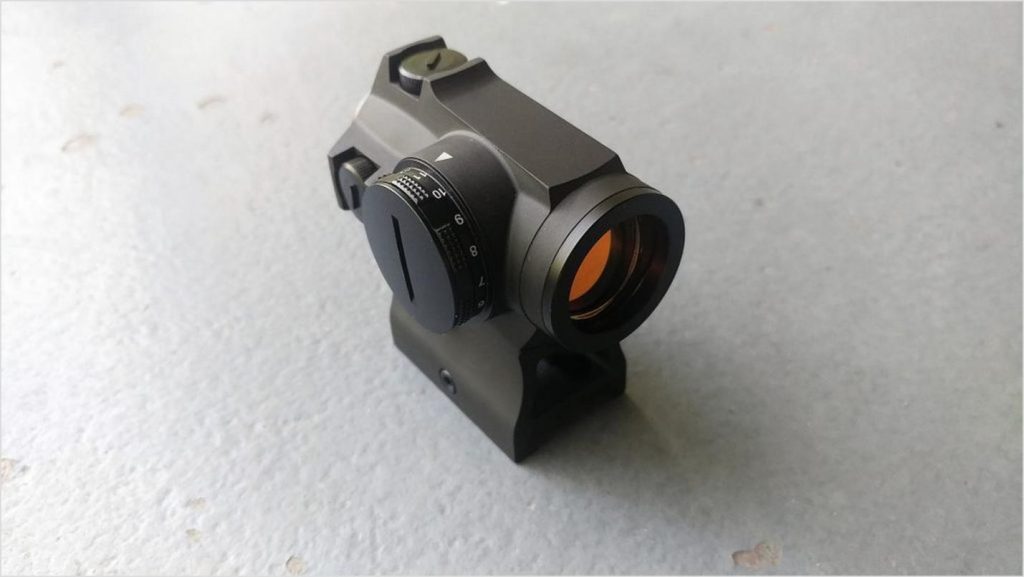
Which Shooting Applications Are Gold Dots Best Suited For?
A gold dot is not a universal replacement for a red or green reticle. Instead, it adds a third visual option for certain shooters and shooting environments.
1. Bright Environments with Visually Complex Backgrounds
In intense sunlight, against complex range backgrounds, or in environments containing many competing colors, some shooters find a gold dot faster to locate than a red or green dot.
This advantage is more likely to appear in:
- Outdoor dynamic shooting;
- IPSC, USPSA, and similar competition shooting;
- PCC and close-range carbine applications;
- Large-window pistol sights;
- Training environments with frequent transitions between bright and dark backgrounds.
However, no reticle color performs best against every background. Contrast may also decrease over sand, dry grass, pale-yellow paper targets, or warm lighting. A FORESEEN OPTICS partner brand tested this in South Africa: for shooters with normal vision, the gold dot offered no obvious advantage in the dry and sandy environments of Northern Cape, Free State, and North West, but it delivered faster reticle acquisition than red or green dots in the bush and green terrain of Limpopo and Eastern Cape.
2. Shooters Who Do Not Identify Red or Green Reticles Easily
Human eyes do not respond equally to every wavelength. Some shooters acquire red dots more slowly, while others tend to lose green dots against vegetation.
A gold dot gives these users a third option.
One point must be stated carefully: a gold dot cannot correct astigmatism, nor can it guarantee that every user with astigmatism will see a rounder aiming point. However, in comparative testing between gold and red dots, a substantial proportion of users have subjectively reported a better viewing experience with the gold dot.
The starburst, tailing, or petal-like shapes seen by users with astigmatism are also affected by reticle brightness, MOA size, LED emitting-surface geometry, pupil size, and the eye’s refractive condition. The most reliable approach is still to test the sight personally under different brightness levels and backgrounds.
Some older shooters have also reported that a gold dot causes less visual fatigue, allowing them to maintain focused shooting for longer periods.
3. Brands Seeking Clear Product Differentiation
From an OEM/ODM perspective, the greatest commercial value of a gold dot may not be replacing red dots, but helping a brand add a visibly differentiated SKU to an already mature platform.
For example, the same large-window pistol sight can be offered as:
- A standard red-dot version;
- A high-visibility green-dot version;
- A differentiated gold-dot version.
This approach expands the product line without redeveloping the entire mechanical structure and gives distributors a fresh sales story.
How Do Modern Gold Dots Differ from Earlier Amber-Reticle Sights?
Yellow or amber reticles did not first appear in 2026.
Traditional products such as the Meprolight M21 have long offered amber reticles, but they use a different technical route: fiber optics collect ambient light during the day, while a tritium source provides illumination at night, eliminating the need for a battery.
Modern electronic gold dot sights instead use:
- A battery-powered 590 nm narrowband LED;
- Manual or automatic brightness adjustment;
- Motion activation;
- Night-vision brightness settings;
- Optional circle, center-dot, or multi-reticle systems.
Both technologies may appear golden-yellow or amber to the eye, but their product logic is different.
Traditional fiber-optic/tritium systems emphasize “battery-free, always-on” operation; modern electronic gold dots emphasize controllable brightness, power management, compact size, and multi-reticle functionality.

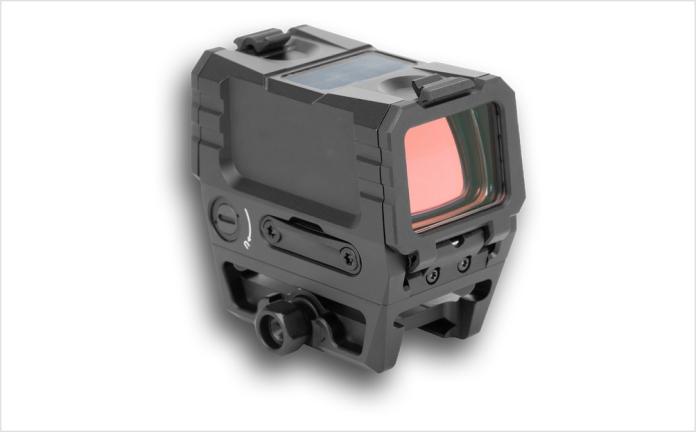
What Is the Technical Development Route for a Gold Dot Sight?
From an R&D perspective, a modern gold dot sight requires at least five systems to be rematched.
Step 1: Select a 590 nm Emitter Suitable for an Optical Sight
Yellow LEDs are readily available, but ordinary indicator LEDs are not necessarily suitable for use in a sight.
An LED for a sight must meet all of the following requirements:
- An emitting surface small enough to form a 2 MOA, 3 MOA, or 6 MOA reticle;
- High luminous efficiency even at low current;
- Stable center wavelength and spectral width;
- Controlled color shift after high- and low-temperature exposure;
- Adequate consistency between production batches;
- A package height that matches the existing optical focal position.
If the emitting surface is too large, the shooter may see a tail, flare, or irregular shape instead of a crisp round dot.
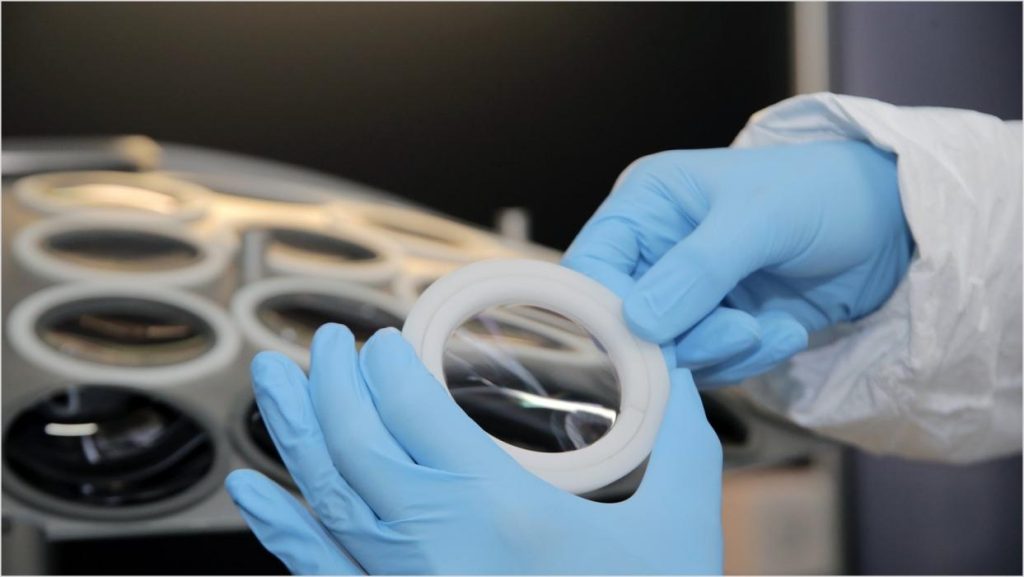
Step 2: Redesign the 590 nm Selective-Reflection Coating
This is the main reason many simple “color-change” solutions fail.
Red-dot lenses are generally designed around approximately 650 nm, while green-dot lenses must reflect light near 540 nm. If a 590 nm LED is placed directly behind a red- or green-dot lens, no usable reflected aiming point may appear because the light can pass through the entire window lens.
FORESEEN OPTICS has accumulated extensive experience developing narrowband reflective coatings with different cut-off ranges for red- and green-dot platforms. Our publicly disclosed green-dot solution uses more than 30 coating layers to selectively reflect approximately 490–550 nm while balancing reticle brightness and environmental light transmission.
For a gold dot project, this capability can be transferred to a narrower band around 590 nm, but the selected band, coating-layer thickness, reflection peak, angle-of-incidence compensation, and color neutrality must all be recalculated and verified.
Step 3: Recalibrate Brightness and Power Consumption
A 590 nm gold dot cannot simply use the same current parameters as a red dot.
The same electrical current does not produce the same perceived brightness from LEDs of different colors. If brightness is too low, the reticle disappears in strong light; if it is too high, blooming, starburst effects, and lens reflections may occur.
The R&D team must redefine:
- Every daylight brightness setting;
- The minimum output of night-vision settings;
- The response curve of the automatic brightness sensor;
- Motion-activation and automatic-sleep logic;
- Brightness stability under low-voltage conditions;
- Actual battery life at different temperatures.
FORESEEN’s existing red-dot platforms already support custom control chips, low-power LEDs, motion activation, memory functions, and night-vision brightness control, providing a mature electronic foundation for the gold-dot drive system.
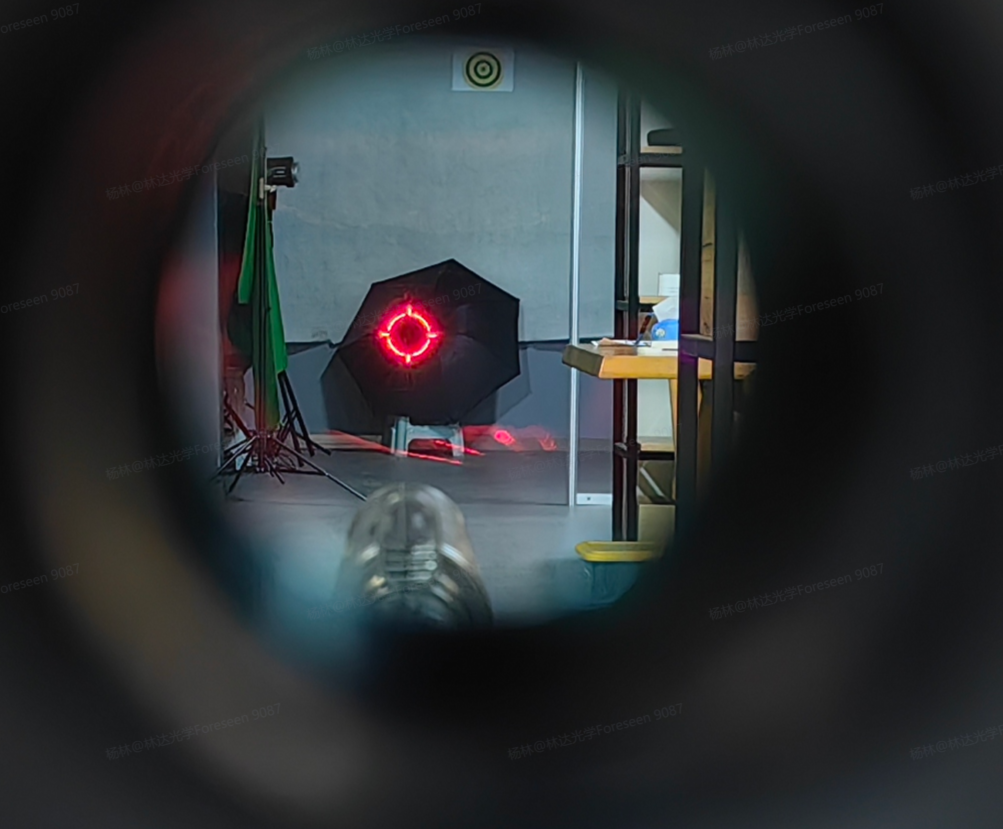
Step 4: Control Ghosting, Tailing, and Parallax
A prototype that displays a gold point of light does not mean the optical design is complete.
If the angles between the LED, lens, and shooter’s eye are incorrect, the shooter may see:
- A second, dimmer gold dot;
- Tailing around the reticle edge;
- Rectangular or arc-shaped reflections;
- Comet-shaped flare near the edge of the field of view;
- Additional aiming error when the shooter changes head position.
FORESEEN uses off-axis cemented lenses in open-emitter sights and aspheric processing in tube-style sights to reduce edge deformation, coma, and field distortion.
These proven structures can serve as the foundation for a gold dot project, but after changing the wavelength, the assembly angle and coating response still have to be revalidated.
Step 5: Move from a Prototype to Stable Mass Production
This stage reveals the greatest difference between “knowing how” and “being able to deliver.”
Knowing how:
Find a 590 nm LED, design a lens that reflects gold light, and make the prototype illuminate successfully.
Actually delivering:
After producing thousands or tens of thousands of units, every unit must maintain:
- Nearly consistent gold color;
- Nearly consistent output at each brightness setting;
- A crisp reticle that meets the target MOA specification;
- Controlled lens color cast;
- Stable battery life;
- Stable brightness and zero after high- and low-temperature exposure;
- No displacement of the LED, lens, or PCB after recoil testing;
- Acceptable consistency between different coating batches.
FORESEEN has always emphasized in red-dot development that optical, mechanical, and electronic design must be validated within the same closed loop. Even a very small deviation in lens angle can deform the reticle or change parallax. Turning a CAD drawing into tens of thousands of consistently reliable products is an entirely different manufacturing challenge.
This is the main reason the gold dot concept has existed for years without achieving widespread adoption.
Why Were Mature Gold Dot Products Still Rare in 2026?
The reason is not a lack of yellow LEDs. Gold dot products face three practical challenges at the same time.
The Market Is Still Relatively Small
Red dots have the largest user base and the most mature supply chain, while green dots have also established a stable market. Gold dots, by comparison, still require brands to invest in customer education so consumers understand how they differ from red and green reticles.
Upfront R&D Costs Cannot Be Quickly Amortized through Large Orders
Gold dots require new LED part numbers, lens-coating systems, electronic parameters, and quality standards. When the first order is small, coating development, prototype validation, and early low-yield costs must be distributed across a limited number of units.
Consumers Notice the Color Difference but Cannot Easily See the Engineering Behind It
From the outside, consumers only see that “the dot changed color.”
At the manufacturing level, however, the real changes include:
The LED, wavelength binning, lens coating, drive current, brightness algorithm, optical alignment process, and quality inspection all need to be rematched.
By 2026, Holosun had expanded its 590 nm gold dot technology across publicly available competition-pistol, large-window rifle, enclosed-pistol, and multi-reticle platforms, showing that the gold dot was gradually developing from a small group of experimental products into an independent product category.
FORESEEN OPTICS also believes that as the red dot sight category continues to mature, gold reticles will attract increasing attention. However, for most small and medium-sized brands, this is still not a project that can be completed by simply replacing one component.
Why Is the OEM Cost of a Gold Dot Sight Usually Higher?
Based on FORESEEN’s current project assessments, when the mechanical structure and basic functions remain the same, a mature gold dot solution may add approximately US$20 to the OEM cost compared with the corresponding red-dot version.
This does not mean the gold LED itself is worth US$20. The increase reflects the combined cost of the entire gold-dot system.
The main cost sources include:
| Cost Source | Why the Cost Increases |
| Gold LED and wavelength binning | Fewer suitable components are available, requiring screening for center wavelength, emitting-surface geometry, and luminous-intensity consistency |
| Dedicated 590 nm coating system | The coating stack must be redesigned and tested for spectrum, transmission, and color cast |
| Electronic parameter adjustment | Brightness levels, automatic brightness, and power parameters cannot be copied directly from the red-dot version |
| Prototype and reliability validation | High-/low-temperature, battery-life, recoil, and optical tests must be repeated |
| Lower initial yield | Small-batch coating and new processes generally create higher screening losses during early production |
| Separate material management | LEDs, lenses, PCB parameters, and quality-control standards must be managed separately |
A more accurate way to understand the cost is:
The customer is not paying to “change the color”; the customer is paying for the development of a 590 nm optoelectronic system that can be mass-produced consistently.
Which Brands Can Absorb a US$20 Gold Dot OEM Premium?
Gold dots are not suitable for every customer.
For entry-level products that compete primarily on price, an additional US$20 in manufacturing cost may disrupt the entire pricing structure. For the following customer types, however, a gold dot may create sufficient commercial value.
1. Brands with an Established Red Dot Product Line
The customers best suited to developing a gold dot product usually already have stable sales of red- or green-dot sights.
These customers can reuse:
- A validated mechanical structure;
- Existing molds and CNC programs;
- A mature mounting footprint;
- Packaging and accessory systems;
- Distributor channels;
- Existing product reviews and brand recognition.
The brand does not need to educate consumers to accept the entire product again. It only needs to explain the visual difference offered by the gold-dot version.
2. Brands Positioned in the Mid-Range or Upper-Mid-Range Retail Market
If the end-user retail price is below US$100, an additional US$20 in OEM cost is usually difficult to absorb.
Products better suited to gold-dot development generally meet the following conditions:
- An existing retail price of approximately US$199 or higher;
- A product already using 7075 aluminum, a large window, or an enclosed-emitter structure;
- Functions such as automatic brightness, motion activation, or a multi-reticle system;
- Target consumers who are willing to pay more for a clearly perceptible difference.
It is important to note that adding US$20 to the OEM cost does not mean the retail price will increase by only US$20.
In a traditional channel involving importers, distributors, and retailers, a US$20 increase in manufacturing cost may translate into approximately US$40–60 at retail. Under a direct-to-consumer model, the retail increase may be smaller. The actual result depends on tariffs, logistics, channel layers, and the brand’s gross-margin requirements.
Therefore, a brand must determine whether its customers are willing to pay roughly US$30–60 more for a gold-dot version, rather than merely deciding whether it can accept a US$20 increase in purchase cost.
3. Brands Serving Competition, Large-Window, or Enclosed-Sight Markets
Consumers can perceive the difference of a gold dot more easily in the following products:
- Large-window competition pistol sights;
- Enclosed-emitter EDC or law-enforcement pistol sights;
- PCC and carbine sights;
- Multi-reticle products with a circle-and-dot pattern;
- Products emphasizing rapid acquisition and visibility against complex backgrounds.
By contrast, consumers may not accept enough of a premium on very low-cost tube-style red dots or basic sights intended only for recreational shooting.
4. Brands Capable of Market Education
A gold dot is not a feature that can be sold through product photos alone.
Brands suited to gold-dot development can usually produce:
- Background comparisons of red, green, and gold reticles;
- Real-world videos under different lighting conditions;
- Competition or rapid-acquisition testing content;
- User trials and explanations of visual differences;
- Distributor training materials.
Without the ability to educate the market, a brand may only show consumers that “the color is different” without explaining why the product costs more.
5. Brands Able to Support Repeat Orders
If a customer only needs a one-time order of a few dozen units, the costs of dedicated coatings, LED binning, and validation are difficult to distribute reasonably.
A more realistic project usually follows this path:
- Validate the visual effect with functional prototypes;
- Test the market with a small batch of 300–500 units;
- Move into stable replenishment after receiving channel feedback;
- Build the potential to expand annual sales to the thousand-unit level.
Actual quantities must still be assessed according to the product structure, existing platform, and depth of customization. Not every project requires the same MOQ.
Which Customers Should Postpone Gold Dot Development?
The following projects should be evaluated cautiously:
- The primary competitive strategy is the lowest possible price;
- The target retail price is below US$100;
- The customer does not yet have a stable base red-dot product;
- Only a one-time small purchase is planned;
- The brand cannot explain the practical value of a gold dot;
- The customer wants to replace the LED directly but is unwilling to redevelop the lens;
- The customer is unwilling to conduct high-temperature, low-temperature, power-consumption, and recoil validation;
- The customer expects a gold dot to guarantee a solution for every user with astigmatism.
For these customers, the more reliable strategy is usually to improve the clarity, reliability, and production consistency of the red- or green-dot product first, then evaluate a gold-dot version.
How Does FORESEEN OPTICS Manage a Gold Dot OEM Project?
FORESEEN does not begin with the question, “Which color does the customer like?” We begin with the target user and the application scenario.
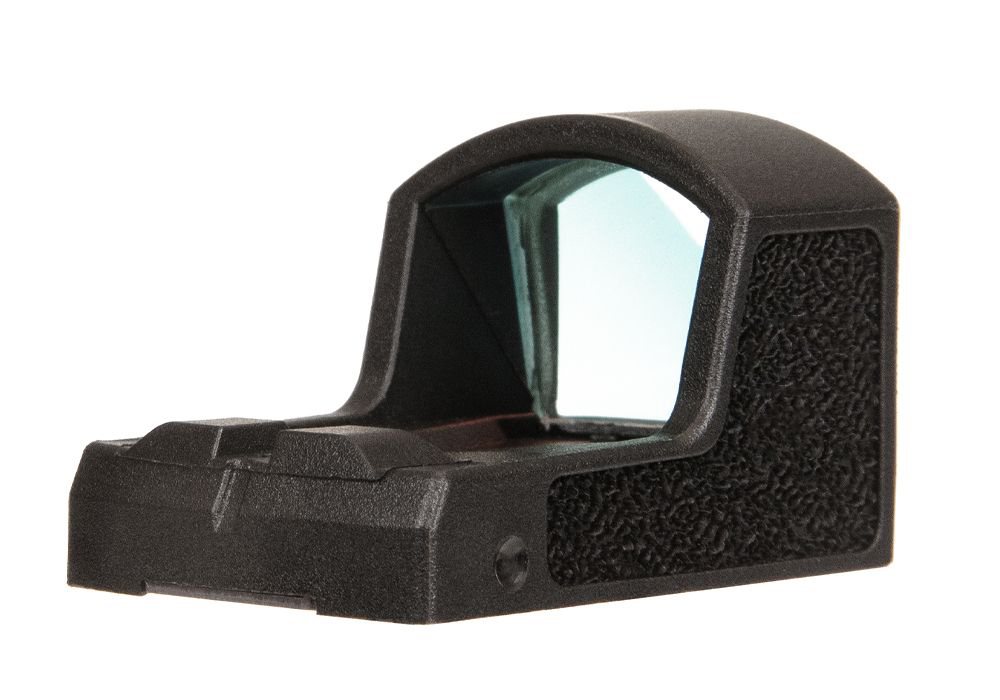
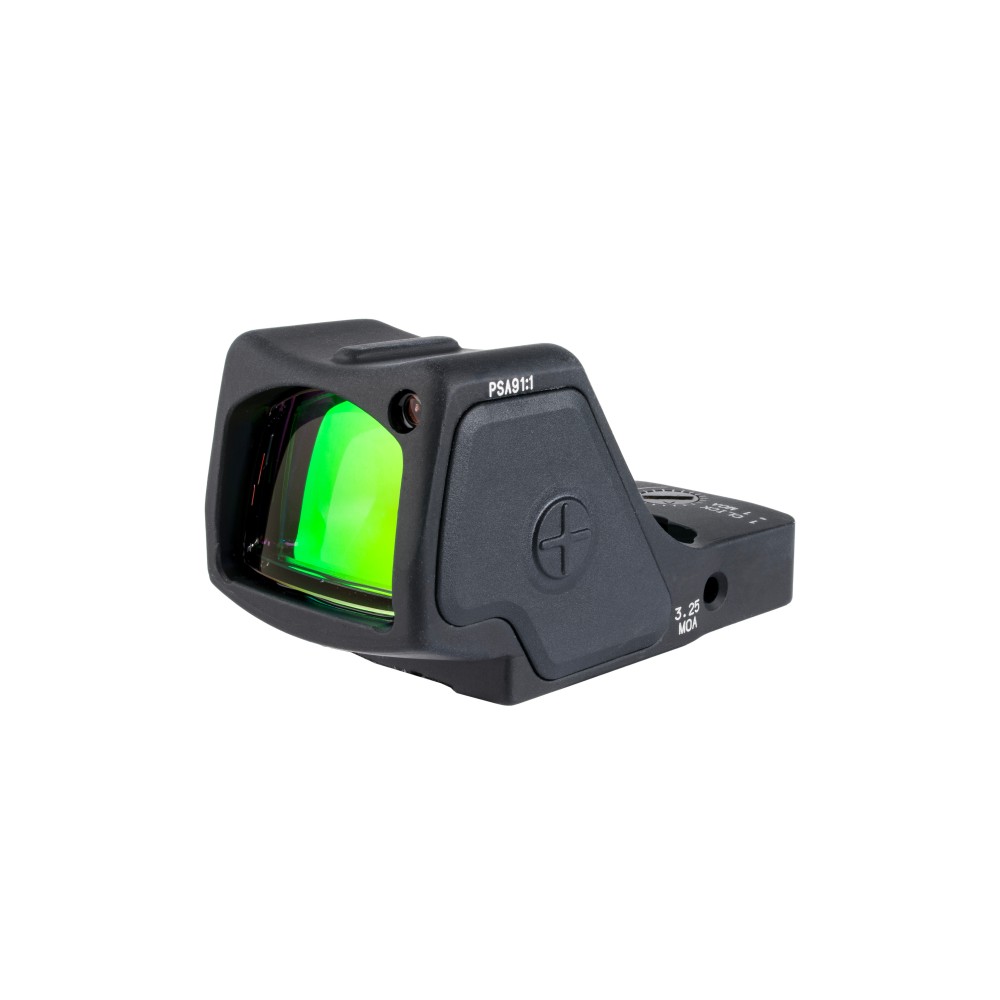
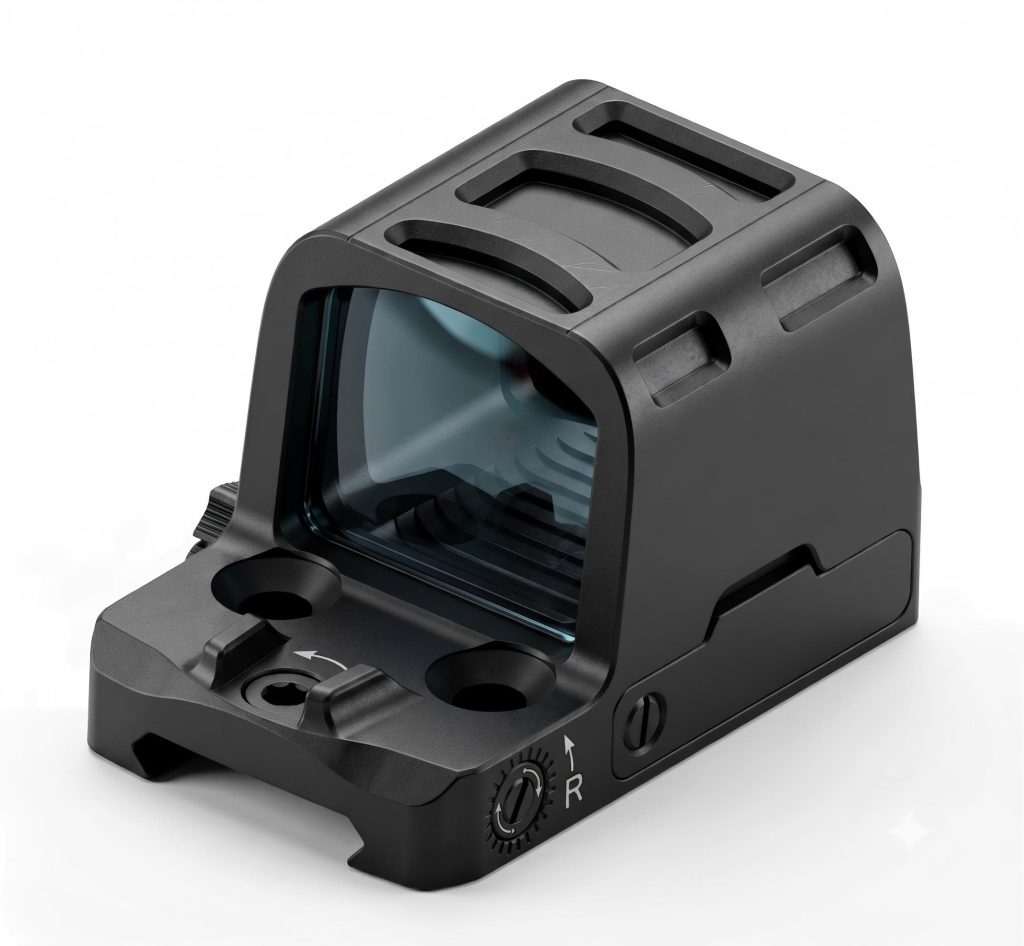
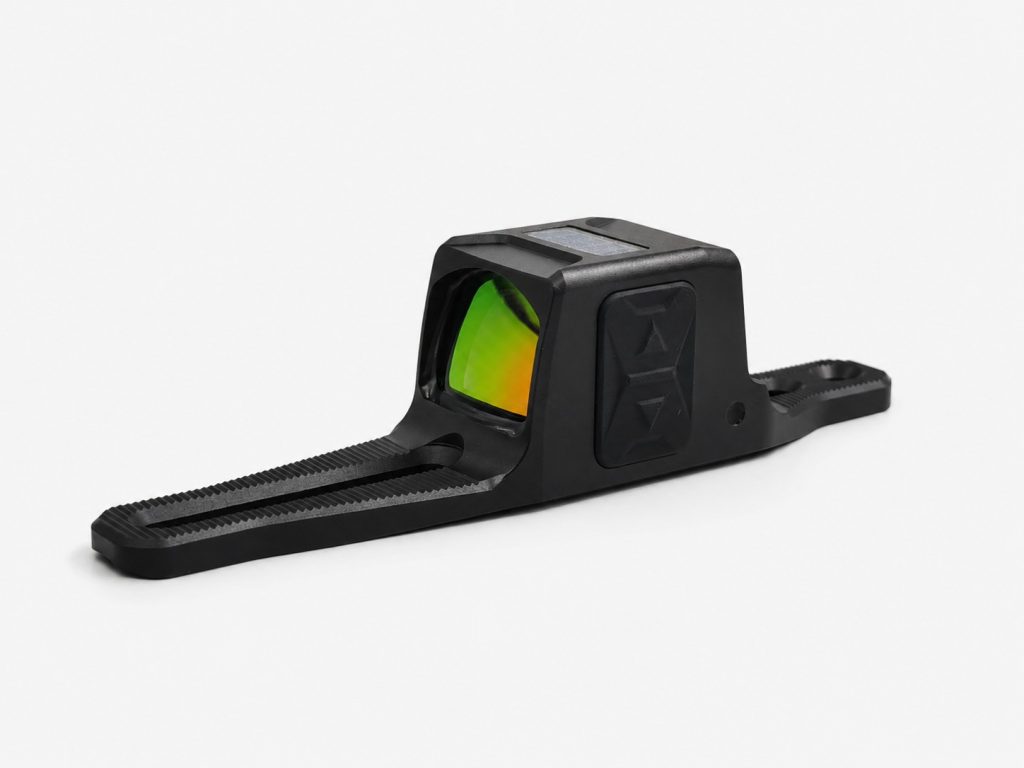
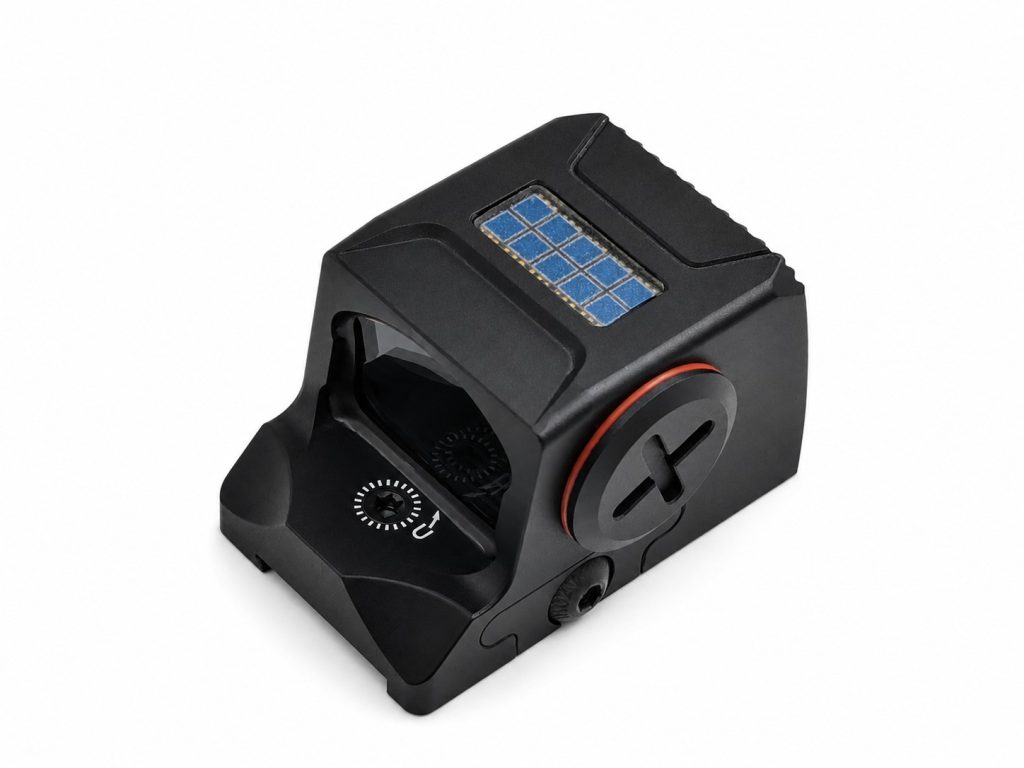
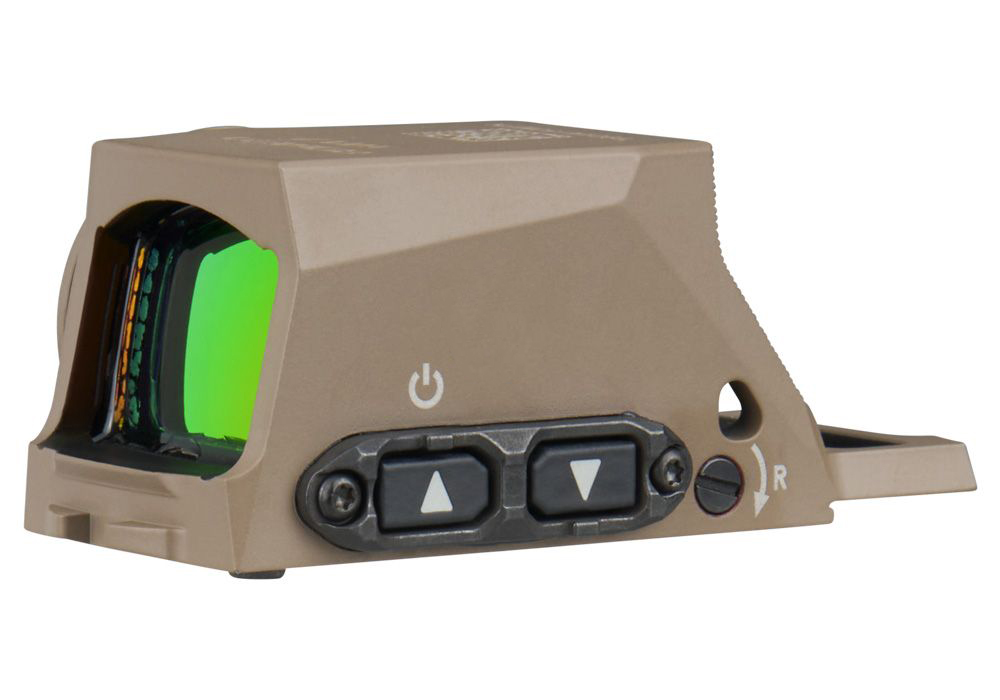
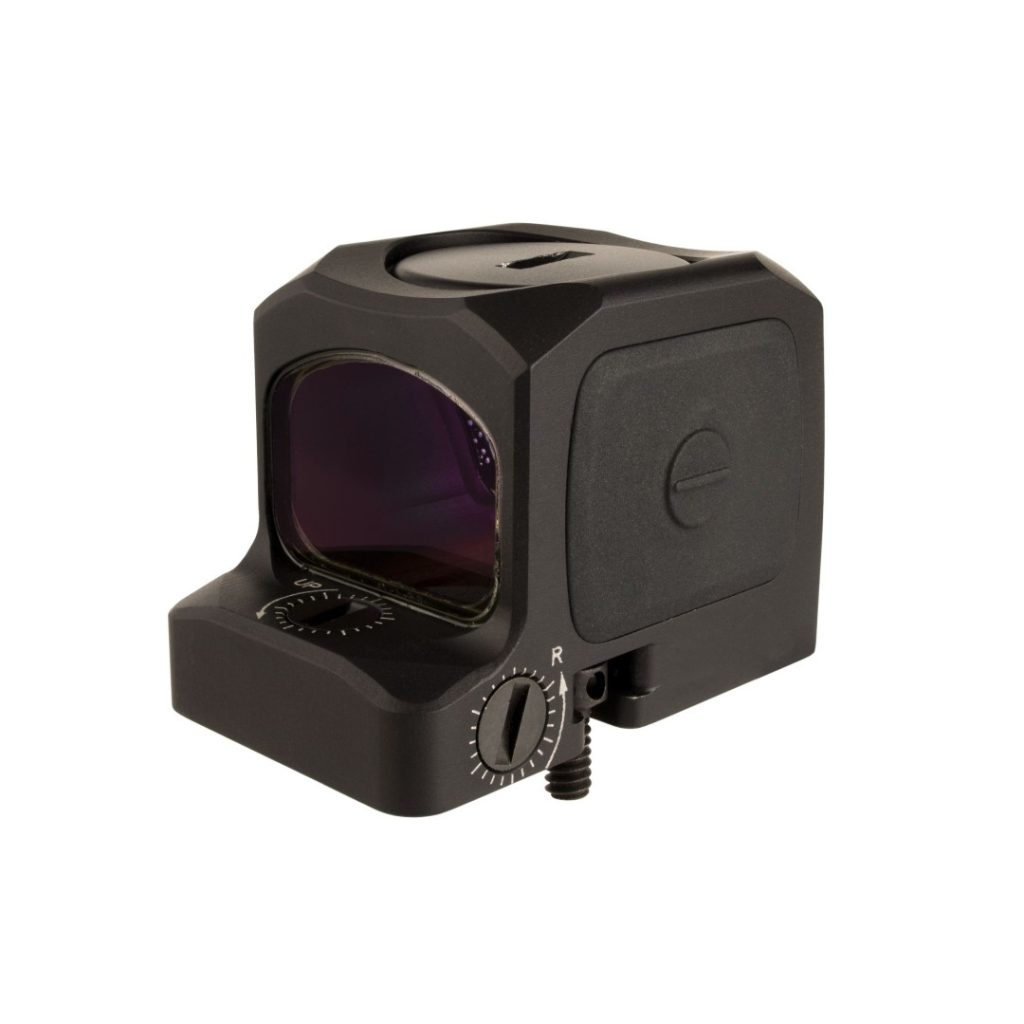
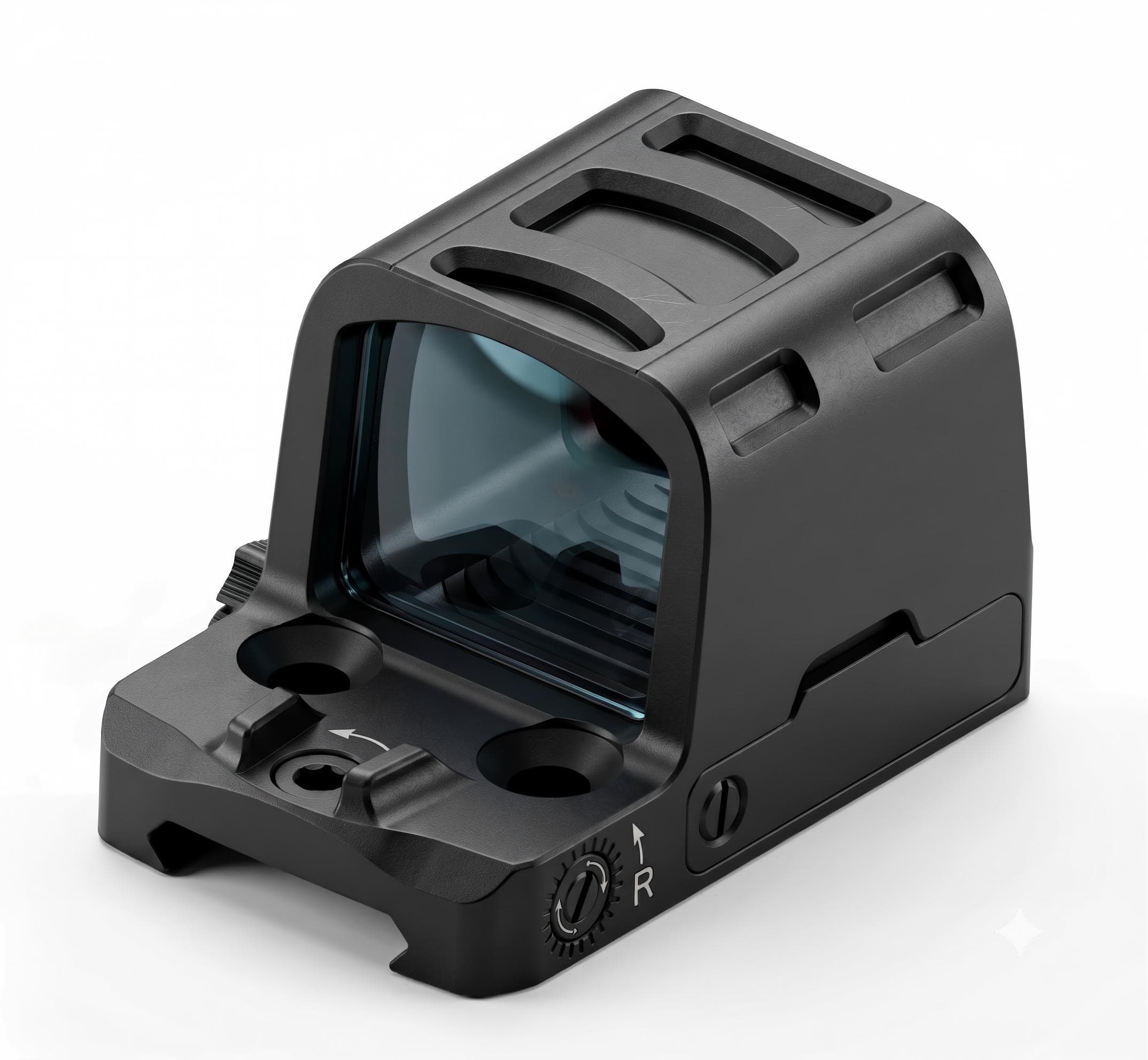
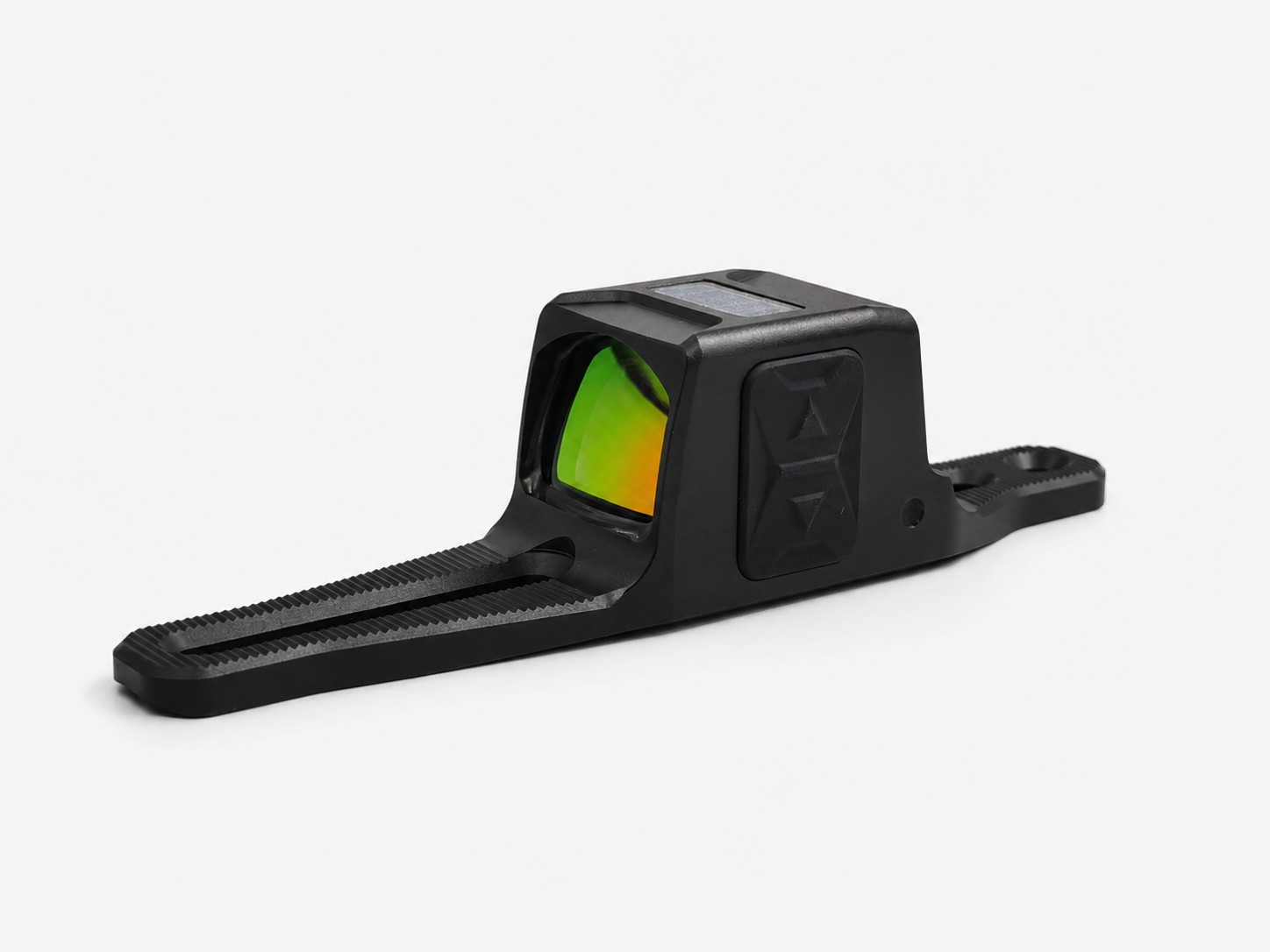
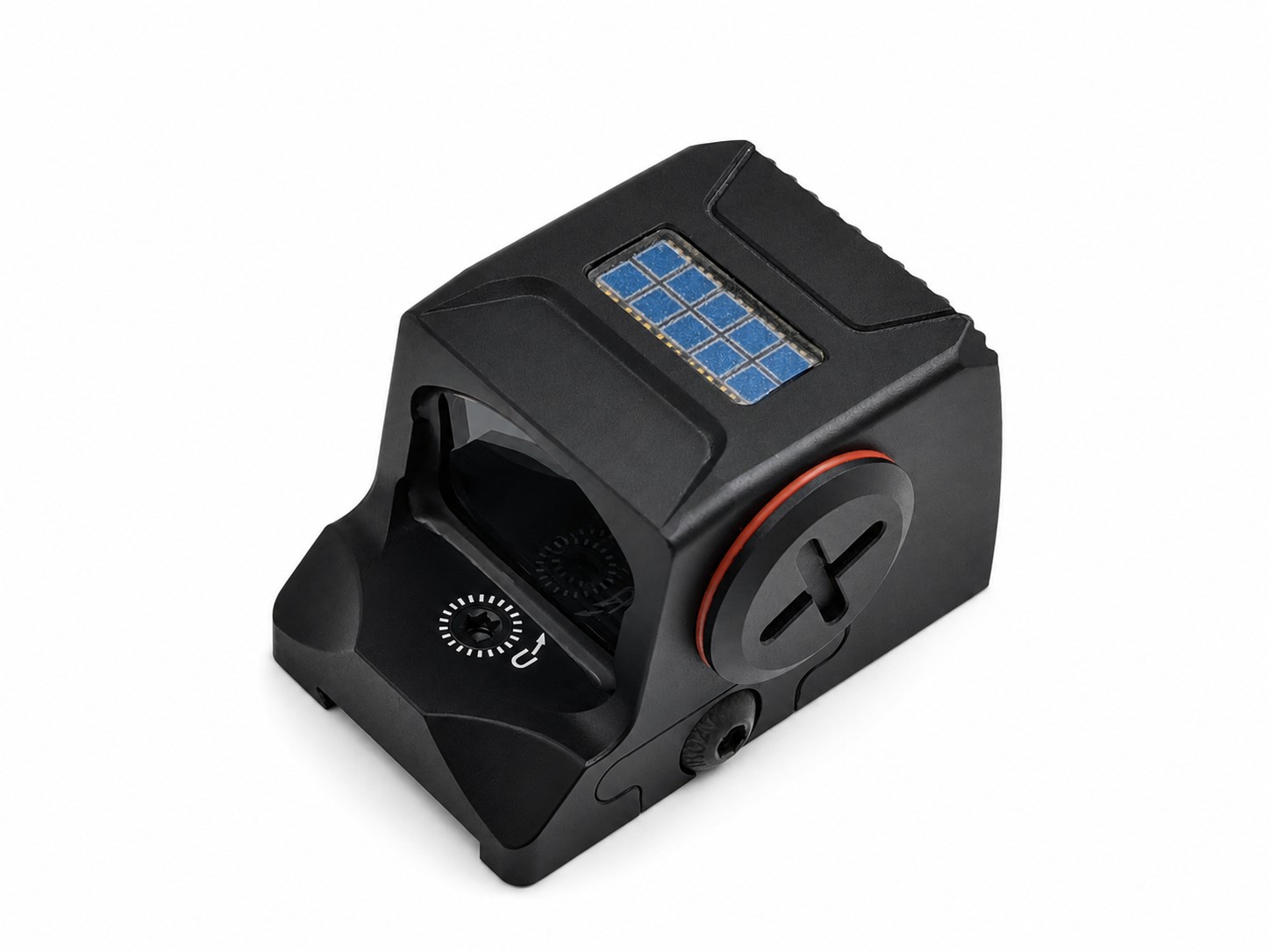
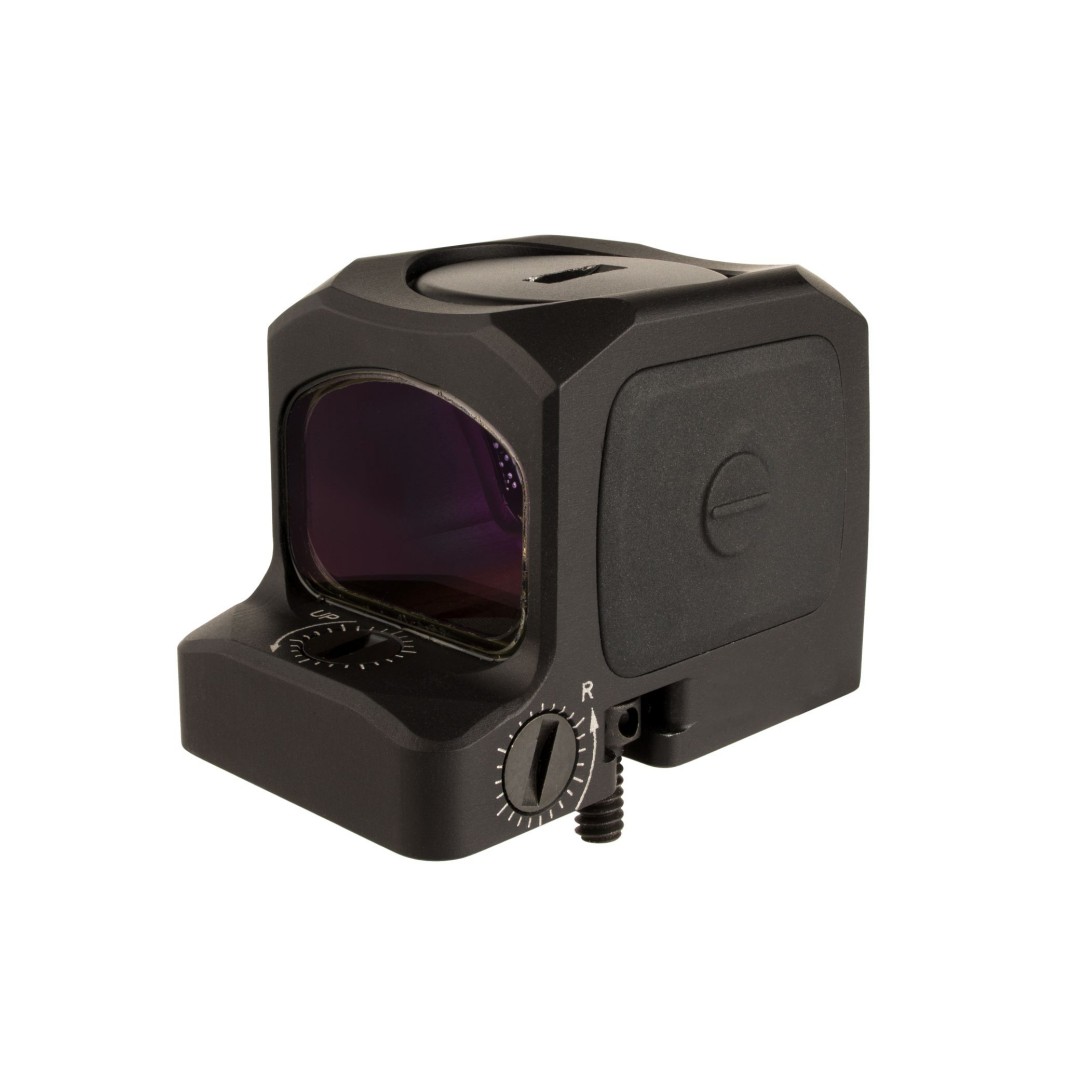
A complete gold dot project normally includes four stages.
Stage 1: Product and Market Definition
The customer needs to define:
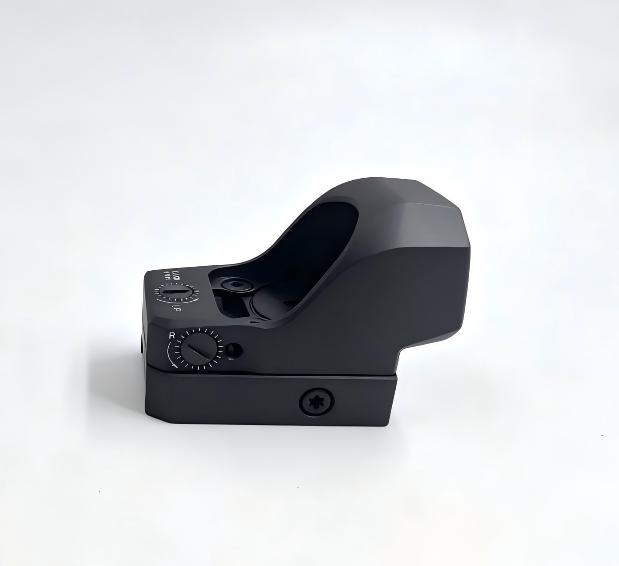
- A pistol, rifle, PCC, or shotgun platform;
- An open-emitter, enclosed-emitter, or tube-style structure;
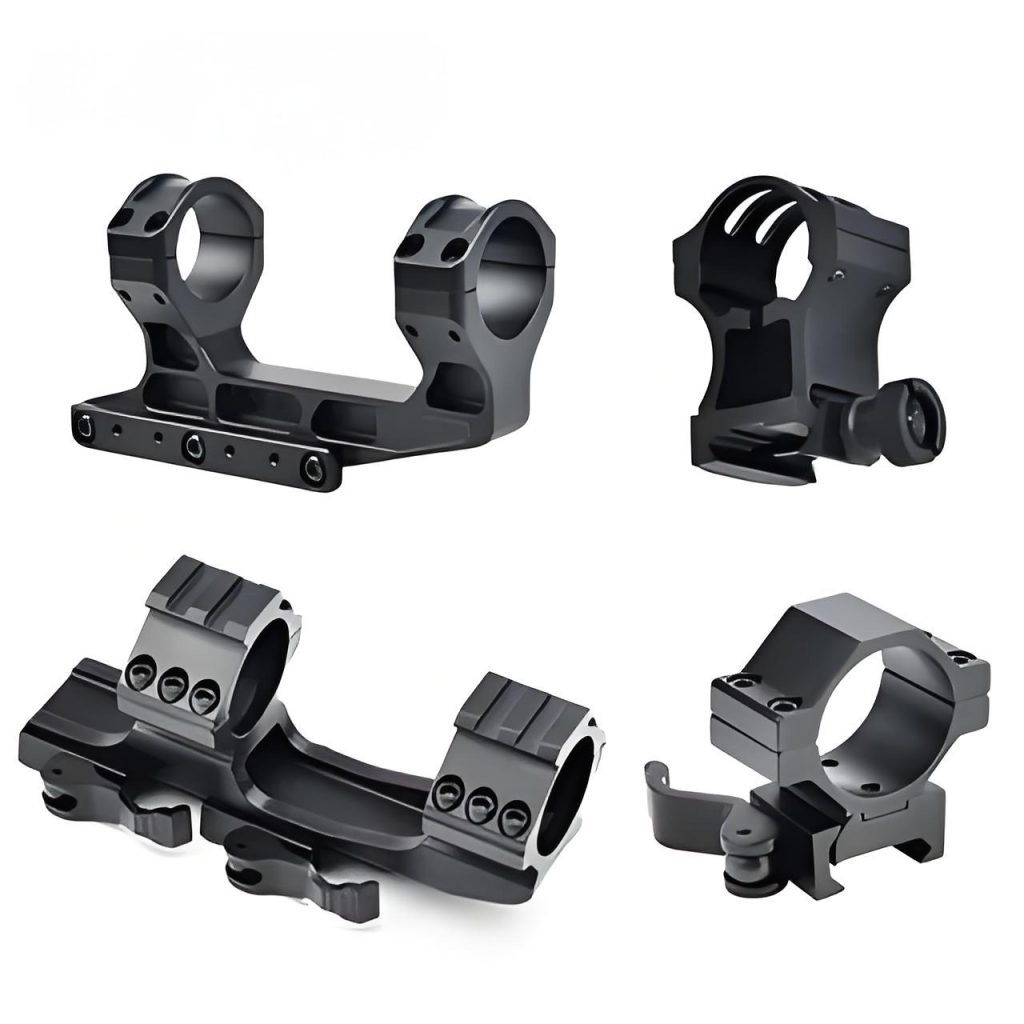
- An RMR, RMSc, ACRO, or Picatinny mounting interface;
- A 2 MOA, 3 MOA, 6 MOA, or circle-and-dot reticle;
- Bright-light, competition, EDC, or general-purpose use;
- The target retail price and expected annual sales volume.
Stage 2: Optical and Electronic Matching
Based on the product definition, the FORESEEN R&D team completes:
- 590 nm LED selection and wavelength binning;
- Design of a dedicated lens-coating system for the gold dot;
- Position matching between the LED and lens;
- Adjustment of brightness levels and power consumption;
- Calibration of automatic-brightness or motion-activation parameters;
- Optimization of stray light, ghosting, and reticle roundness.
Stage 3: Prototyping and Validation
The prototype must be evaluated for:
- Reticle contrast against different backgrounds;
- Reticle shape at the center and edges of the field of view;
- Brightness and actual power consumption at every setting;
- Performance at high temperature, low temperature, and low voltage;
- Zero retention and LED position after recoil testing;
- Lens color cast, ghosting, and light-transmission performance.
Stage 4: Pilot Production and Mass-Production Control
Passing prototype validation does not mean the project is complete.
Before mass production, the following standards and processes must also be established:
- Incoming LED binning standards;
- Coating-spectrum inspection standards;
- Reticle MOA and roundness standards;
- Current ranges for each brightness setting;
- Optical alignment and adhesive-dispensing processes;
- Sampling plans for high-/low-temperature and recoil testing;
- Pilot-batch yield control and abnormality-traceability mechanisms.
The goal of this process is to ensure that unit No. 1 and unit No. 5,000 deliver nearly the same visual performance and reliability.

Conclusion – A Gold Dot Is a New Color and a New Product System
The value of a gold dot sight is not that it is “absolutely better” than a red or green dot. Its value lies in offering shooters another visual wavelength and giving brands a new direction for product differentiation.
For consumers, a gold dot may be easier to acquire in bright light, against complex backgrounds, or under specific visual conditions.
For brands, a gold dot can help an established red-dot platform create a new mid- to upper-tier SKU.
For manufacturers, a gold dot requires the LED, coating system, drive electronics, optical alignment, and mass-production controls to be rematched. Making one prototype illuminate is only the beginning. The real technical capability is producing thousands of units with consistent color, brightness, and reliability.
Based on its existing red- and green-dot platforms, FORESEEN OPTICS can provide brand customers with complete OEM/ODM support covering gold-dot feasibility assessment, 590 nm optical solutions, electronic-control adjustment, structural adaptation, prototype validation, and pilot-batch introduction.
Here are 15 Steps to Building Your Product Line from Scratch.
If your brand is evaluating a gold-dot product, we recommend providing the target platform, window size, mounting interface, reticle format, functional configuration, target retail price, and expected annual sales volume. The FORESEEN OPTICS R&D team can then determine whether the existing structure can be upgraded and whether the approximately US$20 gold-dot OEM premium can generate a reasonable commercial return within your product portfolio.