First-person shooter games have helped formulate the conception of millions of gamers worldwide when it comes to guns, aiming assistance, and combat optics. Some of the most sought-after aiming aids in a virtual setting and a real-world shooting range are the so-called holographic sights. They enjoy great popularity on fast-paced FPS games and on real-world guns.
But how well is the accuracy of holographic sights in real life represented in FPS games? Do they perform in the real world in the same manner that they do in the game? Furthermore, can playing FPS games improve one’s real-world accuracy in aiming?
In this article, we will also see how holographic sights function in FPS games and in reality and also get to understand why they are so popular among gamers and shooters alike.
What Is a Holographic Sight in FPS Games?
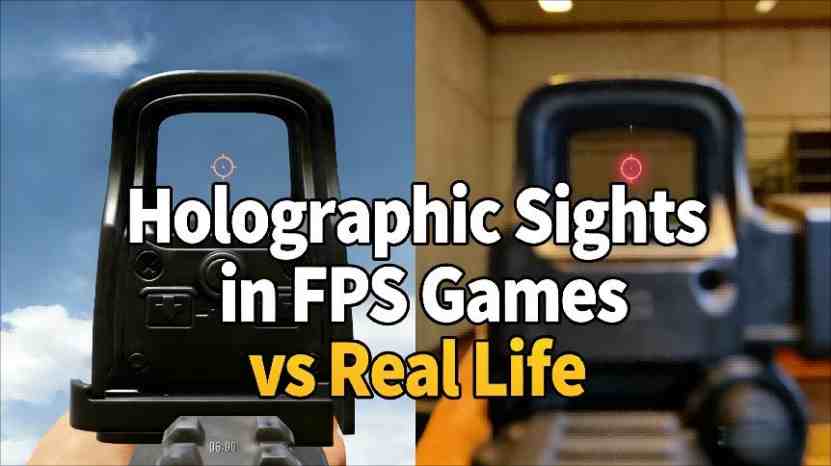
In first-person shooter games, a holographic sight is typically an optical aiming device without magnification. It projects a bright crosshair – usually a dot or a simple dot – through a transparent field of view window. Unlike mechanical sights, holographic sights allow players to maintain complete perception of the surrounding environment while aiming.
Most first-person shooter games view holographic sights as an option between mechanical sights and magnification sights. They are usually unlocked at the early stage of the game or provided as standard accessories for assault rifles, submachine guns and carbines.
In terms of gameplay, holographic scopes typically offer:
- Clear crosshair, no need for magnification
- Minimum aiming speed loss
- Compared with mechanical sights, it has a better field of vision
Although the version in the game has been simplified, its design inspiration comes from the holographic and reflective scopes used on real firearms.
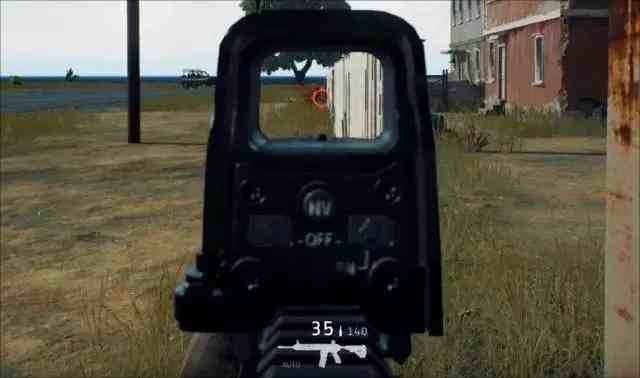
Why FPS Players Prefer Holographic Sights
FPS players favor holographic scopes because they perfectly fit the fast-paced and quick-reaction gameplay. Compared with high-magnification scopes, holographic scopes offer speed, flexibility and ease of use.
Faster Target Acquisition in FPS Games
One of the greatest advantages of holographic scopes in FPS games is the ability to quickly lock onto targets. The bright crosshair enables players to quickly aim at the target without adjusting the front and rear sights.
This is particularly important in close combat, as every second counts. The ability to quickly lock onto targets makes the holographic scope the first choice for aggressive players.
Wider Field of View Compared to Scopes
Unlike sniper scopes or optical scopes such as ACOG, holographic scopes offer a wider field of view. Players can track multiple enemies, maintain awareness of the surrounding environment, and deal with threats from different angles.
In highly competitive first-person shooter games (FPS), losing peripheral vision can be fatal. The holographic sight not only enhances aiming accuracy but also avoids a narrow field of view, thus achieving a balance.
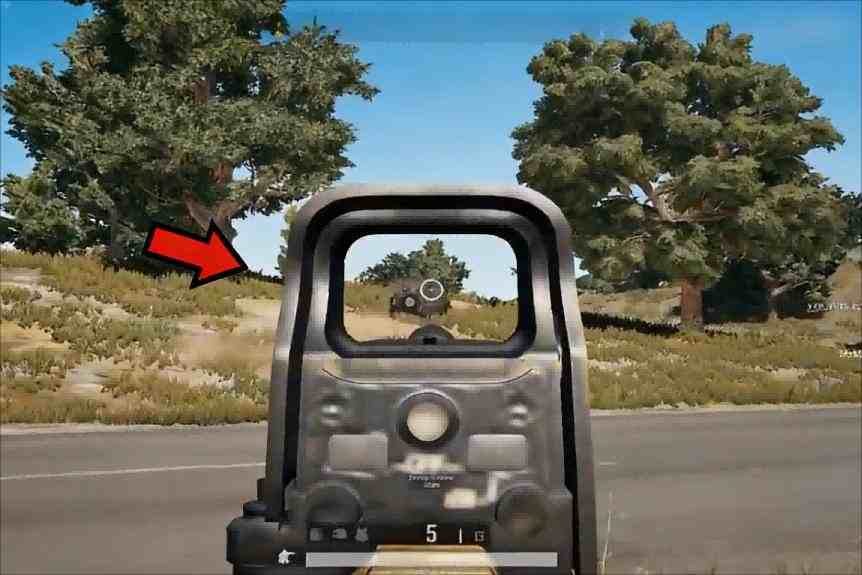
Balanced Accuracy for Close to Mid-Range Combat
The FPS holographic scope has been optimized for close and medium-range combat. They do not offer magnification, but compared with mechanical sights, they can provide clearer and more stable crosshairs.
This balance makes it an ideal choice for the following scenarios:
- City map
- Indoor environment
- Goal-oriented game mode
Therefore, they are usually the most widely used optical sight options in FPS games.
Are Holographic Sights in FPS Games Realistic?
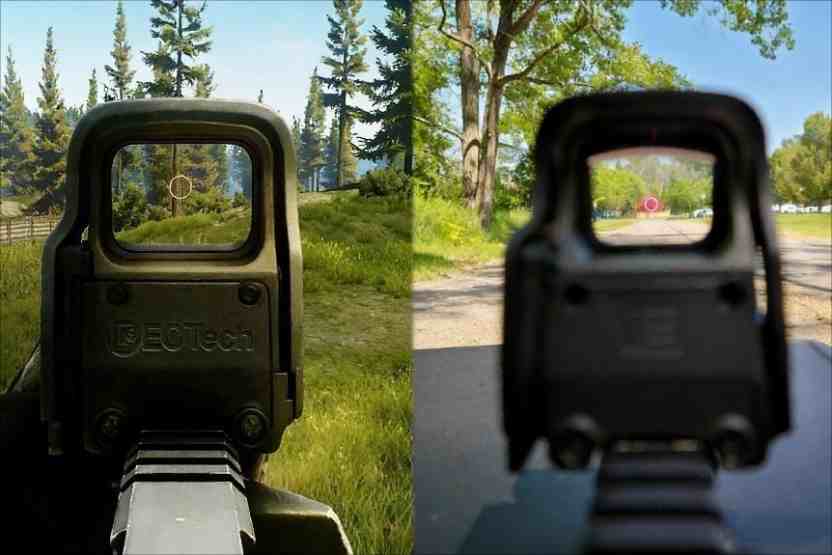
FPS games draw heavily on the optical principles of the real world, but for the sake of game balance and ease of use, they inevitably simplify some aspects.
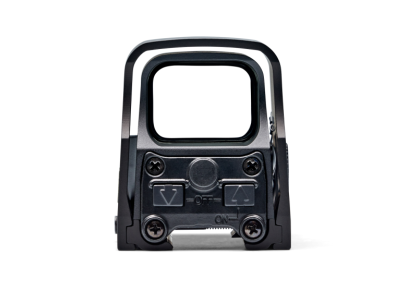
The Good Aspects of FPS Games
FPS games are surprisingly accurate in several key areas:
- Non-magnification aiming: Real holographic sights also offer a 1x magnification
- Aiming with the crosshair centered: Even if the eyes are not fully aligned, the crosshair can still be used
- Speed advantage: Whether in games or in real life, holographic scopes are faster than traditional scopes
These similarities explain why players familiar with FPS games usually find real holographic sights intuitive to operate.
What FPS Games Simplify or Ignore
- However, games often overlook or simplify:
- Parallax effect (or exaggerating its non-existence)
- Battery life and electronic components
- Environmental factors, such as rain, fog or glare
- Crosshair brightness adjustment
In fact, the physical and electronic principles involved in holographic scopes are far more complex than those presented in the game.
How Does a Real Holographic Sight Work?
A true holographic sight works in a completely different way from a simple red dot sight, even though they may look very similar.
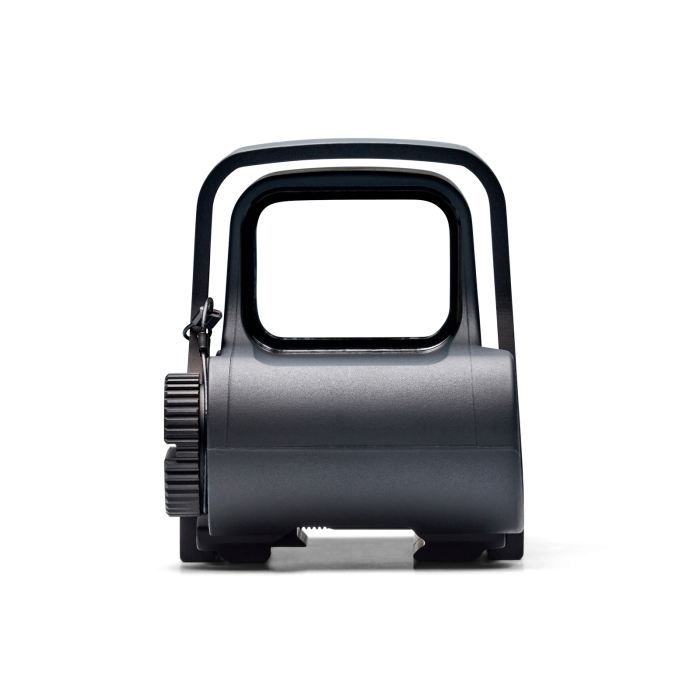
The holographic sight does not reflect the light spot onto the glass, but uses a laser diode to project the holographic crosshairs recorded on the holographic film. This crossograph appears to be suspended at a fixed distance, usually at optical infinity.
Key characteristics of real holographic sights include:
- True holographic reticle projection
- Minimal parallax at practical shooting distances
- Clear reticle visibility even if the front glass is partially obstructed
- Both-eyes-open shooting capability
Because the scope uses holographic images, even if some of the lenses are damaged, the shooter can still aim precisely – a point that is often overlooked in games.
This technology makes holographic sights highly effective in tactical applications, home defense, hunting and competitive shooting, among other fields.
Learn about FORESEEN’s Holographic Sight products
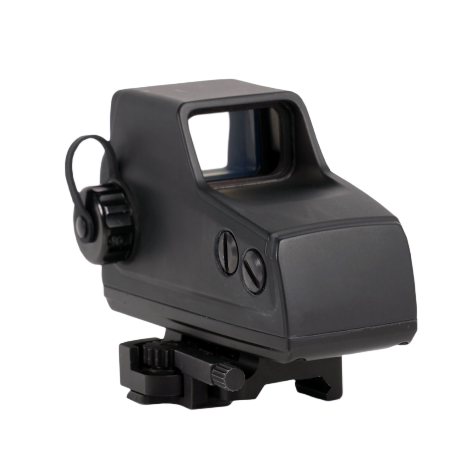
Can FPS Games Help You Aim Better in Real Life?
This is a common question among gamers and shooting enthusiasts.
FPS games can help develop visual skills, such as:
- Hand-eye coordination
- Target tracking
- Reaction speed
- Spatial awareness
Players familiar with holographic sights in FPS games often adapt faster to real optics because they already understand reticle-based aiming.
However, FPS games cannot replace real-world training. They do not teach:
- Recoil management
- Trigger control
- Firearm safety
- Real ballistic behavior
In short, FPS games can build foundational aiming instincts, but real-life shooting requires physical practice and proper instruction.
In Summary
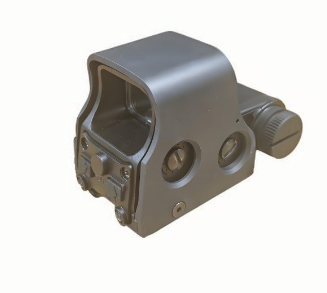
Holographic scopes play a significant role in both first-person shooter games (FPS) and real-world shooting, but their functions vary in both scenarios. Although FPS games cannot fully replicate the technical complexity of real holographic sights, they do an excellent job in demonstrating their core advantages. For players who are interested in real optical devices – or those who are interested in shooting games – the overlap between the two is higher than many people imagine.
Understanding the working principle of holographic scopes in FPS games and real life can not only enhance the gaming experience but also deepen the understanding of modern aiming technology.