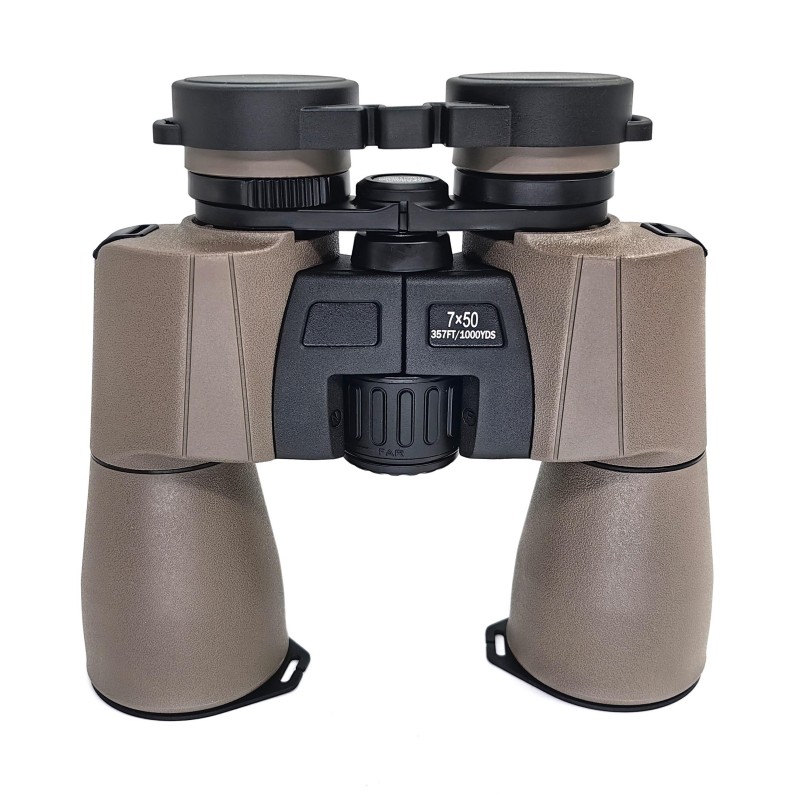
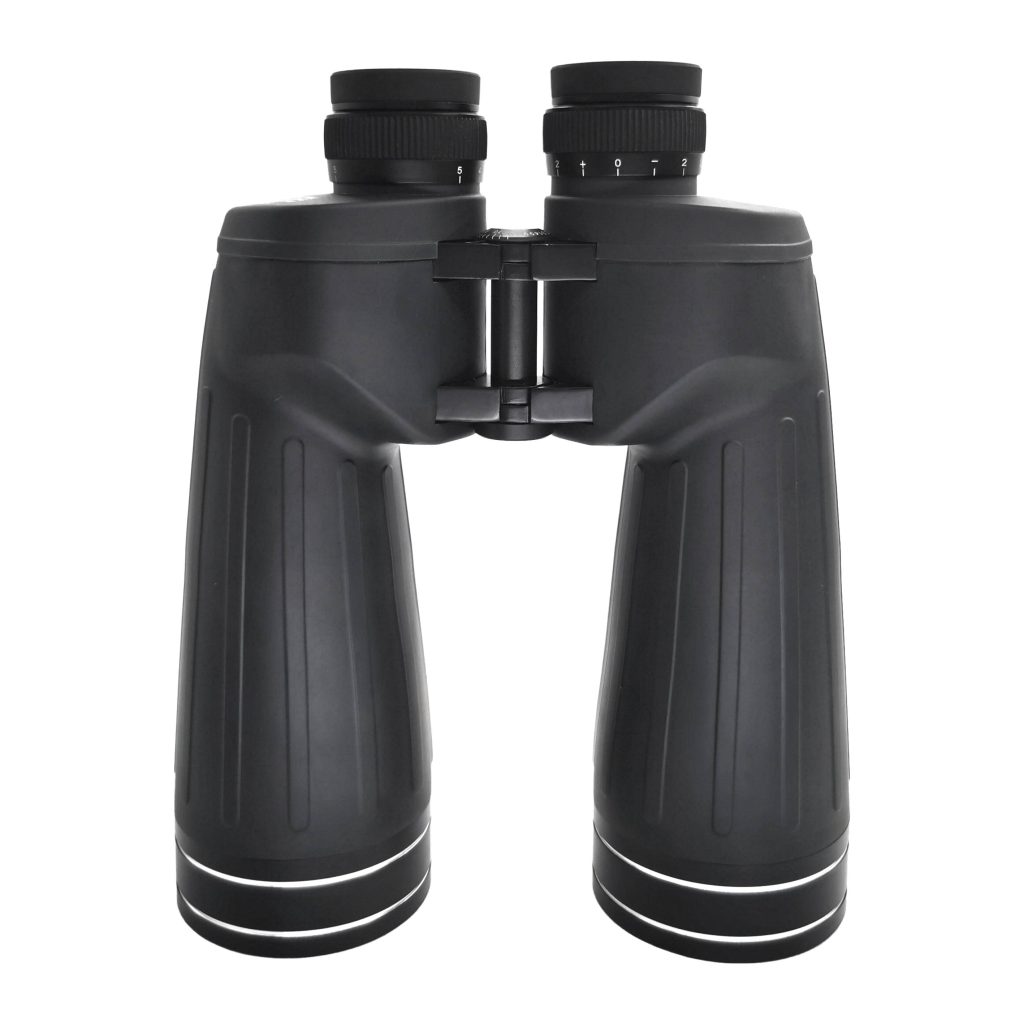
This isn’t a simple question of “higher magnification is better” or “lower prices sell more.” Rather, the binoculars industry is forming two clearly defined technology paths: one serves professional observation and long-duration use, and the other serves lightweight travel, low burden, and high-frequency, grab-and-go use. Specifications haven’t become obsolete — their order of importance has simply been rewritten by use cases.

This Is a “Reordering,” Not Just Another Upgrade
Over the past few years, if you looked at new telescope product releases, the most prominent highlights were usually magnification, aperture, coating layers, waterproof ratings, or some single spec that’s easy to market and communicate.
But across recent rounds of trade show conversations, client sampling, channel reviews, and end-user content planning, what I’ve been hearing repeatedly is no longer just questions about specs — but two distinctly different sets of concerns.
Among customers who lean more toward professional use, outdoor scenarios, and extended observation, the questions tend to be:
“Can I still see fine details at dawn and dusk? Will it feel heavy after wearing it around my neck for long periods? After rain, temperature changes, or bumps, will collimation and focusing still remain stable?”
On the other hand, among a much larger group of customers focused on travel, urban exploration, gifting, and light-consumption scenarios, the questions sound more like:
“Can I easily throw it into my bag? Can I see something clearly the moment I pick it up? Is it comfortable to use with glasses? Can it be bundled with a phone, straps, or storage systems?”
It is through this constant comparison that I’ve become increasingly convinced: the telescope industry is entering a new phase of technological route restructuring.
One path is converging toward full-size, high-performance devices built for long-duration observation in complex environments; the other is rapidly expanding toward lightweight portability, instant usability, and broader everyday scenarios.
This isn’t about which path is more advanced. It reinforces a belief I’ve come to hold more strongly:
Use cases are redefining specifications.
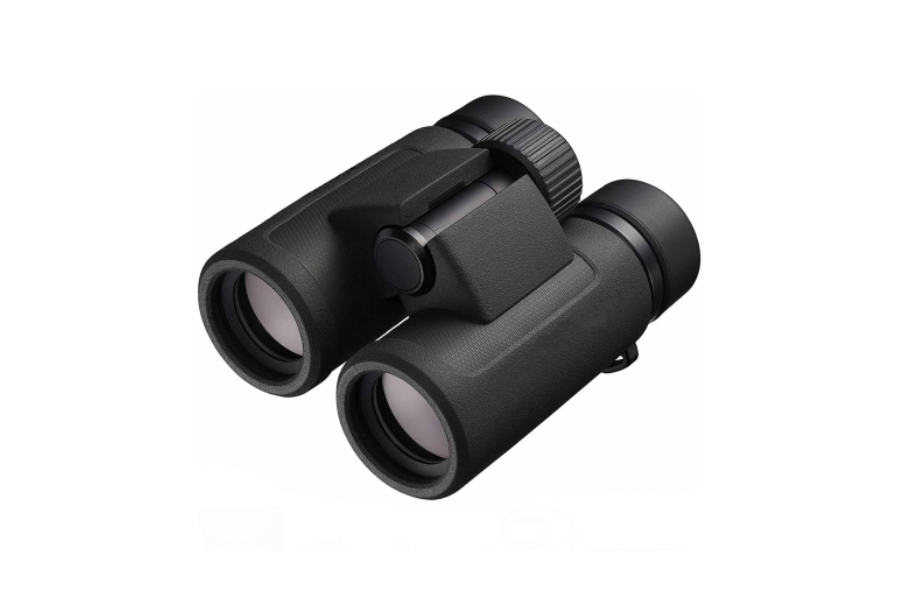
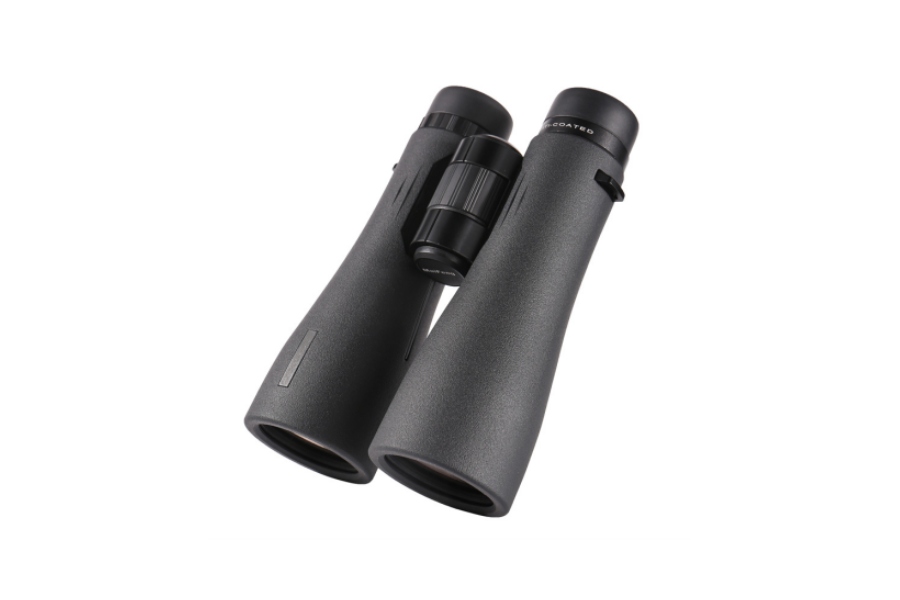
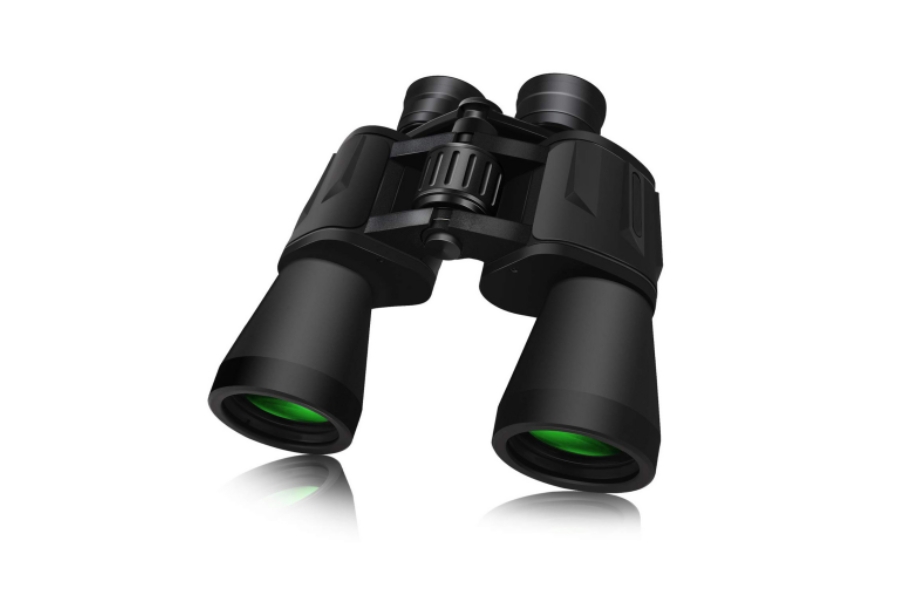
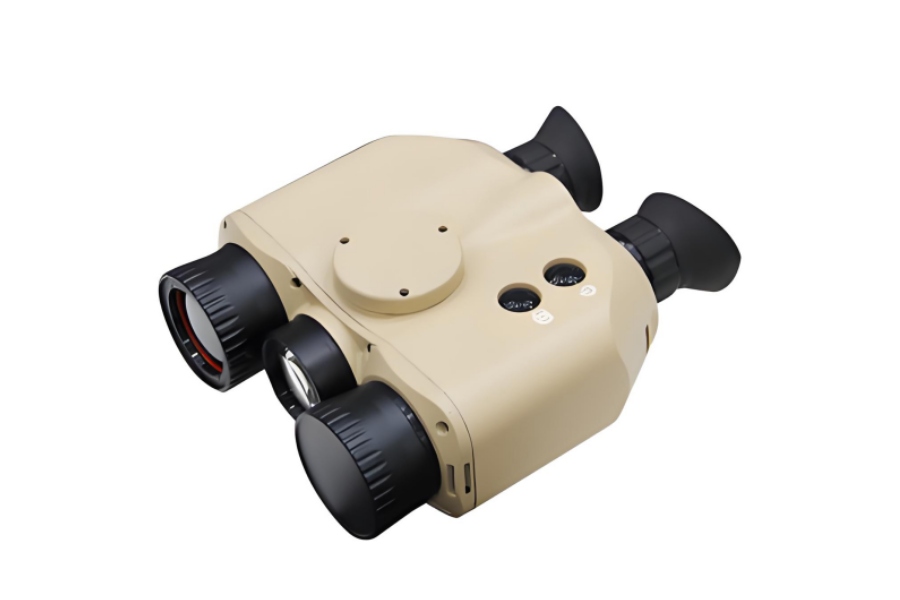
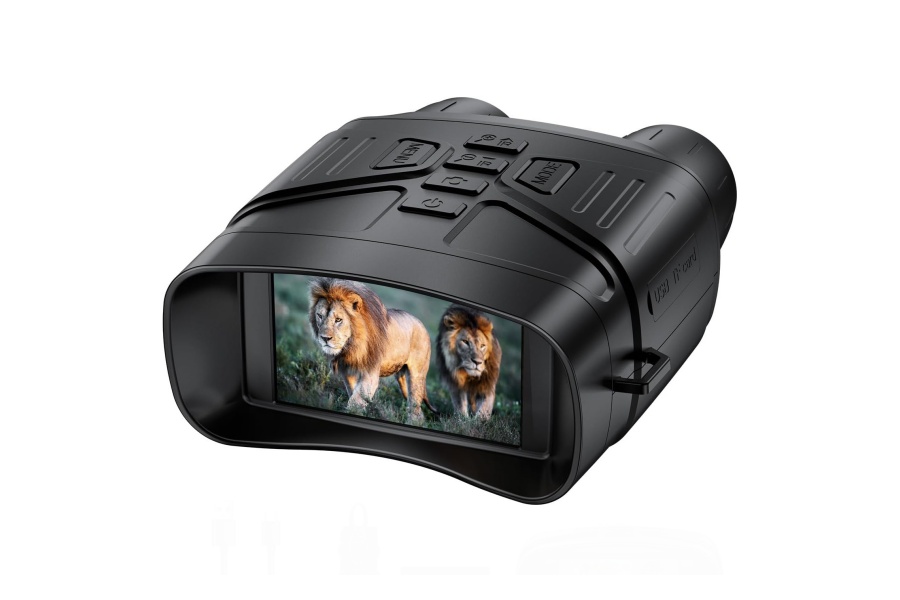
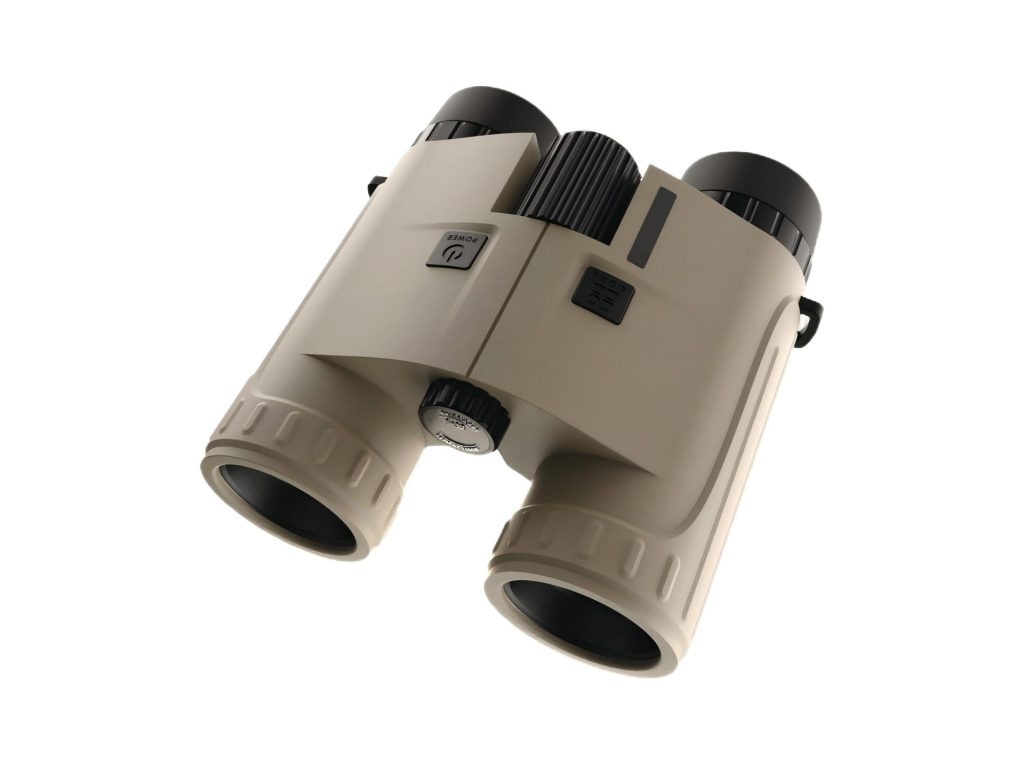
In Channel Meeting Rooms: Every Discussion Comes Back to “Who Is This For?”
One of the most noticeable shifts in recent years is that B2B clients no longer start by asking, “Should we go with 8×42 or 10×42?” Instead, they’re asking much earlier: Who is this for? Is it for birdwatchers, outdoor retail stores, gift channels, travel retail, or lifestyle brands that rely on content-driven marketing?
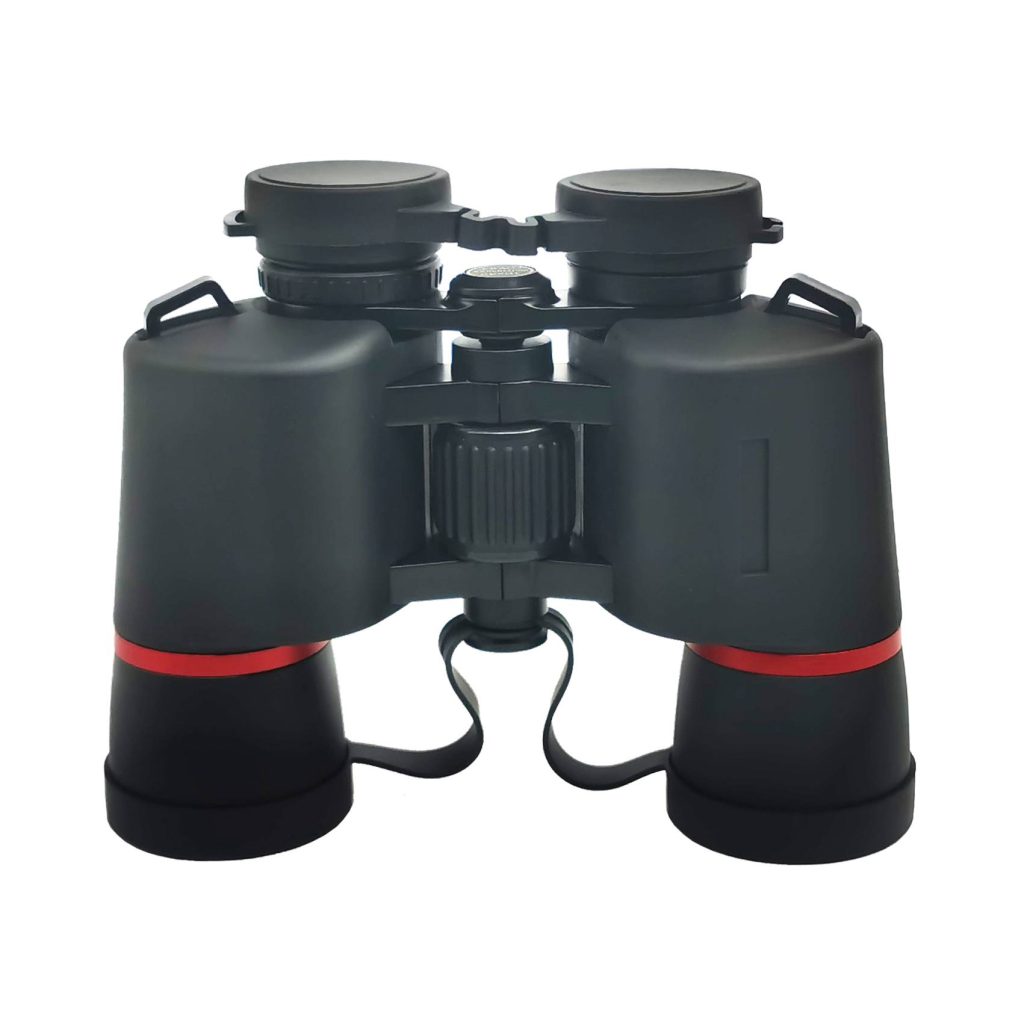
Once that question is raised upfront, nearly every technical decision that follows begins to shift accordingly. Even for the same category — binoculars — products designed for professional observation and those built for lightweight, on-the-go use are fundamentally different in how they’re defined.
At this stage, specifications are no longer the starting point — use cases are. Magnification, aperture, coatings, structure, weight, packaging, and accessories all become responses to specific scenarios, rather than standalone selling points.
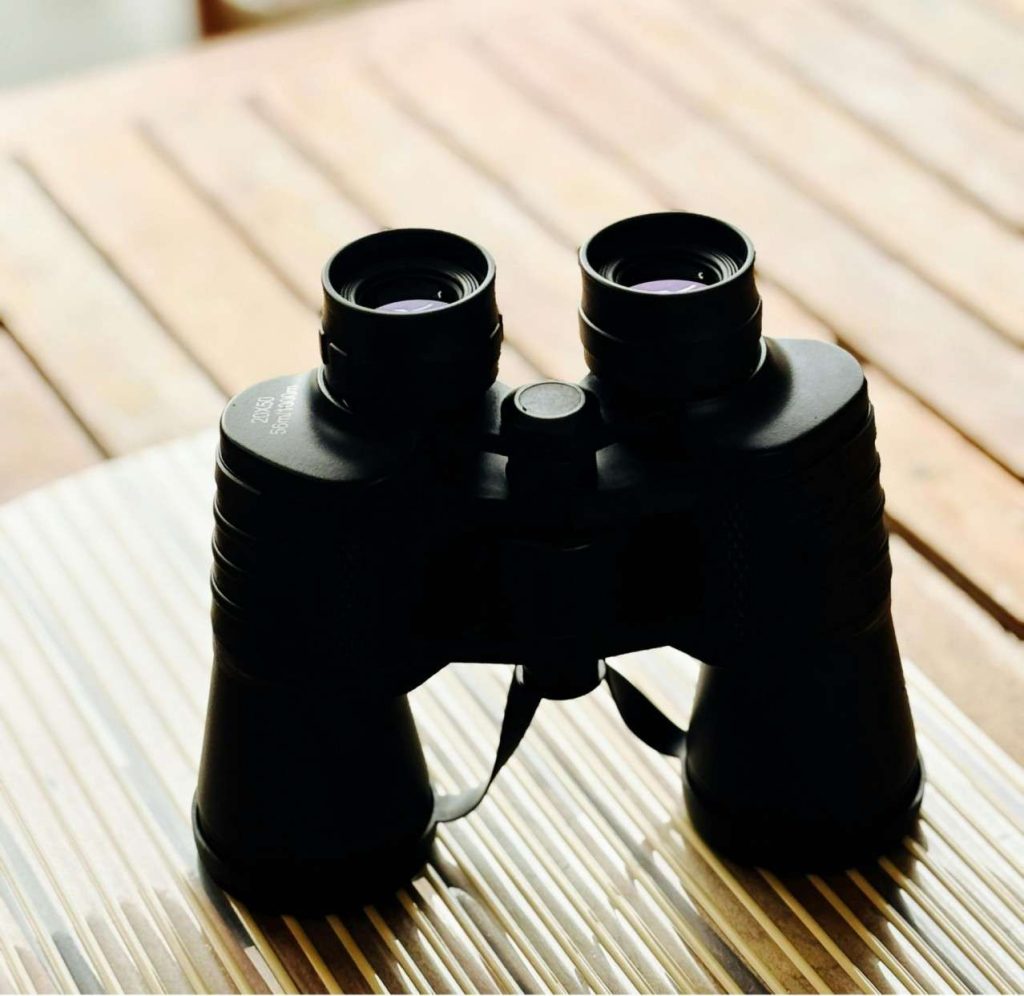
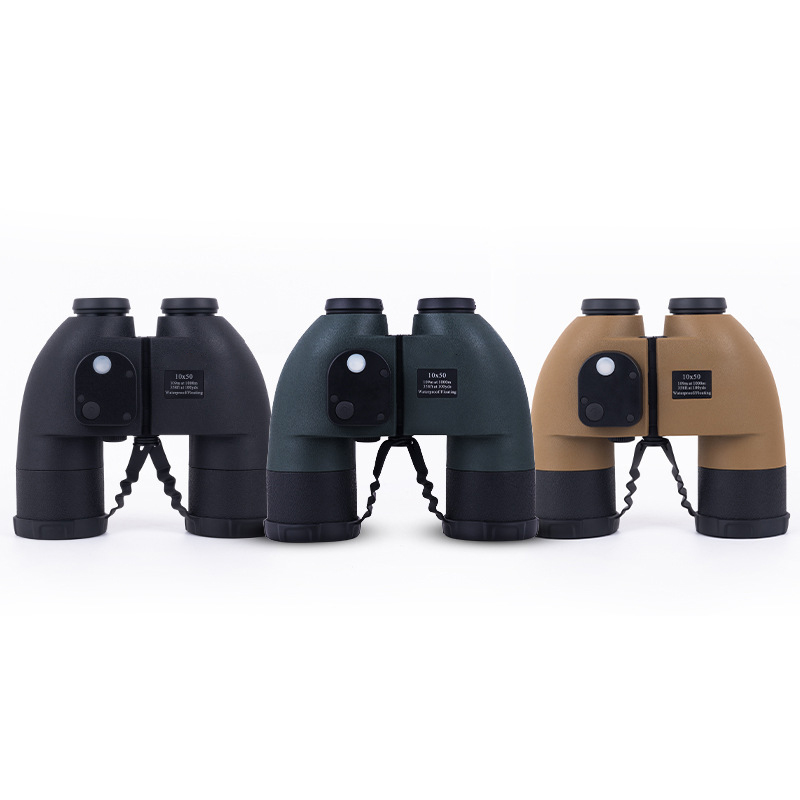
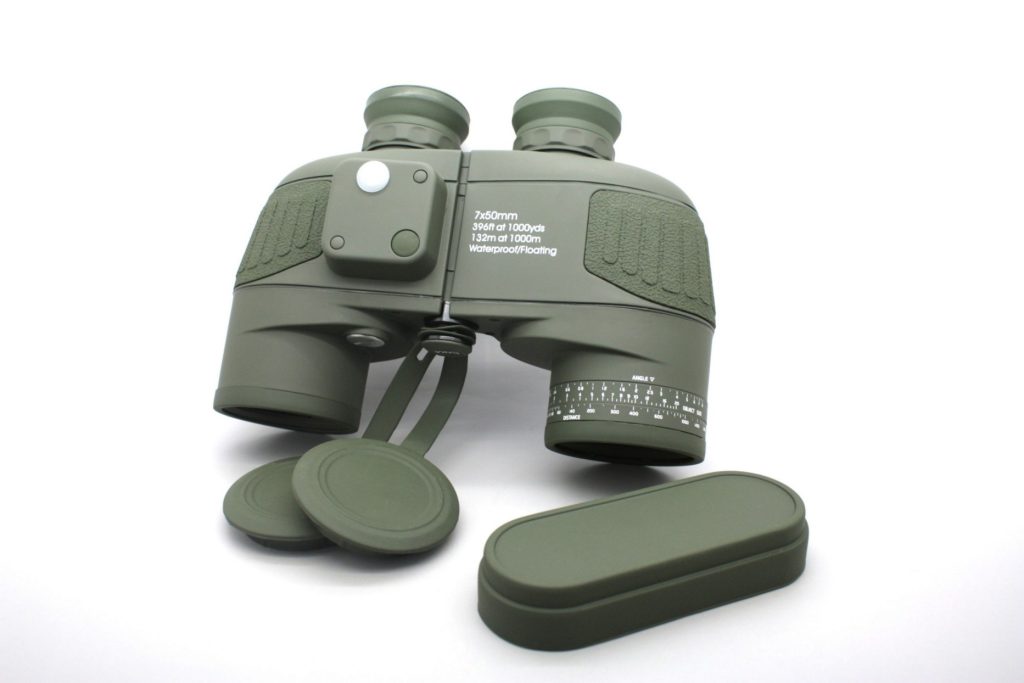
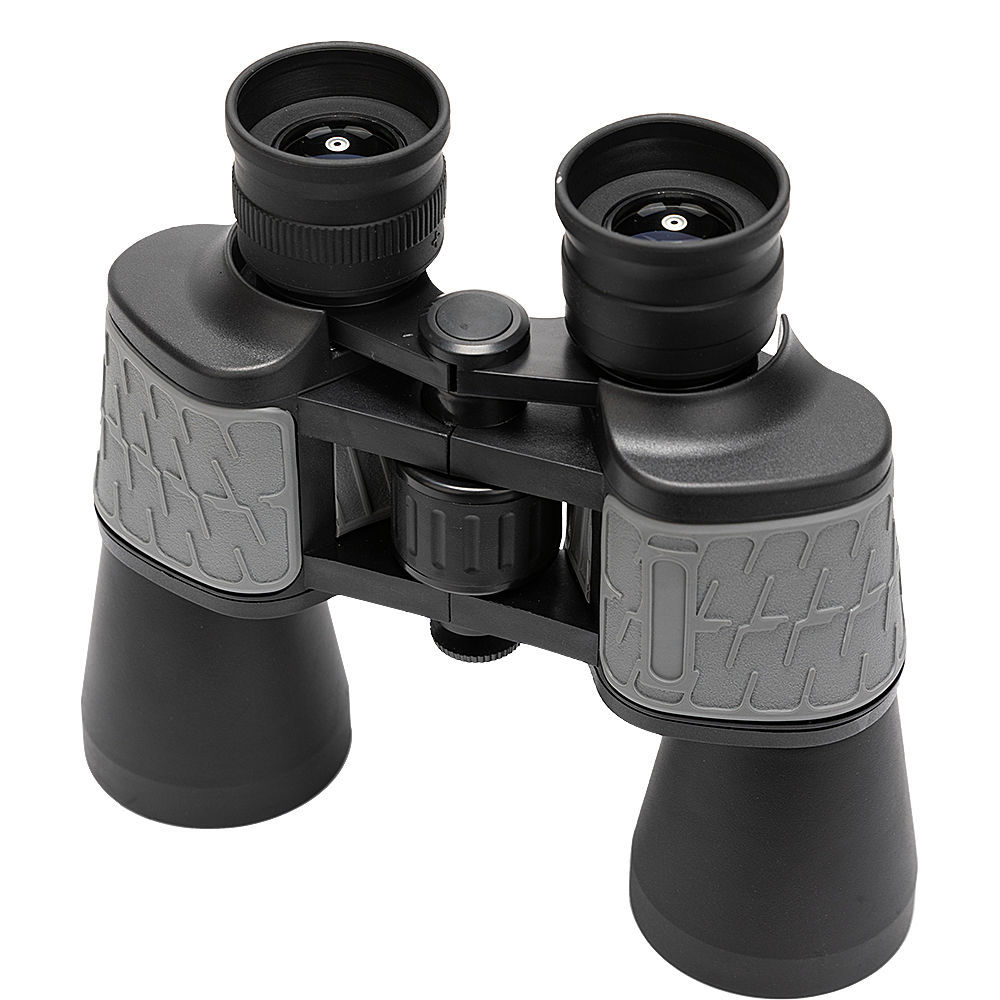
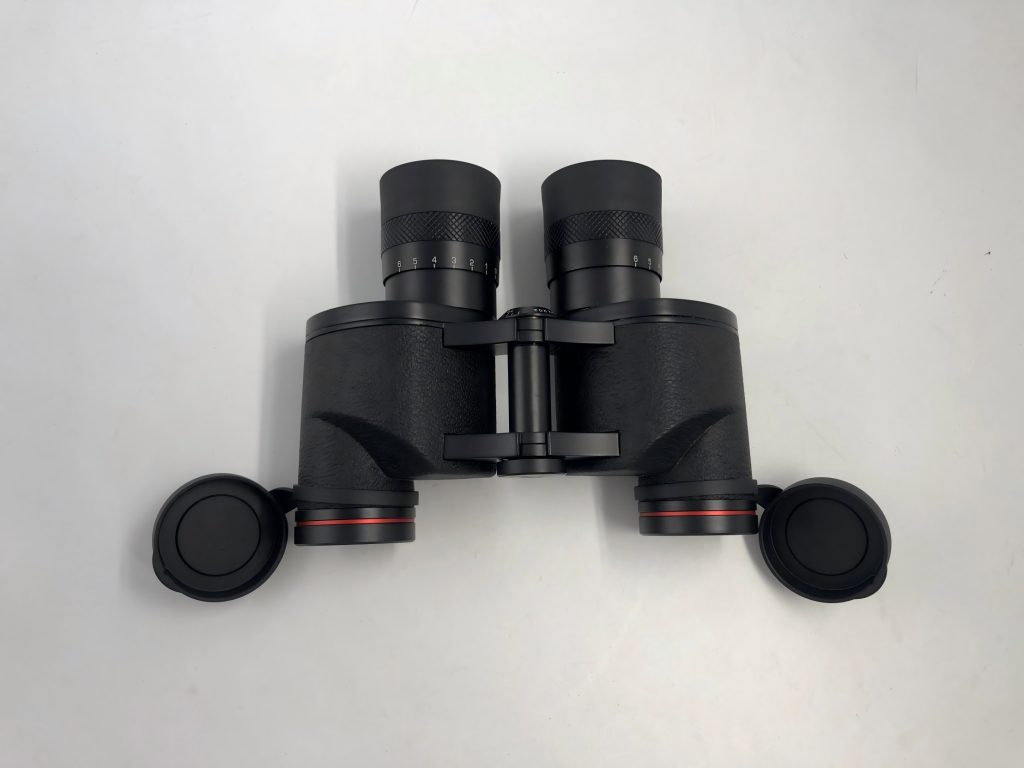
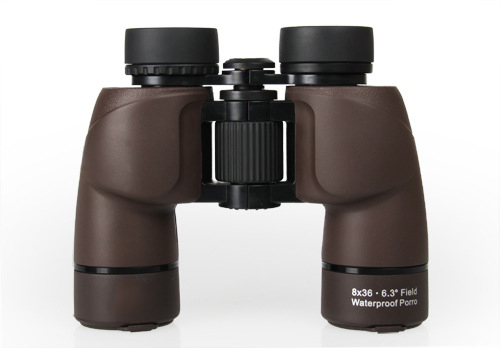
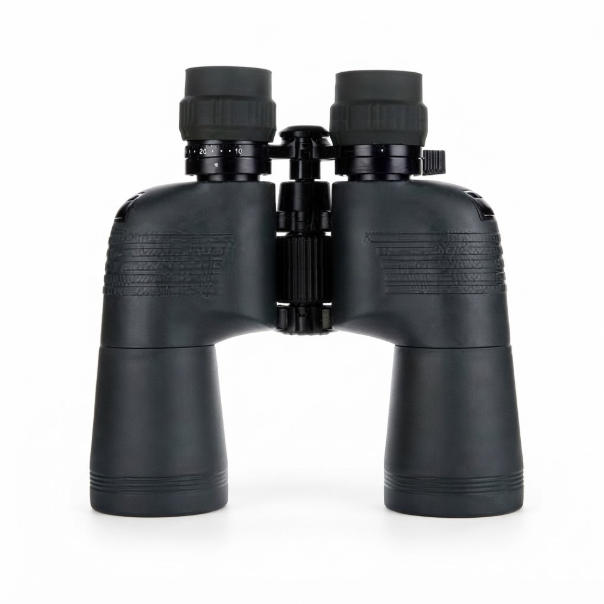
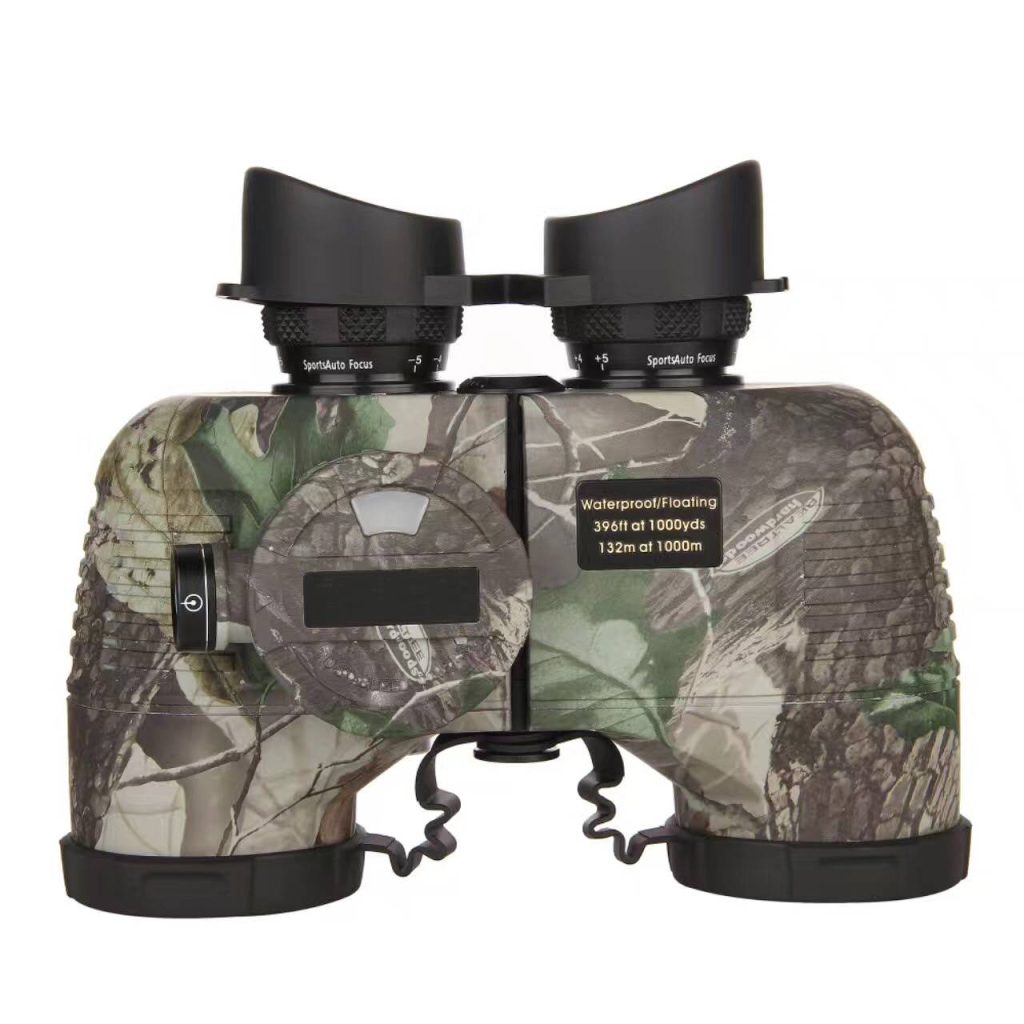
On the Consumer-Facing Side: More and More Discussions Now Begin with the Experience
If you look at retail pages, short videos, social content, and livestream sales scripts, you’ll notice another equally clear shift: consumers are talking less and less about abstract specifications, and more and more about the actual experience.
What they ask is: Does the view feel wide and open? Is it easy to find the subject once I lift it up? Will it press against my glasses? Will it take up too much space when I travel? Can other family members use it easily too?
What this shows is that binoculars are no longer seen simply as optical instruments — they are becoming part of the overall viewing experience. And once a product moves from being just a piece of equipment to being part of an experience, its technology path can no longer revolve around a single answer.
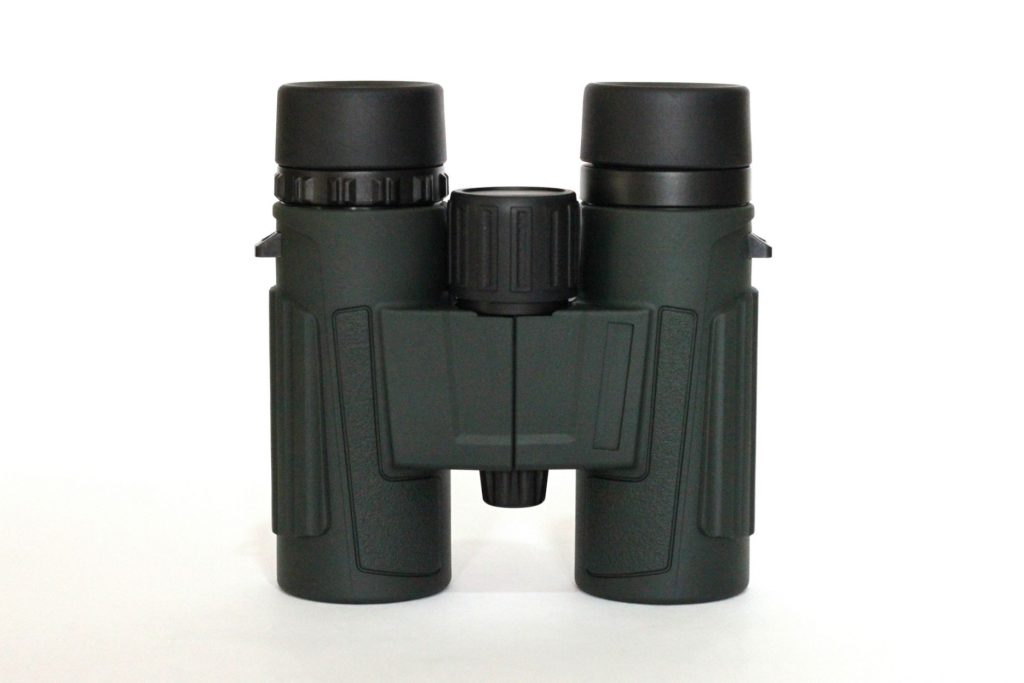
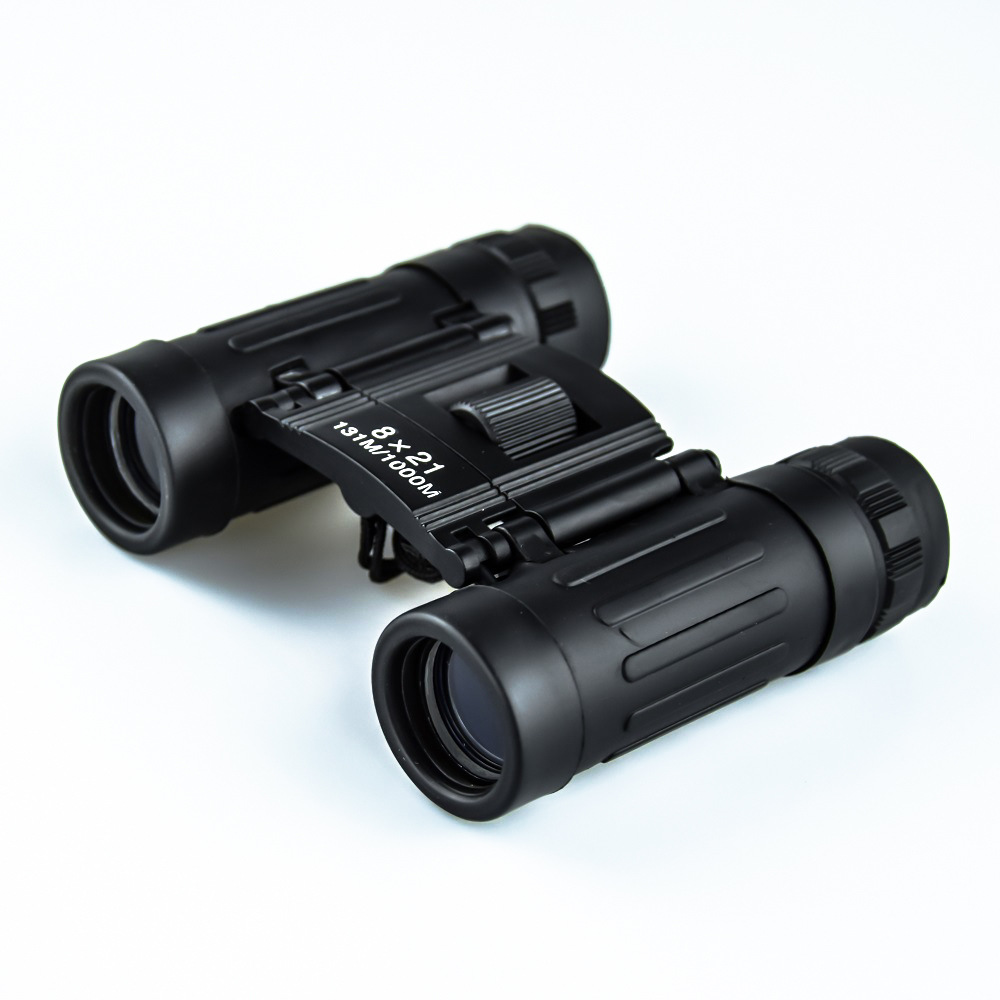
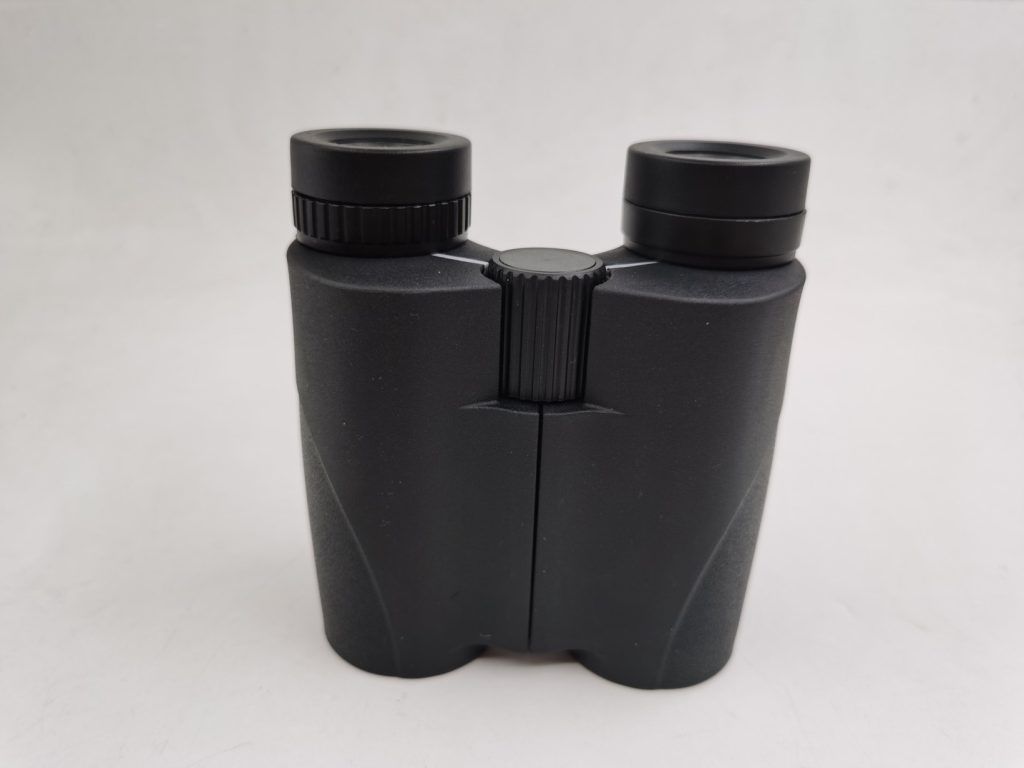
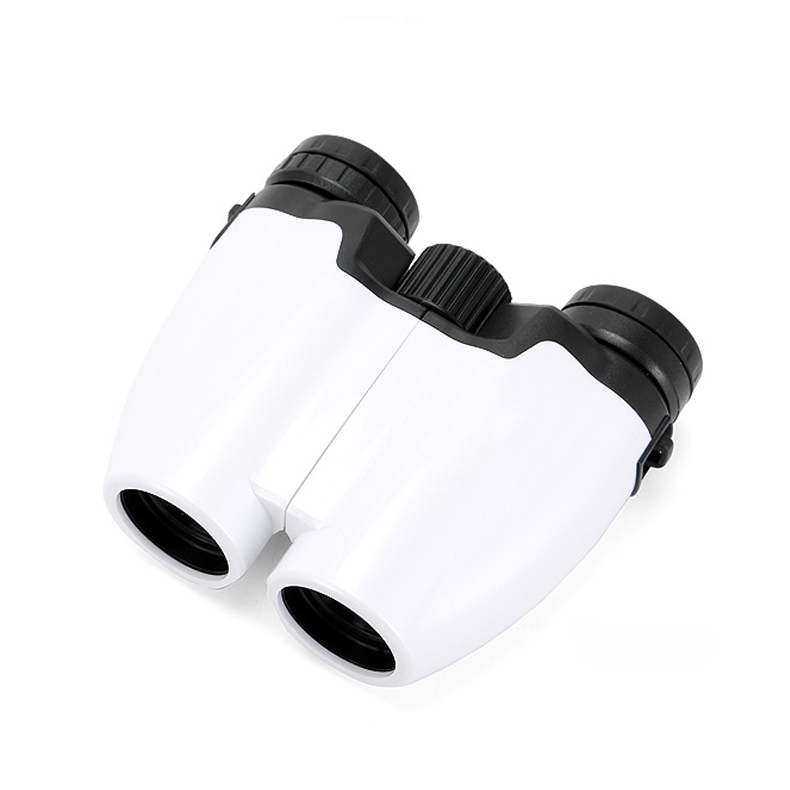
Why Is This Restructuring Happening? — The Two Usage Models I See in Customer Demand
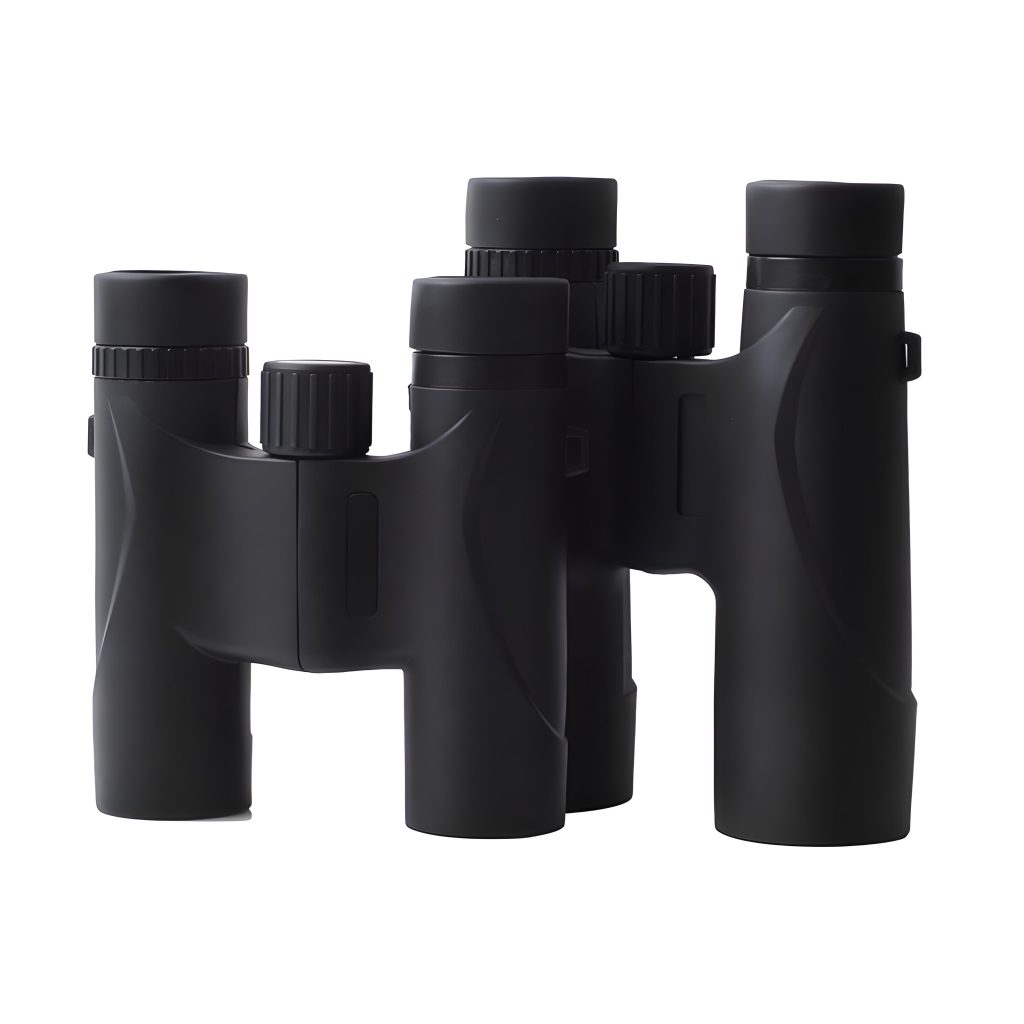
Model A: Professional Observation + Long-Duration Use
This type of demand is commonly seen among birdwatchers, nature educators, inspection users, serious outdoor enthusiasts, and part of the higher-ticket professional retail segment.
What they truly care about is not whether the specs are simply “bigger,” but whether the binoculars remain comfortable over long periods of use, whether they are still usable at dawn and dusk, whether color reproduction feels natural, whether edge performance stays stable, and whether the eye relief and handling can support extended observation.
Under this model, the product logic is very clear: rather than chasing specifications that look more exciting on paper, it makes more sense to pursue a system that is more stable, more durable, and more balanced overall.

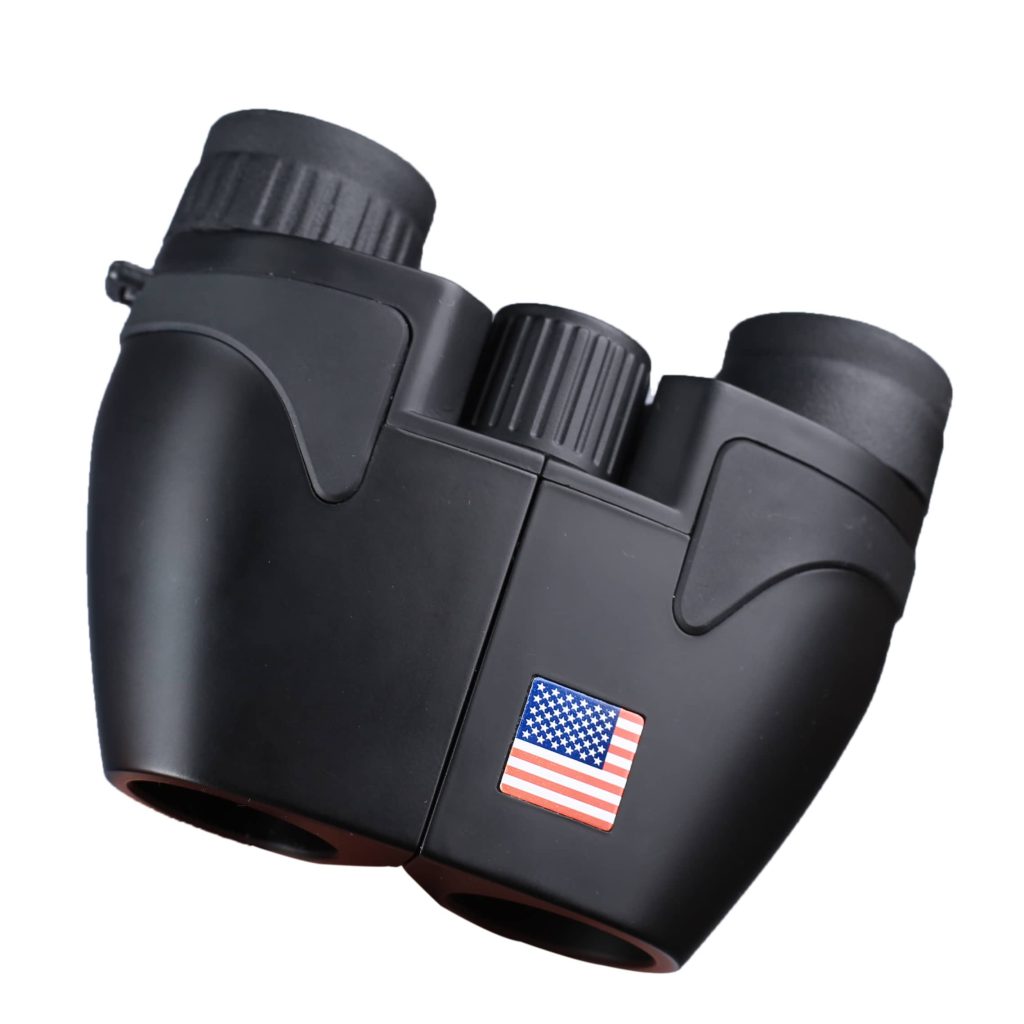
Model B: Lightweight Travel + High-Frequency, Grab-and-Go Use
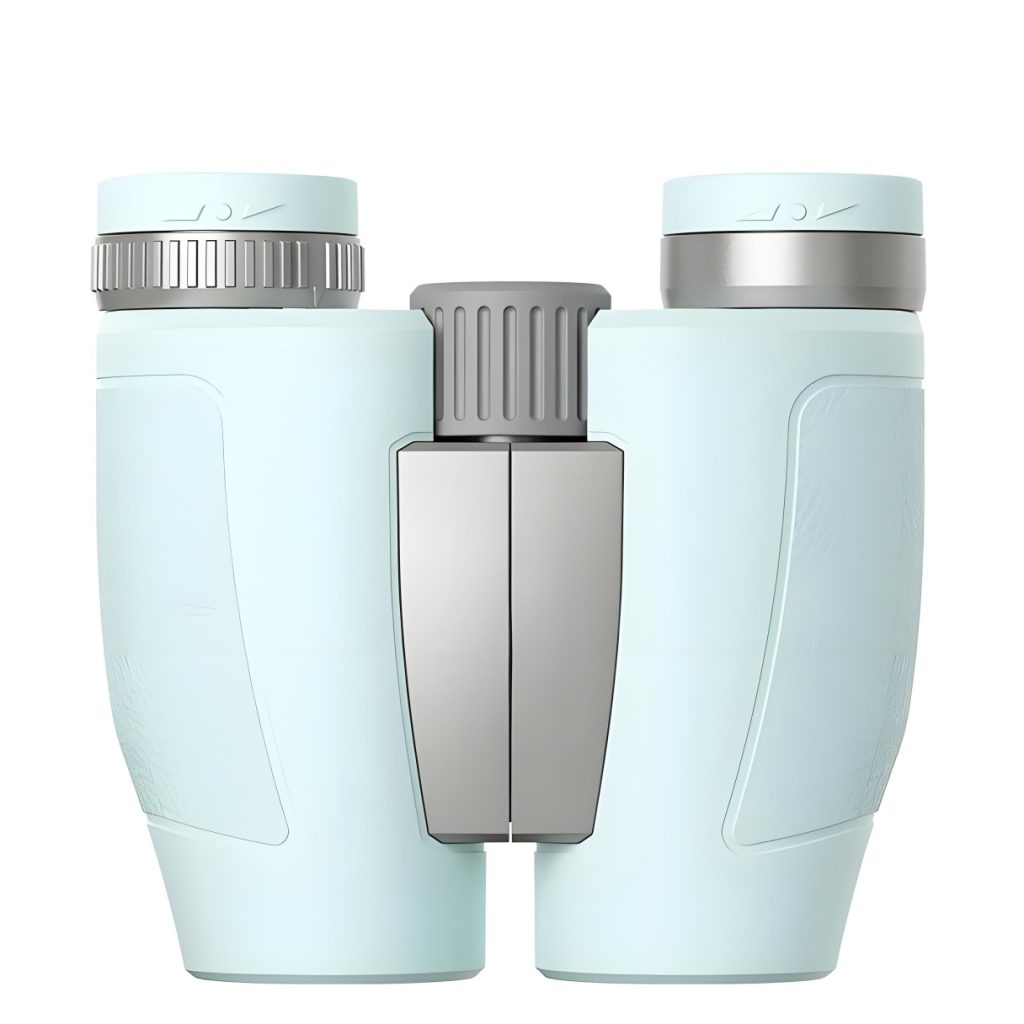
Another set of demand comes from travel, urban observation, family-friendly experiences, the gift market, and entry-level consumers.
What these users care more about is whether the binoculars are easy to pick up, convenient to store, comfortable at first glance, approachable in terms of price, and something they’d actually be willing to carry with them over the long term.
Under this model, binoculars don’t necessarily take center stage — they function more like a high-frequency accessory for travel, camping, events, sightseeing, or content creation.
As a result, their competitiveness often comes not only from optical performance, but from a more practical question:
Are they something people want to keep carrying — and keep using — over time?

Differentiation Across Six Technical Dimensions — What I’m Actually Seeing
Magnification, Aperture, and Exit Pupil: Not About Bigger, but About What Can Be Used Consistently
From both factory and channel perspectives, magnification and aperture are still the most frequently discussed specifications — but they no longer exist in isolation.
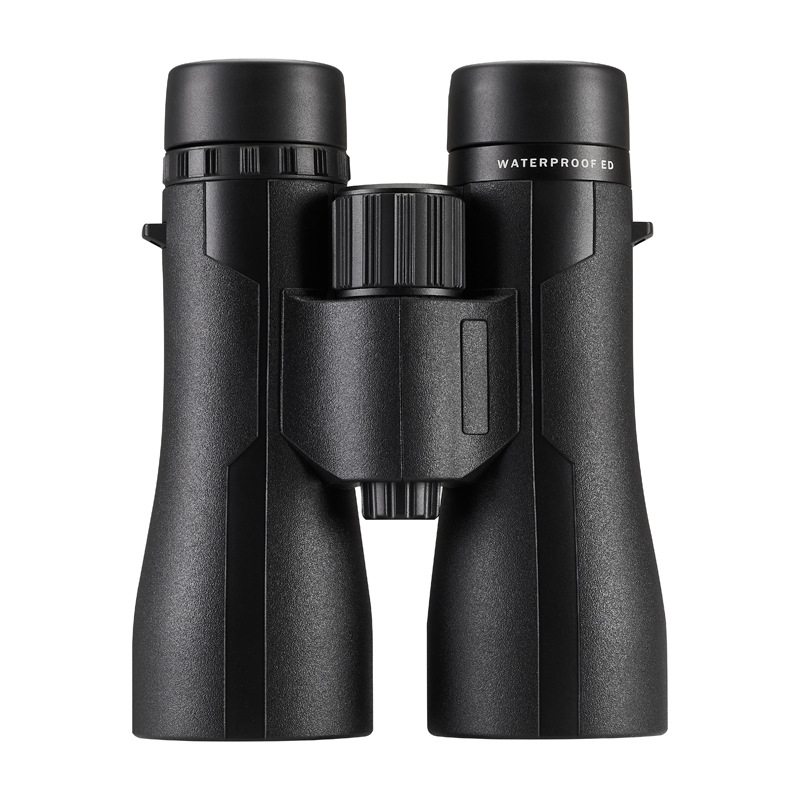
For products aimed at professional observation, there is usually a stronger preference for more balanced configurations like 8×42 or 10×42, as they offer a better trade-off between brightness, stability, comfort, and low-light performance.
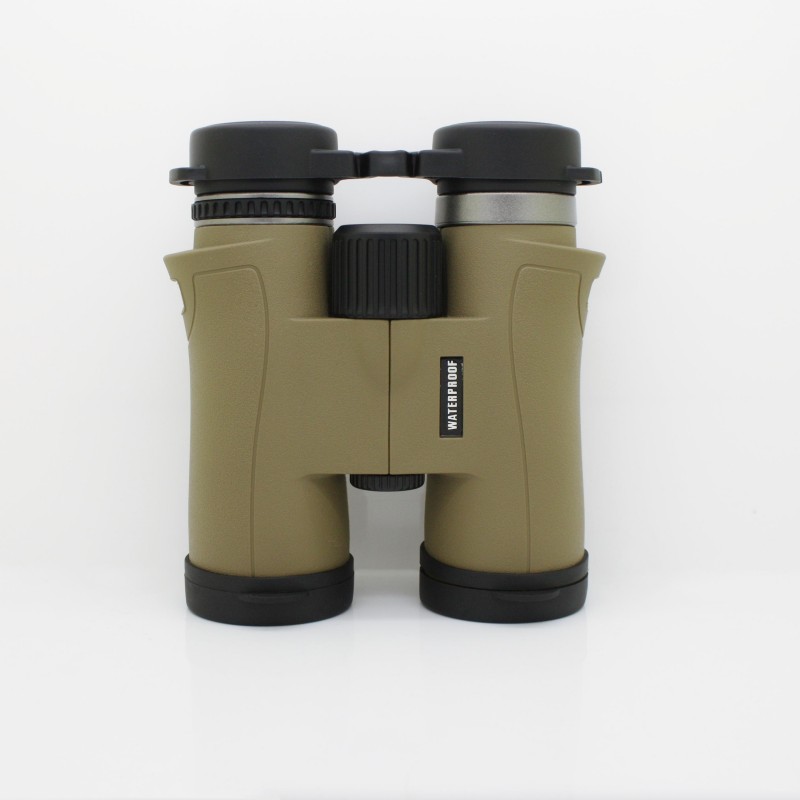
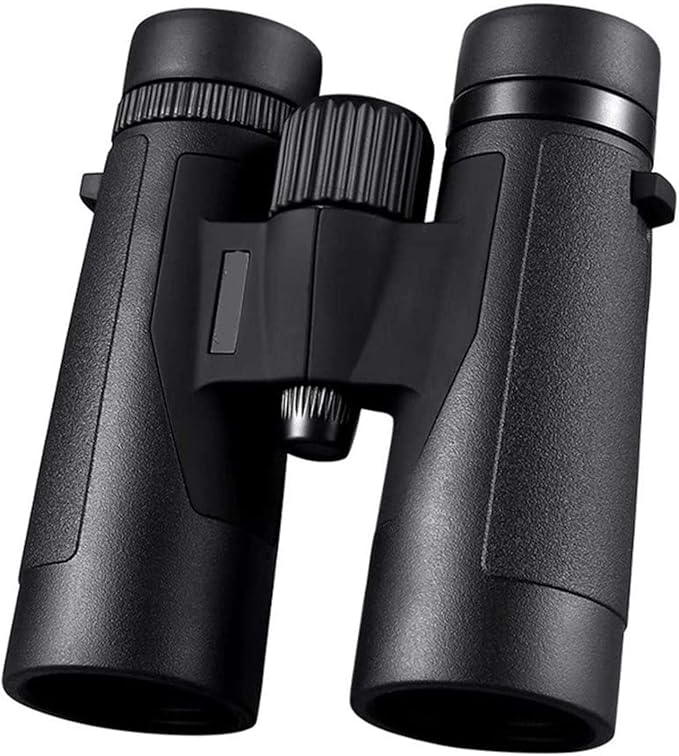
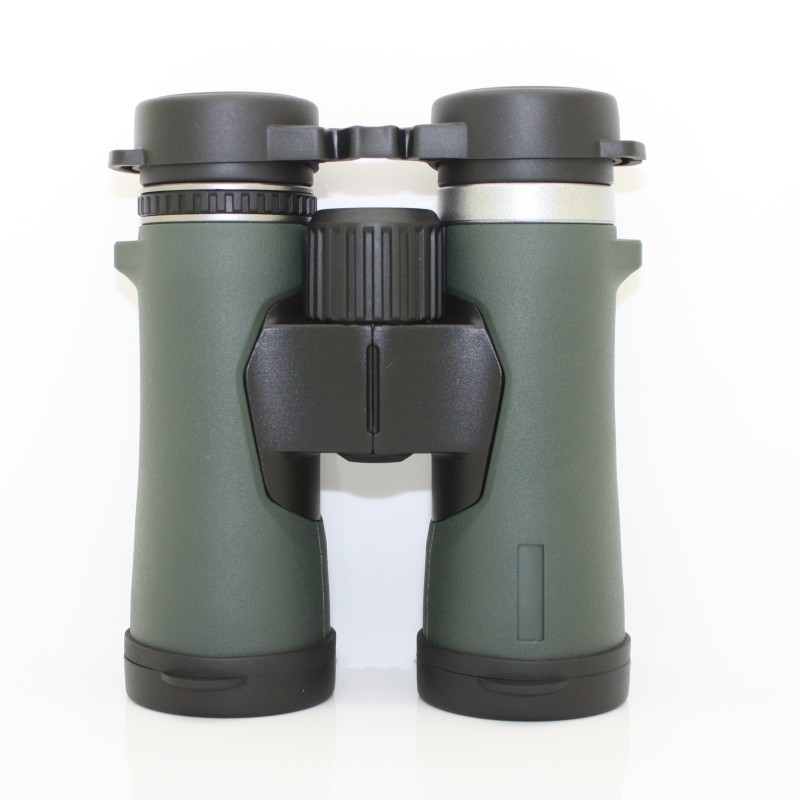
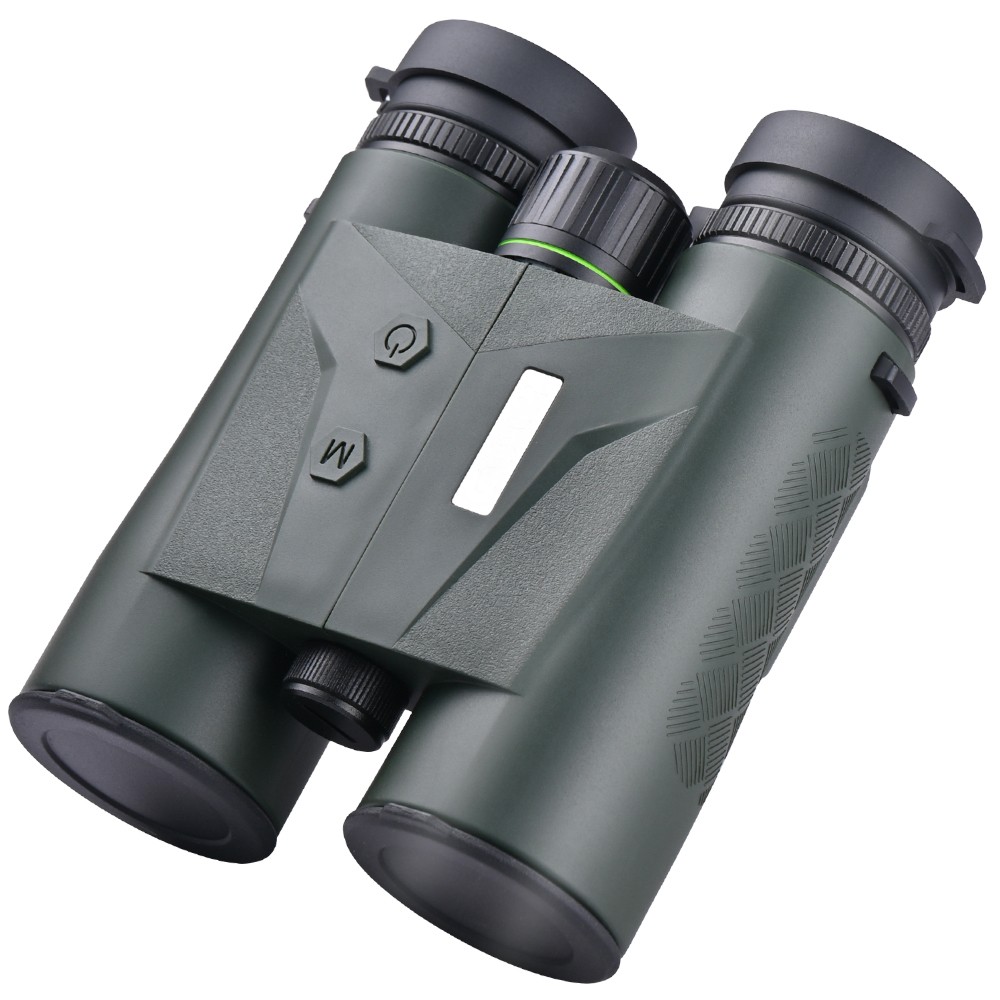
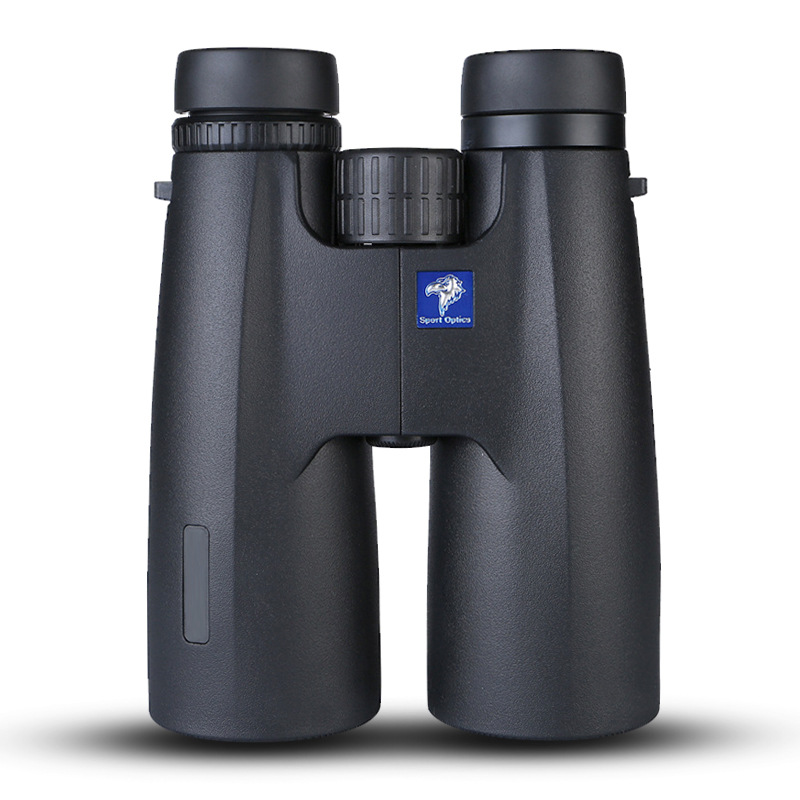
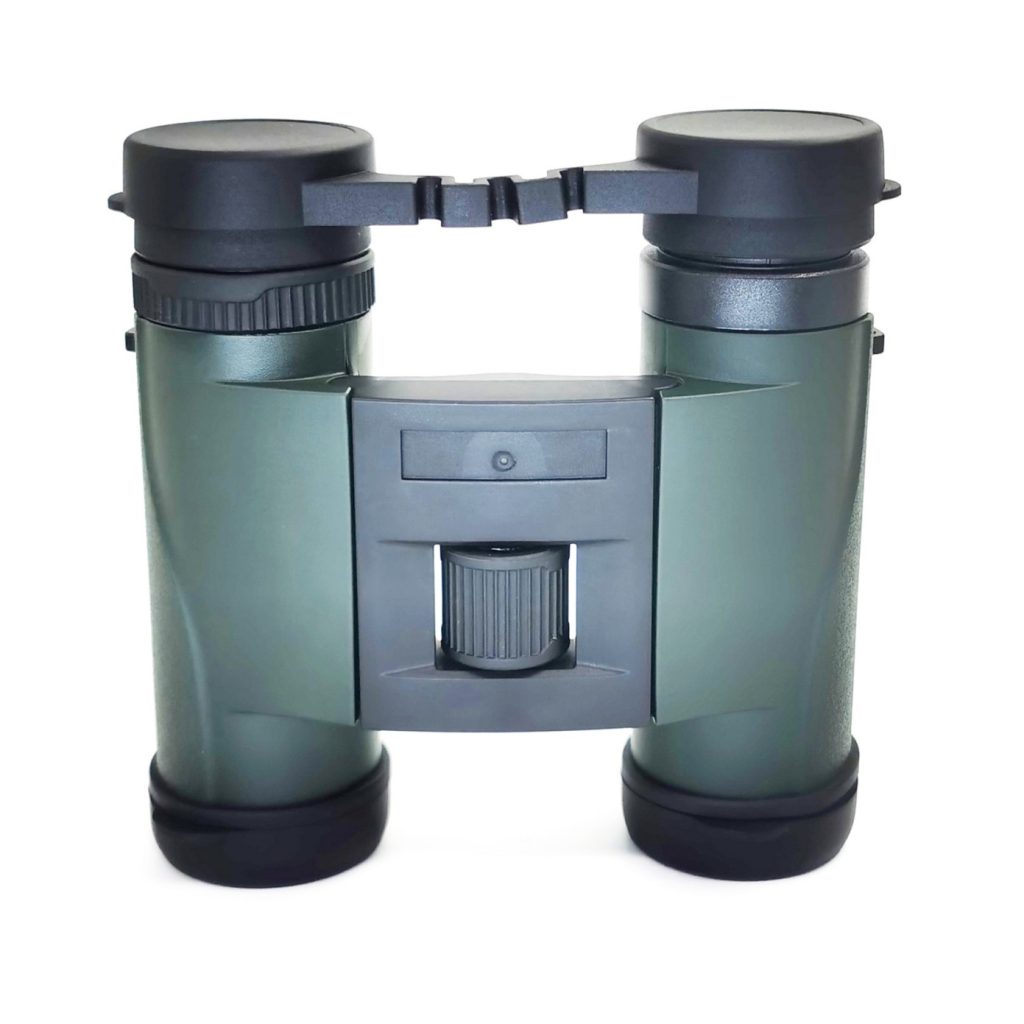
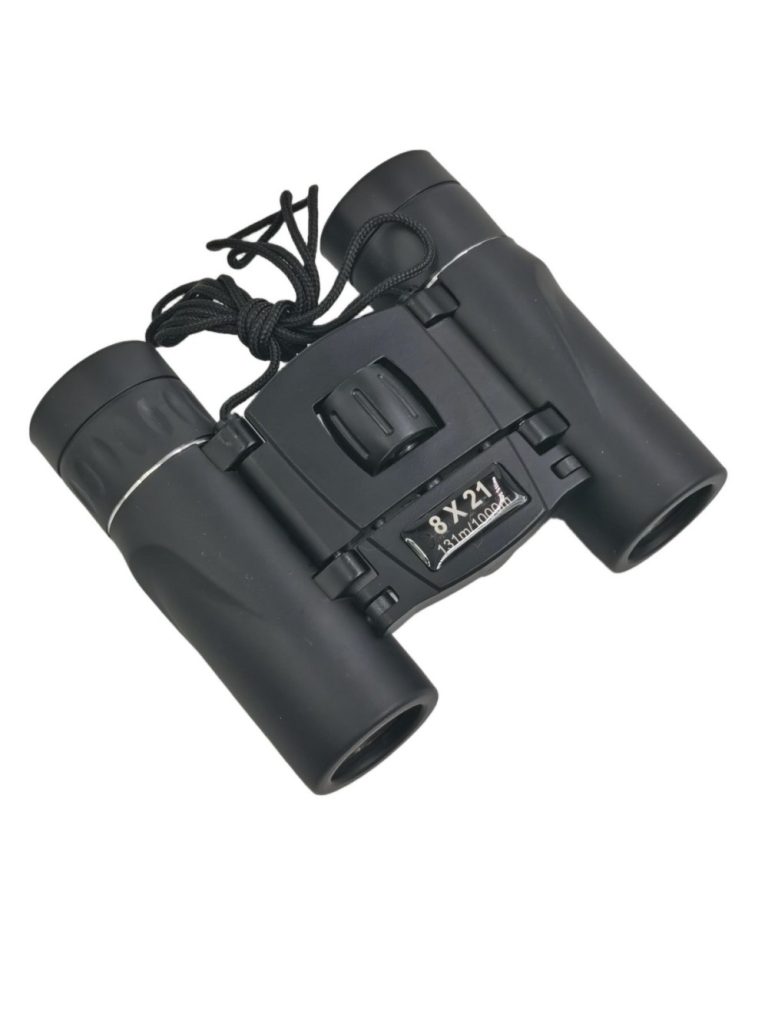
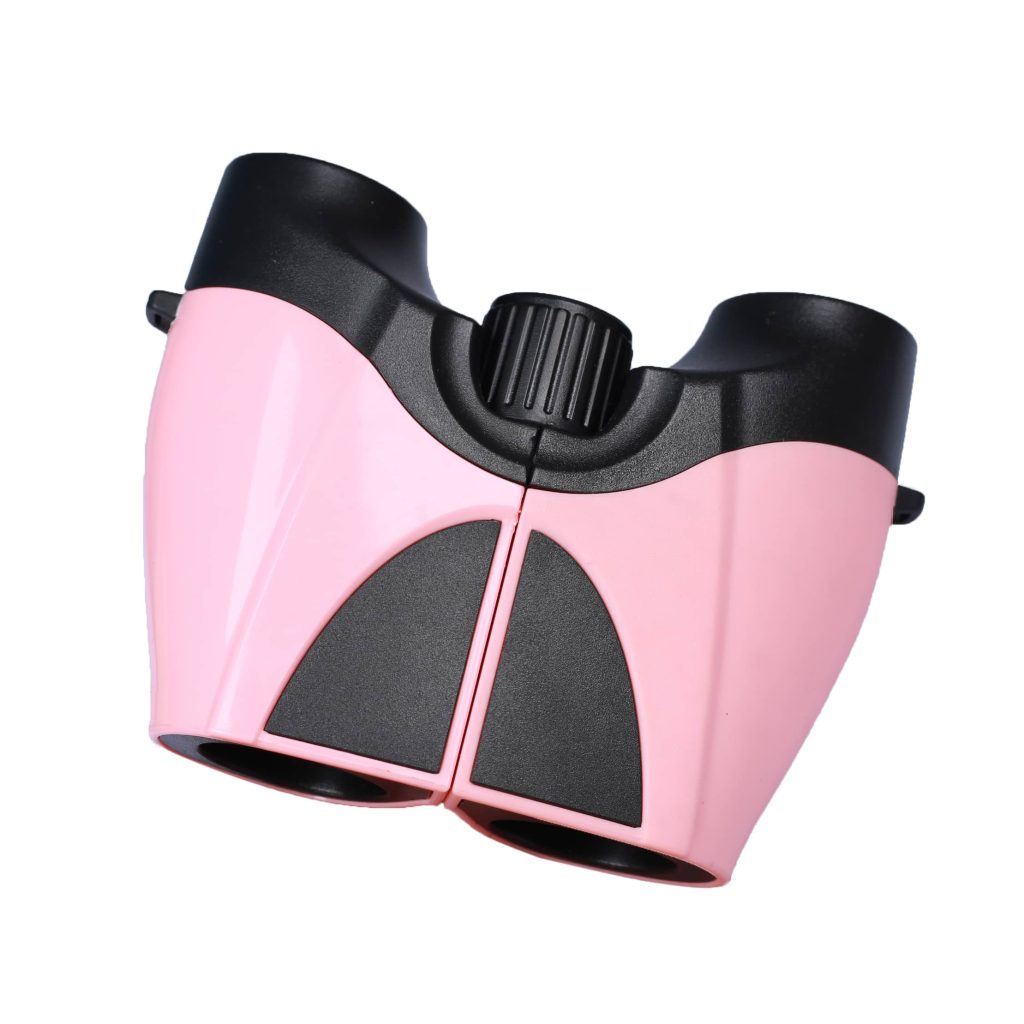
On the other hand, products designed for lightweight, on-the-go use tend to cluster around ranges like 8×25, 10×25, and 8×32. They may not outperform in every condition, but they are far more likely to convert in real-world scenarios thanks to advantages in weight, size, and carry ability.
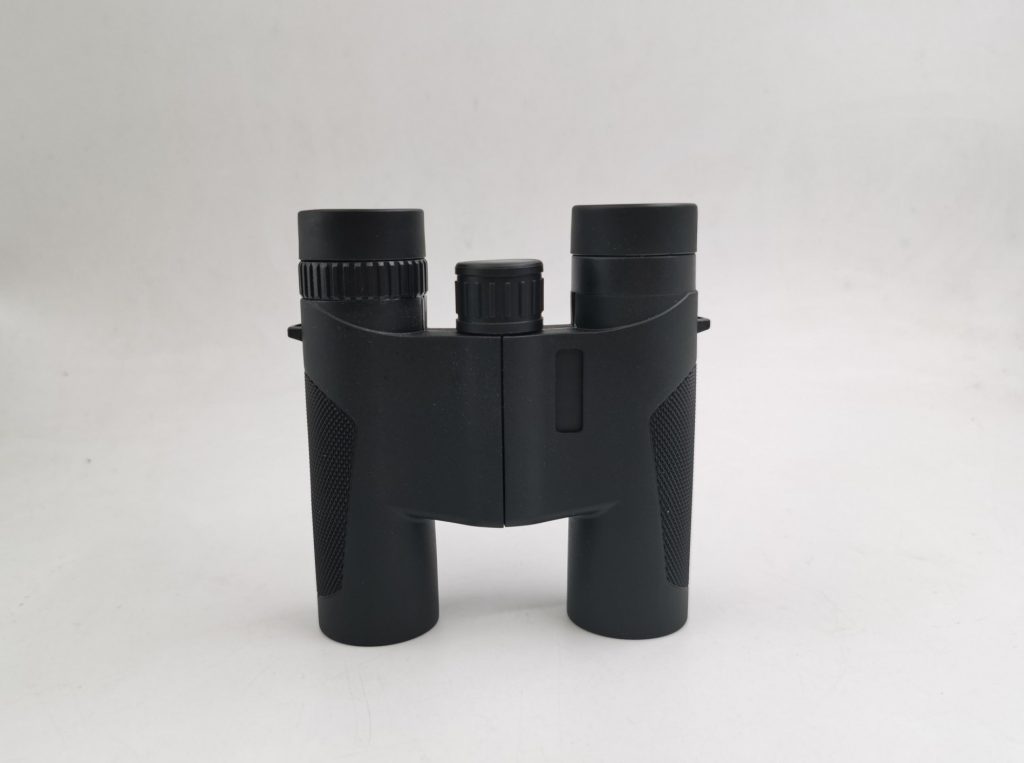
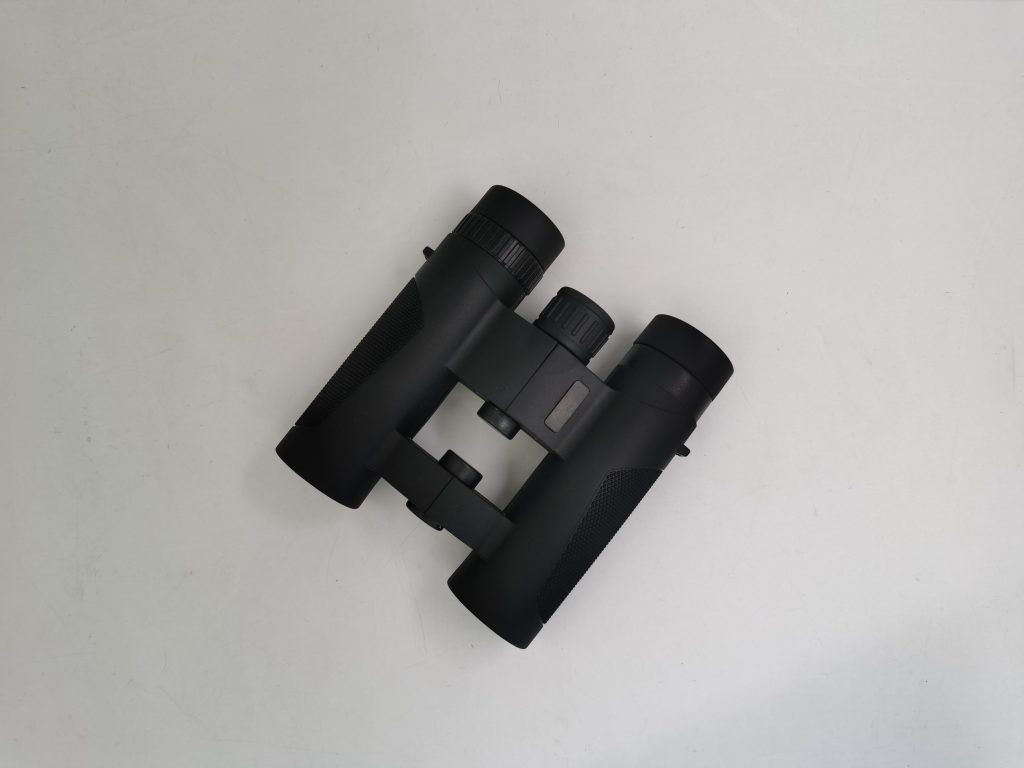
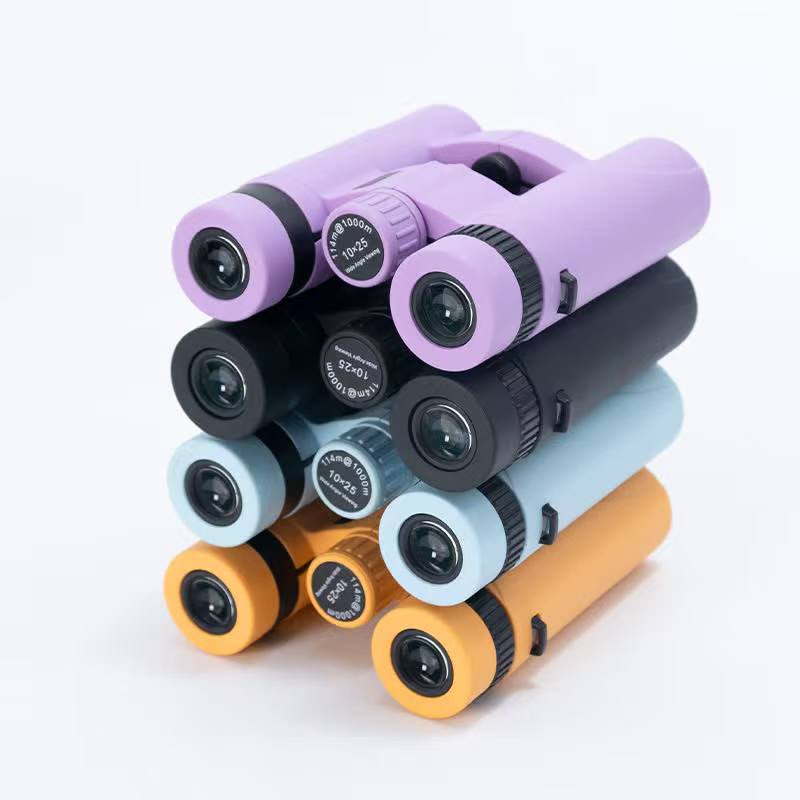
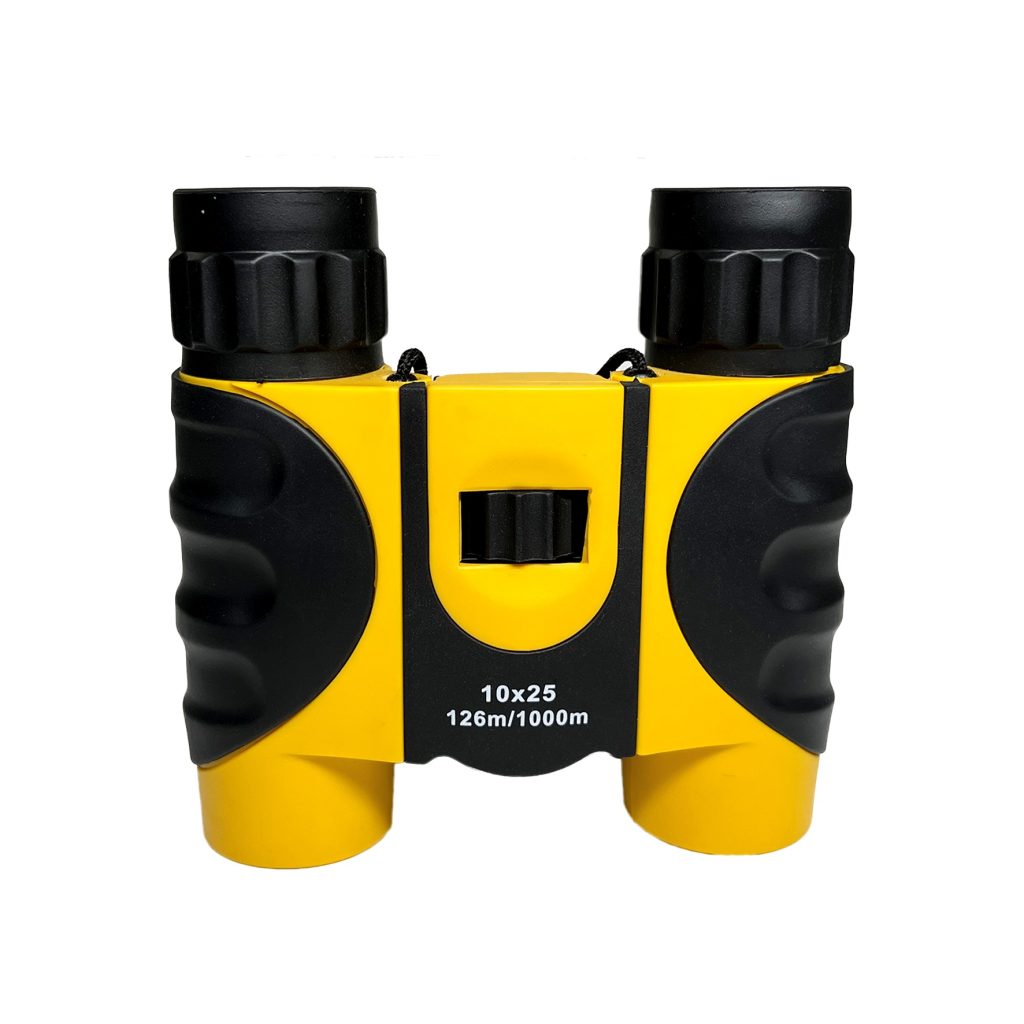
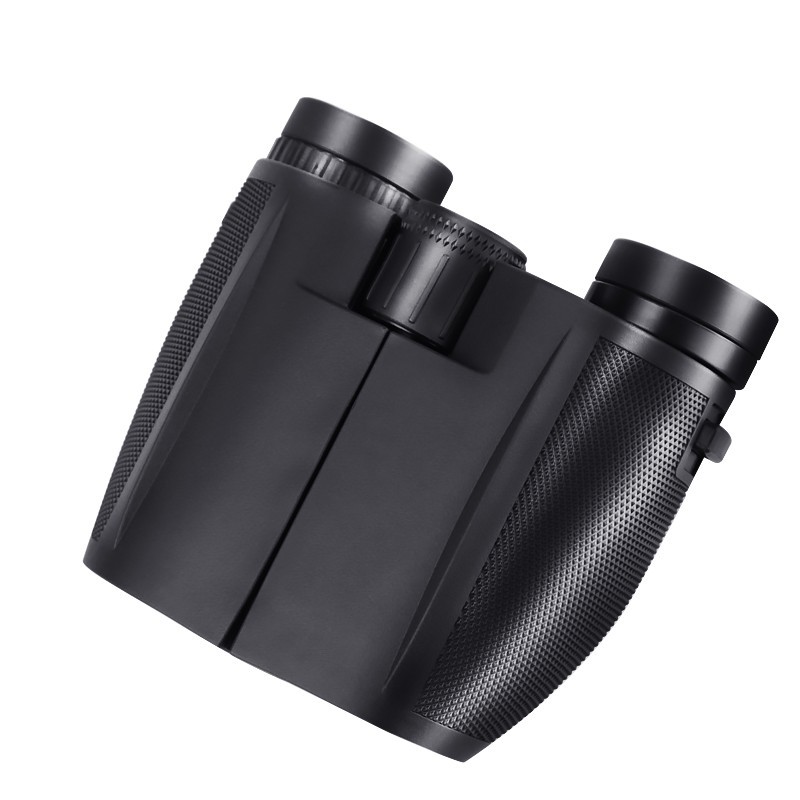
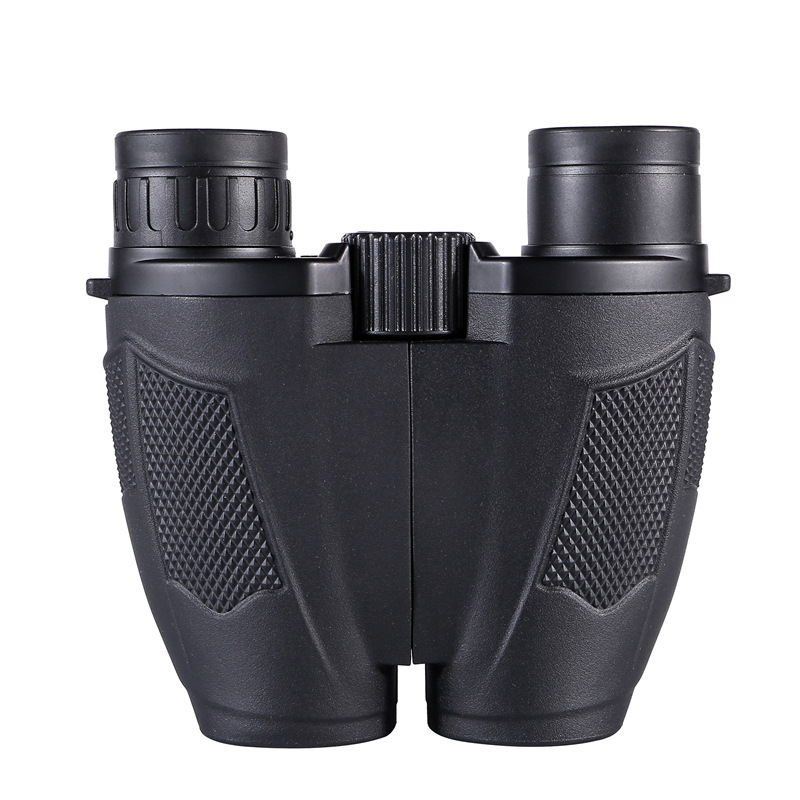
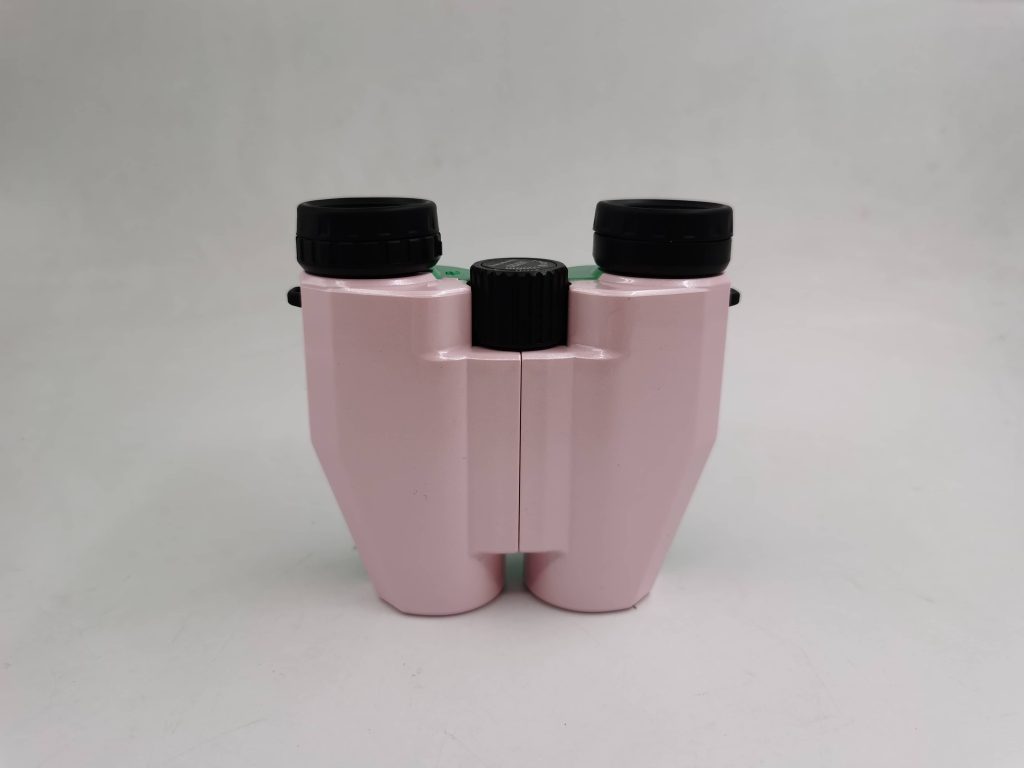
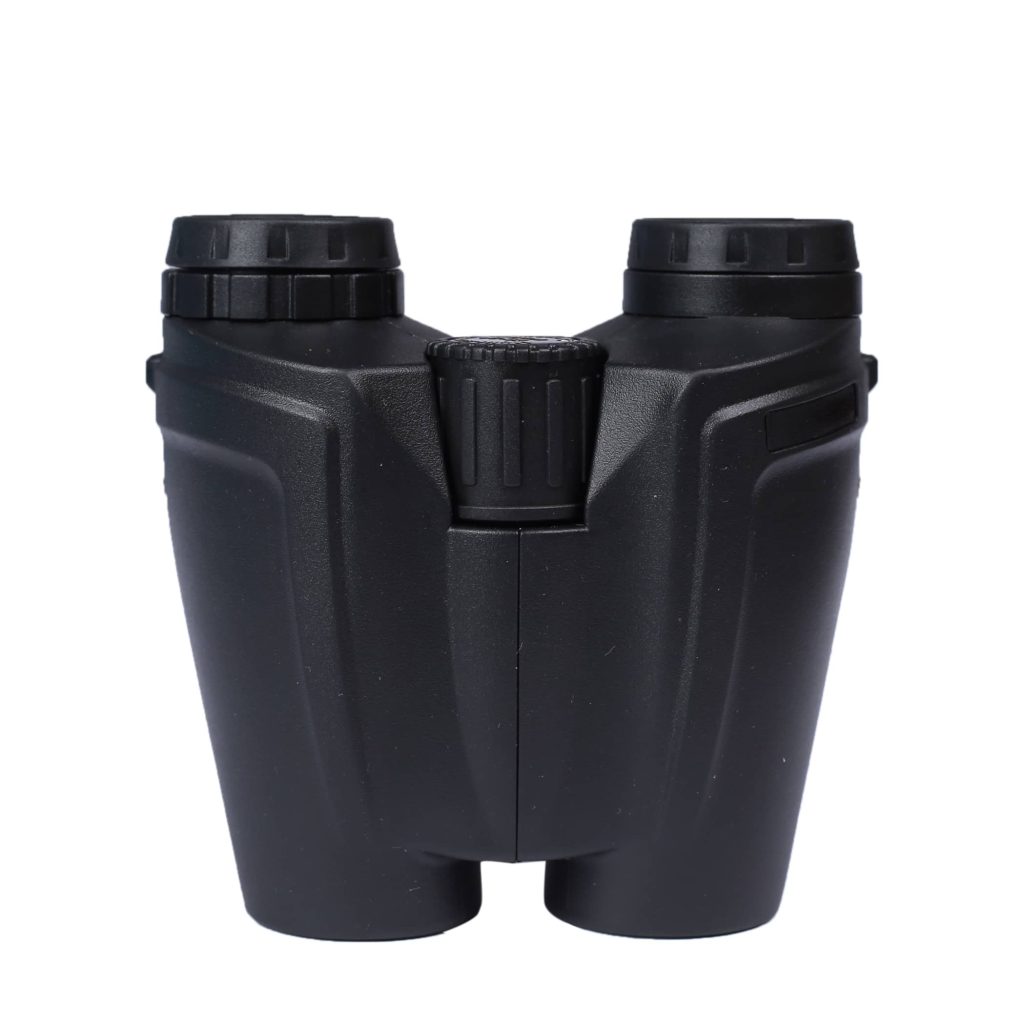
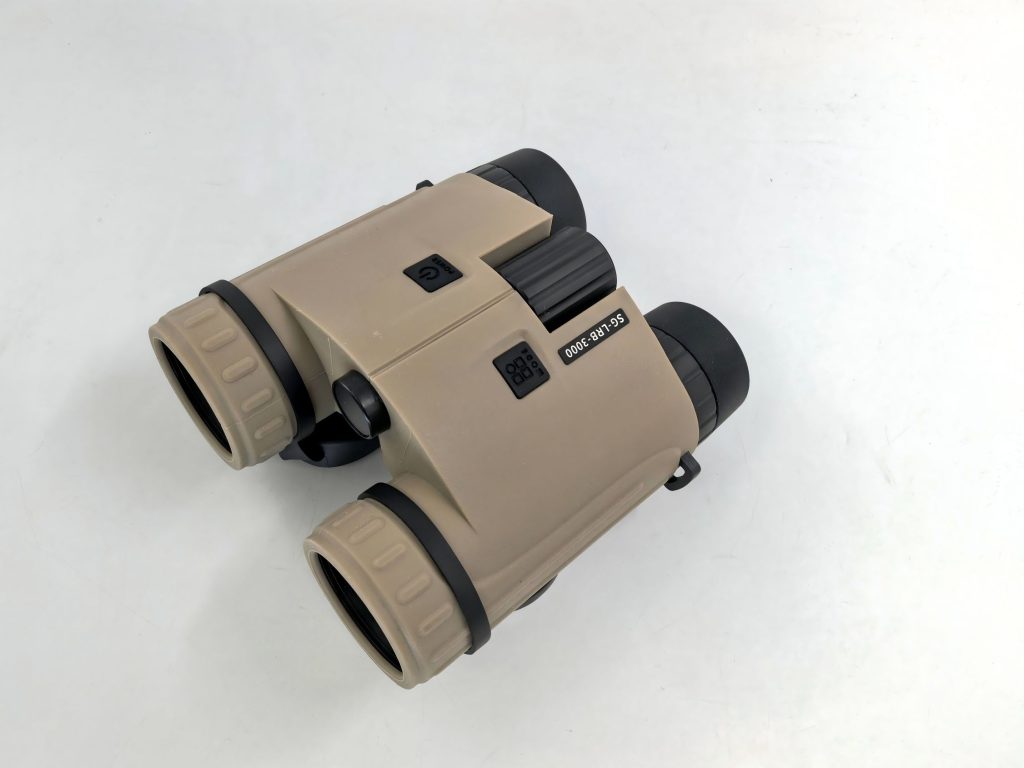
My view is this: magnification and aperture still matter — but what really drives sales today is often not the peak specs, but whether those specs are aligned with how often the product will actually be used.
Field of View, Eye Relief, and Usability: The Real Experience Gap Isn’t Just About Sharpness
For many users, the first judgment when picking up a pair of binoculars isn’t about resolution — it’s whether they can see something immediately.
Is the field of view wide enough? Is the eye relief comfortable? Does it feel restrictive when wearing glasses? Is it easy to locate the subject the moment you raise it to your eyes? These factors directly determine how easy the product is to get into.
The professional route tends to place more emphasis on edge control, field stability, and long-term viewing comfort. The lightweight route, on the other hand, prioritizes that first-second usability — even if it means accepting some compromises at the edges, the goal is to minimize the effort required to find and engage with the subject.
This is why I increasingly believe: for many retail users, usability itself is a high-weight technical metric.
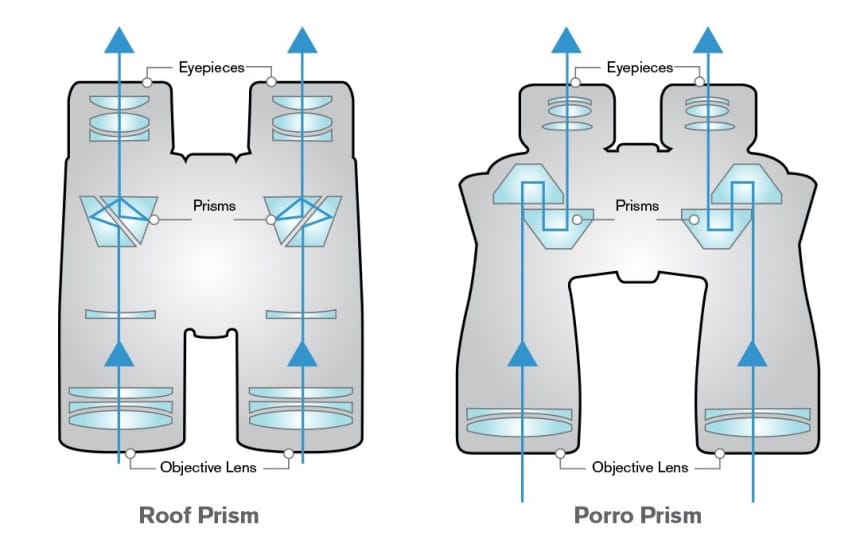
Prism Structure and Form Factor: Choosing a Structure Is Ultimately About Balancing “Portability” and “Performance”
From a manufacturing perspective, roof prisms, Porro prisms, full-size bodies, and folding designs have never been about which is technically superior — they are expressions of different product positioning.
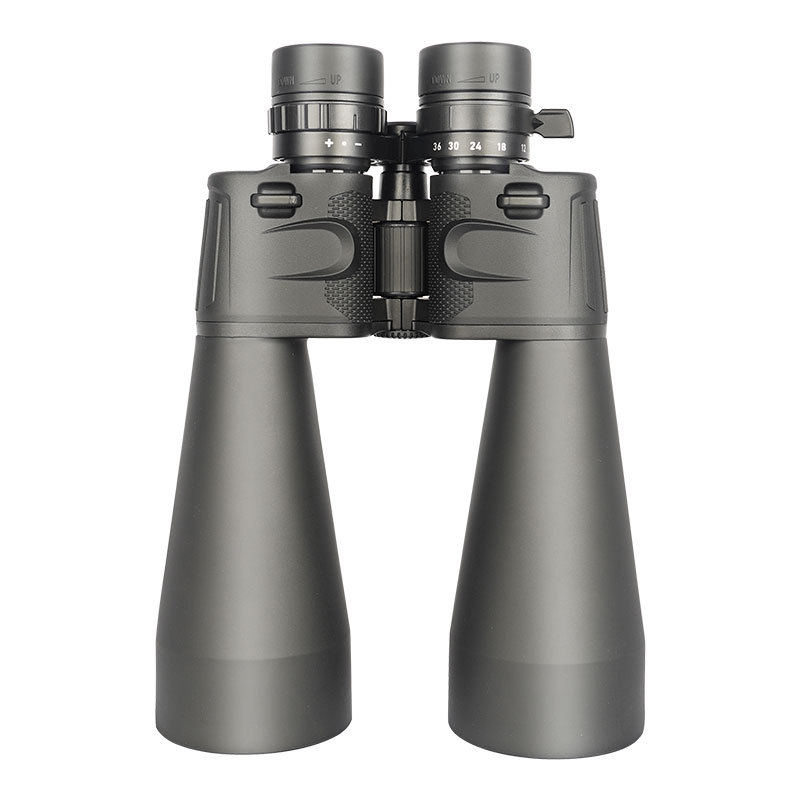
For the high-performance route, the market is more willing to accept fuller ergonomics, a more stable center of gravity, more reliable sealing, and higher consistency overall. In contrast, for the lightweight, travel-oriented route, consumers are significantly more sensitive to overall size and packability.
That’s why, even within the same category, some products prioritize a more robust central bridge, thicker armor, and a more forgiving focusing feel, while others push further toward compact folding dimensions, one-handed usability, and better integration with backpacks and carry systems.
Coatings, Transmission, and Color Rendering: Beyond the Spec Sheet, What Drives Repeat Purchase Is Perception
Transmission is the easiest metric for factories to quantify, and also one of the easiest for brands to communicate. But what users actually remember is rarely the number — it’s how the image feels.
In the professional route, factors like tonal depth in low light, flare suppression in backlit conditions, neutral color rendering, and natural edge falloff matter more than a single “brightness” claim.
In the lightweight route, what matters more is whether the center field looks bright enough, the image feels clean, and the overall view is comfortable at first glance — often more so than pushing every optical metric to the extreme.
This again highlights a key shift: real technical competition is no longer just about achieving higher specs, but about delivering a viewing experience that fits the intended use case.
Waterproofing, Fogproofing, and Mechanical Reliability: Some Customers Buy Performance, Others Buy Certainty
In professional observation, intensive outdoor use, and after-sales-sensitive channels, mechanical reliability is never a bonus — it’s the baseline.
Consistency in focusing resistance, stability of collimation, resistance to fogging under temperature changes, and the ability to maintain performance after long-distance transport or repeated impacts — these are what determine whether a product can sustain its reputation over time.
In the lightweight, travel-oriented route, users still expect a basic level of reliability, but their tolerance hierarchy shifts — weight, price, and portability often take priority.
My perspective is this: the high-performance route is essentially managing failure probability, while the lightweight route is managing ease-of-use thresholds. They are not serving the same decision logic.
Weight, Carrying, and the Accessory Ecosystem: Possibly the Fastest-Evolving Dimension in the Past Two Years
On paper, weight has never been the most eye-catching selling point. But in real purchase and repeat-buy behavior, it’s becoming an increasingly critical factor.
Today, many consumers no longer evaluate binoculars as a standalone product. Instead, they consider them together with straps, chest packs, cases, phone adapters, tripod mounts, gift packaging, and even how the product fits into content sharing.
For the professional route, a well-designed carrying system can significantly improve comfort during extended use. For the lightweight route, whether it fits into an everyday bag and how quickly it can be taken out and put away often directly determines whether it will actually be carried at all.
From my perspective, future competition won’t be limited to the binocular itself, but will increasingly revolve around the entire usage ecosystem built around it.

My Overall View: This Isn’t About Specs Losing Relevance — It’s About Specs Being Reordered
After going through the entire market chain, I actually see this as a very positive signal.
The binocular industry is finally moving away from trying to solve every problem with a single product.
The professional observation route is focused on addressing what users most want to avoid — low-light degradation, long-term fatigue, and uncertainty caused by changing environments.
The lightweight, travel-oriented route, on the other hand, is amplifying what users want immediately — easy portability, quick usability, low barriers to entry, and higher frequency of use.
If I had to sum it up in one sentence:
The binocular industry is shifting from competing on specifications to competing on use cases — and from competing on individual products to competing on entire systems.
Three Directions I’ll Be Watching Closely in the Next 12–24 Months
- Whether full-size products can continue to reduce weight and volume without sacrificing field of view and low-light performance;
- Whether the lightweight, portable segment can maintain compact form factors while improving eye relief, edge performance, and mechanical stability, so that “lightweight” no longer means “compromise”;
- Whether OEM/ODM players will shift away from a single “hero product” approach and move toward scenario-based, platform-driven product lines — for example, developing differentiated structures and accessory ecosystems for birdwatching, travel, gifting, and outdoor inspection.
These three points may well determine whether, over the next two years, the binocular industry continues to compete on specs — or truly moves toward a more mature, scenario-driven segmentation.
And for manufacturers, what’s truly worth investing in may no longer be pushing a single parameter higher, but building a complete, clearly defined, and repeatable product pathway tailored to specific use cases — and taking it further.